

Is Secret RF Safe? The Real Side Effects
Secret RF is often pitched as the gentler, lower-risk RF microneedling option, but redness, pigmentation, and pinpoint marks still show up — usually because of settings and aftercare, not the device itself.


Planning a trip to Seoul?
If you've read that Secret RF is safer than laser treatments because it uses electrical energy instead of light, you're not wrong — but that doesn't mean it's risk-free. In this article, we'll cover the three side effects patients ask about most: lingering redness, post-inflammatory hyperpigmentation, and small pinpoint marks, along with why they happen and how the right settings and aftercare keep them from turning into a lasting problem.
What Is Secret RF, and Where Do Side Effects Come From?
Secret RF is a microneedling radiofrequency* treatment. A grid of ultra-fine needles is pressed into the skin, and once the tips are below the surface, they release radiofrequency energy directly into the dermis. Unlike ablative lasers or laser toning, Secret RF doesn't rely on light, so it's less dependent on how much melanin your skin carries — part of why it's often described as having a lower pigmentation risk than light-based devices.
*Radiofrequency (RF): energy delivered through an electrical current that generates heat inside tissue, used here to trigger collagen remodeling.
That said, a lower risk isn't a zero risk. The needle depth on most devices can be adjusted anywhere from roughly 0.5mm to 3.5mm, and how a provider dials in that depth — along with the RF power level — is what determines whether you walk away with mild, short-lived redness or something that lingers for weeks.
| Depth Range | Typically Used For | Side Effect Consideration |
|---|---|---|
| Shallow (about 0.5–1.5mm) | Pores, fine lines, surface texture | Lower heat load even across broad areas |
| Deep (about 2.5–3.5mm) | Collagen remodeling, deeper scarring | Higher heat load — more likely to trigger redness or PIH if overused on sensitive skin |
Why Redness Can Stick Around Longer Than Expected
Some redness right after treatment is expected — it's a normal inflammatory response to the needles and heat, and for most people it settles within three to five days. Redness that's still visible two weeks later is a different story, and it usually comes down to settings rather than the device itself.
If you already run warm in the face, flush easily, or have a rosacea-prone complexion, your capillaries are working harder than average to begin with. Layering a high RF power level at full depth across the entire face adds a heavy cumulative heat load on top of that, and the result can be redness that settles into your skin instead of fading on schedule. Providers who work with sensitive or flush-prone skin will often dial back the depth or power, or treat in a more targeted way instead of running the whole face at maximum settings.
If your face is still flushed well past the two-week mark, it's worth mentioning to your provider. A vascular laser session alongside is sometimes used to help calm redness that's settled in rather than faded on its own.
Post-Inflammatory Hyperpigmentation (PIH): What Raises the Risk
Post-inflammatory hyperpigmentation, or PIH*, shows up as dark or discolored patches that develop after inflammation — in this case, from the heat the RF energy delivers to the skin. It's one of the more common concerns people bring up after microneedling RF treatments.
*PIH (post-inflammatory hyperpigmentation): darkening of the skin that develops after inflammation or injury, as melanin production ramps up during healing.
Secret RF's pigmentation risk is generally considered lower than light-based lasers, but it's not nonexistent. Fitzpatrick skin types III and IV, which are common among Korean and other Asian populations, tend to carry a higher baseline PIH risk from any heat-based procedure. On top of that, skipping sun protection after treatment is one of the biggest drivers of PIH — treated skin that gets exposed to UV light in the days after a session is far more likely to darken.
In practice, most PIH cases trace back to a similar pattern: patients who spent time outdoors, at the beach, or in direct sun within the first couple of weeks after their session, without diligent sunscreen use.
Pinpoint Marks: Usually a Technique Issue, Not a Device Issue
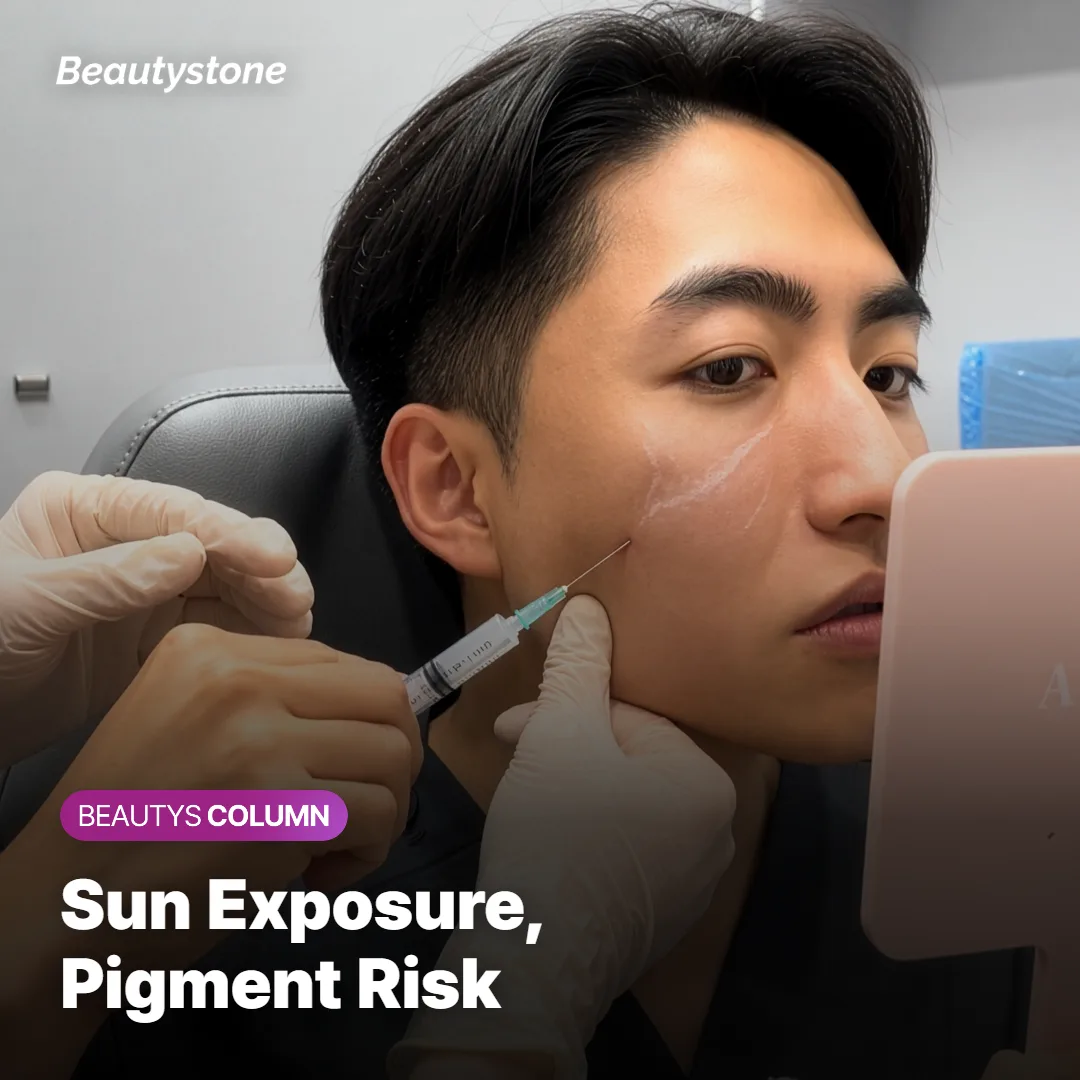
The third side effect people notice is small, dot-like marks where the needles entered — sometimes described as tiny pits or a faint stippled pattern. Honestly, this one has less to do with the machine and more to do with the person holding it.
Pinpoint marks are more likely to linger when the same spot gets passed over multiple times, or when the needle pressure is set too aggressively for the area being treated. A provider working carefully, with even spacing and appropriate pressure, rarely leaves marks that don't fade.
Secret RF Side Effects and Risks: What's Normal, What's Not
- Redness and mild swelling for 3–5 days: Normal and expected. It should be settling, not worsening, day by day.
- Redness still visible after 2 weeks: Not typical — worth a follow-up conversation with your provider.
- Faint pinpoint marks that fade within a few days: Normal.
- Pinpoint marks that seem to be settling into lasting texture change: Flag this. It usually points to a technique issue.
- Gradual darkening in treated areas over 1–2 weeks: A possible sign of PIH, especially if sun exposure wasn't well controlled.
- Spreading warmth, oozing, or pain that worsens instead of improving: These can point to infection and should be checked by your provider right away.
This article is general information, not medical advice. If anything on that list looks or feels off, don't wait it out — check in with the provider who actually treated you.
How to Lower Your Risk Before and After Treatment
Most of the risk with Secret RF comes down to two things you can actually influence: how your provider sets the depth and power for your skin, and what you do in the two weeks afterward.
Before your session, mention any history of flushing, rosacea, or past pigmentation issues so your provider can adjust settings accordingly. A consultation where your skin is actually assessed, rather than a one-size-fits-all setting used on everyone, makes a real difference here.
- Sunscreen, daily, no exceptions: This is close to the entire game when it comes to preventing PIH.
- Skip the beach and direct sun for about two weeks.
- Hold off on saunas and intense exercise while your skin is still settling, since extra heat and sweat can aggravate redness.
- Pause retinol, AHAs, and other exfoliating actives for at least a week. Your skin barrier needs time to recover before it's ready for exfoliation again.
The Bottom Line
Secret RF's side effects — redness that lingers, PIH, and pinpoint marks — are real, but they're rarely about the device itself. They almost always trace back to settings that don't match your skin, or aftercare steps that got skipped, especially sun protection. Like any procedure, it comes with trade-offs, and individual results vary based on your skin type and how closely you follow aftercare.
Ultimately, the right depth and power settings depend on your skin, your history, and what you're trying to treat. If you're considering Secret RF, a consultation is the best way to find out what fits you. Beautystone is a dermatology clinic in Seoul's Hapjeong area — see current offers at /en/promotion.
Frequently Asked Questions
Q1. Does Secret RF hurt?
Most people describe it as more of a warm, prickling sensation than sharp pain, especially with numbing cream applied first. How intense it feels also depends on the depth and power your provider uses, so it's worth asking what settings they plan for your skin.
Q2. How long does redness last after Secret RF?
For most people, redness and mild swelling settle within three to five days. If your skin is still visibly flushed two weeks out, that's not typical, and it's worth checking in with your provider rather than waiting it out.
Q3. Can I get Secret RF if I have rosacea or sensitive, flush-prone skin?
It's often still possible, but your provider will usually need to adjust the depth and power to lower the heat load on your skin. Mentioning any history of flushing or rosacea at your consultation helps them plan settings that fit you specifically.
Q4. Does a cheaper Secret RF session mean a higher risk of side effects?
Not necessarily — price varies by clinic and by how many sessions your plan includes, and it isn't a reliable stand-in for how carefully the settings are chosen. Providers who take time to assess your skin before dialing in depth and power are the ones who tend to lower your risk, regardless of price. A consultation is the best way to get a plan specific to you — see current offers at /en/promotion.