Shurink vs. Ultherapy: Is It the Same HIFU?
Shurink, Ultraformer, HIFU and Ultherapy can sound like rivals. Here's how they relate, which layer decides the device, and how to compare two quotes before a Seoul trip.

Wi Young-jin
Chief Director, Myeongdong
Shurink isn't a cheaper copy of Ultherapy, and Ultherapy isn't automatically the stronger pick. Both are focused ultrasound (HIFU) lifts, and for a jawline that's starting to soften, which depth goes into which part of your face matters more than the name on the machine.
So if you're comparing the two before a trip to Seoul, compare the plans you're offered: the depths, the zones, and the zones left alone. The brand and the shot total come after that.
You may have noticed that the two quotes don't even seem to use the same numbers. That's normal, and it's also why the comparison gets confusing. In this article, we'll cover how Shurink, Ultraformer, HIFU and Ultherapy relate, how to tell which layer is actually sagging, how to read two quotes side by side, what the risks look like, and how a session fits into a trip.
Is Shurink Just a Cheaper Version of Ultherapy?
No. They're two focused-ultrasound devices from different makers, and I'm not aware of a published trial that puts these two specific devices head to head.
Both work on the same basic idea. The device focuses ultrasound energy into tiny points under the skin, the heat creates small coagulation points, and the tissue remodels afterward.
That word, visualization, is the part people skip. Ultherapy's handpiece shows an ultrasound image of the layers under it, so the depth can be checked on screen before energy goes in. A 2025 systematic review and meta-analysis uses that same name, microfocused ultrasound with visualization (MFU-V), for this kind of treatment.
Shurink comes from a Korean manufacturer. A case report on an eye injury after HIFU identifies the Shurink device it describes as made by Classys Inc., Korea.
If you're searching "Shurink vs Ultraformer," this is the useful part. The same 2025 review lists the Ultraformer III among the devices studied for the face and names Classys Inc., Seoul, Korea as its maker. Both names come from the same company, so the practical question for a clinic is simply which model and which generation it uses.
What about "Shurink vs HIFU"? HIFU is the category, not a competitor. Shurink, Ultraformer and Ultherapy all sit inside it.
The closest thing to a fair comparison I can point to is an evaluator-blinded split-face study in which two different HIFU devices were used on each side of the face in 20 Korean patients, with the same number of coagulative zones on each side. In that study, the two devices had similar efficacy in blinded clinician and quantitative assessment, although there were some differences in patient satisfaction and degree of pain. The abstract doesn't name the two devices, so it can't settle Shurink against Ultherapy. What it does show is that when the dose is matched, the brand stops being the headline.
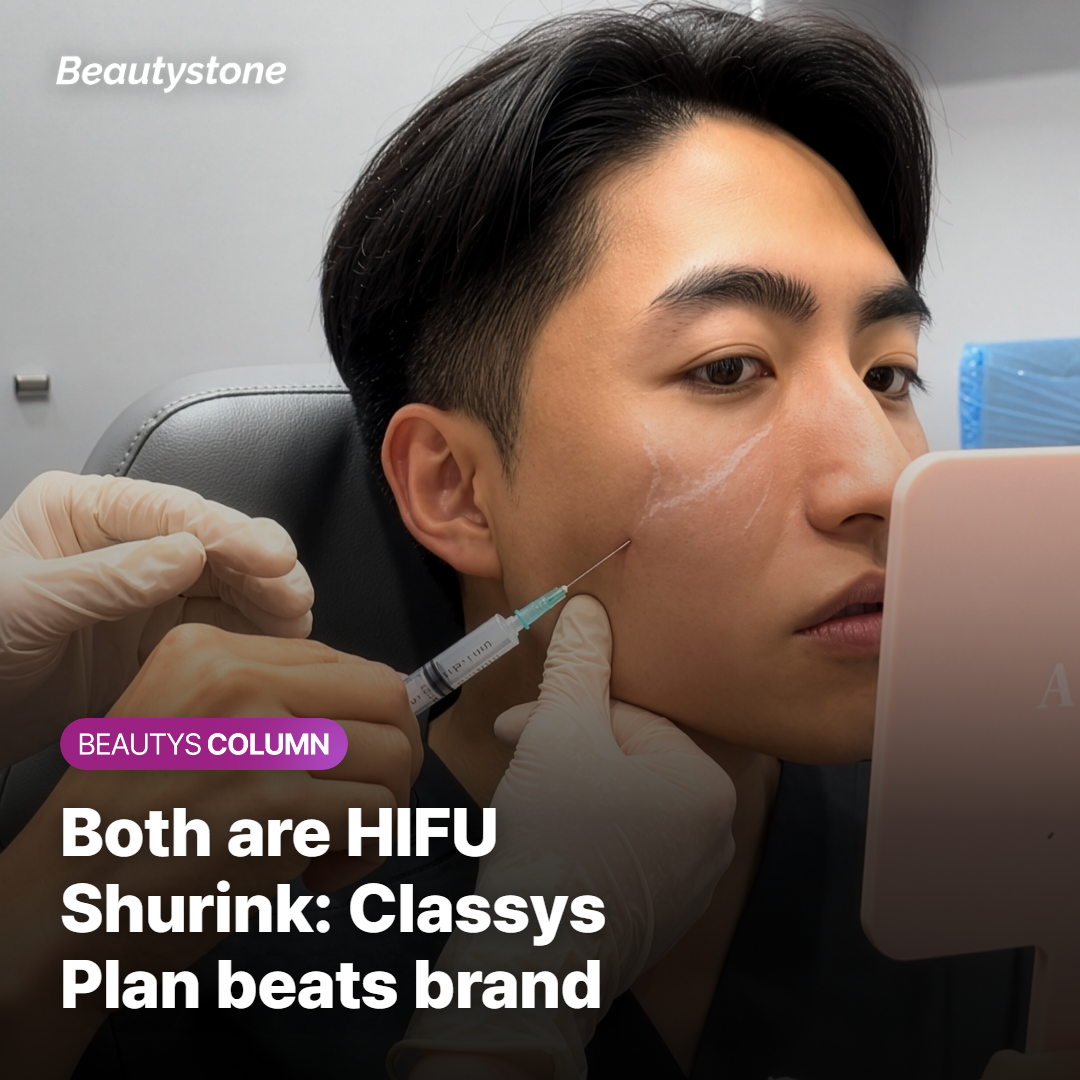
Which Layer Is Sagging? That Decides More Than the Brand
The first question isn't which device. It's which layer the change is in: the skin itself, or the softer tissue underneath that has started to drop along the jaw.
Depth is the setting that answers that, and it's chosen by swapping the transducer, the piece placed on the skin. In a tissue study of Ultherapy-type treatment, the 1.5 mm transducer worked in the superficial dermis and the 3.0 mm transducer in the deep dermis. Shallower settings act closer to the surface, deeper ones further down, and a plan picks between them zone by zone.
Classys devices work the same way with swappable cartridges. One pig-skin study of the Ultraformer MPT tested the device at specific depths of 2.0, 3.0, 4.5, and 6.0 mm. So when a Shurink quote lists cartridges by millimeter, read those numbers as depth settings, not product grades.
Here's where I land for a jawline that has softened because the tissue has actually sagged, for example after weight loss: Ultherapy is a fitting option, and what matters most is checking the treatment depth on the ultrasound image and treating only the areas where the sagging actually is.
The second half of that sentence matters as much as the first. In a four-woman case report, treatment areas narrower than the standard Ultherapy protocol were chosen aiming to create a reduction in the volume and a pattern of contraction leading to the appearance of slimming on the lower third of the face. The same authors write that the method isn't considered a fat-treatment technology. Still, if a protocol can be designed to make the lower face look slimmer, cheeks that are already thin are a zone to discuss before anyone fires into them.
So, for your situation: if your jawline has blurred and the soft tissue below the cheek has dropped, a depth-checked lift aimed at that zone is a reasonable thing to book on this trip. If what bothers you most is a hollow look rather than sagging, ask first whether energy belongs in those zones at all, whichever device is on offer.
Shots, Lines and Depths: How to Compare Two Quotes
Compare the depth plan, not the shot total. A shot count tells you how many points were placed. It doesn't tell you where they went or how deep.
That's why two quotes can look worlds apart. One device's plan may spread many points across several depths, and another's may put fewer points into fewer layers, and neither number converts into the other.
Plans built around the face itself are also what the research describes. In a Korean study of 50 patients treated with the Ultraformer MPT, treatment protocols were tailored to leverage five cartridges with micropulsed mode options, optimizing outcomes based on sonographic anatomy. The same study attributed a smaller lift at the forehead to the thin tissue requiring a cautious approach to avoid discomfort.
When you put two quotes side by side, these are the lines worth checking:
- Device and generation: Which machine, and which model? For Shurink, that also answers the Ultraformer question.
- Depth by zone: Which depth goes on the jawline, which on the cheek, which on the neck or forehead?
- Zones left out: Which areas get no energy, and why? Thin or already hollow areas should come up here.
- How depth is checked: Is the depth confirmed on an ultrasound image for your face, or set from a standard chart?
A quote that answers all four is easier to compare than two shot totals, even when the devices are different.
Side Effects and Risks: What's Common, What Needs a Doctor
Most reactions are short-lived, but focused ultrasound has rarer risks that are worth knowing before you book, especially on a trip.
A systematic review of adverse events after Ultherapy-type treatment found that transient edema, erythema, and postprocedural pain were observed most often.
The same review also searched the FDA's MAUDE device-report database, where lipoatrophy (fat loss), neurologic sequelae such as focal numbness, and scarring were reported with the most frequency. Those are reports, not measured rates, but they're the reason a plan should say where energy is not going.
Pain is real, too. In the 2025 meta-analysis, patients reported a pooled mean pain score of 4.85, indicating moderate pain.
That analysis also found that common adverse events included erythema, edema, swelling, bruising, and tenderness, which were generally mild to moderate in severity.
The eyes are the area that needs the most respect. In the eye-injury case report, the patient had undergone HIFU treatment at a beauty salon the day before her eye symptoms began. Wherever you go in Seoul, have this done in a medical clinic by a doctor who plans around the eyes.
Seek medical care right away if you notice any of these: a change in your vision, numbness or weakness that doesn't settle, blistering, or redness that spreads with heat or a fever.

Within Your Travel Schedule: Flights, Photos and Home
Unless you've had sedation (sleep anesthesia) that day, my view is that there's no reason to postpone a lift like this because of your flight home.
Photos are a separate question. For Ultherapy, up to around 300 shots, swelling usually barely shows on the outside, though that can change as the shot count goes up. For a Shurink plan, ask about photo timing for your specific zones in your first message, since it depends on the plan.
One visit can still mean something. A lift like this rarely changes you all at once. It tends to move you a little at a time back toward how you looked before, so plan to judge it after you're home, not in the mirror on day one.
After you're home, if something doesn't look right, you can send photos through our WhatsApp channel and ask. If the signs are serious, such as a vision change or numbness that's getting worse, see a doctor where you are first.

The Bottom Line: Choose the Plan, Then the Device
- Shurink and Ultherapy are both HIFU. Shurink comes from Classys, the same company that makes Ultraformer.
- Which layer is sagging decides more than the brand does.
- Shot totals don't convert between devices. Compare depth by zone and the zones left out.
- Pain was rated moderate on average in the research, and less common risks like fat loss or numbness are why the plan should say where energy isn't going.
Like any procedure, either device comes with trade-offs. Ultimately, the choice depends on your face, your goals, and your budget.
The variable that's easy to miss is tissue thickness, which isn't the same across your face. A thin forehead and a heavier jawline shouldn't get the same depth. So when you get a quote, look for three things: the depth set for your jawline, the depth set for thinner areas like the forehead, and the zones the plan leaves alone. If those three lines are filled in for your face, you're looking at a real plan.
If you're planning a trip, you can message Beautystone on WhatsApp before you book; the clinic is in Hapjeong, Seoul, one stop from Hongik Univ. Station on Line 2. A first message can be as simple as: "I'm in Seoul from [date] to [date]. My jawline has started to soften and I'm deciding between Shurink and Ultherapy. Here are front and side photos in daylight." The final plan is decided at the in-person consultation.
Frequently Asked Questions
Q. Is Shurink the same as Ultraformer?
A. Both names come from the same Korean manufacturer, Classys. A clinic may have a Shurink or an Ultraformer model, and generations differ, so ask which model and generation will be used on your face. Whichever it is, the depth set for each zone and the zones left out matter more than the name.
Q. Is HIFU the same thing as Ultherapy?
A. HIFU (high-intensity focused ultrasound) is the category. Ultherapy is one device in it, described in research as microfocused ultrasound with visualization, because its handpiece shows an ultrasound image so the depth can be checked. Shurink and Ultraformer are other devices in the same category.
Q. How much do Shurink and Ultherapy cost in Seoul?
A. This article doesn't list prices. A quote depends on the device, the zones, the depths and how many lines are placed, so two quotes with different shot totals aren't directly comparable. You can send your trip dates and front and side photos on WhatsApp and ask how a quote for your face would be put together.
Q. Will I need more than one session?
A. One session can be meaningful on its own. A lift like this tends to move you gradually back toward how you looked before rather than changing you all at once. Whether a later session makes sense, and when, is better decided after seeing how your face responds, so it isn't something to promise from a menu.