How Long Does Juvelook Really Last?
Juvelook results depend less on the treatment itself and more on how many sessions you get — the difference between one session and a full three-session protocol can be more than a year.


Planning a trip to Seoul?
If you've searched "how long does Juvelook last" and landed on two very different answers — six months in one place, over a year in another — you're not imagining things. Both numbers can be accurate. The gap almost always comes down to one detail people skip past: how many sessions you actually got. In this article, we'll cover how Juvelook builds collagen under the skin, why one session and a three-session protocol can land more than a year apart in real-world duration, and what that means for your results and your budget.
How Long Does Juvelook Actually Last?
Juvelook is a PDLLA (poly-D,L-lactic acid) collagen biostimulator, not a dermal filler. That distinction matters for duration. A filler adds volume directly; Juvelook works by triggering your own skin to produce new collagen over time, and that new collagen is what sticks around.
Clinics often quote "12 to 18 months" as a general range, and that's not wrong — it's just incomplete. In practice, patients who get a single session tend to land closer to 6 to 8 months of visible improvement. Patients who complete the standard three-session protocol, spaced about four weeks apart, more commonly report results in the 14- to 18-month range. That's not a small difference; it's roughly double.
How Juvelook Works: Why Collagen Takes Time to Build
Here's the mechanism, in plain terms. Once injected, PDLLA particles break down gradually over roughly 6 to 9 months. As they do, your fibroblasts — the cells responsible for collagen production — treat the particles as a signal to get to work, laying down new collagen fibers in the dermis.
The catch is that one session alone doesn't generate much of a signal. A single round of injections produces a modest collagen response — enough to notice, but not enough to build the kind of density that holds up well past a year. Repeated stimulation, spaced roughly four weeks apart across three sessions, is what pushes fibroblasts into sustained collagen production.
Think of it less like a single deposit and more like a savings habit. One session is a one-time contribution. Three sessions, spaced out, function more like regular installments — and the "balance" you're left with a year later reflects that difference.
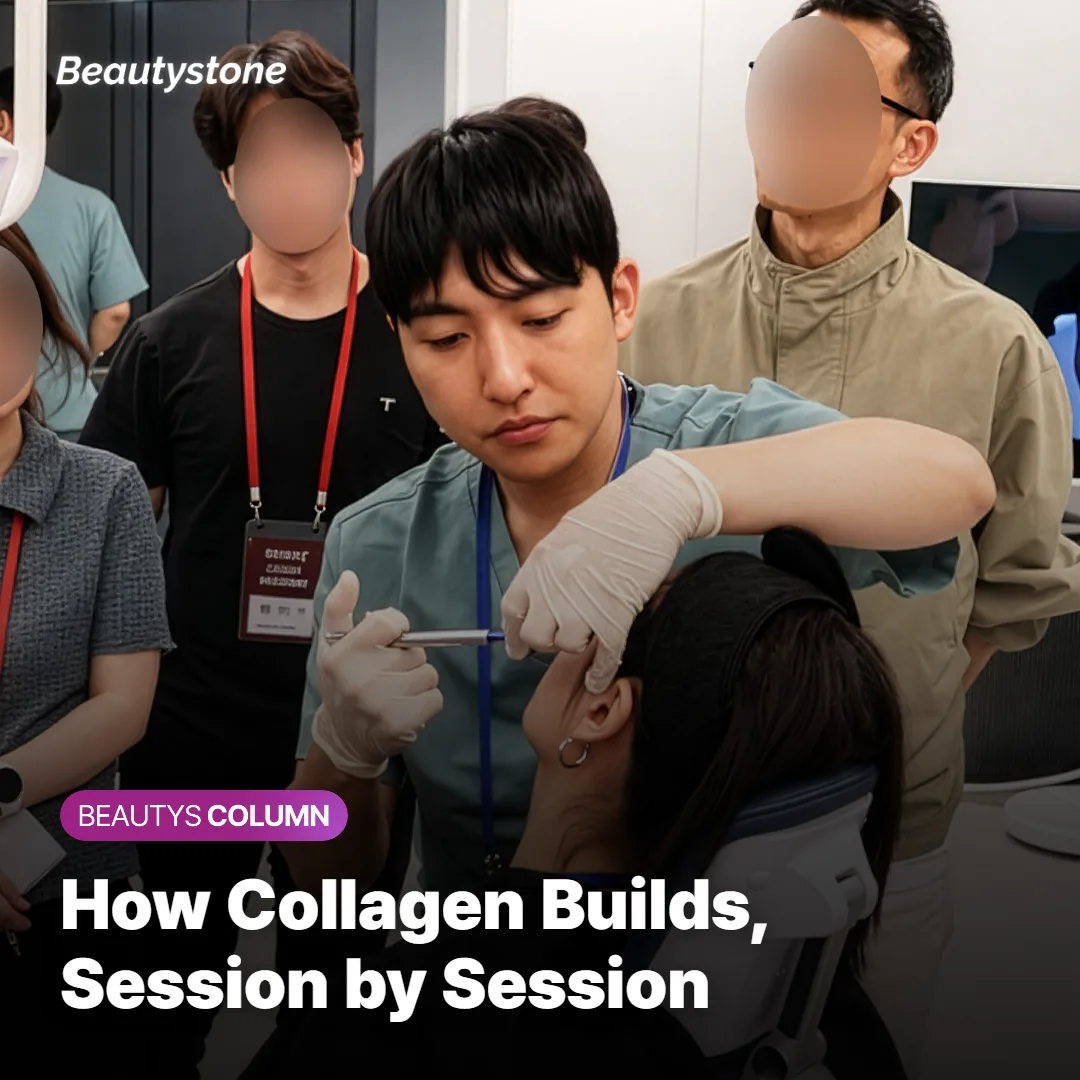
One Session vs. Three: The Real Difference in Duration
This pattern shows up often enough in clinical practice that it's worth spelling out. Patients sometimes ask, reasonably, why they'd need three sessions if a single treatment already lasts close to a year. On paper, that logic sounds fine. In practice, providers frequently see a different curve.
A patient who has one session may look great at three months, still solid at six, and noticeably faded by month ten — often down to roughly half of the original improvement. A patient who completes all three sessions on schedule tends to hold a meaningfully higher share of their results well past the one-year mark.
Here's how that typically breaks down:
| Protocol | Typical Duration | Follow-Up Suggested |
|---|---|---|
| Single session | 6–8 months | Around month 6 |
| Full 3-session protocol | 14–18 months | Around month 12 |
| Low-movement areas (cheeks, forehead) | +2–3 months on average | Varies by individual |
| High-movement areas (nasolabial folds, mouth corners) | -2 months on average | Check around month 10 |
Lifestyle factors show up in these numbers too. Patients who don't smoke, use sunscreen consistently, and get adequate protein in their diet tend to hold their results toward the longer end of each range. Smoking and low protein intake are associated with faster fade, sometimes starting as early as month 8 even after a full protocol.
What to Expect: Timeline From Injection to Peak Results
Juvelook isn't an instant-results treatment, and it's worth setting that expectation early.
- Day of treatment: Mild swelling and redness at injection sites, usually manageable with a cold compress.
- First 1–2 weeks: Initial swelling settles; skin looks close to normal, but collagen production hasn't really started yet.
- 1–3 months: Early texture and firmness improvements become noticeable as fibroblasts respond.
- 4–6 months: If you're on the three-session protocol, your second and third sessions build on this stage, layering additional collagen response.
- 6–12 months: Results typically peak, with a gradual, gentle decline afterward rather than a sudden drop-off.
Side Effects and Safety: What to Watch For
Juvelook is generally well-tolerated, and most side effects are mild and short-lived. Redness and swelling are common right after treatment and usually settle within a few days. Some patients notice minor bruising or tenderness at injection sites.
Nodules — small, firm bumps under the skin — are the side effect worth paying closer attention to. They're associated with injection depth and how well the area is massaged afterward, which is why providers typically recommend a short massage session immediately post-treatment and consistent self-massage for about a week. Watch the treated area closely for the first two weeks. If swelling worsens, spreads, or comes with fever, contact your provider right away.
As with any injectable, individual reactions vary, and a consultation with a qualified provider is the best way to flag anything that doesn't fit the typical pattern.

How Much Does Juvelook Cost in Seoul?
Pricing for Juvelook varies by clinic, the area being treated, and whether you're booking a single session or the full three-session protocol upfront. Most clinics offer a per-session rate along with a discounted package price for the three-session protocol, since that's the more common approach.
Rather than guessing at numbers here, the more useful move is a consultation, where a provider can walk you through current pricing for your specific treatment area and goals — see current offers at /en/promotion.
Is the Three-Session Protocol Worth It?
Run the math over a few years and the picture shifts. A patient doing single sessions every 6 to 8 months is booking, and paying for, more appointments over time. A patient who invests in the full three-session protocol upfront and then maintains with a single top-up around the 12-month mark often ends up with fewer total visits and steadier results across the same stretch of time.
That said, "worth it" depends on your goals, your treatment area, and your budget — this is a case where a quick chat with your provider about your specific skin will tell you more than a general rule ever could.
The Bottom Line
Here's the recap:
- Duration depends on session count, not just the treatment itself. One session: roughly 6–8 months. A full three-session protocol: roughly 14–18 months.
- The mechanism explains why. Collagen builds gradually, and repeated stimulation is what pushes fibroblasts into sustained production.
- Lifestyle matters. Sunscreen, not smoking, and adequate protein intake are linked to longer-lasting results.
- Watch for nodules in the first two weeks and follow your provider's massage instructions closely.
Like any procedure, Juvelook comes with trade-offs, and results vary from person to person. Ultimately, the choice between one session and the full protocol depends on your skin, your goals, and your budget. If you're considering Juvelook, a consultation is the best way to find out what fits you. Beautystone is a dermatology clinic in Seoul's Hapjeong area — see current offers at /en/promotion.
Frequently Asked Questions
Q1. How long does Juvelook actually last?
It depends heavily on how many sessions you complete. A single session typically holds up for around 6 to 8 months, while the standard three-session protocol, spaced about four weeks apart, more commonly lasts 14 to 18 months. The reason is mechanical: repeated stimulation pushes your fibroblasts into sustained collagen production, while one session only produces a modest response. Individual results vary based on skin, lifestyle, and treatment area.
Q2. Does Juvelook hurt?
Most patients describe the sensation as mild pinching or pressure rather than sharp pain, and many clinics apply a topical numbing cream beforehand to keep things comfortable. Some tenderness, redness, or light swelling at the injection sites is common for a day or two afterward. Everyone's pain tolerance is different, so it's worth asking your provider about numbing options during your consultation.
Q3. How much does Juvelook cost?
Pricing varies by clinic, treatment area, and whether you book a single session or the discounted three-session package, which is the more common route. Rather than relying on a general number, a consultation is the best way to get an accurate quote for your specific goals — see current offers at /en/promotion.
Q4. What happens if I only get one session instead of three?
You'll still see a genuine improvement, but it typically fades faster — often down to about half its original effect by around month 10. It's not wasted, but it is the shorter, less efficient version of the treatment. Many patients who start with one session end up adding a follow-up around month 6 to 8 to extend results, which is why the full protocol is usually the more practical choice from the start.