Rejuran Healer vs. HB Plus: Which Hurts Less?
Both versions run on the same polynucleotide base, so the Plus label points at what rides along in the syringe rather than at a stronger active.

Wi Young-jin
Chief Director & CEO, Myeongdong
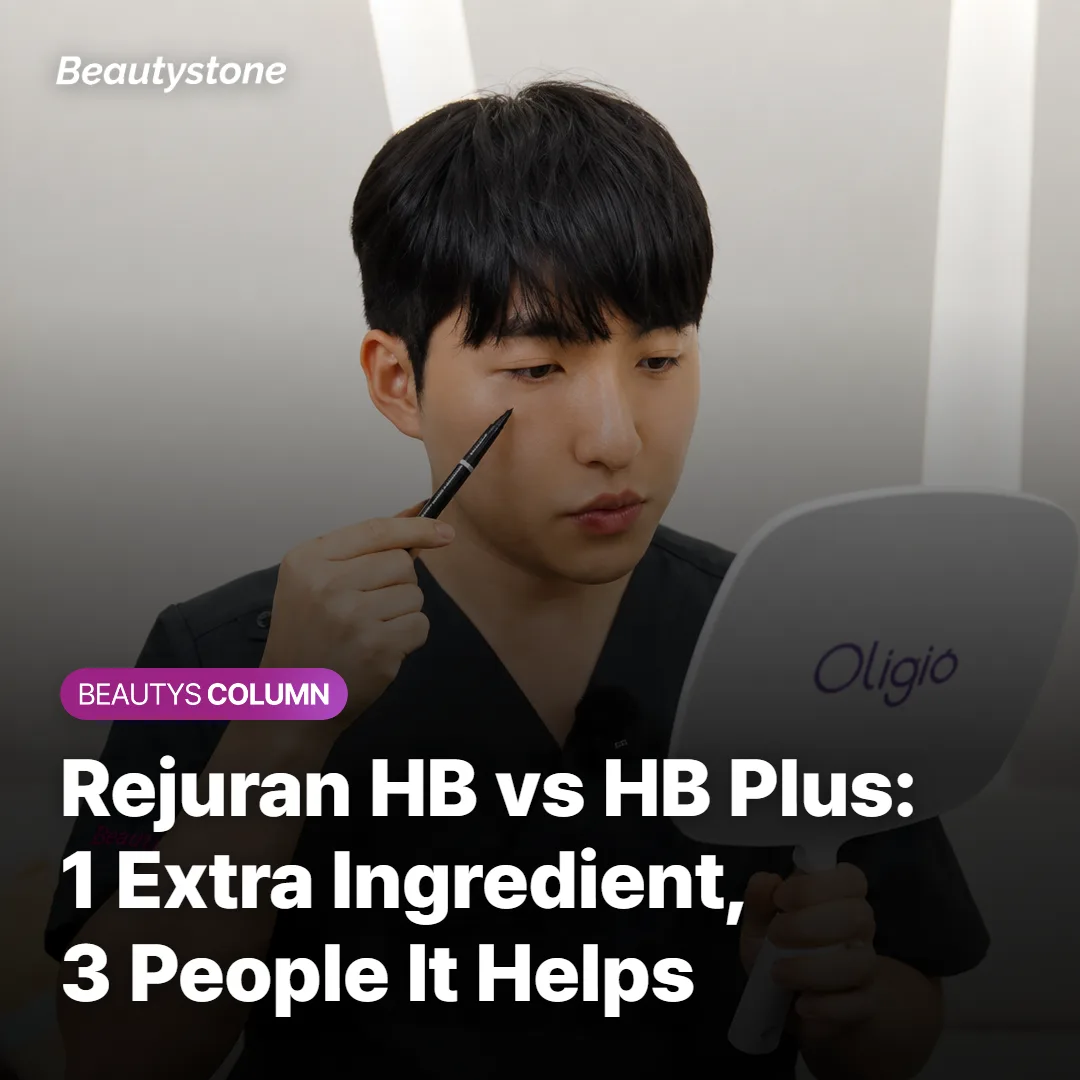
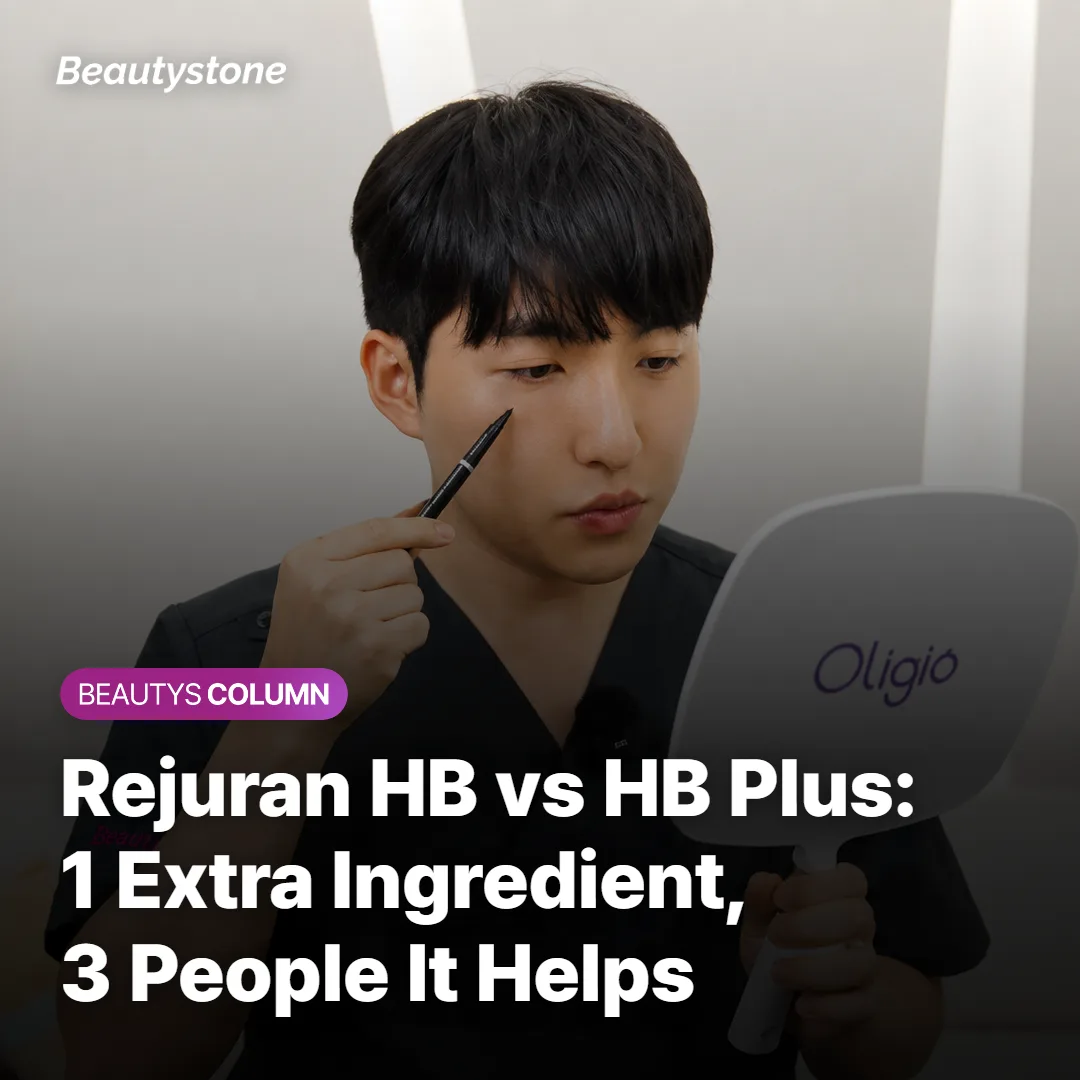
Here is the short answer first. Moving from Rejuran HB to HB Plus does not buy a stronger treatment. Both run on the same active and aim at the same work in your skin. What Plus changes is the part of the appointment you actually feel: it carries a local anesthetic in the product itself, so numbing works at every injection point rather than only on the surface.
That matters more than it sounds, because Rejuran is not one deposit in one spot. It is a run of small injections across the treatment area, so comfort is most of the session rather than a footnote to it. Below: what the Plus label refers to, the three situations where it earns its slot, when the standard version is the smarter booking, and five questions that tell you which syringe you are getting. One piece of background first: Rejuran is not FDA-approved in the United States and is used in Korea under MFDS authorization. That is context, not a selling point, and individual results and comfort vary.
What the "Plus" Actually Adds to Rejuran HB
Everything in the Rejuran line is organized around one active: polynucleotide, usually shortened to PN, made of DNA fragments sourced and purified from salmon. PN does not fill space the way a traditional filler does. It holds water and appears to support the skin's own repair process, which is why the payoff reads as texture improving gradually rather than a change you see the same day.
The HB branch is the hybrid one: alongside the PN it carries hyaluronic acid, so hydration comes along with the repair work. None of that changes when you move to HB Plus. Same base, same hydration ingredient, same treatment plan. What Plus refers to is lidocaine, a local anesthetic, mixed into the product so numbing starts as the material goes in. Plus describes the delivery, not the dose.
| What you are comparing | Rejuran HB | Rejuran HB Plus |
|---|---|---|
| Base active | Polynucleotide (PN) | Polynucleotide (PN), unchanged |
| Hydration ingredient | Hyaluronic acid | Hyaluronic acid, unchanged |
| Anesthetic in the syringe | Ask before booking, naming varies | Yes, this is what Plus points at |
| How numbing is handled otherwise | Topical cream, applied in advance | Cream may still be used on top |
| Planned as a series | Yes | Yes |
One caveat about that anesthetic row: naming across this line is not standardized between clinics, and a menu does not always tell you what is in the syringe. Carry the underlying question, not the product name.
3 People the HB Plus Upgrade Is Built For
Because the upgrade changes the session rather than the outcome, the people it helps are defined by how their appointments tend to go.
- You are covering a wide area, not one spot. Rejuran goes in as many shallow injections across the zone, sitting in the dermis rather than deeper tissue. More area means more entry points, and stinging accumulates across them.
- Numbing cream has not been enough before. Cream numbs what it sits on. If the cream took the edge off but you still counted every injection, that is useful information about your own skin.
- Flinching has shortened your sessions. If you tense up, the appointment gets managed around it: pauses, rushed passes, an area left lighter than planned. A calmer session lets your provider work evenly.
None of that promises a painless appointment, and neither version is sold that way. Pain tolerance is personal, and where the injections land matters too. The honest expectation is milder, not absent.
When Plain HB Is Still the Smarter Booking
The mirror question gets asked less often, which is how people end up paying to solve a problem they do not have.
- Cream already does the job for you. If the sting registered as background noise rather than something you counted down from, the built-in anesthetic fixes a complaint you never filed.
- You are treating one small area. Fewer injection points, less accumulated sting. The wide-area logic that makes the upgrade compelling does not apply at that scale.
- You would rather keep the syringe simple. Some people prefer the shortest ingredient list, especially after reacting to a local anesthetic at the dentist. Raise any known sensitivity before booking.
Either way, notice what does not move. The session count does not shrink because the appointment was more comfortable. Plus buys you a better half hour, not a shortcut through the series.
What Changes on the Day, and What Stays the Same
Here is the appointment end to end, with the two versions diverging in one place and identical everywhere else.
- Before the injections. With the standard version, cream goes on and you wait for it to work, so build that wait into your schedule. With Plus the anesthetic is already in the product.
- During the session. Small amounts placed across the area in a run of shallow injections. Identical either way, and this is the part the anesthetic question is really about.
- The first day or two. Small raised bumps at injection sites are normal and usually flatten within a day or two. Mild redness or stinging is common and fades quickly. Light bruising usually clears within one to two weeks.
- The weeks after. Improvement builds rather than arrives. Sessions are spaced several weeks apart, and texture and hydration accumulate across the series. Individual results vary.
While your skin settles, skip saunas, steam rooms, hard workouts, and alcohol for a few days, and stay consistent with moisturizer and sunscreen.
A few things are not part of the normal course: swelling or pain that keeps worsening instead of easing, warmth with spreading redness, which can point to infection and warrants medical care right away, and firm lumps that do not soften over time. If you are treated away from home, sort out the follow-up before you book.

5 Questions That Settle Which Syringe You Get
You cannot settle this from a screen, because it depends on the area being treated and on how you handle injections. Walk in with the questions that make the difference visible in five minutes.
- "Is there anesthetic mixed into the product, or are we relying on cream?" The actual difference between the two, phrased so that clinic naming cannot muddy the answer.
- "Roughly how many injection points across this area?" That number predicts how the session will feel better than the product name does.
- "If we use cream, how long before the appointment does it go on?" A scheduling detail people usually discover too late, in a waiting room.
- "How many sessions are we planning, and how far apart?" Agree on it first, so you are not judging a gradual treatment against a timeline you invented.
- "If a bump has not softened, how long is too long and when should I come back?" You want that threshold in advance, not at midnight in front of a mirror.
For reference, Beautystone is a dermatology clinic in Seoul's Hapjeong neighborhood, and current sessions and offers are listed at /en/promotion. The approach there is to work out whether texture, hydration, or elasticity is the priority first and let the formula and session count follow.
This article covers general information only. Which version suits you, and how comfort is managed on the day, should come from a provider who has examined you.
Frequently Asked Questions
What is the difference between Rejuran HB and Rejuran HB Plus?
They share the same base. Both are built on polynucleotide, the salmon-derived DNA fragment the Rejuran line is organized around, and both carry hyaluronic acid for hydration. What Plus points at is a local anesthetic mixed into the product, so numbing works at each injection point rather than only on the surface. It is a difference in how the session feels, not in how strong the treatment is.
What ingredients are in Rejuran HB Plus?
Polynucleotide as the active, hyaluronic acid for hydration, and lidocaine, a local anesthetic, for comfort during injection. The polynucleotide does the work over the following weeks, holding water and supporting the skin's own repair process. The other two shape the experience rather than the outcome.
Is HB Plus a newer generation of HB, or a different treatment?
Neither, in the way people usually mean it. The base and the hydration ingredient are unchanged, so treat it as the same treatment with the anesthetic question already answered. If a clinic's naming is unclear, ask whether anesthetic is in the syringe.
Does choosing HB Plus mean I need fewer sessions?
No. Session count follows how the polynucleotide works in your skin and how your skin responds, and that is identical between the two. Rejuran is planned as a series spaced several weeks apart either way, with improvement building across it rather than appearing after one visit.