Bruising After a Procedure: Why It Happens
Bruising after fillers, Botox, or laser treatments is completely normal — here's why it happens and how to help it fade faster, day by day.

If you've had a filler, Botox, or laser treatment and woken up the next day to a bruise staring back at you in the mirror, you're not alone. It's one of the most common — and most stressed-about — parts of recovery, especially when you've got somewhere to be in a few days.
Here's the short version: bruising is a normal side effect of working near the skin's surface, even with a needle as fine as a hair, and how you treat it in the first few days makes a real difference in how fast it fades. In this article, we'll cover why bruises form and change color, what to do hour by hour and day by day, and how to tell a normal bruise from one that needs a call to your provider.
Why Do You Bruise After a Procedure?
The short answer? A tiny blood vessel got nicked, and a small amount of blood is leaking into the tissue just under your skin.
Whether it's a fine injection needle, a laser, or an RF device, most cosmetic procedures work close to a dense network of capillaries — the smallest blood vessels in your body. When one of them is disturbed, blood escapes into the surrounding tissue instead of staying inside the vessel. The skin's surface isn't broken; the discoloration you're seeing is coming from underneath.
Medically, this is called a bruise, or ecchymosis if you want the clinical term. It's not a sign anything went wrong — it's just what happens when a vessel gets in the way, and your body already knows how to clean it up.
- Thin-skin areas: under the eyes and around the lips have blood vessels sitting closer to the surface, so the same treatment can leave a more visible mark there than it would on your cheek or jawline
- Individual factors: some people bruise more easily than others regardless of the procedure — that's normal, not a red flag on its own
What's Actually Happening Under Your Skin?
That blood doesn't just sit there — your body is actively breaking it down and reabsorbing it, and the color changes you see are basically a progress report.
The pigment responsible is hemoglobin, the protein that carries oxygen in your blood. As your body metabolizes it in stages, the color shifts in a fairly predictable pattern.
| Day | Typical color | What it means |
|---|---|---|
| Day 1–2 | Reddish, deepening to purple | Fresh blood pooling under the skin |
| Day 3–5 | Blue or blue-green | Hemoglobin starting to break down |
| Day 5–7 | Yellow-green | Active healing, later breakdown stage |
| Day 7–10 | Pale yellow, fading out | Nearly reabsorbed |
The takeaway: color change is a good sign. A bruise that's shifting from purple to yellow-green is one that's actively healing, not getting worse.
The First 48 Hours: What to Do Right Away
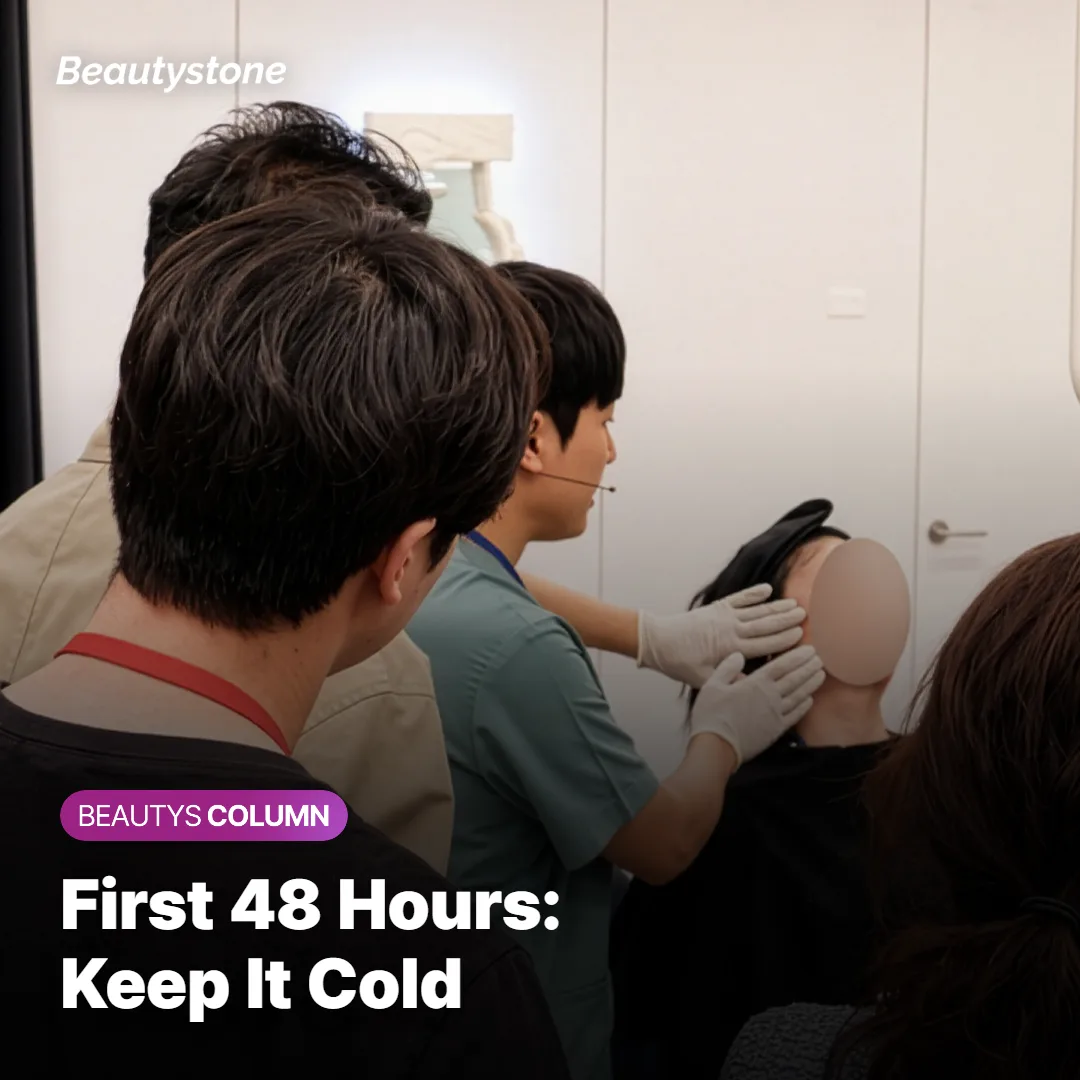
The rule of thumb for the first two days is simple: keep it cold.
Cold narrows blood vessels, which limits how much blood leaks into the surrounding tissue and helps keep swelling down. Warmth does the opposite this early on — it can actually make a fresh bruise larger.
- Do: apply a cold compress wrapped in a thin cloth (never ice directly on skin) for 10–15 minutes at a time
- Do: keep your head elevated if the treatment area is on your face, and give your skin a break
- Avoid: rubbing or pressing on the area
- Avoid: hot showers, hot yoga, or anything that raises your body temperature
Days 3 to 7: Switching From Cold to Warm
Once you're a few days out, the game plan flips.
By day 3 to 5, the goal shifts from limiting new bleeding to helping your body clear out the blood that's already pooled. That's where warm compresses come in — gentle heat increases blood flow to the area, which helps disperse the trapped blood faster.
- Days 3–5: switch to a warm compress, applied gently, a few times a day
- Days 5–7: continue warm compresses, and it's usually fine to ease back into light activity
- At every stage: skip deep massage or aggressive rubbing directly on the bruise — it won't speed things up, and it can irritate the area

What to Avoid While You're Healing
A few everyday habits can quietly work against you during recovery.
- Alcohol: widens blood vessels and can slow clotting, which tends to make bruises darker and slower to fade — skipping it for the first few days is an easy win
- Strenuous exercise and saunas: both raise blood flow and body temperature fast, similar to the risk alcohol poses
- Aspirin and ibuprofen: these thin the blood and can delay clotting, making a bruise more pronounced — acetaminophen (Tylenol) is generally considered the gentler option for pain relief, but always check with the provider who treated you before changing any regular medication, especially if you take blood thinners for another condition
- Vitamin K cream or arnica gel: some people find these over-the-counter options helpful, though the research is mixed and results vary from person to person — ask your provider whether one is a good fit for the treated area
How Long Will the Bruise Actually Last?
Most procedure-related bruises fade on their own within about seven to ten days, no special treatment required.
The first few days are usually the most dramatic, color-wise, and then things move quickly from there. A few things are completely normal and don't mean anything's wrong:
- The bruise looks like it's migrating slightly downward — that's just gravity helping your body reabsorb the blood
- Areas like the under-eyes or lips take a bit longer than average to clear
- The color looks worse before it looks better
If you're covering it with makeup in the meantime, pat, don't drag — dragging a concealer brush or sponge across a fresh bruise can be more irritating than it looks.
Normal Bruising vs. Safety Red Flags
The vast majority of post-procedure bruises fall into the "normal, give it time" category.
Normal and expected:
- A bruise that's shifting from blue or purple to yellow-green over several days
- Mild swelling or tenderness that eases up within a day or two
- Slight downward spreading as the blood reabsorbs
Contact your provider if you notice:
- A bruise that's growing larger or feels hard and lumpy — this can point to a hematoma, a larger pocket of pooled blood that may need to be drained
- Pain that's getting worse instead of better as the days go on
- Warmth, spreading redness, or a fever, which can signal infection
- A bruise that hasn't faded much at all after two weeks
If any of these come up, don't wait it out — seek medical care right away. It's always better to have it checked and be told it's fine than the other way around.
The Bottom Line
Bruising after a filler, Botox, laser, or RF treatment is a normal part of the process, not a sign anything went wrong. It usually looks worse before it looks better.
- Keep it cold for the first 48 hours
- Switch to warm compresses from around day 3
- Skip alcohol, strenuous workouts, and saunas for the first few days
- Give it about a week to ten days to fade on its own
Like any procedure, there's a small chance of a slower-than-usual recovery, and that's worth keeping an eye on rather than ignoring. Individual results vary, and how your skin responds depends on the treatment, the area, and your own body.
Ultimately, if you're not sure whether what you're seeing is normal, a quick check-in with your provider is the fastest way to find out. Beautystone is a dermatology clinic in Seoul's Hapjeong neighborhood, and current offers are listed at /en/promotion if you're weighing your next treatment.
Frequently Asked Questions
Q1. Can I put a warm compress on a bruise right away?
It's better to wait. In the first 48 hours, cold is what limits how much a bruise spreads, since it narrows the blood vessels near the surface. Warmth is more useful starting around day 3 to 5, once the goal shifts to helping your body clear out the pooled blood rather than preventing more of it.
Q2. Does alcohol make bruising worse?
It can. Alcohol widens blood vessels and can slow clotting, which tends to make a bruise darker and slower to fade. Skipping it for the first few days after a procedure is a simple way to support faster healing, along with steering clear of strenuous exercise and saunas.
Q3. Why do I bruise more easily around my eyes?
The skin under the eyes and around the lips is thinner, and the blood vessels sit closer to the surface there than on most other parts of the face. That means the same treatment can leave a more visible bruise in those areas. It's normal, and it usually fades within about a week.
Q4. Do vitamin K cream or arnica gel actually help bruises fade faster?
Some people find them helpful, but the evidence is mixed and results vary from person to person. If you want to try one, it's worth checking with your provider first to make sure it's a good fit for the treated area. Either way, the basics — cold early on, warm later, and a few days of rest — do most of the work.