Secret RF vs. Peels: Which Wins for Pores?
A single Secret RF session and a full course of chemical peels can end up costing about the same over six months. Only one of them reaches the layer where pores actually form.

Wi Young-jin
Chief Director & CEO, Myeongdong
If you've been getting a peel every few weeks and your pores still look the same in the mirror, you're not alone. It's one of the most common frustrations we hear in consultations — people who've spent months, and a fair amount of money, chasing smoother skin with peels alone, only to feel like they're right back where they started. In this article, we'll cover how Secret RF and chemical peels actually work, why one tends to outperform the other for enlarged pores specifically, what each option costs once you add up a full course of treatment, and how to figure out which approach fits your skin and your budget.
What Is Secret RF, Anyway?
Secret RF is a radiofrequency microneedling device made by Cutera — part of a treatment category you'll also see marketed generically as RF microneedling. Instead of applying an acid to the surface of your skin, it uses a grid of ultra-fine needles to deliver radiofrequency energy directly into the dermis, the deeper layer of skin where collagen actually lives. The needle depth is adjustable, so your provider can dial in exactly how far the energy travels depending on what's being treated.
Devices in this category, including Secret RF, are FDA-cleared in the U.S. for procedures such as skin resurfacing and the treatment of facial wrinkles. That clearance doesn't mean it's automatically right for every skin type — numbing time, needle depth, and the number of passes all get customized to you during a consultation.
Peels vs. Secret RF: How They Actually Work
Here's the short version: a chemical peel is surface remodeling, and Secret RF is dermal remodeling. Even a strong peel typically works in the top 0.1 to 0.3 millimeters of skin — the epidermis and, at most, the very top of the dermis. It's genuinely good at sloughing off dead cells, brightening tone, and softening rough texture.
Enlarged pores, though, usually start deeper than that. When the collagen and elastic fibers surrounding a pore weaken, the opening loses its structural support and stretches out — and that breakdown tends to happen somewhere between 1.5 and 3.5 millimeters down, depending on the area of the face. A peel, no matter how many times you repeat it, isn't designed to reach that far.
Secret RF's needles can be set anywhere from roughly 0.5 to 3.5 millimeters, so a provider can target that specific depth where pore-supporting collagen actually breaks down. That mechanical difference is what tends to show up as a bigger, faster change after just one session.
| What matters | Chemical peels | Secret RF |
|---|---|---|
| Typical interval | Every 2–3 weeks | About once a month |
| Sessions for visible pore change | 8–10, often plateaus | 1–3 |
| Depth reached | Top 0.1–0.3mm | Adjustable 0.5–3.5mm |
| Typical downtime | Minimal, mild flaking | A few days of redness, pinpoint scabbing |
Why Ten Peels Sometimes Don't Move the Needle
We hear a version of this story a lot: someone comes in after months of peels somewhere else, saying the first two or three sessions gave a nice glow, and then results seemed to stall. Their skin texture improved, but the pores themselves never really changed.
That pattern makes sense once you separate \"brighter, smoother-feeling skin\" from \"smaller-looking pores.\" Peels are genuinely good at the first thing. They're limited when it comes to the second, simply because the tissue that controls pore size sits below where an acid can reach, no matter how high the concentration or how many rounds you do.
This isn't a case of one treatment being better across the board. If your main concerns are dullness, mild discoloration, or rough texture, a peel series still makes sense on its own. It's specifically the pore-size complaint where the depth mismatch becomes the whole story.
What to Expect: Timeline for Each Option
Here's how the two options typically play out once you're actually in the chair:
- Chemical peels: Sessions are usually spaced two to three weeks apart, with most people doing eight to ten rounds to see a cumulative change. Downtime is minimal — some flaking or mild redness for a day or two.
- Secret RF, day of: Expect numbing cream beforehand, then a sensation most people describe as pressure or heat rather than sharp pain. Redness shows up right away and usually eases within a few hours to a day.
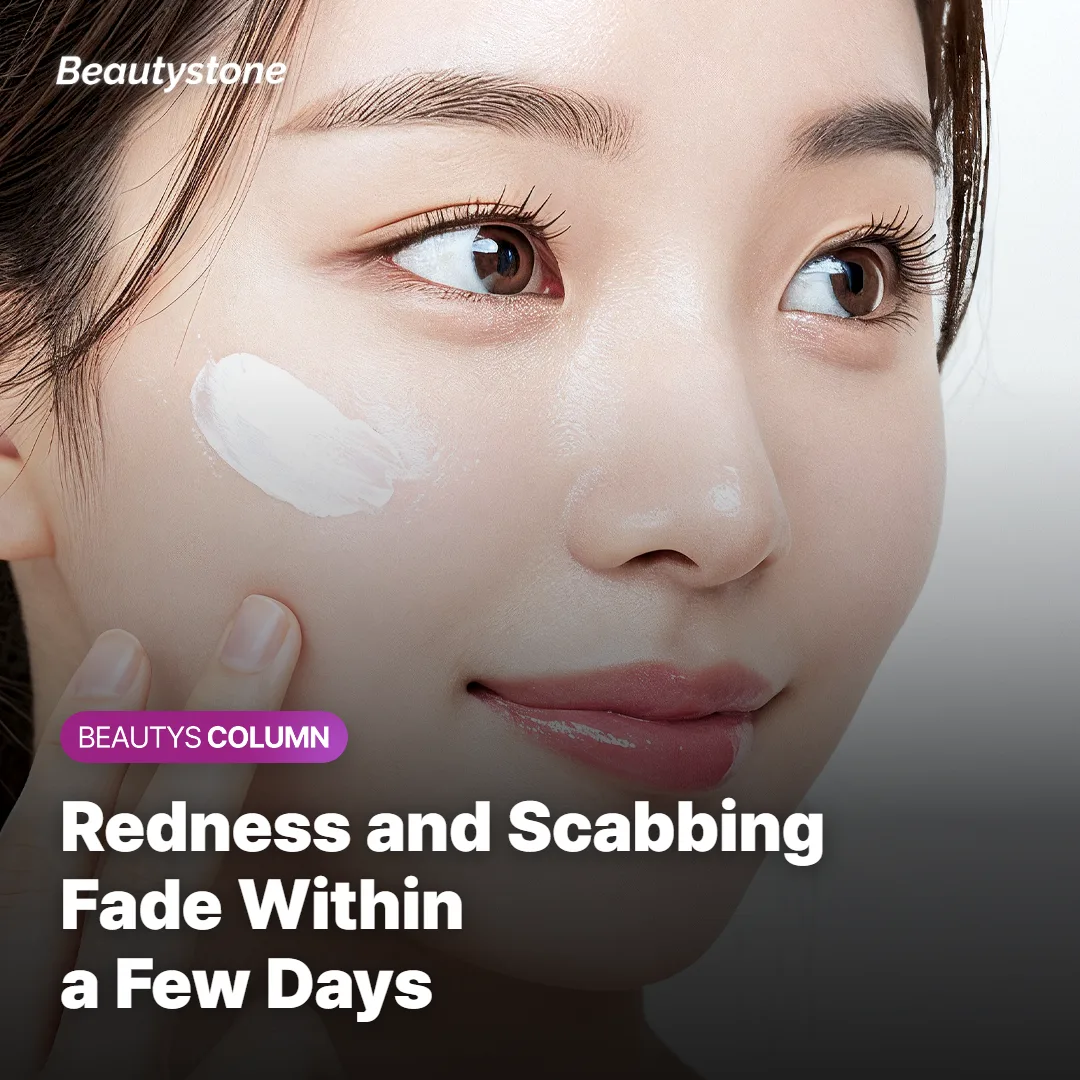
- Secret RF, 48 hours: Tiny pinpoint marks and faint scabbing are common and typically resolve within two to three days. Makeup is usually fine once the worst of the redness settles, though your provider will confirm timing for your skin.
- Secret RF, 1 to 4 weeks: Collagen remodeling is a slow process, so visible tightening and pore refinement keep building over several weeks — this is why providers usually space sessions about a month apart instead of judging results too early.
In both cases, individual results vary depending on your skin type, age, and how consistent you are with sun protection afterward.
Side Effects & Risks
Chemical peels are generally low-risk when performed by a trained provider, though stronger formulas can cause temporary redness, flaking, or — in rare cases — hyperpigmentation, especially on darker skin tones that aren't prepped correctly beforehand.
Secret RF comes with a slightly longer list simply because it's a needle-based procedure. Redness, swelling, and pinpoint scabbing are common and usually settle on their own within a few days. Less commonly, people report temporary bruising, prolonged redness, or, rarely, infection if aftercare instructions aren't followed closely. If you notice spreading redness, fever, or worsening pain at the treatment site, seek medical care right away.
Neither treatment is a good fit for active skin infections, open wounds, or certain medications that increase photosensitivity — your provider should screen for these before your first session either way.
How Much Does It Cost Over 6 Months?
Cost is where this comparison gets interesting, and it's also where a lot of people get the math wrong. Looking at a single session, a peel is almost always cheaper than a Secret RF treatment — that part's true. But a single peel isn't really doing the same job as a single Secret RF session, so comparing them one-to-one skips the part that actually matters.
Add up a realistic six-month course instead. A peel series run every two to three weeks means eight to ten total visits. Secret RF, aimed at the same concern, typically needs two to three sessions spaced about a month apart to reach a comparable, often more noticeable, result — with effects that tend to hold well past the six-month mark.
Once you tally the total number of visits, the time spent in the chair, and how long the improvement actually lasts, the per-session sticker price stops telling the whole story. Exact pricing varies by clinic, by how many sessions your skin actually needs, and by any add-ons your provider recommends, so it's worth asking for a written treatment plan before you commit to either path. If you want current session and package details, a consultation, or a quick look at what's currently offered at /en/promotion, is the most reliable way to get real numbers instead of ballpark guesses.

The Bottom Line
Here's the short version: if what's bothering you is enlarged pores specifically, six months of peels and one to three sessions of Secret RF can end up costing about the same — but only one of them reaches the depth where pores actually form.
- Peels are excellent for texture, dullness, and mild discoloration, but they work on the surface.
- Secret RF targets the deeper dermal layer where pore-supporting collagen lives, which is why even one session often outperforms a full peel series for this specific concern.
- Downtime is longer with Secret RF (a few days of pinpoint scabbing) versus minimal with peels.
- Like any procedure, both come with trade-offs, and individual results vary from person to person.
Ultimately, the choice depends on your skin, your specific concern, and your budget — a peel series and Secret RF aren't really competing for the same job. If you're not sure which one matches what you're dealing with, a consultation is the best way to find out what fits you. Beautystone is a dermatology clinic in Seoul's Hapjeong neighborhood — see current offers at /en/promotion.
Frequently Asked Questions
Q1. Does Secret RF hurt?
Most people describe it as pressure or heat rather than sharp pain, especially with topical numbing cream applied beforehand. Sensitivity varies from person to person, and your provider can adjust needle depth and settings if you're particularly sensitive.
Q2. How many Secret RF sessions do I need to see a change in pore size?
Many people notice smoother texture after a single session, but visible pore refinement usually builds over two to three sessions spaced about a month apart, since collagen remodeling takes time. Your provider can map out a plan based on how deep your concern sits.
Q3. Is Secret RF more expensive than a peel series?
Per session, yes — Secret RF typically costs more than a single peel. But when you compare a realistic six-month course, a peel series of eight to ten visits can add up to a similar or higher total than two to three Secret RF sessions, especially once you factor in how much longer Secret RF's results tend to last.
Q4. Can I combine peels and Secret RF?
Often, yes — combining them is common once your skin has recovered from each individual treatment. Providers typically space the two out by a couple of weeks and wait until any scabbing from Secret RF has fully resolved before layering on a peel.