Pebble Chin Botox: Is a Small Dose Enough?
A bumpy, dimpled chin that shows up only when you close your mouth usually comes from an overactive mentalis muscle and often responds to a small dose of Botox. Lines that stay at rest or a short chin may need skin or volume treatment too.

If your chin only turns dimpled and bumpy when you close your mouth, you’re looking at a small muscle working harder than it needs to. That pattern, often called a cobblestone or "pebble" chin, is usually the kind that responds to a small dose of Botox placed in the right spot.
It’s a different story if the texture stays when your face is relaxed, or if your chin is short and has to lift every time your lips meet. In those cases, relaxing the muscle helps, but it may not finish the job on its own. In this article, we’ll cover what causes a pebble chin, how to tell which type you have, how much Botox is typically used and where it goes, and which side effects are worth a call to your provider.
Why Does My Chin Look Bumpy When I Close My Mouth?
The short answer: a muscle called the mentalis is pulling on your skin from underneath.
The mentalis sits at the tip of the chin. It starts on the jawbone and runs up into the skin, and its job is to lift the chin and push up the lower lip. Because some of its fibers attach directly into the underside of the skin, a strong contraction tugs the skin inward at several points at once. That’s what creates the dimpled, orange-peel look.
An anatomy review from a Korean research team at Yonsei University describes it the same way: the cobblestone chin results from mentalis hyperactivity, because the muscle inserts fibers into the dermis of the chin. The same paper notes that this overactivity tends to be more visible in people with a shorter chin, since the muscle has to work harder to bring the lips together.
Here’s a quick check you can do at home:
- Relax test: Stand in front of a mirror, part your lips slightly, and let your jaw go soft.
- Smooth when relaxed: If the bumps disappear, the muscle is doing most of the work.
- Lines that stay: If fine lines or small dents remain even at rest, the skin itself has started to change.

When Botox Is Enough, and When It Isn’t
Botox works best on the muscle part of the problem. Whether it’s enough on its own depends on which layer is driving what you see in the mirror.
| What you see | Main layer involved | Typical approach |
|---|---|---|
| Bumpy only when the mouth is closed, smooth at rest | Overactive muscle | A small dose of Botox alone |
| Fine lines and dents that stay at rest | Loss of collagen and fat in the skin | Botox plus a treatment that improves skin texture |
| Short, set-back chin that lifts every time the lips meet | Chin length and volume | Chin volume plus Botox |
| Lips that don’t close easily because the mouth sits forward | Teeth and jaw structure | An orthodontic or dental consultation first |
The Yonsei review explains that when the bumpy pattern repeats for years and settles into a static wrinkle, the fat and dermal collagen underneath thin out, giving the skin an orange-peel texture. At that stage, relaxing the muscle softens things, but some texture usually stays, which is why skin-focused care goes into the plan.
For a short chin, there’s a small study worth knowing about. Ten women with a set-back chin and an overactive mentalis received Xeomin in the mentalis followed by a calcium-based filler at the front of the chin, and all 10 improved by at least one point on a chin projection scale at one and six months. It’s a tiny study with no control group, so it doesn’t prove the combination is better. What it does show is the logic: when the chin is short, both the muscle and the volume matter.

Why a Small Dose Goes Low and Central
Dose and placement matter more here than almost anywhere else on the face, because the chin sits right next to the muscles that move your lower lip.
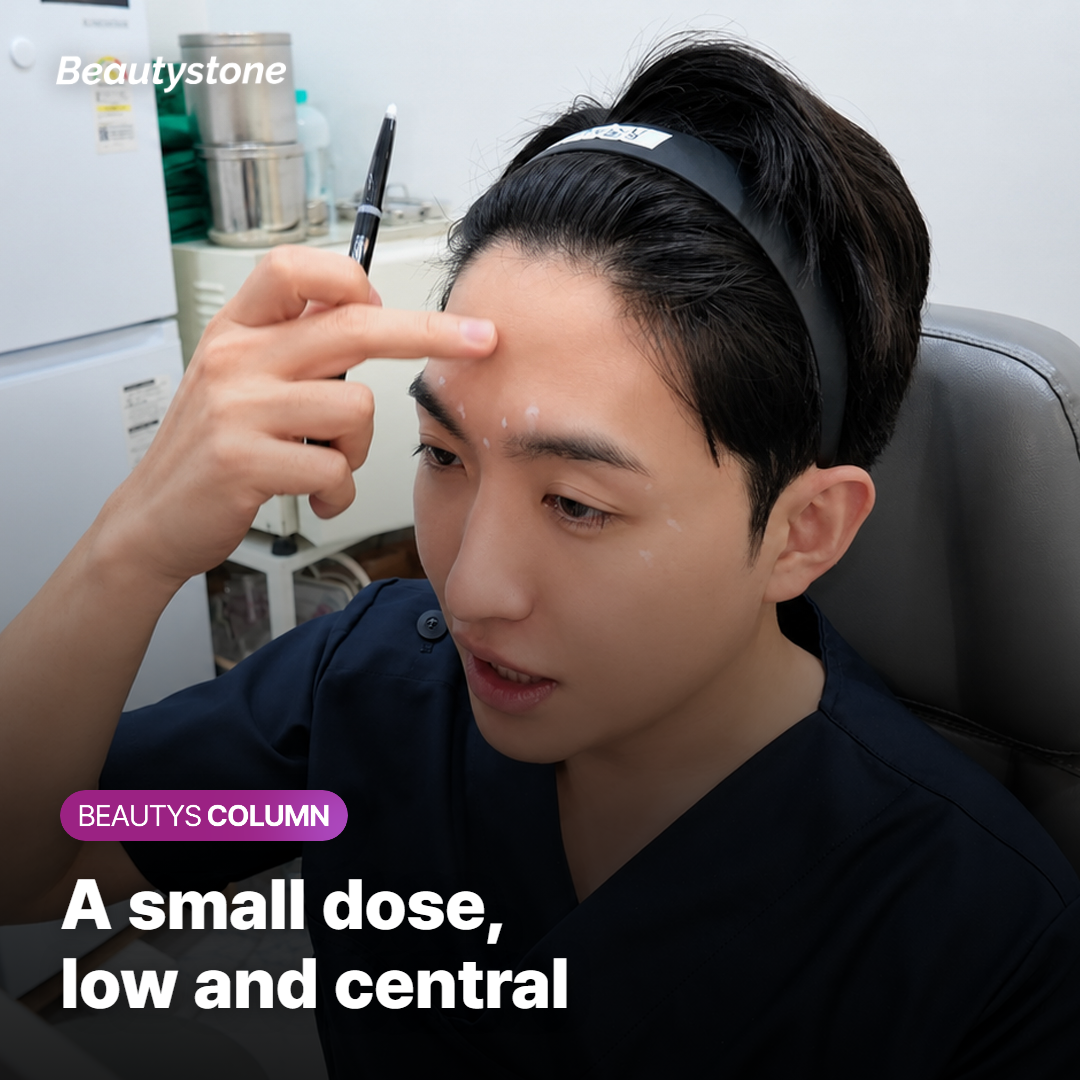
The mentalis is essentially the lower lip’s main lifter. Right beside and above it are muscles that purse the lips and pull the lower lip down. If the toxin spreads upward or outward into those neighbors, you may notice one side of the lower lip drooping, an uneven smile, or trouble sealing your lips fully.
That’s why the dose stays small and the injection points stay low and near the middle of the chin. A 2026 Italian consensus paper that also reviewed 16 international consensus documents reported that the dose per mentalis muscle ranged from 1 to 6 units, with a mean of 3.9 units. The average total for both sides was 6.5 units across international consensus papers and 8 units in the Italian panel.
The Yonsei review suggests a split technique: about 3 units placed deep near the bone, 0.5 cm to each side of the most projected point of the chin, then 1 unit just under the skin at the same spot. The shallow dose matters because the fibers attach to the skin, so a deep dose alone may leave some bumps behind.
For comparison, jaw-slimming Botox often uses dozens of units. The chin is a place where a couple of units can change how your mouth moves. At Beautystone, a dermatology clinic in Seoul’s Hongdae area, the doctor asks you to close your mouth, marks where the muscle bunches up most, and sets the dose from there.
Side Effects and Risks: What’s Normal and When to Call
Most reactions are mild and short-lived. In a retrospective study that followed 400 patients for 24 to 60 months while they received lower-face Botox every six months, mild adverse events occurred in less than 12% of patients, mainly bruising and discomfort at the injection site. That study treated several lower-face muscles at once, so the numbers aren’t specific to the chin.
A rarer reaction is paradoxical bulging, where the chin actually looks more raised after treatment. Researchers who scanned it with ultrasound saw it in one of 120 patients treated in the mentalis. The shallow part of the muscle had relaxed while the deeper part was contracting harder.
Contact the clinic that treated you if you notice any of these:
- Water dribbles from the corner of your mouth when you drink, or using a straw feels hard
- One side of your lower lip doesn’t move when you smile, so your smile looks uneven
- A few days after treatment, your chin looks more raised than before
- The injection site is swollen and warm, and the pain gets worse each day instead of better
If redness spreads or you develop a fever, seek medical care right away. Let your provider know before treatment if you’re pregnant or breastfeeding, have an active infection or inflammation where you’d be injected, or have been diagnosed with a neuromuscular condition that causes muscle weakness.

Timing, Touch-Ups, and What to Bring to Your Consultation
The mentalis is an expression muscle, so the effect usually shows up within one to two weeks, and the best time to judge how much the bumps have smoothed is around three to four weeks. Individual results vary. If it still looks a little bumpy at the one-week mark, it’s usually wiser to wait than to add more right away.
When it comes to repeat treatment, let the bumps be your guide rather than the calendar. Watch for the dimpling to come back when you close your mouth. The next dose can then be adjusted based on how well the last one worked.
To make your first consultation more productive, it helps to bring:
- Photos: One relaxed and one with your mouth firmly closed, from the front and the side
- Treatment history: Dates and areas of any previous Botox or filler around the chin or mouth
- Your bigger goal: Whether chin length or your side profile also bothers you
If you’re reaching out from abroad, you can send your first message and photos through WhatsApp. Pricing follows the clinic’s price list and depends on the areas you choose.

The Bottom Line
- A chin that’s bumpy only when your mouth is closed usually comes from an overactive mentalis and often responds to a small dose of Botox.
- Placement low and near the center of the chin helps protect how your lower lip moves.
- Lines that stay at rest, or a short chin, may call for skin or volume treatment alongside Botox.
- Judge the result at three to four weeks, not in the first few days.
Like any injectable, chin Botox comes with trade-offs, and knowing the warning signs ahead of time makes the process easier. Ultimately, the choice depends on your chin, your goals, and your budget.
If you’re considering Botox for a pebble chin, a consultation is the best way to find out whether the muscle alone is the issue. Beautystone is a dermatology clinic in Seoul’s Hongdae area, and our team can review your photos before you plan a visit.
Frequently Asked Questions
Q. Does it matter whether I get Xeomin or another toxin brand?
A. The chin uses such a small dose that where and how deep it goes usually matters more than the brand. If you get Botox in other areas often and worry it’s wearing off faster, share that history so your provider can factor it into the choice.
Q. Can I add Botox if I’ve already had chin filler?
A. Yes, the two are often used together, since filler adds volume while Botox relaxes the muscle. Your provider will adjust the injection points based on when and how deep the filler was placed, so bring your treatment record if you have it.
Q. Can I work out or use a sauna the day I get chin Botox?
A. It’s best to skip heavy sweating, saunas, and firm massage of the area on the day of treatment. You can usually get back to your normal routine the next day.
Q. Will repeated treatments weaken my chin or change its shape?
A. In a study of 400 patients who had lower-face Botox every six months for at least three sessions, no serious complications were reported. How fast the bumps return varies from person to person, so each dose is set based on how well the previous one worked.