Loose Skin After Mounjaro: What Actually Helps
The scale moved, but the mirror didn't fully agree. Here's why skin lags behind rapid weight loss on Mounjaro, and what can be done about it while you're still losing.

Kaeul Kim
Chief Director & CEO, Hapjeong
If you've dropped a meaningful amount of weight on Mounjaro and caught yourself pinching skin that used to feel firm, you're not alone. It's one of the most common things people mention once the scale finally moves — the number looks great, but the mirror tells a slightly different story. Skin doesn't shrink on the same schedule that fat does, and when the gap between the two gets wide enough, you notice it in your arms, your abdomen, and sometimes in your face. In this article, we'll cover why rapid weight loss leaves skin behind, which treatments actually address it, when to start them, and what the trade-offs look like.
Why Does Skin Sag After Rapid Weight Loss?
Because skin loses its support structure faster than it can rebuild itself. The fat layer sitting directly beneath your skin isn't just storage — it works like a cushion that keeps the surface taut. When that cushion shrinks gradually, skin has time to remodel its collagen and elastin and draw itself back in. When it shrinks quickly, that remodeling can't keep pace, and the extra surface area has nowhere to go.
Tirzepatide, the active ingredient in Mounjaro, works on two gut hormones at once — GLP-1 and GIP — to blunt appetite and change how your body handles fat. In clinical trials, average weight loss has landed in the range of roughly 15% to 20% of body weight, which is genuinely powerful and part of why the skin question comes up so often. One point worth clarifying for US readers: tirzepatide is FDA-approved for type 2 diabetes under the name Mounjaro, and the same molecule is FDA-approved for chronic weight management under the name Zepbound.
Where laxity tends to show up first is fairly predictable:
- Upper arms: the skin along the back of the arm has little underlying muscle bulk to fill it once fat volume drops.
- Abdomen: especially if you've carried weight there for years, or been through pregnancy.
- Inner thighs: thin skin plus constant movement makes crepiness more visible here.
- Face: cheeks and temples deflate along with everything else, which is a different problem than body laxity and needs a different answer.
How much of this you end up with isn't the same for everyone. Age, baseline skin quality, how much weight came off, and how fast it came off all factor in, and individual results vary. Someone in their late twenties losing 20 pounds over eight months is in a very different situation than someone in their fifties losing 60 pounds over the same stretch.
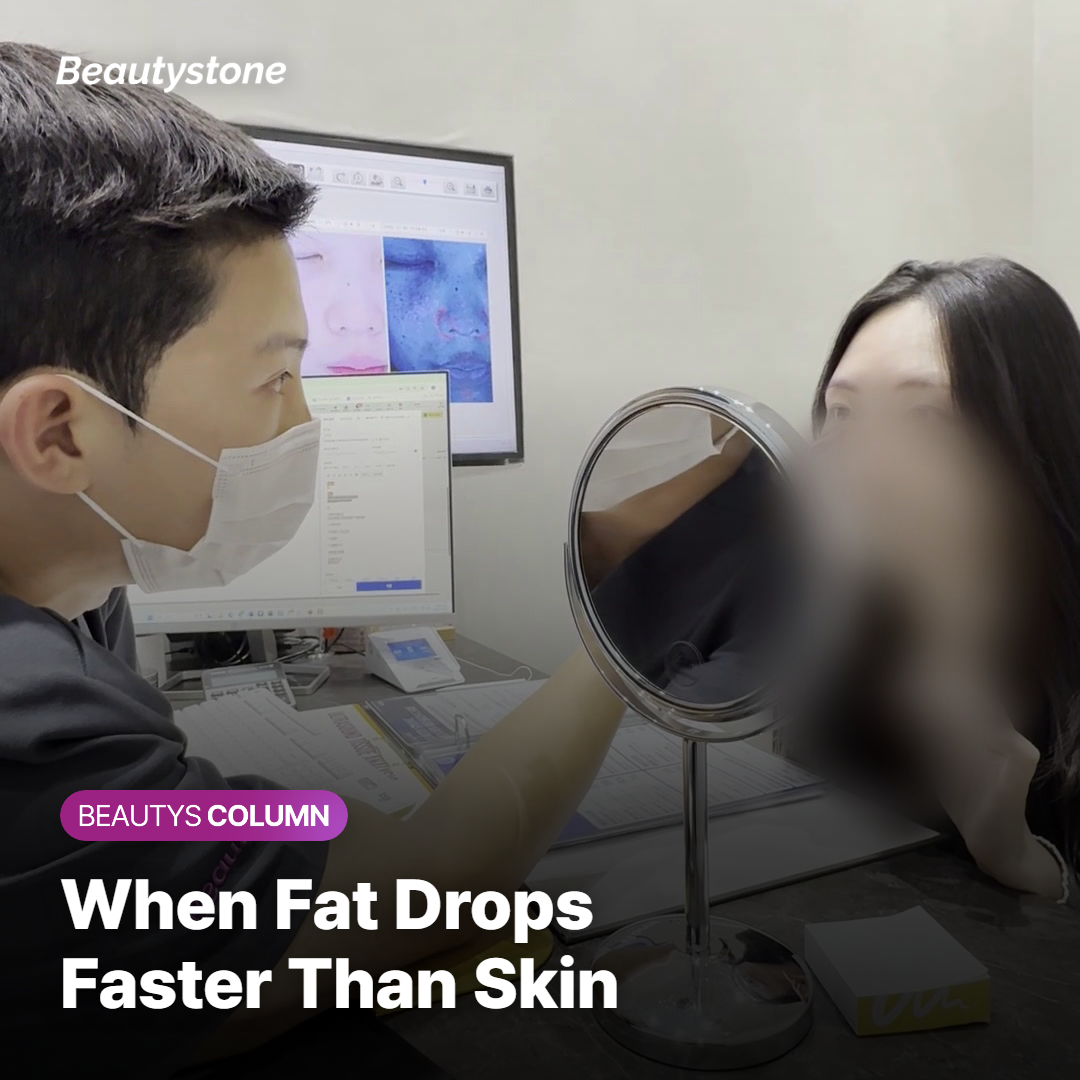
How Onda Uses Microwaves to Tighten Loose Skin
Onda delivers microwave energy — the "Coolwaves" in its full name — into the deeper layers of skin and the fat just below, while the surface stays cooler. That heat does two things at once. It stimulates collagen fibers in the dermis, which is what drives the tightening response over the following weeks, and it acts on fat cells in the treated zone, which is why it's often used for localized fat and the dimpled texture people call cellulite.
For someone coming off a GLP-1 medication, that combination is useful. Overall weight has come down, but one or two areas still look soft or draped, and those are exactly the spots a general weight-loss plan can't target.
- Best suited to: arms that feel loose, an abdomen that's lost firmness, or an inner thigh line that hasn't tightened up.
- Session length: roughly 30 to 50 minutes, depending on how much area is being treated.
- Downtime: minimal — it's non-invasive, and bruising or swelling is uncommon, so most people head straight back to their day.
- Course: typically two to four sessions or more, spaced out rather than done all at once.
Results tend to build gradually rather than appear overnight, since you're waiting on collagen to reorganize. Skin thickness, how much fat is present, and age all influence how much change you see, and your provider should tell you honestly whether your skin has enough elasticity left to respond.

Deoxycholic Acid Injections for Stubborn Pockets
Deoxycholic acid is a bile acid your body already makes to break down dietary fat. Injected into a small, localized pocket, it disrupts the membrane of fat cells in that area so they're broken down and cleared over the following weeks. In Korean clinics you'll often see it offered under product names such as Double Slim.
Here's the regulatory picture in the US, because it matters: deoxycholic acid is FDA-approved as an injectable for moderate-to-severe fullness under the chin, sold as Kybella. Using it on the arms, thighs, or back is off-label, meaning it falls outside the approved indication even though clinicians do it. That's a conversation to have openly with whoever is treating you, not a detail to gloss over.
What it's genuinely good at is the stubborn pocket problem — the inner arm, the inner thigh, or the bra-line roll that stayed put while everything else came down. Research suggests fat cells destroyed this way aren't regenerated in that spot, so if weight does come back, it tends to distribute differently. That's a real advantage, though it isn't a substitute for weight management.
Expect swelling, bruising, tenderness, and a warm or firm feeling in the treated area for a stretch afterward. How pronounced that is varies a lot between people, and most areas need a series rather than one visit.
Filler and Collagen Stimulators for "Diet Face"
Your face has its own discrete fat compartments — in the cheeks, the temples, under the eyes, and around the smile lines — and they deflate along with the rest of you. The result is the hollow, slightly drawn look people call diet face: you've done everything right, and somehow you look tired, or older, or like you've been unwell. It's a frustrating trade to make after months of effort.
The most direct fix is replacing volume where it disappeared. Hyaluronic acid filler is the usual first choice for a few practical reasons: hyaluronic acid already exists in your skin, so the reaction rate is low, and if placement isn't right it can be dissolved rather than waited out. Placement is precise and area-specific — a small amount in the temple or the mid-cheek often does more for the overall impression than filling the line you were actually worried about.
Duration depends on the area and the product, and generally falls somewhere between six months and two years. Bruising and swelling in the first days are common. Individual results vary, and more product is not better.
If injectable volume isn't what you want, collagen stimulators such as Juvelook or Sculptra take a slower route — they prompt your own collagen to build over a series of sessions and several weeks, which some people prefer because the change arrives quietly.
When Should You Start Firming Treatments?
Earlier than most people assume — alongside the weight loss rather than after it. The instinct is to finish first and deal with the skin later, and that's only half right. Once laxity has settled in and skin has stayed stretched for a long stretch of time, you're working against a more established problem. Treating while the loss is still happening means the tightening response and the shrinking fat layer are moving in the same direction at the same time.
That said, this isn't a fixed rule. Body composition, your current skin condition, the pace you're losing at, and which areas concern you most all shift the plan. Someone losing slowly with good baseline elasticity may need very little. Your provider will look at all of that before suggesting a sequence, and it's reasonable to ask why a given order was chosen.
At Beautystone, a dermatology clinic in the Hapjeong area of Seoul, the approach is to map body composition and the target loss first, then place tightening and volume work at the points in that timeline where they'll do the most good, rather than treating everything at once.
Side Effects, Risks, and Who Should Wait
Every option here has trade-offs, and they're worth knowing before you book rather than after.
- Onda: warmth, redness, and mild tenderness in the treated area are typical and usually settle within a day or two.
- Deoxycholic acid: swelling can be significant for the first week or so, along with bruising, firmness, and occasionally patchy numbness that resolves over time.
- HA filler: bruising, swelling, and small palpable lumps in the early days. Rarely, filler can affect a blood vessel, which is the one complication that's genuinely urgent.
Escalate rather than wait if you develop fever, redness that spreads outward, pain that gets worse instead of better, or skin that turns pale, dusky, or mottled after an injection. Any change in vision after facial filler is an emergency. In all of those cases, seek medical care right away.
Some people should hold off entirely for now: anyone pregnant or breastfeeding, anyone with an active skin infection in the area, and anyone whose weight is still moving fast enough that today's contour won't be next month's. If you take blood thinners or have a bleeding disorder, say so before any injectable treatment.
The Bottom Line
- Skin sags after rapid loss because fat volume drops faster than skin can remodel, and age, skin quality, and pace all influence how much you see.
- Onda uses microwave heat to tighten body skin and act on localized fat, usually over a course of sessions.
- Deoxycholic acid injections address small stubborn pockets, and are FDA-approved only for under-chin fat in the US — other areas are off-label.
- Facial hollowing is a volume problem, answered with HA filler or slower collagen stimulators rather than tightening devices.
Like any procedure, each of these comes with trade-offs, and none of them replaces the weight management work itself. Ultimately, the choice depends on your skin, your goals, your timeline, and your budget.
If you're losing weight on Mounjaro and want firmness to keep up, a consultation is the best way to find out which pieces are actually worth doing and in what order. Beautystone is a dermatology clinic in Seoul's Hapjeong area — current offers are listed at /en/promotion, and treatment pricing is at /en/price.