Juvelook Eye vs. Regular: What's Different?
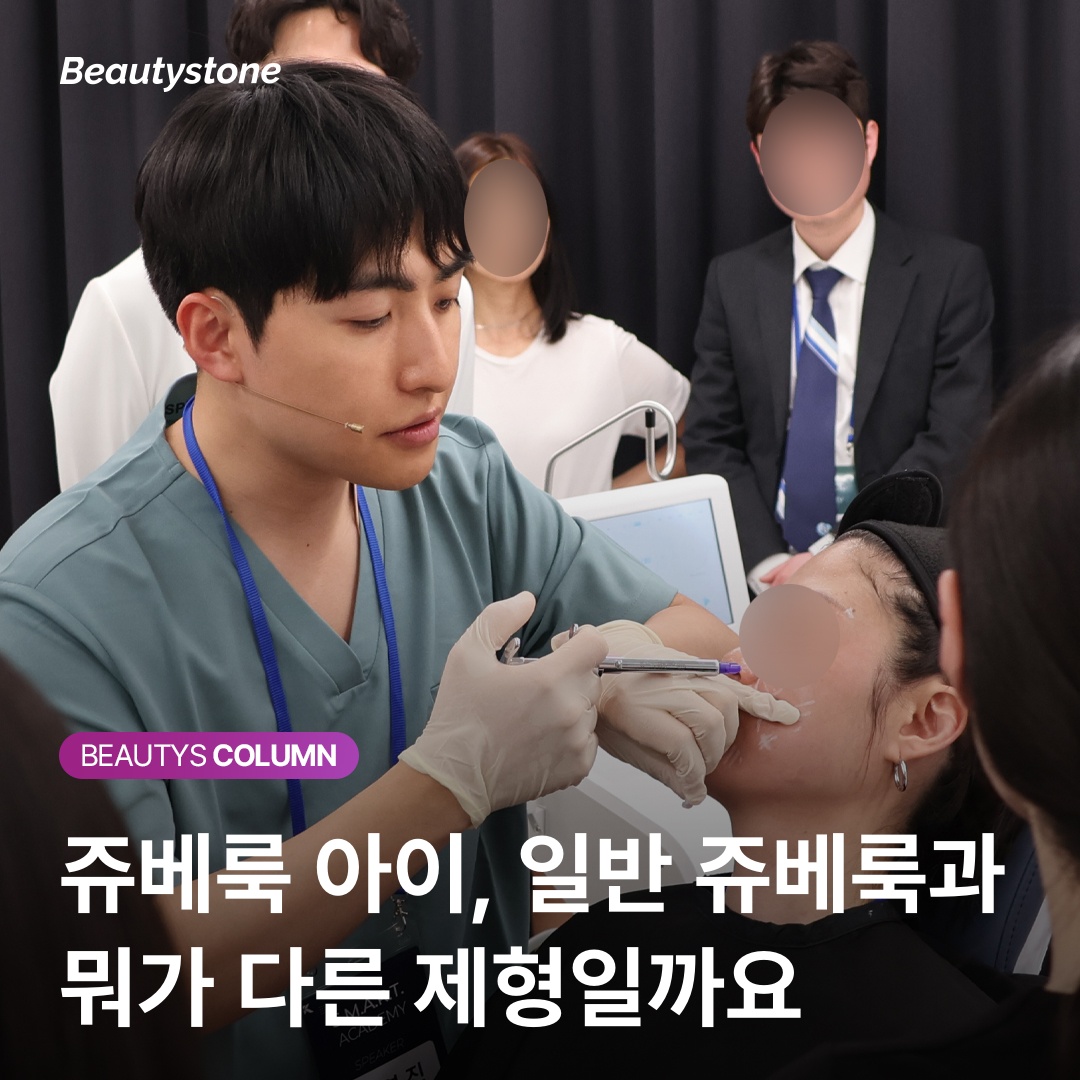
Juvelook Eye is a formulation designed exclusively for the eye area, with smaller particles and a lower concentration. We also break down the real risk of nodules.

Juvelook Eye vs. Regular Juvelook — They're Not the Same
"Can't you just inject regular Juvelook around the eyes too?"
That's a question I get all the time in the clinic.
The short answer is — no, they are not the same product.
The names are similar, but the particle size and concentration are different.
They are entirely different formulations designed for different purposes.

What Makes Juvelook Eye Different from Regular Juvelook?
Juvelook is a Collagen booster that combines PDLLA (Poly-D,L-Lactic Acid),
a biodegradable polymer, with hyaluronic acid
to stimulate Collagen production.
While regular Juvelook targets areas with thicker skin —
like the cheeks, forehead, and jawline —
Juvelook Eye uses smaller particles
and a lower PDLLA concentration, specifically formulated for the delicate eye area.
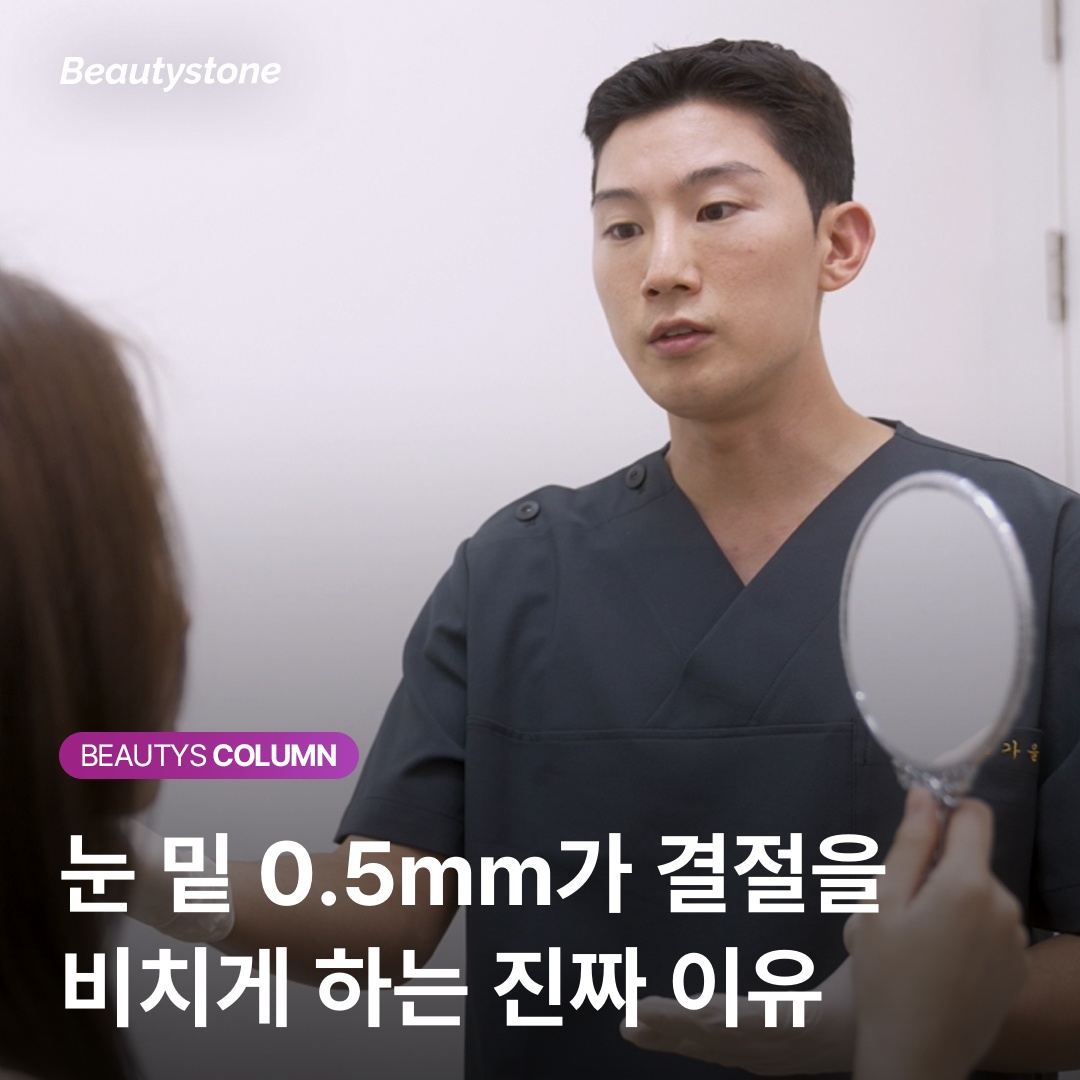
Why 0.5mm of Skin Under the Eye Makes Nodules Visible
The Key Takeaway from This Post
Juvelook Eye is an eye-area-specific formulation with smaller particles and a lower concentration than regular Juvelook.
The skin under the eyes is just 0.5mm thin, which means using a standard formulation can cause nodules to become visible —
the Eye version is designed to reduce that risk.
You've probably heard that "the more frequently you get Collagen boosters, the better."
Around the eyes, it's actually the opposite.
Let me explain why.
The average skin thickness under the eyes is around 0.5mm —
roughly one-third the thickness of the cheeks (about 2mm) or forehead (about 1.5mm).
That's why the same particles that stay invisible over the cheekbones
can show right through the skin under the eyes.

The mechanism behind nodule formation is actually quite interesting.
PDLLA particles cluster together within the Dermis,
drawing macrophages to the site, which then stimulate Collagen production —
that's the core principle of this procedure.
However, when the particle concentration is too high, the clustering becomes excessive,
and in thinner skin, those clusters become visible through the surface.
They can appear as white bumps or feel like small granules when touched.
The reason Juvelook Eye uses smaller particles and a lower concentration
is precisely to minimize this risk of clustering and surface visibility.
As a trade-off, its Collagen-stimulating effect is milder than the standard formulation,
so results appear more gradually and subtly over time.
It's also important to understand the PDLLA absorption curve.
For the first four weeks after injection, the particles settle into place.
Between weeks 8 and 12, Collagen begins to fill in more significantly.
By around six months, the PDLLA has largely broken down.
In other words, results typically peak around 2 to 3 months post-procedure.
If you come back a month later saying "I don't see any results,"
you're simply evaluating too early.
Dr. Wi Young-jin's Key Summary
Even within the Juvelook line, the eye-area formulation is a different product entirely.
It features smaller particles and a lower concentration to reduce the risk of nodules and surface visibility,
and results build gradually over 8 to 12 weeks.
Judging the outcome after just one month isn't accurate.
Who Is Juvelook Eye Actually Right For?
This can be hard to grasp from text alone — real cases make it much clearer.
Last week, a 29-year-old patient came in just for a consultation.
She'd seen Juvelook Eye reviews on social media
and was interested because she'd read it could reduce dark circles.
But when I examined her, she had pigmented dark circles.
She didn't have visible blood vessels showing through,
and there was almost no tear trough hollowing either.
Honestly, for someone in that situation, this procedure is hard to recommend.
Since PDLLA works by stimulating Collagen to thicken the skin,
it can help with dark circles caused by thin, translucent skin —
but its effectiveness is limited when melanin pigmentation is the underlying cause.
So that day, I suggested she start with Laser toning instead
and she left without making a decision. That was the right call.
So — which category do you fall into?

Three Questions I'm Asked Most About Juvelook Eye
Q1. How long do results last after a single session?
A. Three patients asked me this exact question just this week.
One of them was eight months out from their second session,
and Fine Lines were starting to reappear slightly — so I recommended one additional session.
Typically, completing 2 to 3 sessions spaced 3 to 4 weeks apart maintains results for about 8 to 12 months,
but you really shouldn't judge effectiveness based on a single session alone.
It takes time for Collagen to properly establish itself.
And right after that, there's almost always a follow-up question.
Q2. How much does one session around the eyes cost?
A. There's a straightforward answer to this.
Pricing is based on one vial for the eye area,
and while costs vary by clinic, you shouldn't think of it as a one-and-done expense.
You need to plan for 2 to 3 sessions and calculate the total cost to reach the point where results actually show.
Roughly three out of ten patients evaluate results after just one session —
but at that stage, the Collagen hasn't fully developed yet.
And finally — this is one point I don't want you to leave without knowing.
Q3. Can nodules or lumps actually form?
A. I'll be honest — I initially assumed that using the eye-specific formulation meant nodules weren't a concern.
But that's not entirely true.
Even with reduced particle size and concentration, injecting too superficially or placing too much product in one spot can still cause clustering.
Based on clinical experience, it occurs in roughly one or two out of every hundred patients,
and when it does happen, it's managed with massage or a steroid injection.
That's why gently massaging the injection site for a few days after the procedure is genuinely helpful.
If there's one thing to take away from this post — Juvelook Eye is specifically engineered for thin, delicate skin. So if a clinic is using a standard Juvelook formulation in the eye area, that's worth questioning.
In my next post, I'll cover what to expect if you feel a nodule after Juvelook Eye — how many days is considered a normal part of recovery, and when it's time to seek intervention. I'll walk through real clinical cases to show exactly how we make that distinction. This has been Dr. Wi Young-jin.