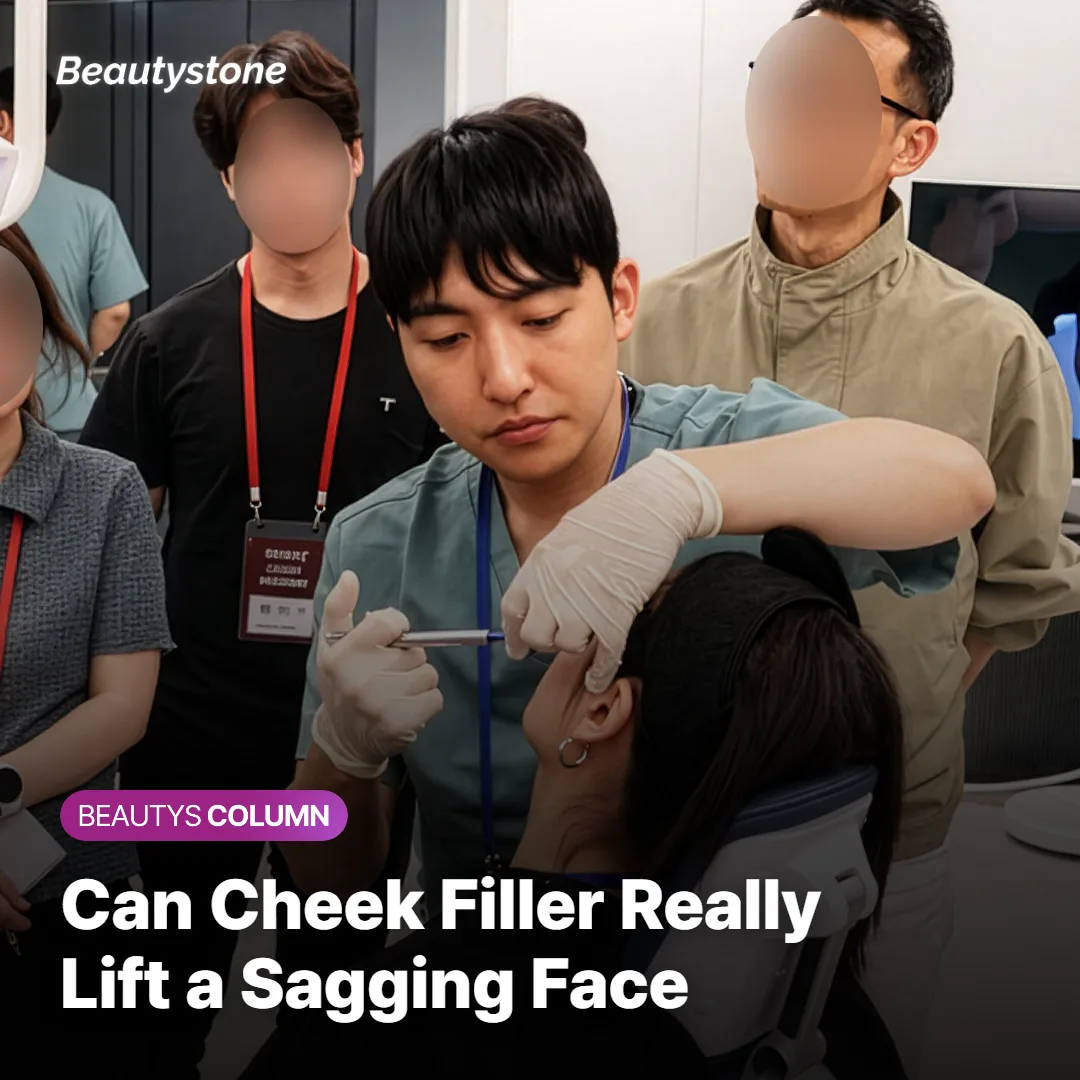
Can Cheek Filler Really Lift a Sagging Face?
Filling the cheek doesn't automatically create a lifted look. Here's why the injection technique, not just the filler, decides whether the result looks natural or just heavier.

Wi Young-jin
Chief Director & CEO, Myeongdong
Filler in your cheeks can do more than restore volume — it can change the entire angle of your midface. But only if it goes in at the right depth, in the right spot, and in the right direction.
If you've noticed your nasolabial folds getting deeper or your cheeks starting to look like they're sliding downward, the cause might not be loose skin at all. It could be volume loss in the fat compartment that used to sit like a shelf under your cheekbone.
Juvederm Voluma is one of the most established fillers for exactly this problem, and it's often placed using a mapping system called the MD Code to plan out where it goes. In this article, we'll cover how cheek volume loss causes sagging, why injection technique matters as much as the product itself, what results and recovery actually look like, and who tends to be a good candidate for this approach.
What Is Juvederm Voluma, and What Is the MD Code?
Juvederm Voluma is a hyaluronic acid (HA) filler that's FDA-approved specifically for adding volume to the cheek area, not just softening lines. It's thicker and more cohesive than most HA fillers, which is what lets it sit under the skin without collapsing under the weight of the tissue above it.
The MD Code is a facial mapping system built on research into facial anatomy. It divides the face into dozens of defined points, each labeled with a letter and a number, and the cheek zone is coded as “Ck.” Think of it less as a brand name and more as a shared roadmap — a way for a provider to plan depth, direction, and volume before the needle ever goes in.
Here's the part that gets lost along the way: plenty of clinics use the term “MD Code,” but far fewer actually vary their injection depth by layer the way the system calls for. That distinction — not the label — is what decides whether the result looks like a lift or just looks like more cheek.
Why Cheek Volume Loss Makes Your Whole Face Sag
It's tempting to blame sagging entirely on loose skin, but that's usually only half the story.
Underneath your skin, fat sits in distinct pockets called compartments, stacked like shelves across your face. The upper cheek compartment acts almost like scaffolding — it holds up the tissue below it. As that compartment thins out with age, or shifts downward, the shelf underneath starts to collapse.
Once that support is gone, everything that was resting on it — cheek tissue, the area around the nasolabial fold, the lower face — starts to drift down with gravity. That's why nasolabial folds often look deeper and cheeks look heavier even when nothing about the skin itself has changed.
So if you treat this as strictly a skin problem, you're solving the wrong equation. Pulling on skin that's already sagging over a collapsed structure tends to look overdone, not natural. Rebuilding the structure underneath, on the other hand, gives the skin something to rest on again.
Why Injection Technique Matters More Than the Product
Here's something that surprises a lot of people: injecting Voluma into the cheek doesn't automatically create a lifted look.
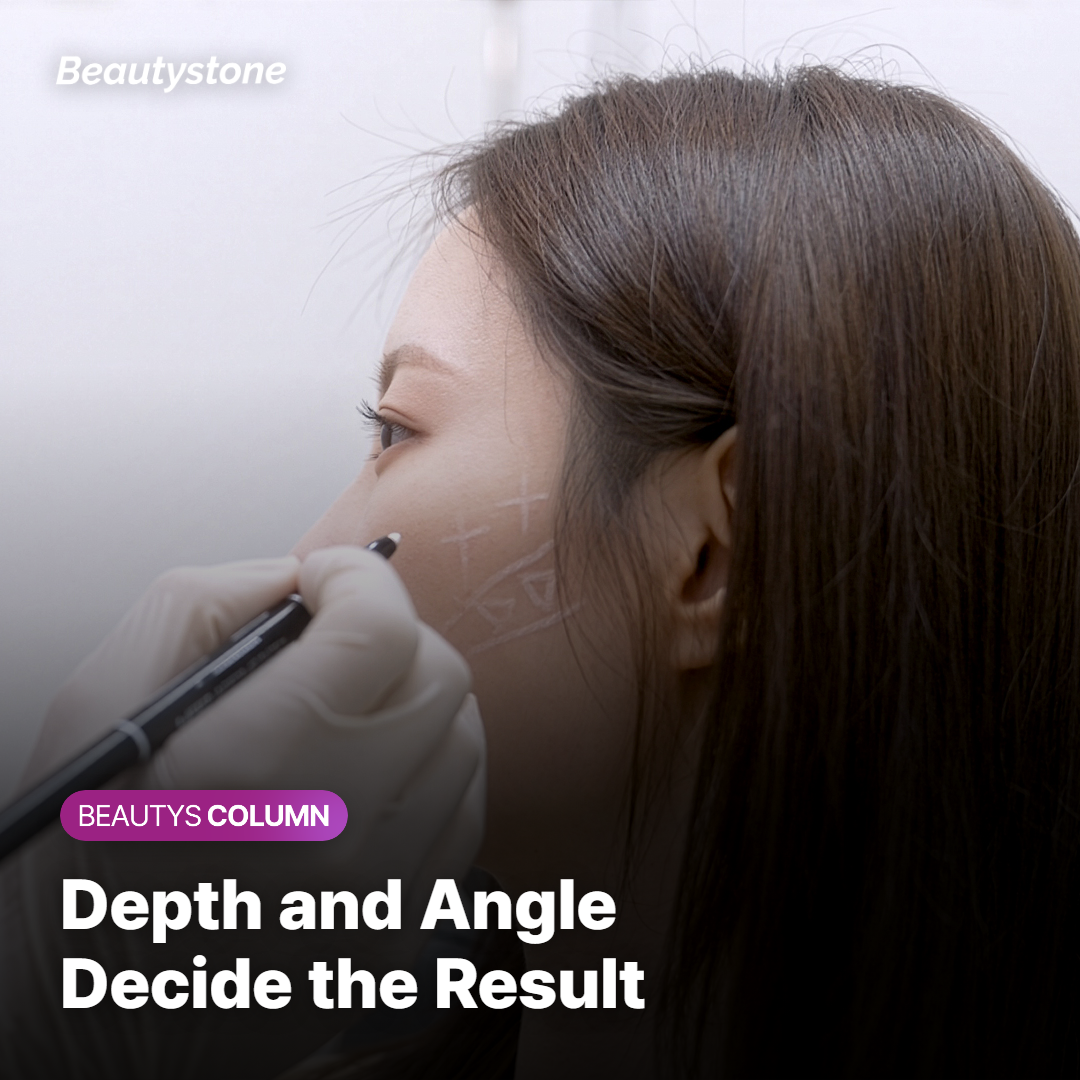
The same amount of filler, placed at a different depth, angle, or point, can either round out the cheek or genuinely lift it. Go too shallow, and Voluma's high cohesivity can sit as a firm bump you can feel (and sometimes see) under the skin. Placed deep, directly above the bone in what's called the deep fat layer, it acts as structural support instead.
This is part of why some people walk away from cheek filler saying their face feels heavier, not lighter, even when nothing was medically wrong with the injection itself. It's usually a strategy issue, not a product issue.
- Depth: Voluma is designed to sit near the bone, in the deep fat layer, not just under the surface.
- Direction: The vector, meaning the angle the product is pushed in, decides whether the result reads as lifted or just fuller.
- Sequence: Structural support near the cheekbone typically goes in first, with smaller touch-ups elsewhere added only if needed.
Providers who get this right usually start by assessing how much volume has actually been lost and which direction the tissue is sagging before deciding where the first drop goes. Change that order, and you tend to end up using more product for a less natural result.
| Category | Standard Filler Injection | Voluma + Layered Technique |
|---|---|---|
| Goal | Fill volume | Fill volume and build a lifting vector |
| Injection layer | Mostly shallow, just under the skin | Deep fat layer, close to the bone |
| Typical result | Cheeks can look wider or heavier | Midface can look subtly lifted |
| How long it tends to last | Roughly six to twelve months | Roughly eighteen to twenty-four months, per Voluma's clinical data |
| What to watch for | Surface bumps if placed too shallow | Result depends heavily on the provider's skill |
What Results Look Like: Timeline and How Long They Last
Right after the injection, expect some swelling and possibly a little bruising — that's normal for any filler, and Voluma is no exception. Most people see the volume immediately, then watch it settle into its final shape over the following couple of weeks as the swelling goes down.
Because Voluma sits deep and close to the bone, a lot of people notice the lifted look becomes more obvious once the initial swelling resolves, rather than looking dramatic on day one.
Duration varies from person to person, but Voluma is formulated to last longer than many HA fillers — clinical data on the product point to results in the cheek lasting up to two years, compared with roughly six months to a year for a lot of standard fillers. How long it lasts for you depends on your metabolism, how much was used, and where exactly it was placed.

Side Effects and Risks to Know
Swelling and bruising are the most common side effects, and they typically settle within about five to seven days — a bit longer than what you might expect from a lighter, more fluid filler, since Voluma is denser.
Because Voluma is so cohesive, incorrect placement in a shallow layer can leave a bump you can feel, or occasionally see, under the skin. That's a technique issue more than a product issue, which is part of why choosing an experienced injector matters here specifically.
The cheek area sits close to several blood vessels, so a provider needs solid working knowledge of facial vascular anatomy. If you've had filler elsewhere in the past that hasn't fully broken down, mentioning that upfront lets your provider dissolve it first, which tends to lead to a more predictable result than layering new filler over old.
If you notice spreading redness, unusual pain, skin discoloration, or any other signs of a vascular problem after treatment, contact your provider right away rather than waiting it out.

How Much Does It Cost?
Pricing for cheek filler varies by clinic, how much product is used, and your specific plan. Voluma tends to cost more per syringe than standard HA fillers, which reflects both the formulation and how long it lasts. Many people need somewhere around half a syringe to a full syringe per side, though your provider will tailor the amount to your anatomy.
More filler doesn't automatically mean a better result — placement and technique tend to matter more than volume alone. A consultation is really the most reliable way to get a number specific to you; you can see current offers at /en/promotion for reference.
Who's a Good Candidate for Cheek Filler?
This approach tends to work best for a few specific situations, and it's not one-size-fits-all.
- Cheeks that used to have volume: If your cheeks had natural fullness years ago and have since flattened, filling the same structure tends to look the most natural.
- Deep nasolabial folds paired with heavier-looking cheeks: Injecting the fold directly can look overdone if the cheek above it is already sagging; rebuilding the structure above is often the gentler route.
- Anyone considering a thread lift or Ultherapy: If volume loss is a big part of what's causing the sagging, addressing that first can make an energy-based lifting treatment look more natural instead of pulled.
On the flip side, if your cheeks are already naturally full, adding volume in this area can make your face look wider rather than lifted — that's a case where a different approach usually makes more sense. Your provider should be upfront with you about whether you're a fit before recommending it.
The Bottom Line
Cheek volume loss is a structural problem, and structural problems usually need a structural fix, not just skin tightening. Juvederm Voluma, placed with a deliberate, mapped-out technique like the MD Code, can rebuild the support your midface has lost.
- Volume loss in the cheek's fat compartment is a major, underrated cause of a sagging midface.
- Placement and vector matter as much as the filler itself — the same product can look heavy or lifted depending on technique.
- Results tend to last longer than standard fillers, but swelling and bruising also take a bit longer to settle.
Like any procedure, it comes with trade-offs, and individual results vary. Ultimately, the choice depends on your anatomy, your goals, and your provider's approach. If you're considering cheek volume filler, a consultation is the best way to find out what fits your face — Beautystone is a dermatology clinic in Seoul's Hapjeong area, and you can see current offers at /en/promotion.