
Hip Dip Filler or Squats: What Fills the Dip?
Squats build muscle but can't reshape the bone behind many hip dips. Here's what causes them, how much HA filler covered in a published technique, when filler isn't the answer, and which signs need care right away.

Wi Young-jin
Chief Director, Myeongdong
If your hip dips come from the shape of your bones, squats probably won't fill them, and filler is the option worth weighing first. The dip sits just below a bony knob at the top of your thigh bone, so building muscle around it doesn't change the curve the bone creates.
That said, filler isn't the answer for every dip. If the lower part of your buttocks sags, or your skin is very loose, filler alone may not smooth the line. In this article, we'll cover what causes hip dips, when exercise helps and when it doesn't, how much one published filler technique covered, the reactions to watch for, and how treatment fits a trip to Korea.
Quick summary
- A dip shaped by bone and muscle attachments is the kind that hip dip filler is meant to fill, not squats.
- Benchmark: one technique report covered dips up to 7 cm across with 10 mL of hyaluronic acid (HA) filler per side, repeated after 15 days if needed.
- No dermal filler is FDA-approved for the hips or buttocks, so hip dip filler is an off-label use.
- Skin near the injection site turning white, gray, or blue means you need medical care right away.
What Causes Hip Dips, and Is It Your Pelvic Bone?
Hip dips are usually blamed on the pelvic bone, but the dip itself sits just below the greater trochanter. That's the bony knob at the top of your thigh bone, and several buttock and thigh muscles attach right around it. How far that knob sticks out, and how those muscles attach, can create an inward curve on its own.
Fat distribution matters too. With age, skin loosens and fat tends to settle in the lower third of the buttocks, which makes the area above it look more hollow by comparison. Athletes with very defined glute muscles can see the same dip for a different reason: the muscle edges are sharper.
In men, a dip on the side of the buttocks is part of the typical male shape rather than a flaw*.
*Based on a 2024 hip dips technique report in Skin Health and Disease.
At the visit, the first thing checked is how far the trochanter sticks out above the dip while you're standing, and whether the lower buttocks sag. Those two observations tell you which cause your dip is closer to.

Do Squats Help With Hip Dips?
Squats can build your glutes, but they can't reshape bone, so a dip caused by the trochanter's shape often stays. Nope, more reps won't move it. In fact, defined muscle can make the dip look deeper, since athletes are one of the groups where hip dips show up.
| Likely cause | What you see from the side | Where filler fits |
|---|---|---|
| Natural bone and muscle shape | A hollow only below the bony knob | The kind of dip filler is planned for |
| Well-defined glute muscles | Sharp muscle edges | Check first whether you actually want a smoother line |
| Loose skin, fat in the lower buttocks | Sagging in the lower third | Very loose skin was outside the studies |
None of this is a reason to stop training. Exercise is good for you, and it can change how your buttocks look overall. Keep in mind, though, that filling the dip itself is a separate question from how strong your glutes are.

How Much Can Hip Dip Filler Fill?
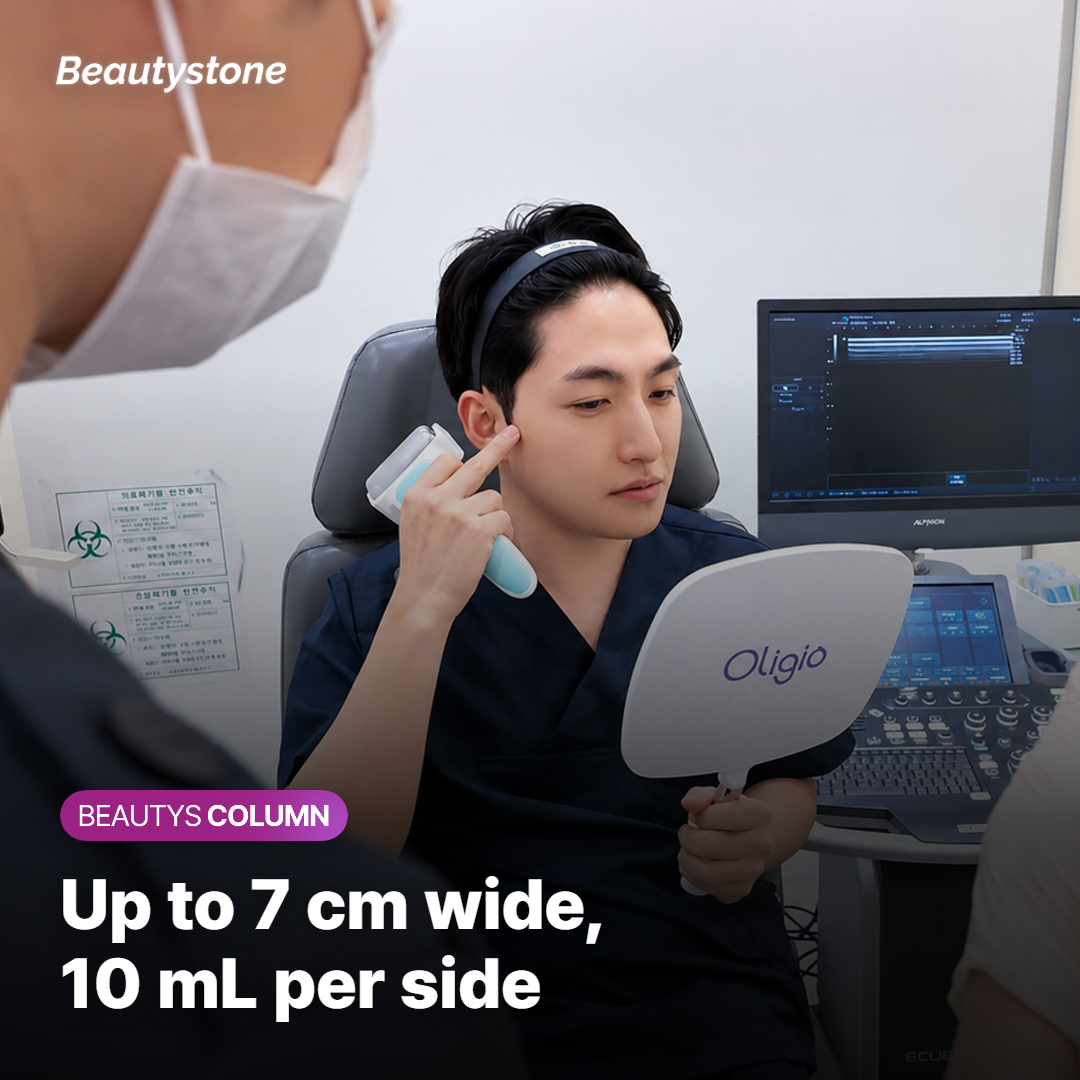
One hip dips technique covered a hollow up to 7 cm across. In that report, 11 women received HA filler in the middle layer of fat under the skin, 10 mL per side, with the same amount added 15 days later if needed. There was no comparison group, so it describes one method rather than proving that everyone gets the same result. Individual results vary.
This spot is harder to lift than other parts of the buttocks. There are few firm ligaments or fibrous bands holding the tissue there, so the authors chose a firm, large-particle filler that holds its shape. They also planned with ultrasound and kept the filler in the fat layer, which has no blood vessels thicker than 2 mm. The larger vessels and nerves run in or below the muscle.
Filler changes the shape on the day you get it, and then it's slowly absorbed. In a 1-year study of 30 women who had HA filler in the buttocks, 90% were satisfied at day 30 and 62% at 12 months. Satisfaction isn't the same as volume measured on a scan, and how much you keep depends on your body.
A note on regulation: in the US, HA fillers are FDA-approved for facial uses such as wrinkles and folds, lips, cheeks, and chin. Using them on the hips is off-label.
When Is Hip Filler Not the Right Answer?
If the lower buttocks sag and make the area above look hollow, filling only the dip may not give you a smooth line. The 11-woman report left out people with obesity or with very loose muscle and skin from the start. The 1-year study of 30 women also excluded anyone with a body mass index (BMI) of 30 or higher, or a big weight change in the previous 6 months. How well filler works in those bodies hasn't been studied.
BMI: your weight in kilograms divided by your height in meters squared.
Since the side hollow is a typical male feature, that report treated women only. If you're a man, the first question is whether a filled-in line is really the shape you want.
It's best to delay treatment, or tell your provider first, in these cases*.
*Based on US FDA guidance on dermal fillers.
- Inflamed or infected skin where the filler would go
- A bleeding disorder
- Severe allergies or a history of anaphylaxis
- An allergy to a local anesthetic such as lidocaine
Hip Filler Side Effects: What Fades, What Needs Care Now?
Mild bruising and pain at the injection site lasted 2 to 3 days in the 11-woman report. Over an average of 10 months of follow-up, no serious adverse events were reported there.
A review of 10 studies with 168 people who had HA filler in the buttocks found bruising and redness in 5 people and fluid buildup with inflammation at the injection site in 5. The gel shifted out of place in 3 people, and 1 had an uneven contour. Two of the 10 studies reported major complications, and serious problems such as bleeding in the lungs and death have been reported with buttock filler.
Don't wait for a reply if you notice any of these signs:
- Skin near the injection site turning white, gray, or blue: get medical care right away
- Unusual pain: get medical care right away
- A raised lump you can feel in or under the skin: see a doctor
- Vision changes, such as blurring: go to the nearest emergency room
- Sudden difficulty speaking, numbness or weakness in your face, arms, or legs, difficulty walking, face drooping, severe headache, dizziness, or confusion: go to the nearest emergency room
Messaging the clinic doesn't replace an in-person exam when these signs appear.

Hip Dip Filler Within Your Travel Itinerary in Korea
Unless you had sedation that day, there's no reason to push back your flight because of hip dip filler. Plan for 2 to 3 days of bruising and soreness, and the report advised skipping sports for those same 2 to 3 days. If a second session might be needed, the technique repeated it after 15 days, which is hard to fit into a short stay.
It also helps to know what one visit can do. Filler is one of the treatments that changes your shape the same day. Even so, a single session isn't designed to transform your whole figure, and many people wait until the bruising fades before judging the line.
Once you're home, you can send photos through the consultation button on this page if something worries you. If you see a warning sign like a color change in the skin, spreading redness, or fever, see a local doctor first instead of waiting for a reply.
The Bottom Line: What to Check at a Hip Dip Filler Consult
A hip dip filler plan should start with the size and depth of the dip and whether your lower buttocks sag. While you're standing, the doctor looks at the height of both trochanters and how deep each dip is, then decides whether it's an area filler can reasonably fill.
- How wide the dip is (the published technique covered up to 7 cm)
- Whether the lower buttocks sag or the skin is loose
- Weight changes in the last 6 months and any past hip surgery
Before you decide, ask: "Is my hip dip closer to the bone-shape type or the sagging type?" That one answer tells you a lot about whether filler fits. If you're considering hip dip filler, Beautystone is a clinic in Seoul's Hapjeong area. When you reach out, include standing photos of your side and back, plus what exercise you've done and for how long.
References
- Hip dips technique with large-particle HA filler in 11 women, Skin Health Dis, 2024
- HA filler in the buttocks in 30 women followed for 1 year, J Cosmet Dermatol, 2025
- Review of 10 studies on HA filler for buttock augmentation, Aesthetic Plast Surg, 2023
- Case of buttock HA filler moving to the inner thigh, Indian J Radiol Imaging, 2023
- Case of complications after polyamide gel filler for hip dips, JPRAS Open, 2025
- Approved uses, body contouring advice, and warning signs for dermal fillers, US FDA
Frequently Asked Questions
Q. How long does hip filler last?
A. Hip filler made of HA is slowly absorbed, and a review of 10 buttock filler studies estimated it stays effective for about 16 months. That's an average across different products and amounts, not a fixed timeline. How long yours lasts depends on the product and your body.
Q. Why does hip filler shrink over time?
A. Hip filler made of HA shrinks because your body's own enzymes gradually break it down, since HA is a substance your body already makes. Products also differ in particle size and how firmly they're cross-linked, so they stay for different lengths of time. Areas that move a lot can feel like they fade faster, and shifts in water content can make the volume seem to drop.
Q. Are hip dip filler before and after photos a reliable guide?
A. Hip dip filler before and after photos show one person's result, so they can't tell you what you'll get. Bruising can blur the line for the first 2 to 3 days. A fair comparison uses the same standing pose and lighting once bruising has faded, and that photo is what helps decide whether more filler is needed.
Q. Can hip dip filler make my butt bigger too?
A. Hip dip filler fills the hollow on the side, so it isn't meant to increase buttock size. The US FDA recommends against using any injectable filler to increase the size of the buttocks. If overall volume is your concern, bring it up as a separate question at your consultation.
Q. How much filler do hip dips need compared with a full buttock lift?
A. Hip dips need far less filler than full buttock augmentation. The hip dips technique used 10 mL per side, while a review of buttock augmentation studies reported an average of about 207 mL. When you see a quote, check which area the amount was planned for.
Q. Can hip filler move to another spot?
A. Hip and buttock HA filler moving to another spot has been reported, but it's rare. One case report described buttock filler that traveled to the inner thigh and showed up as a soft lump. If you feel a new lump somewhere you weren't treated, have it checked by a doctor.
Q. Is a non-HA filler OK for hip dips?
A. A non-HA filler used for hip dips has led to serious problems in at least one case report. A woman treated with polyamide gel had the filler shift within 6 months, and 4 years later she developed fever, hip pain, and an abscess that needed 3 surgeries. Ask exactly what the filler is made of before treatment.
Q. Can I get hip dip filler after a hip replacement?
A. People with a hip replacement were excluded from the 11-woman hip dips report, so there's no data on how filler works for them. Tell your provider when and on which side you had surgery. That history is reviewed before deciding whether treatment makes sense.