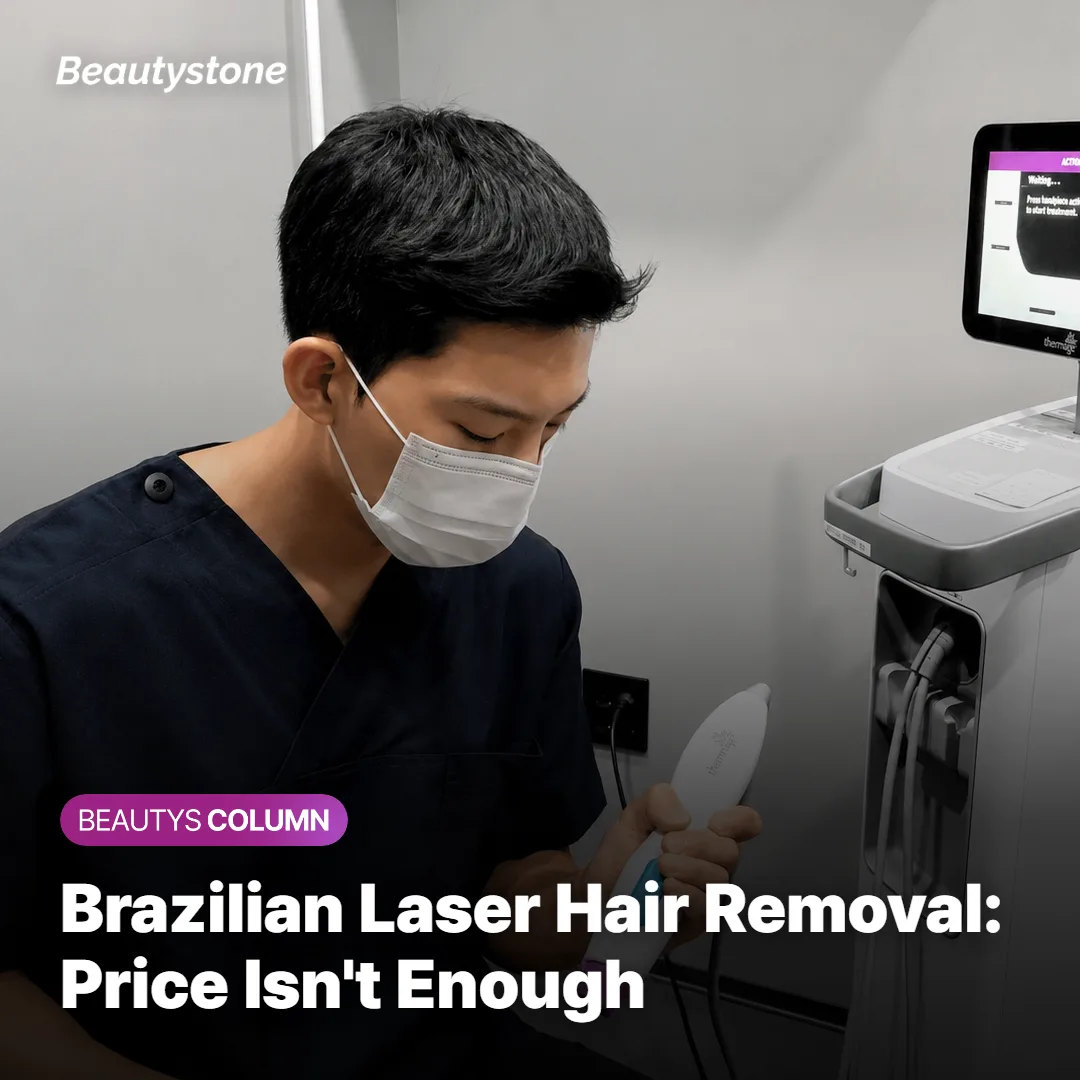
Brazilian Laser Removal: Price Isn't Enough
The cheapest Brazilian laser hair removal package on paper isn't necessarily the one that gets you smooth, lasting results with the fewest bumps along the way. Here's what actually separates a solid outcome from a frustrating one.

Last updated: July 2026
If you've priced out Brazilian laser hair removal at a few different clinics, you've probably noticed something odd: the quote for what sounds like the exact same treatment can swing wildly from one place to the next. It's tempting to just book whichever option is cheapest and move on. But for a treatment area this sensitive, the sticker price is one of the least useful things to compare. In this article, we'll cover what actually determines whether your results last, what a good appointment should look like, how to lower your risk of folliculitis afterward, and why the lowest quote on the table isn't always the smartest one.
What Is Brazilian Laser Hair Removal, and How Does It Work?
Brazilian laser hair removal uses focused light to target melanin — the pigment inside each hair — and converts that light into heat. The heat damages the hair's growth center at the root, so over a series of sessions, the hair that grows back tends to come in finer, sparser, and lighter. One session almost never finishes the job: only hair that's actively growing at that exact moment responds to the laser, which is why sessions are spaced weeks apart to give resting follicles their turn.
Most people need five or more sessions before they see a meaningful, lasting change, and that's true no matter what you paid for the package. A rock-bottom price doesn't shortcut the underlying biology — it just occasionally shortcuts the parts of the treatment that keep you comfortable and safe along the way.
What Actually Makes the Results Last?
Here's the part that's easy to miss when you're comparing prices side by side: the device, the settings, and the person operating it matter at least as much as the number of sessions printed on your package.
- The device itself: a dual-wavelength system like GentleMax Pro Plus is built for higher power, deeper penetration into the follicle, and a stronger cooling system to protect the skin's surface while the energy does its work underneath.
- Custom settings, not a default preset: your hair's thickness, density, and color, along with your skin tone, should shape the energy level used on you specifically — not a one-size-fits-all setting run on every client that day.
- The provider's technique: precise handling and careful adjustment session to session is what turns a capable machine into a consistent result.
Skip any one of those three, and it shows up later — usually as a series that "should" be done but hasn't actually changed much.

Why Doesn't Price Tell You the Whole Story?
A lower price can mean a clinic is simply more efficient. It can also mean an older or lower-power device, generic settings applied across every client, or less time spent on the diagnosis part of your visit. From the outside, both scenarios can look identical — until you're several sessions in.
If you've had seven or more sessions and your hair honestly looks about the same as when you started, that's usually not a sign that laser hair removal "doesn't work" for you. More often, it points to underpowered energy settings or a device that isn't reaching the follicle deeply enough to disable it. That's a fixable problem, but only if it gets flagged and adjusted rather than repeated on autopilot.
None of this means the priciest clinic automatically wins. It means the price tag alone doesn't tell you which scenario you're walking into — so it's worth asking directly what device is being used and how the settings get tailored to you before you commit to a package.
What Should You Expect at Your Appointment?
Because the Brazilian area is more sensitive than legs or underarms, a few details matter more here than they would elsewhere.
- A private treatment room: not a shared, open bay — this is standard for the area and worth confirming before you book.
- The option to request a female provider: many people feel more comfortable with this for a sensitive-area treatment, and most clinics that see regular Brazilian clients can accommodate it.
- A real consultation first: your provider should look at your hair thickness, density, and skin tone in person before recommending a plan, rather than quoting a package before ever seeing you.
If a clinic can't answer basic questions about privacy or provider preference before your first visit, that's worth weighing alongside the price you were quoted.
How Do You Lower Your Risk of Folliculitis?
Small red bumps in the days after a session are the most common thing people notice, and in most cases they're a normal part of treated hair working its way out, not a sign anything went wrong. That said, simple aftercare in the first two to three days makes a real difference in how mild that reaction stays.
Skip for two to three days:
- Saunas, steam rooms, and hot baths
- Intense exercise or anything that causes heavy sweating
- Tight underwear or leggings that rub against the treated area
- Touching, scratching, or picking at the skin
Do instead:
- Apply a soothing gel to calm redness and irritation
- Pause scrubs, retinoids, and other exfoliating products for a few days
- Keep the area clean with a gentle, fragrance-free cleanser
If bumps keep showing up after every single session in the same spot, mention it at your next visit — that's usually a cue to adjust either your aftercare routine or the settings themselves, not something to just push through.

Side Effects & Risks
Brazilian laser hair removal is considered low-risk when it's done by a trained provider using settings matched to your skin, but no procedure is entirely without risk.
- Common: mild redness, warmth, or small bumps around the follicles for a day or two after treatment.
- Less common: temporary lightening or darkening of the treated skin, especially if the energy wasn't well matched to your skin tone.
- Rare: blistering or burns, most often tied to settings that ran too high for the skin being treated.
If you notice blistering, pain that's getting worse instead of better, spreading redness, or discharge, seek medical care right away rather than waiting it out. Between sessions, shaving is fine — even useful — but waxing, threading, or plucking pulls out the very follicle the laser needs to target, so those hairs effectively skip a cycle. Individual reactions vary, and hair thickness, skin sensitivity, and the treated area all play a role in how your skin responds.
How Much Does Brazilian Laser Hair Removal Cost?
Pricing depends on how many sessions your plan includes, the size of the area being treated, and the clinic and device behind the number — so there's no single figure that applies everywhere. Because you're really paying for a full series rather than one visit, the total cost of the plan tends to matter more than any single per-session price you see advertised.
A consultation is the best way to find out what a realistic plan and price actually look like for your hair and skin. Beautystone is a dermatology clinic in Seoul's Hapjeong area — current offers are listed at /en/promotion.

The Bottom Line
Brazilian laser hair removal is one of those treatments where the cheapest quote and the best outcome don't always line up, and that's not a coincidence.
- Results depend on the device, the customized settings, and the provider's technique — not just the number of sessions on your receipt.
- Most people need five or more sessions, spaced weeks apart, before they see a lasting change.
- A private room and the option to request a female provider are reasonable things to expect for this area.
- Simple aftercare — skipping saunas, tight clothing, and touching the area for a couple of days — meaningfully lowers your odds of irritation.
Like any laser procedure, it comes with trade-offs, and results vary from person to person. Ultimately, the plan that's right for you depends on your hair, your skin, and your budget — not just whichever quote happened to be lowest. If you're considering Brazilian laser hair removal, a consultation is the best way to find out what actually fits you.
Frequently Asked Questions
Q1. Is Brazilian laser hair removal really permanent?
The accurate term is permanent hair reduction, not permanent removal. Most people see dramatically less hair after finishing a full series, but some fine regrowth over time is normal, which is why a lot of people schedule an occasional touch-up session down the road.
Q2. Why do bumps show up a few days after my session, not right away?
That timing is actually normal. The treated hair is weakened at the root and sheds gradually over the following days to weeks, and that's usually when small, folliculitis-like bumps appear. It's rarely a sign that anything went wrong during your appointment.
Q3. Does a cheaper Brazilian laser package mean lower quality?
Not automatically, but it can. A lower price sometimes reflects real efficiency, and sometimes it reflects an older device, generic settings, or less time spent on your consultation. The price alone won't tell you which — asking about the device and how settings are customized will.
Q4. How can I lower my chances of folliculitis after treatment?
Skip saunas, intense exercise, tight underwear, and touching the area for two to three days, and use a soothing gel if you notice redness. Pausing scrubs and other exfoliating products for a few days helps too. If it keeps happening in the same spot after every session, flag it to your provider.