![[Doctor's Column] Top 3 'Best Value' Procedures for Skincare Beginners — Zero Regrets Guaranteed](/_next/image?url=https%3A%2F%2Fwazsqvuzlsxxykdisytt.supabase.co%2Fstorage%2Fv1%2Fobject%2Fpublic%2Fblog-images%2Fuploads%2Flocale-featured%2Fbeginner-skincare-guide-top3%2F20260629081639-en-auto-v1.webp&w=3840&q=75)
3 Starter Skin Treatments: Which Layer First, and Why Quotes Differ
Pick by the layer your concern lives in, then read the quote line by line

What you'll learn

  · Choose by the layer your concern sits in — dermis, muscle, or surface pigment.
  · Thin, marked skin means Rejuran; lingering lines mean toxin; dull tone means pico toning.
  · Rejuran is not FDA-approved in the US; it is available in Korea under MFDS authorization.
  · Quotes differ on units, area, session count, and what the price actually includes.
If you are booking your first skin treatment, the useful question is not which procedure is most popular. It is which layer your concern lives in. Texture and thinning sit in the dermis; expression lines sit in muscle; dull tone sits in surface pigment. Pick the layer first and the shortlist writes itself.
The second surprise is price. Two clinics can quote very different numbers for what sounds like the same treatment, and usually neither is a scam — the quotes describe different amounts of work. Below is the layer map, then a plain reading of what moves the number.
Start With the Layer, Not the Procedure Name
A beginner's concern rarely belongs to one procedure. It belongs to a layer, and each layer has its own short list. Sort yourself first and the three starter treatments stop competing.
| If your concern is | The layer | Starter option |
|---|---|---|
| Thin skin, lingering acne marks, rough texture | Dermis | Rejuran |
| Forehead, frown or chin lines that linger after an expression | Muscle | Botulinum toxin |
| Dull tone, dark spots, makeup sitting unevenly | Surface pigment | Pico toning |
One regulatory note up front rather than buried in a FAQ: Rejuran is not FDA-approved in the US and is available in Korea under MFDS authorization. Botulinum toxin is an FDA-approved drug, and picosecond lasers are regulated as cleared devices. Knowing which category you are offered is part of reading a quote.
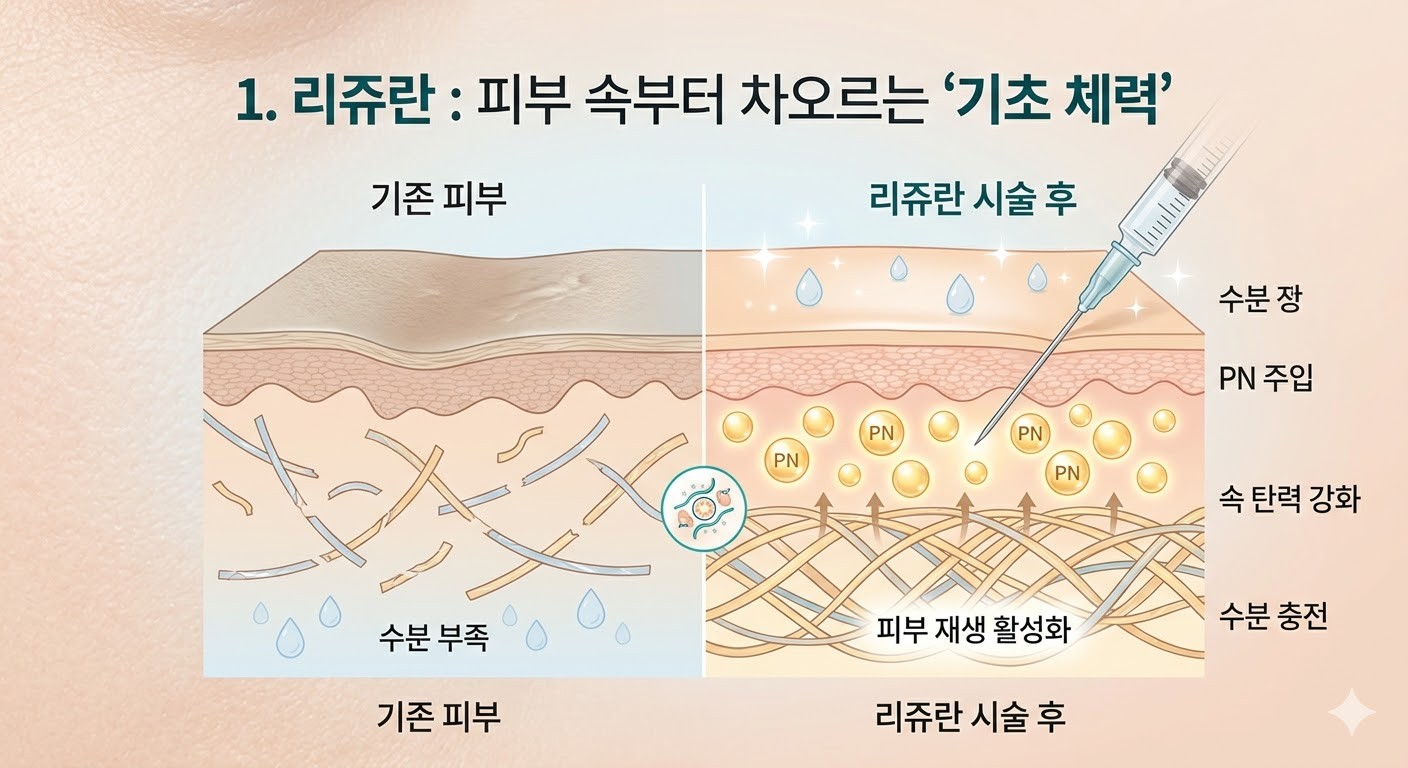
Dermis: Rejuran When Skin Feels Thin
Rejuran — what social media calls the salmon injection — delivers polynucleotide (PN) components derived from salmon DNA into the dermis, where they engage the skin's own repair mechanisms. It is a foundation treatment, not a surface polish: the change shows up as texture rather than instant glow.
- Fits: thin skin, reduced elasticity, acne marks or lingering redness.
- Also considered for: sensitive skin being built back up in resilience.
- Timeline: visible improvement in hydration and evenness around 2 to 3 weeks.
- Skip for now if: your only concern is an expression line.
Individual results vary, and patience is part of the plan here. If you want something visible in 48 hours, this is not your starting layer.
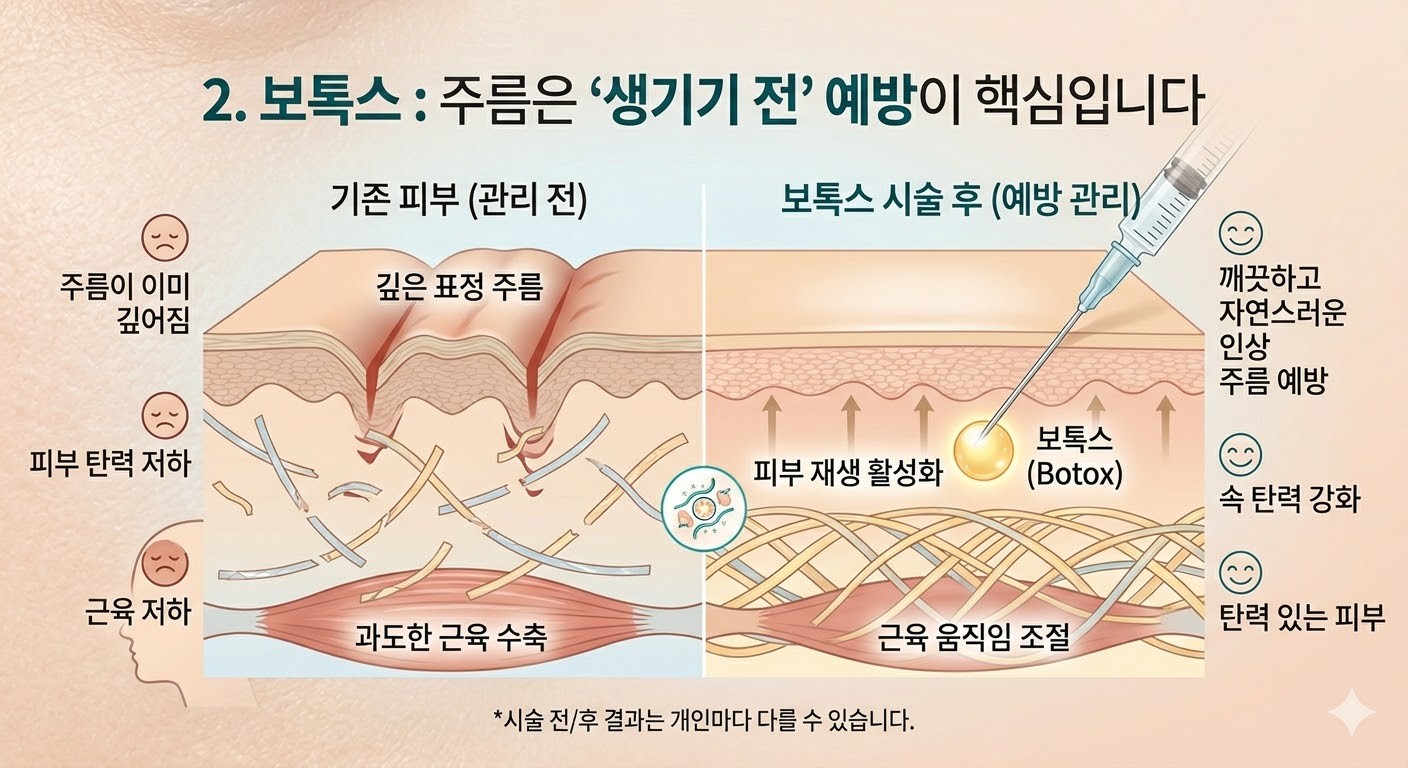
Muscle: Toxin Before the Line Stays Put
Botulinum toxin selectively relaxes the facial muscles that fold the skin, which is why it goes to high-movement areas — forehead, glabella, chin. The point beginners miss is timing: the useful window is not after a line is deeply etched, but when a fine line starts lingering after an expression instead of smoothing out.
- Fits: lines that stay visible for a moment after you stop frowning.
- Practical appeal: quick, with virtually no downtime.
- Realistic framing: it helps reduce the appearance of movement lines, and results vary.
If lines are already deep at rest, toxin alone is the wrong single answer — that is a two-layer conversation, worth raising at the consultation.
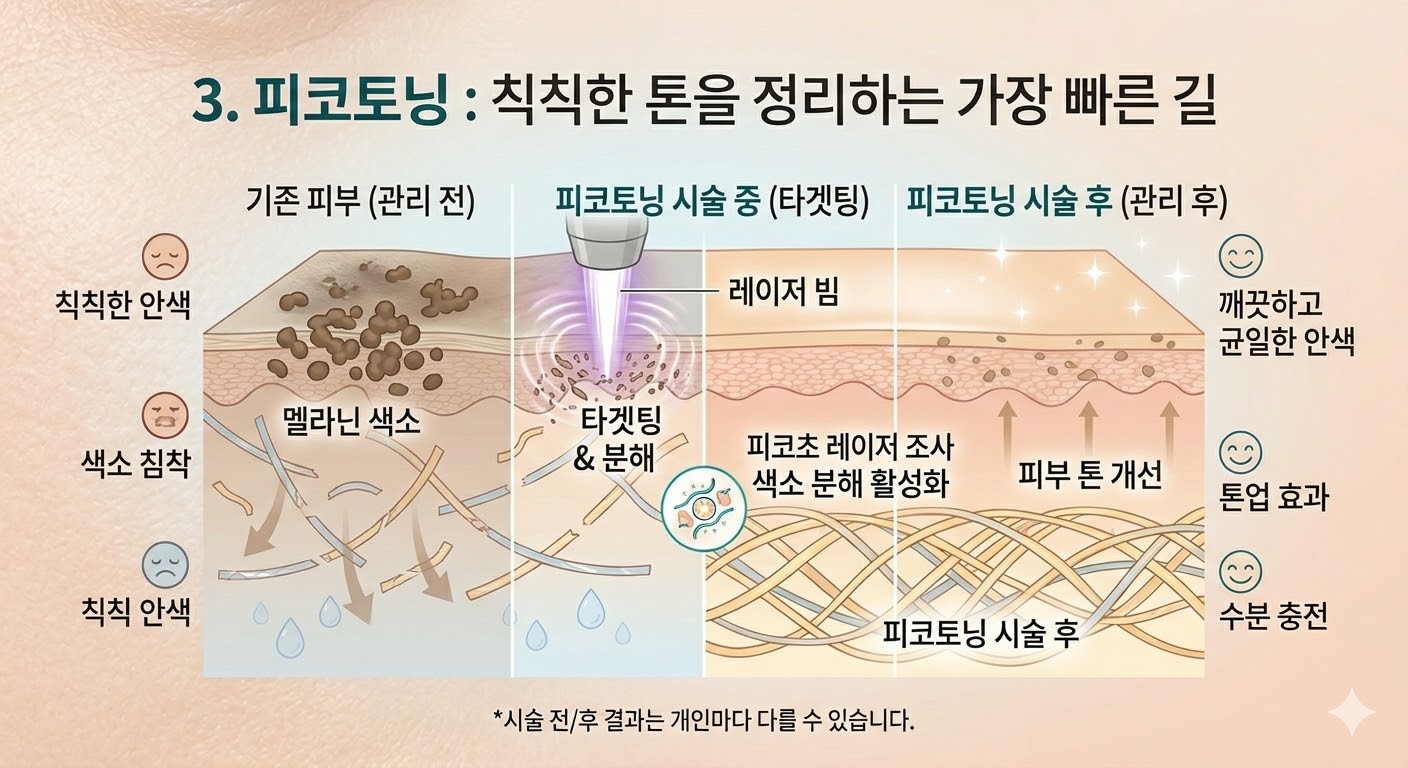
Surface Pigment: Pico Toning for Dull, Uneven Tone
Pico toning delivers laser energy in picosecond pulses — trillionths of a second — to break melanin pigment down at a very fine level. Because the energy targets pigment with limited disturbance to surrounding tissue, it is used to improve the appearance of dark spots, uneven tone and facial redness.
The everyday signal is not one spot: it is a complexion that reads dull overall, or makeup that sits unevenly however you apply it. Downtime is minimal, which is why patients keep it in rotation.
One caveat for anyone travelling for treatment: pigment work responds to sun exposure and aftercare, and a clinic abroad cannot manage a delayed reaction in person — plan for a local provider at home if follow-up is needed.
Why the Same Treatment Gets 2 Different Quotes
Once you know your layer, the rest is commercial rather than clinical. Four things move a quote, and only the fourth is hard to see from outside.
- Amount: units of toxin, or injected volume — a smaller number is a smaller treatment, not a bargain.
- Area: forehead only, or forehead plus glabella; full face toning, or one zone.
- Sessions: one appointment or a planned course, and whether the figure is per session or total.
- Assessment: whether anyone examines your skin and records what was used.
That fourth item is where money quietly leaks: if nobody logs what was done and how your skin responded, every visit restarts from a cautious default and you buy repeats you did not need. Dr. Wi Young-jin maps the concern across layers before naming any product, so the plan says which layer comes first and what the second step would be. Beautystone quotes after that assessment rather than from a fixed online list.
Frequently Asked Questions
How do I compare two clinic quotes for the same treatment?
Line them up on four points: how much product or how many units, which areas are covered, how many sessions the price includes, and whether an examination happens before the plan is set. A cheaper headline number often covers a smaller area. Ask each clinic to state those four items before you compare.
Does a newer laser automatically mean a better result?
Not on its own. The device class matters, but so do the settings chosen for your skin and how they are adjusted between visits. Ask what is being adjusted for your skin rather than which model is in the room.
What should I ask before agreeing to a treatment plan?
Which layer it works on, why it was chosen over the alternative, how much you are receiving, the realistic timeline, and what happens if the response is uneven. If any answer is vague, that is useful information in itself. This article is educational and not a substitute for an in-person assessment.