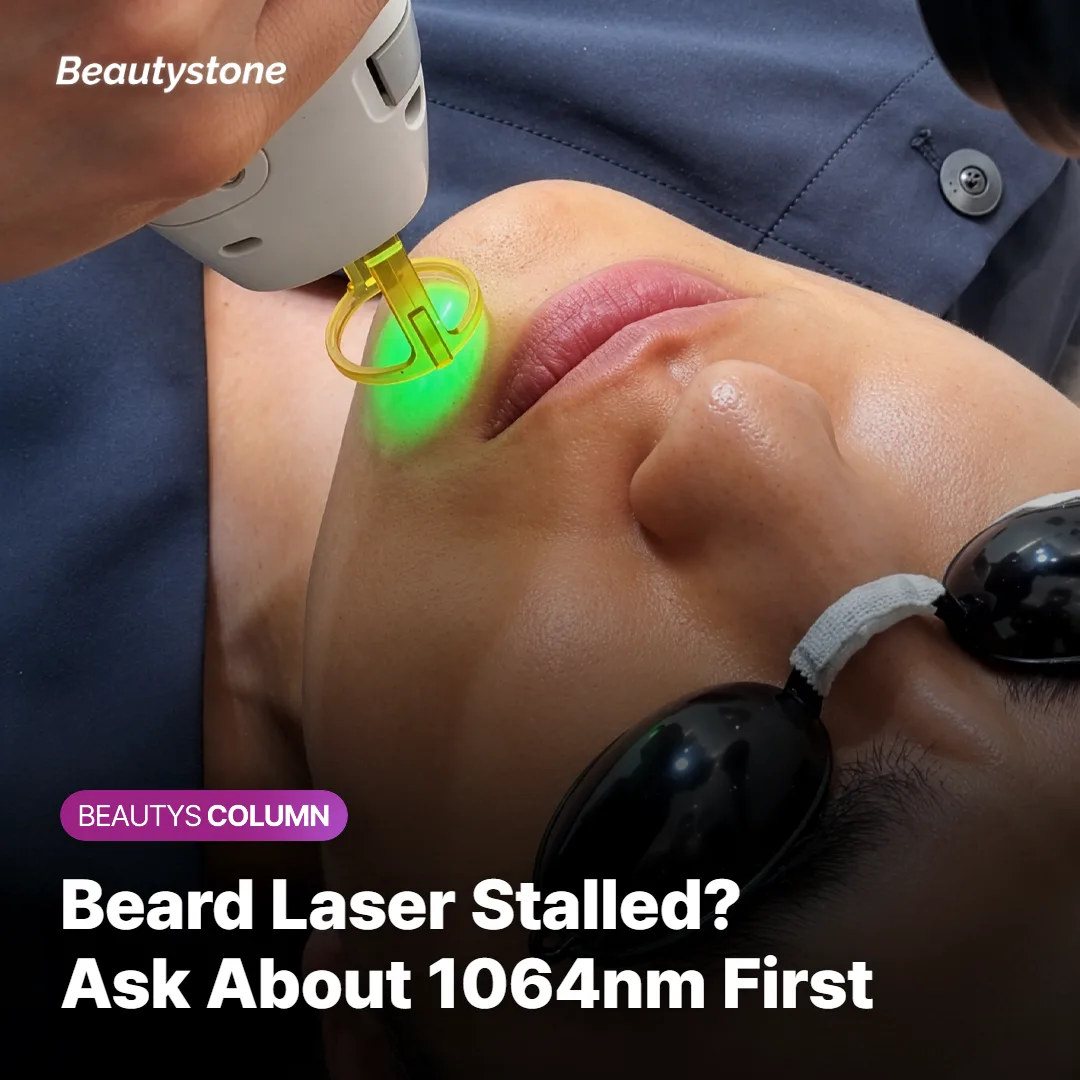
Beard Laser Plateau? Ask About 1064nm First
When coarse beard hair stops thinning after several laser sessions, it's worth checking whether your clinic can switch to 1064nm and reset the energy for your skin before you book more sessions on the same setting.

If you've had a handful of laser sessions on your beard and the thick, dark hairs on your chin and upper lip have simply stopped thinning, you're not alone. It's a familiar frustration for men who started laser hair removal to deal with shaving bumps or a stubborn five o'clock shadow.
Here's the short answer: when coarse beard hair stops responding after several rounds, check whether your clinic can switch to the 1064nm wavelength and recalibrate the energy for your skin, rather than just adding more sessions on the same setting. The 755nm and 1064nm wavelengths reach hair in different ways, so they don't behave the same way on every beard.
You may also have heard that "if you can see a red light, it won't work on a man's beard." Both 755nm and 1064nm sit in the near-infrared range, so the color of any visible light you notice during a session doesn't tell you how well the treatment is working.
If you're planning a trip to Seoul, or you're already living here and picking up treatment you started back home, timing matters too. In this article, we'll cover why beard results stall, how the two wavelengths differ, why energy settings carry so much weight with 1064nm, what the research does and doesn't show, what recovery looks like on a travel schedule, and three questions to ask before you book.
Why Does Beard Laser Hair Removal Stall?
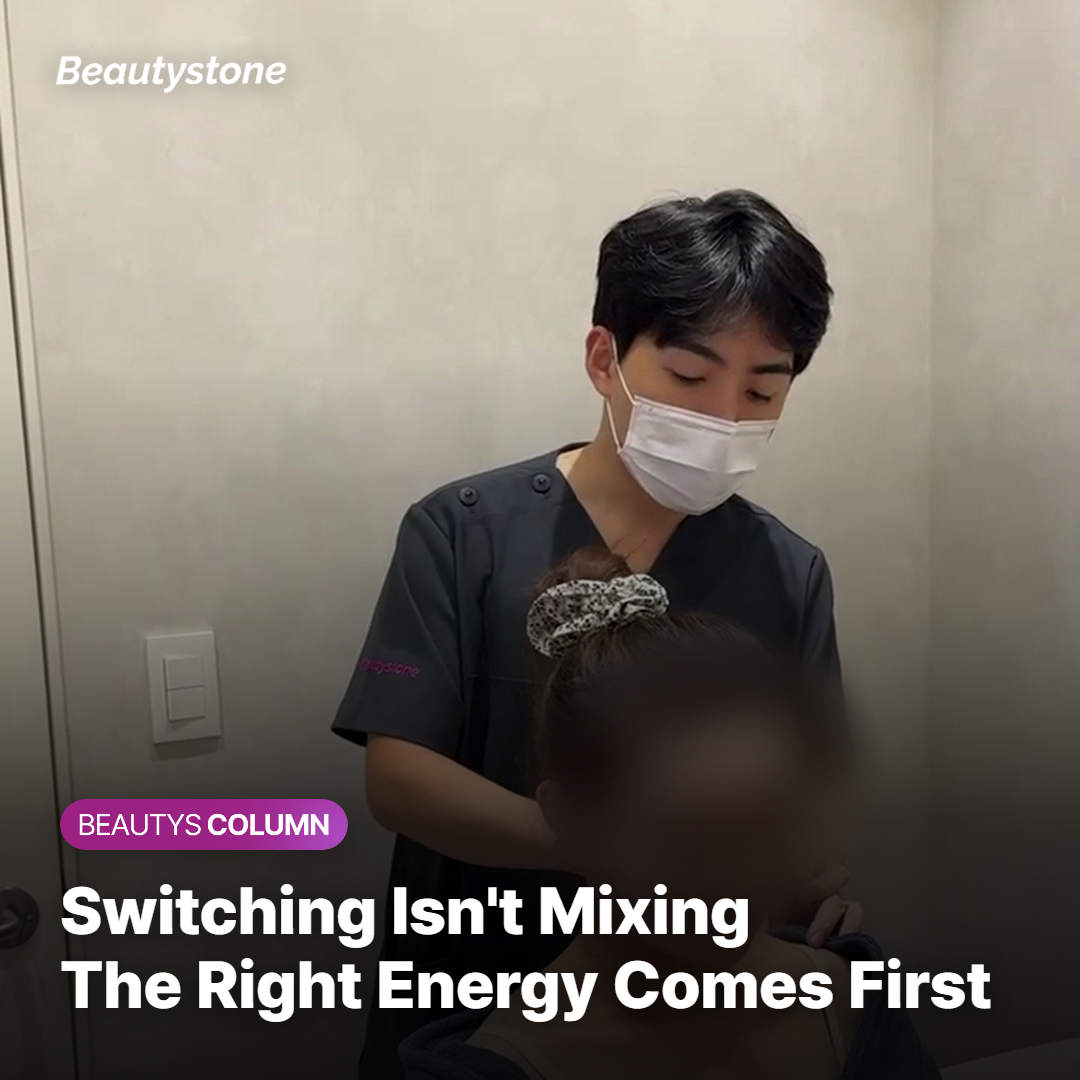
Many men see a big drop in beard density over the first few sessions. Then, somewhere along the way, the coarse hairs along the chin and upper lip stop budging. It's a pattern we see in the treatment room at Beautystone in Seoul. Rather than repeating the same setting and simply adding sessions, Dr. Kim Kaeul works with both the 755nm and 1064nm wavelengths on a single GentleMax Pro Plus device, switching between them and resetting the energy for the hair that's left and for the patient's skin type.
There's published precedent for the idea. A 2025 clinical experience report that followed 60 patients described running multiple sessions with a single laser type until the hair itself changed, then moving to a different wavelength. In that protocol, 1064nm came first for dense, dark hair, and another wavelength took over once the hair became finer.
It's worth reading that study for what it is. It had no control group, mixed men and women, followed people for six months, and didn't analyze beards on their own. So it can't tell you how well beard hair responds to a switch. What it does support is a principle: when the hair changes, the wavelength deserves a second look. Individual results vary.
- What a stall often looks like: the fine and medium hairs are mostly gone, but thick, dark hairs on the chin, jawline, or upper lip keep coming back at about the same density.
- What it doesn't mean: that men's beards "just don't respond." It may mean the current setting no longer matches the hair you have now.
755nm vs. 1064nm: How Each Wavelength Reaches the Hair
755nm is the wavelength of the alexandrite laser. Melanin, the pigment inside the hair shaft, absorbs it strongly, so it can heat hair with relatively little energy. 1064nm is the wavelength of the Nd:YAG laser, and it travels deeper into the skin. The same clinical report describes 1064nm as a wavelength that penetrates deeply to target dense pigment. With thick, deep-rooted beard hair, that's where the two roles start to split.
The trade-off is energy. In a lab study that aimed lasers at scalp hair samples, researchers estimated the threshold fluence at which hair temperature starts to spike at about 10 J/cm² for 1064nm and about 2.5 J/cm² for 755nm. Those values were measured in air, not inside living skin, and some of the authors were affiliated with a laser manufacturer. So the fair reading is directional: 1064nm tends to need more energy to heat hair to the same point.
| 755nm (alexandrite) | 1064nm (Nd:YAG) | |
|---|---|---|
| How it reaches hair | Strongly absorbed by melanin | Travels deeper into the skin |
| Threshold fluence in a hair-sample lab test | About 2.5 J/cm² | About 10 J/cm² |
| Reported pain | Lower than Nd:YAG in the review below | Highest pain score among the lasers compared |
| What to check in the settings | Whether the energy is too high for your skin type | Enough energy to heat the hair, within what your skin can handle |
*Threshold fluence: the energy per unit area at which hair temperature begins to climb sharply.
*Nd:YAG: short for neodymium-doped yttrium aluminum garnet, the laser crystal that produces 1064nm light.
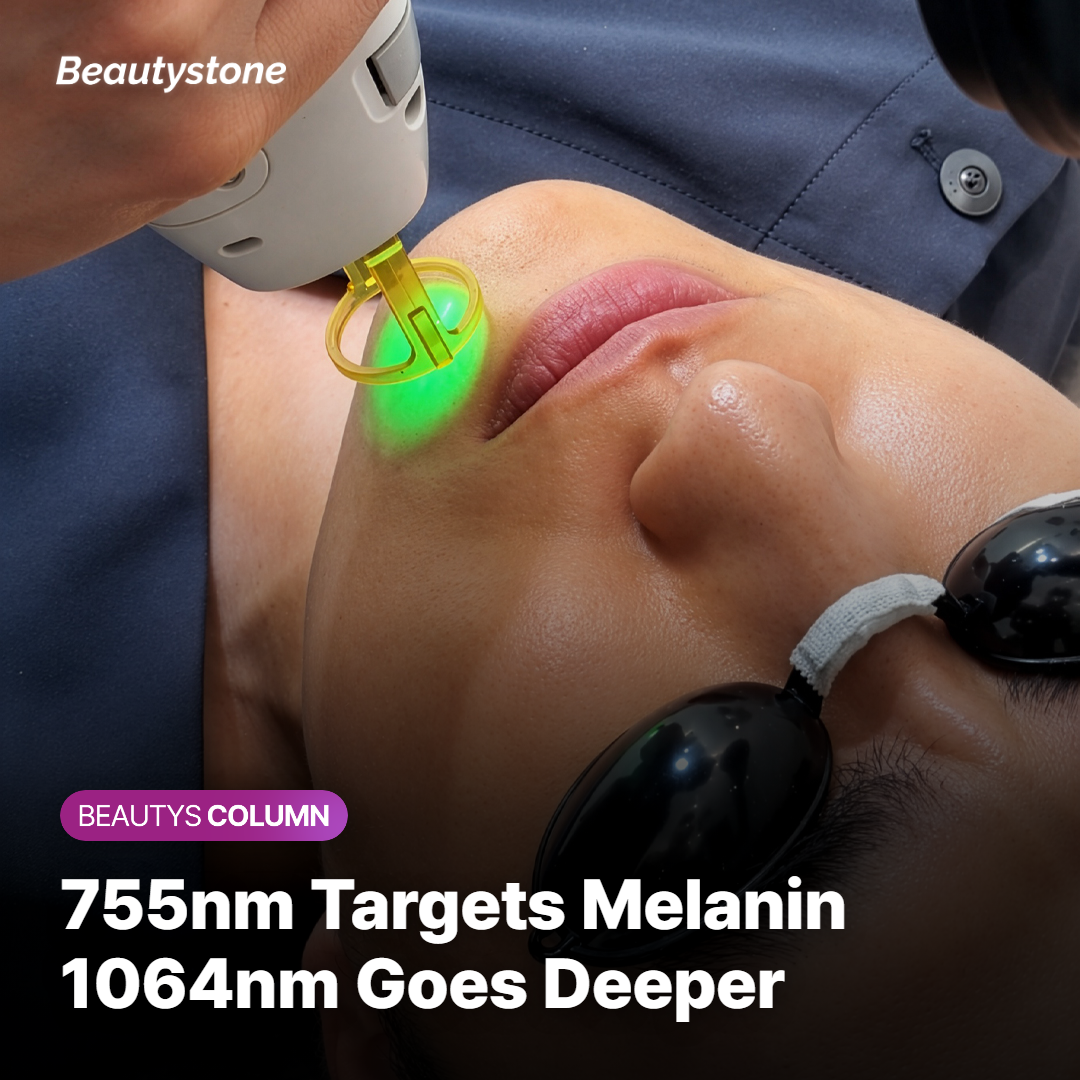
Why Energy Settings Decide 1064nm Results
A higher threshold also means a narrower margin. Set the energy too low and the hair doesn't heat enough to matter. Set it too high for your skin and your skin takes the strain. A review of 104 papers on laser hair removal complications concluded that cutaneous complications are usually related to professional errors and patient characteristics, and among the lasers it compared, Nd:YAG had the highest pain score.
That's why switching wavelengths and resetting the energy are really one decision. If a clinic moves you to 1064nm but leaves the energy wherever it felt right on 755nm, both your results and your skin's reaction can land somewhere you didn't expect.
- Skin type first: your provider should note your skin type before choosing an energy level, not after.
- Hair that's left: the thickness and depth of the remaining hairs shape how much energy it takes to heat them.
- Your last reaction: how your skin responded to the previous session is part of the next setting.
*Fitzpatrick skin type: a I to VI scale that sorts skin by how easily it burns or tans in the sun.
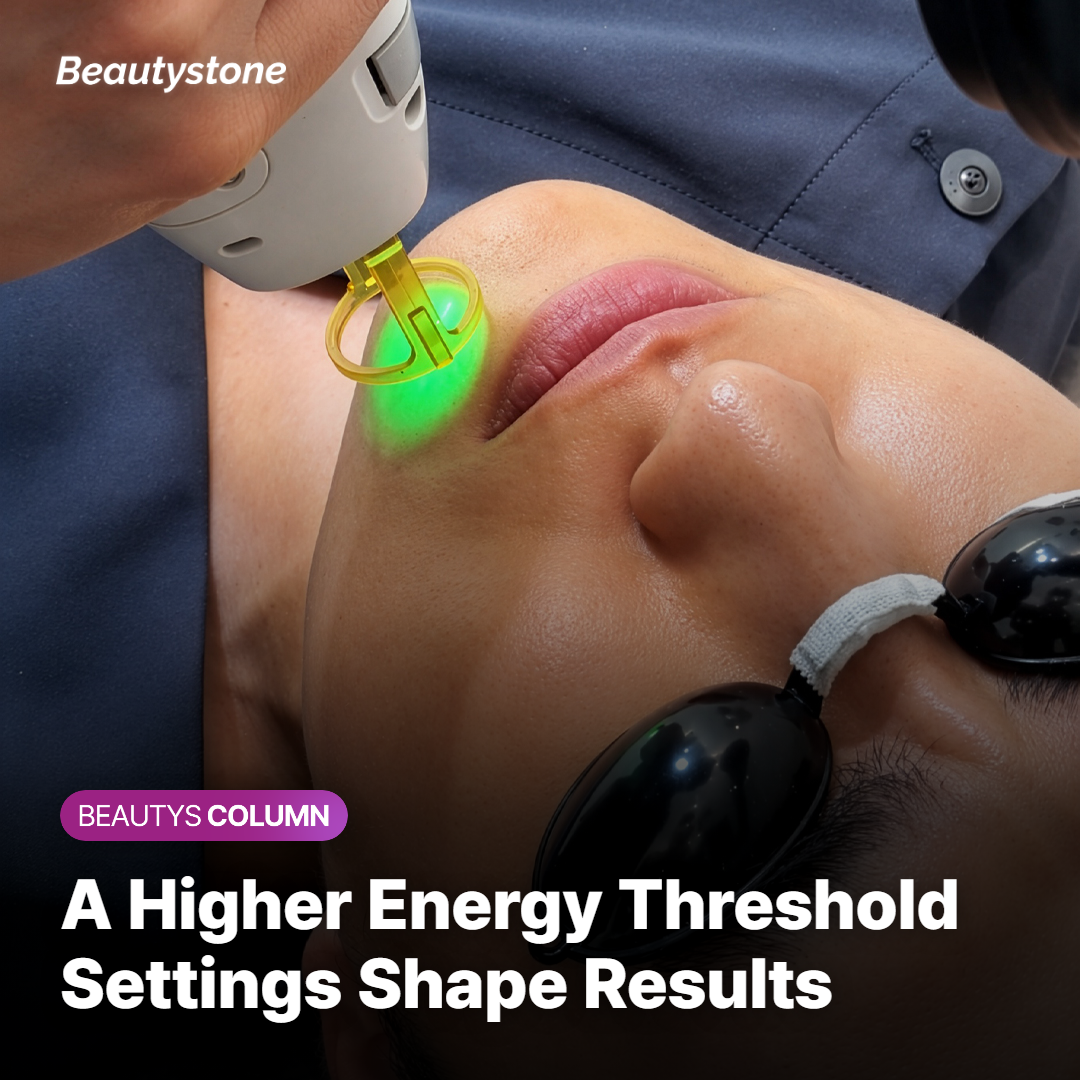
Switching Wavelengths Isn't the Same as Mixing Them
It's easy to confuse switching with combining. In a randomized study of 20 people treated for leg hair and followed for 18 months, 755nm and 1064nm each worked on their own, while using both together added no extra benefit and brought more pigment changes and pain. What we're describing here isn't stacking two wavelengths in one session. It's moving to the one that fits once your progress stalls.
It also isn't accurate to treat risk as a 1064nm-only problem. A case-control study of about 16,900 people found that in skin types III to IV, the alexandrite laser, especially at high energy, was a risk factor for complications. Risk seems to come less from the wavelength's name and more from energy that doesn't suit the skin it's used on.
There's one honest gap to name. We didn't find a study that compared wavelength switching specifically in men's beards, and there's no solid evidence yet that 1064nm simply works better overall. More research is needed, and a good provider will be upfront about that.
Side Effects, Recovery, and Timing Around Your Trip
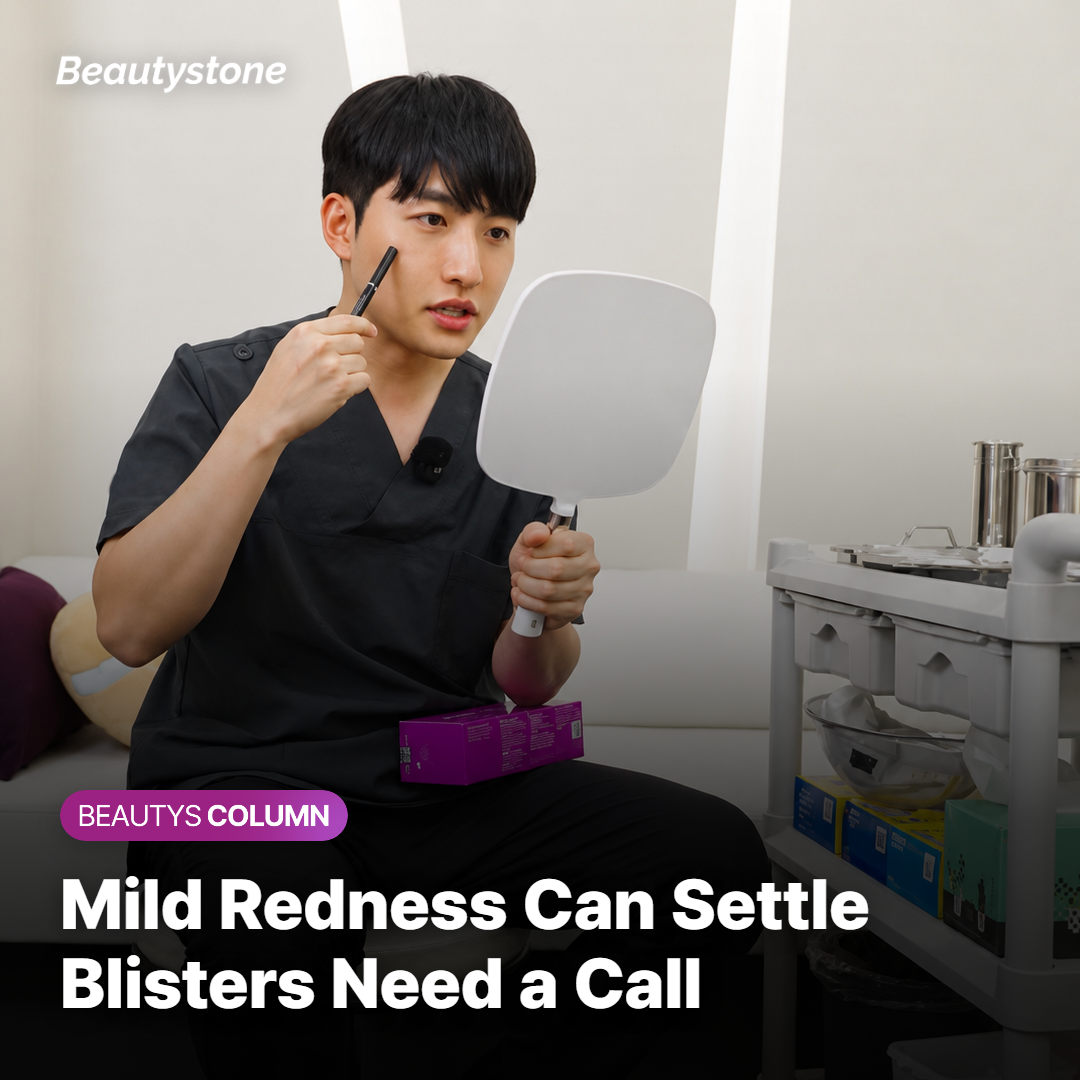
Redness and small raised bumps around the follicles are common after a session, and if they settle within a day or two, that's a typical reaction. If you develop blisters, notice patches of skin turning white or gray, or find that the pain and redness are getting worse after several days instead of better, contact the clinic that treated you right away. Pus-filled bumps from folliculitis also need to be seen by a doctor, and if you have a fever or redness that's spreading, seek medical care right away.
If you're visiting Korea for treatment, leave a few days between your session and your flight home so you can watch how your skin settles while you're still close to the clinic that treated you.
Tell your provider before treatment if any of these apply to you:
- Active infection: pus-filled breakouts or an infection in the beard area.
- Cold sores: you often get herpes blisters around your mouth.
- Keloids: your scars tend to become raised and thick.
- Light-sensitizing medication: you're taking something that makes your skin more reactive to light.
Three Questions to Ask Before You Book
Whether you're weighing a few more sessions where you are or looking at a clinic in Seoul, these questions let you compare on your own terms:
- Equipment: Can this device switch between 755nm and 1064nm?
- Energy: If you move me to 1064nm, how will you set the energy for my skin type and hair thickness?
- Plateau: What will you look at to decide whether I've actually hit a plateau?
Beautystone is a clinic in Seoul's Hapjeong area, inside the Mecenatpolis complex by Hapjeong Station (45 Yanghwa-ro, Mapo-gu). When a beard has stopped thinning, the team writes down your skin type first, then decides which of the GentleMax Pro Plus's two wavelengths to move to and how to set its energy.
It helps to bring what you know: how many sessions you've had, how far apart they were, and which wavelength and energy were used, if your previous clinic shared that. When you first get in touch, one line is enough: "I've had several beard laser sessions and my chin isn't thinning anymore. Could you look at switching wavelengths?"
The Bottom Line
- Stalled beard: if thick hair stops thinning after several sessions, ask about switching to 1064nm and resetting the energy before adding more of the same.
- Two wavelengths: 755nm is strongly absorbed by melanin, while 1064nm reaches deeper and tends to need more energy to heat hair.
- Switching, not mixing: combining both wavelengths at once didn't add benefit in research, and risk tracks energy and skin type more than the wavelength itself.
- Honest limits: no study has compared wavelength switching in men's beards specifically.
Like any procedure, laser hair removal comes with trade-offs, and a new wavelength means a new energy decision. Ultimately, the choice depends on your skin, your hair, and your schedule. If you're considering GentleMax Pro Plus treatment in Seoul, a consultation is where you can find out whether a switch fits you.
Frequently Asked Questions
Q. Will switching to 1064nm stop my beard hair from ever growing back?
A. It's hard to promise that no hair will ever return, whichever wavelength you use. Laser hair removal is better understood as reducing and thinning hair, and it's normal to notice a few hairs coming back over time. Switching wavelengths is a way to keep making progress when you've stalled, and individual results vary.
Q. Does 1064nm hurt more than 755nm?
A. It can. In a review of laser hair removal complications, Nd:YAG had the highest pain score among the lasers compared. How it feels also depends on the energy, the area, and your own sensitivity, so ask your provider how they'll balance the setting with your comfort.
Q. Does switching wavelengths change how often I need sessions?
A. Your provider sets the interval based on how quickly your beard hair grows back and how your skin reacted last time. If you're traveling, share your dates at the consultation so the plan fits the time you have in Seoul.
Q. Can I pluck or wax my beard before a laser session?
A. It's best not to. The laser targets the pigment in the hair inside the follicle, so plucking or waxing out the root leaves less for it to aim at. Advice on when to shave differs between clinics, so ask when you book. This article is general information, and the right wavelength and schedule for you should be decided in person.