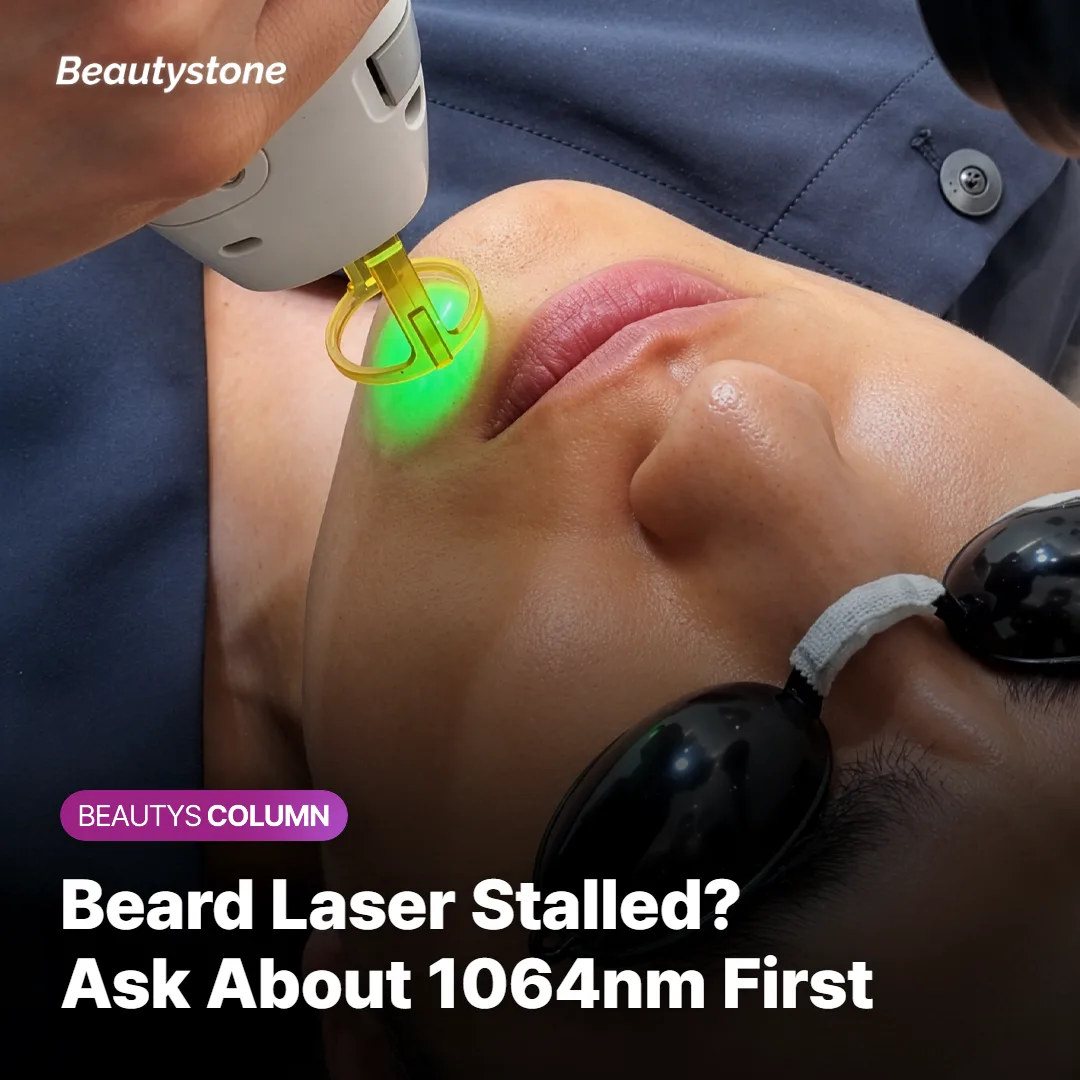
Dark Spot After Laser: When Does It Fade? A 4-Phase Timeline
The dark patch after a laser is usually PIH, not a failure — this guide follows it on a timeline: why it shows up, roughly how it fades, the habits that quietly slow the fade, and the signs that mean it's time to get checked.

You booked the laser to even your skin out, and now there's a darker patch sitting right where the beam did its work — so the very first thought is usually a nervous one: did this go wrong? That worry makes complete sense, but in the great majority of cases the answer turns out to be the reassuring one.
This guide is written for the moment after. You've already had the treatment, the spot is already there, and what you actually want to know is what happens next. So instead of walking through prevention from a blank slate, we'll follow the reaction along a timeline — why the patch appeared, roughly how it clears, the small habits that keep it hanging around longer than it should, and the handful of signs that mean it's time to call someone rather than keep waiting.
It Got Darker After the Laser — Did Something Go Wrong?
The short answer is the reassuring one: a fresh dark patch almost never means the laser was a mistake. What you're most likely seeing is post-inflammatory hyperpigmentation, or PIH — a flat, grayish-brown patch of extra colour that appears once skin has been irritated or injured. A laser is only one of many triggers; acne, eczema, and ordinary cuts can leave the same kind of mark.
The distinction worth holding onto is that PIH is a pigment issue, not a scar. The structure of the skin underneath is perfectly intact — there's simply more melanin, the pigment responsible for your skin tone, gathered in the exact place the inflammation happened. That's genuinely good news, because pigment behaves nothing like scarring: it tends to lighten on its own over time, especially once you stop handing it fresh reasons to darken.
As for why it settled where it did, a laser drives concentrated heat and light energy into the skin, and while that energy does its job, it also leaves a mild wave of inflammation behind as the area heals. In some people that inflammation stirs up the pigment-producing cells and pushes them to work overtime, laying down extra colour unevenly across the treated patch. If your skin is naturally rich in melanin, or it was already irritated on the day, a little of this is more expected than alarming — not evidence that anything failed.
When Will It Fade? A Rough Phase-by-Phase Timeline
Nobody wants an open-ended "it'll clear up eventually," so it helps to picture the fade as a short sequence of phases rather than one long, uncertain wait. The exact pace is personal, but the order runs much the same for most people, and knowing which phase you're in takes a lot of the dread out of the mirror check.
| Phase | What's happening | What you'll notice |
|---|---|---|
| The reaction | The inflammation right after treatment | Redness, mild swelling, a sunburn-like feeling in the first day or two |
| The appearance | Inflammation calms and the pigment shows | The flat grayish-brown patch looks its most obvious in the early weeks |
| The fade | Excess pigment gradually clears | The patch slowly lightens, as long as it isn't being re-triggered |
| Settled | Colour drifts back toward the surrounding tone | Steady, ongoing improvement — the direction that says it's on track |
The most useful thing to track across all four phases is direction, not speed. A patch that's trending lighter from one week to the next is on the right road, even when it feels slow. The early weeks are the highest-leverage stretch of the whole process, because the mark is freshest then and responds most to how well you shield it — which is exactly why the habits in the next section matter so much at this moment.
It also helps to keep this separate from any spots you had before the treatment. Older marks such as sun spots or melasma crept in gradually over years of accumulated sunlight and hormonal shifts, so they never follow this neat post-event curve. Post-laser PIH, by contrast, is tied to a single recent trigger in one specific place — and that's precisely what makes its timeline more predictable and its early care so much more powerful.
5 Habits That Keep Post-Laser Spots Around Longer
If PIH usually fades by itself, why do some spots seem to dig in and refuse to leave? Far more often than not it isn't bad luck — it's a handful of small, well-meaning habits that keep re-lighting the very inflammation the pigment feeds on. These are the five that do the most quiet damage while a mark is trying to heal.
- Picking or scrubbing at the area. Peeling scabs away or exfoliating freshly treated skin piles new inflammation on top of the old — the exact fuel PIH runs on.
- Reaching for strong actives too early. Aggressive brightening ingredients on raw, recovering skin can rebound and deepen the mark instead of lifting it.
- Being stingy with sunscreen. Most people apply far less than they think; a thin film never truly coats the spot, so the UV that keeps pigment switched on still slips through.
- One application and done. A single morning layer won't outlast a full day outdoors — without a fresh top-up every couple of hours when you're out or sweating, the protection quietly wears off.
- Trusting sunscreen to do everything. Cream is only one line of defence; a wide-brim hat, a parasol, or just keeping to the shade blocks what it can't, and helps with the visible light that can also nudge pigment along.
Notice the common thread: every one of these either re-inflames the skin or lets more light reach it, and light is the big external multiplier here. Ultraviolet pushes pigment cells directly to produce more colour, so through this sensitive window, keeping it off the area removes one of the main forces holding the mark in place.
The encouraging flip side is that all five sit entirely within your control. You don't need an elaborate regimen — a hands-off attitude toward the healing skin, sun protection that's both generous and repeated, and a bit of physical cover handle most of what actually shifts the outcome.
When It's Not Just Normal PIH: Signs to Get Checked
The great majority of what turns up after a laser is minor and short-lived. That first reaction phase — a touch of redness, some mild swelling, and a warm, sunburn-like feeling over the first day or two — usually calms down on its own without any fuss. The point of this section isn't to unsettle you; it's to draw a clean line between "keep letting it fade" and "time to check in with someone."
| Reassuring — let it fade | Worth a call |
|---|---|
| Steady, week-over-week lightening | Redness that keeps spreading |
| Mild redness or swelling that settles | A fever alongside the skin changes |
| A flat patch that's slowly clearing | Pain that worsens instead of easing |
| Minor reactions that stay minor | Anything that resembles an infection |
The simplest rule is direction, once again: anything steadily improving is on track, and there's no prize for enduring something that plainly isn't. If a mark starts to darken further rather than lighten, don't reach for a home fix — that's the cue to bring in your provider instead of running experiments on your own skin.
There's one more reason to ask rather than guess: separating post-laser PIH from pigment you were already carrying isn't always obvious, and the right aftercare hinges on knowing which one you're facing. A provider can work out whether the patch is a fresh reaction or an older mark that predates the laser, and steer your next steps accordingly.
How Beautystone Helps You Through the Fade
Plenty of clinics treat the laser itself as the whole event and wave you off the moment the beam switches off. Beautystone — a dermatology clinic in Seoul's Hapjeong area — works from the opposite belief: how you manage the days that follow often decides whether you walk away with a clean result or a patch that overstays its welcome.
In practice, that means the support doesn't end at the appointment. The sun-protection plan is matched to your skin type and the specific area that was treated, the recovery days that call for extra caution are flagged in advance if you happen to pigment easily, and the practical details — like easing off intense outdoor time for a short spell — get talked through instead of left to guesswork. None of it is complicated — just easy to lose sight of when all your attention is on the treatment itself.
If a spot has already surfaced and you're not sure it's fading the way it should, a consultation is the straightforward way to learn what's normal for your skin, your routine, and your goals — and to protect the result you came in for. You can see what's currently on offer at /en/promotion.
Frequently Asked Questions
The spot actually looks darker a few days after my laser — is that a bad sign?
Not usually. The first days are the reaction phase, and as that settles the pigment underneath can look more obvious before it begins to lighten — so a mark that's more noticeable early on is often just the reaction running its normal course rather than a sign anything went wrong. What matters over the following weeks is the direction: steady lightening means it's on track.
Is there anything I can do to help it fade faster?
The most effective moves are subtraction, not addition. Don't pick or scrub the area, go easy on harsh brightening actives while the skin is still healing, and be consistent and generous with sun protection — enough sunscreen to genuinely coat the spot, reapplied through the day, plus a hat or shade. Since UV and fresh inflammation are the two things that keep pigment switched on, removing both is what gives the fade room to happen.
Can I go back to my usual brightening serum while the spot heals?
It's best to hold off on strong actives until the treated skin has calmed down. On raw, recently lasered skin, aggressive brightening ingredients can irritate rather than help, and end up deepening the pigment instead of lifting it. When it's safe to reintroduce them is a good thing to confirm with your provider, since it depends on how your own skin is recovering.
How do I know when to stop waiting and actually see someone?
Let direction be your guide. If the mark is steadily lightening, patience is usually all it needs. But if redness keeps spreading, you run a fever, the pain worsens instead of easing, or anything looks like an infection, that isn't a normal part of healing — get medical care promptly. And if a spot keeps darkening or you simply can't tell what you're dealing with, check in rather than experimenting at home.