Ultherapy PRIME: 4 Questions to Ask Before You Book
The hard part of Ultherapy PRIME isn't the science — it's honestly deciding whether it fits your face, your patience, and your goals right now. These four questions get you there.
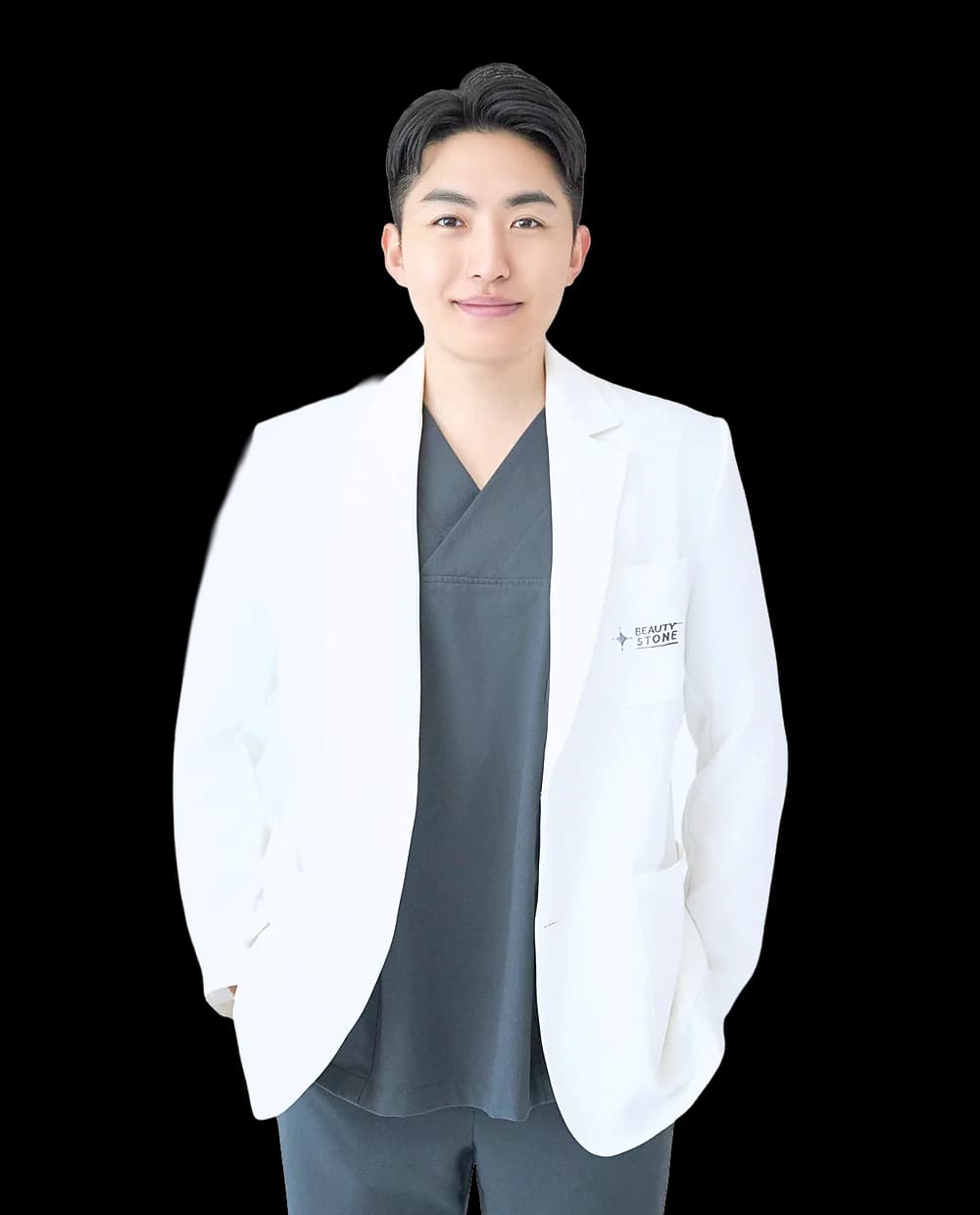
Wi Young-jin
Chief Director & CEO, Myeongdong
If you've read anything about Ultherapy PRIME, you already know the headline: it reaches the SMAS, the deep support layer a surgeon tightens in a facelift, and it lifts without a scalpel. That part is true. But it's also the answer to a question most people aren't really asking. The real question, once you're standing at the booking page, is simpler and more personal — is this the right treatment for my face, right now?
This guide is built around that decision, not the science lecture. We'll walk through four questions worth answering honestly before you book: how loose your skin really is, what you're trading for a non-surgical lift, what the following months will actually feel like, and whether anything on your list means you should wait. Everything here comes from how the treatment genuinely behaves — reframed around you rather than the device.
Question 1: How Loose Is My Skin, Really?
Start here, because this one question predicts more about your result than any other. Ultherapy PRIME is at its best on mild-to-moderate laxity — a jawline that's losing its old edge, cheeks that have started to drop, a neck that isn't as crisp as it once was. It is not built to reverse advanced, heavy sagging, and pretending otherwise is where most disappointment begins.
There's a reason for that limit. A review of focused-ultrasound facial rejuvenation published in PMC noted that outcomes track closely with treating the correct anatomical plane and with choosing the right patient in the first place. In plain terms: the technology delivers when the target is a reasonable one. If skin is only gently loose, there's enough structure left for it to tighten and reposition. If the tissue has descended a long way, a device that firms from the inside simply can't do what a surgeon's incision does.
So the honest self-check isn't "do I have sagging?" — almost everyone past a certain age does. It's "how far along is it?" That single distinction is what separates a happy result from a frustrated one.
| Where you are | Is PRIME a fit? |
|---|---|
| Skin feels a touch soft; jawline just starting to blur | Strong fit — this is the sweet spot |
| Clear looseness along jaw and neck, but tissue still has support | Reasonable fit — set gradual expectations |
| Heavy, hanging laxity or deep folds | Likely not — a surgical consult may serve you better |
If you land in the first two rows, keep reading. If you're closer to the third, the most useful thing a good clinic can do is tell you so plainly rather than sell you a session that was never going to match the goal. A clear no now is worth more than a disappointing yes later.
Question 2: Am I Trading Surgery for Patience?
Every non-surgical lift is a trade, and it helps to name yours out loud before you commit. What Ultherapy PRIME gives you is a genuine lift with no incisions, no stitches, and no recovery time blocked out on the calendar. It's usually a single session, and you walk out and get on with your day. Because it reaches the SMAS with focused ultrasound, the effect is a real structural tightening rather than a surface polish — the same layer a facelift addresses, approached without cutting.
What you give up in exchange is speed and scale. This is the part worth being clear-eyed about before any money changes hands:
- You get: a non-surgical lift, no downtime, one session, and a result that draws on your own collagen.
- You give up: the instant, sweeping change surgery can deliver — the lift here is measured, not maximal.
- You accept: that it won't replicate a facelift, and that the payoff arrives on your body's schedule, not yours.
If you were hoping to erase ten years in an afternoon, this trade will feel like a compromise. If your goal is to look rested and a little firmer without stepping out of your life for two weeks, it's an easy trade to make. The technology is honest about what it is — a lift that borrows from your own tissue's response instead of a scalpel. The mismatch only happens when someone expects surgical results from an ultrasound device.
One more item belongs in the trade column: consistency. Because a real lift depends on placing energy at exactly the right depth, the result leans heavily on who is holding the device. That's not a reason for anxiety — it's a reason to treat the choice of clinic as part of the treatment rather than an afterthought.
Question 3: What Will the Next 6 Months Actually Feel Like?
Booking Ultherapy PRIME is really booking a slow reveal, so it's fair to ask what you're signing up for week by week. The short version: a little happens on the day, not much happens for a while, and then the change quietly arrives. Here's the honest arc, laid out so nothing catches you off guard.
| When | What's happening |
|---|---|
| Treatment day | Roughly 30–90 minutes by area; expect warmth and short, deep pulses during delivery, eased by numbing measures |
| First 1–2 weeks | Some people notice a subtle early tightening; many notice almost nothing yet, and that's perfectly normal |
| 2–3 months | The collagen-remodeling phase gets going — this is when firming and lift start to show |
| 3–6 months | Results tend to peak as new collagen matures |
| Afterward | Effects commonly last around a year or more, varying with age, skin quality, and lifestyle; sun protection helps preserve them |
Notice what this arc rules out: an overnight, dramatic before-and-after. There's no way to hurry the collagen response along, which is exactly why anyone promising an overnight transformation is overselling the technology. Patience isn't a footnote here — it's built into the mechanism itself.
It's also worth knowing how the first few days feel on the skin, so the early phase doesn't rattle you. Mild redness and a little swelling are common in the first hours and usually calm down within a day or two. The area can feel tender, tingly, or a bit numb anywhere from a few days to about two weeks, and a little bruising can show up too, most often around the jaw and neck. None of that is the result — it's just the treatment settling in. Individual results vary, both in how quickly the lift appears and how long the early tenderness lingers.
Question 4: Is There a Reason I Should Wait?
Sometimes the right answer is "yes, but not yet" — or "not with this treatment." Running through the reasons to wait isn't about talking you out of it; it's about making sure the session you book is one that can actually help. A good clinic would rather delay you than treat you into a poor outcome.
Ultherapy PRIME generally isn't recommended when any of the following apply to the treatment area or to you at the time:
- Active infection or open wounds in the area you'd want treated — the skin needs to be intact and calm first.
- Certain implants in the region — worth flagging so your provider can assess placement before proceeding.
- Pregnancy — this is a wait-until-later situation, and a provider will steer you accordingly rather than treat now.
- Advanced, heavy sagging — not a safety issue, but a mismatch; a surgical consult is the more honest path.
- Expectations set on "instant and dramatic" — worth resetting before you spend on a treatment built for the long game.
There's also a small set of things to watch for after any session, precisely because reaching deep tissue means technique matters. Uneven results are more likely when depth or placement isn't well matched to the tissue — again, a provider-experience question. And rarely, transient numbness or brief muscle weakness can occur if energy affects a nerve; these typically resolve on their own. The clear rule for afterward: if you notice spreading redness, fever, worsening pain, or numbness that won't go away, don't wait it out — seek medical care right away.
A good provider will go through your history before agreeing to treat you at all. If a clinic is willing to book you without that conversation, treat it as a reason to pause. The review isn't a formality — it's the step that keeps your "reasons to wait" from turning into regrets after the fact.
Why Beautystone in Hongdae Is Where These Questions Get Answered
Every question above lands in the same place: they're all better answered by looking than by guessing. That's the quiet advantage of doing this properly. Ultherapy pairs with real-time ultrasound imaging, which means a provider can actually see your tissue layers on a screen before delivering any energy — placing it where it should go and steering clear of what shouldn't be treated. Your candidacy, your depth, your realistic result: none of it has to be a guess.
That's the spirit a consultation is meant to capture. Rather than deciding from an article whether your degree of laxity is a good match, a proper assessment can tell you where you actually sit on that first-question spectrum — and whether waiting, or a different route entirely, would serve you better. The best consultations are as willing to say "not yet" as they are to say "you're a good candidate."
Beautystone is a dermatology clinic in Seoul's Hongdae area, and that consultation is the natural next step if these four questions have left you leaning in rather than out. You can see current offers at /en/promotion. Bring the honest version of your answers — how loose your skin really is, how much patience you have, and what you're hoping to trade — and let the assessment do the rest.
None of this is a promise, and it shouldn't be. Individual results vary, the lift is gradual, and it works best on mild-to-moderate laxity. But if those terms sound like a fair deal for your face and your calendar, the four questions have already done their job — they've turned a booking into a decision you can stand behind.
Frequently Asked Questions
Is a single session of Ultherapy PRIME usually enough?
For most people, yes — it's typically done as a single-session treatment. The reason you don't top up right away is that the result builds slowly from your own collagen over 3–6 months, so the honest way to judge it is to wait out that window before deciding on anything else.
Does Ultherapy PRIME hurt?
During treatment you'll feel warmth and short, deep pulses as the energy goes in, and numbing measures are used to keep it manageable. Afterward the area can feel tender or tingly for a few days up to about two weeks. It's a sensation you're aware of during the session, not something that lingers as pain.
Can Ultherapy PRIME replace a facelift?
No — and it isn't meant to. It reaches the same deep SMAS layer a facelift tightens, but it produces a measured lift rather than a surgical one, and it won't reverse heavy, advanced sagging. Think of it as the non-surgical option for mild-to-moderate laxity, not a substitute for the operating room.
How long do the results last?
Effects commonly last around a year or more, though this varies with age, skin quality, and lifestyle. Sun protection helps preserve what you gained. Because the lift comes from remodeled collagen, keeping up with sensible skin care matters more than chasing a permanent fix.