

Ultherapy 600 Shots: Does More Mean Better?
More shots don't automatically mean better results. What truly determines your outcome is where the energy is delivered — and at what depth.

Ultherapy 600 Shots: Does More Always Mean Better Lifting?

When consulting about Ultherapy, the first thing most people focus on is the shot count — 400 shots, 600 shots, 800 shots. It's easy to assume that more automatically means better. But in my clinic, I've seen quite a few patients who received a high number of shots and still came back unsatisfied with their results.
The reason is straightforward: Lifting is not a matter of quantity — it's about where and how the energy is delivered.
Shot Count Doesn't Determine Effectiveness
Ultherapy works by focusing ultrasound energy into the SMAS Layer* to lift sagging tissue from the inside out.
*SMAS Layer: A fibromuscular layer beneath the skin that connects the facial muscles to the overlying skin. This is the layer that descends as the face ages and begins to sag.
Even with the same 600 shots, the outcome can vary dramatically depending on the depth and location of each delivery. A procedure that simply accumulates shot counts in a uniform, stamping-like pattern tends to under-treat the areas that actually need lifting — while unnecessarily stimulating areas that don't.
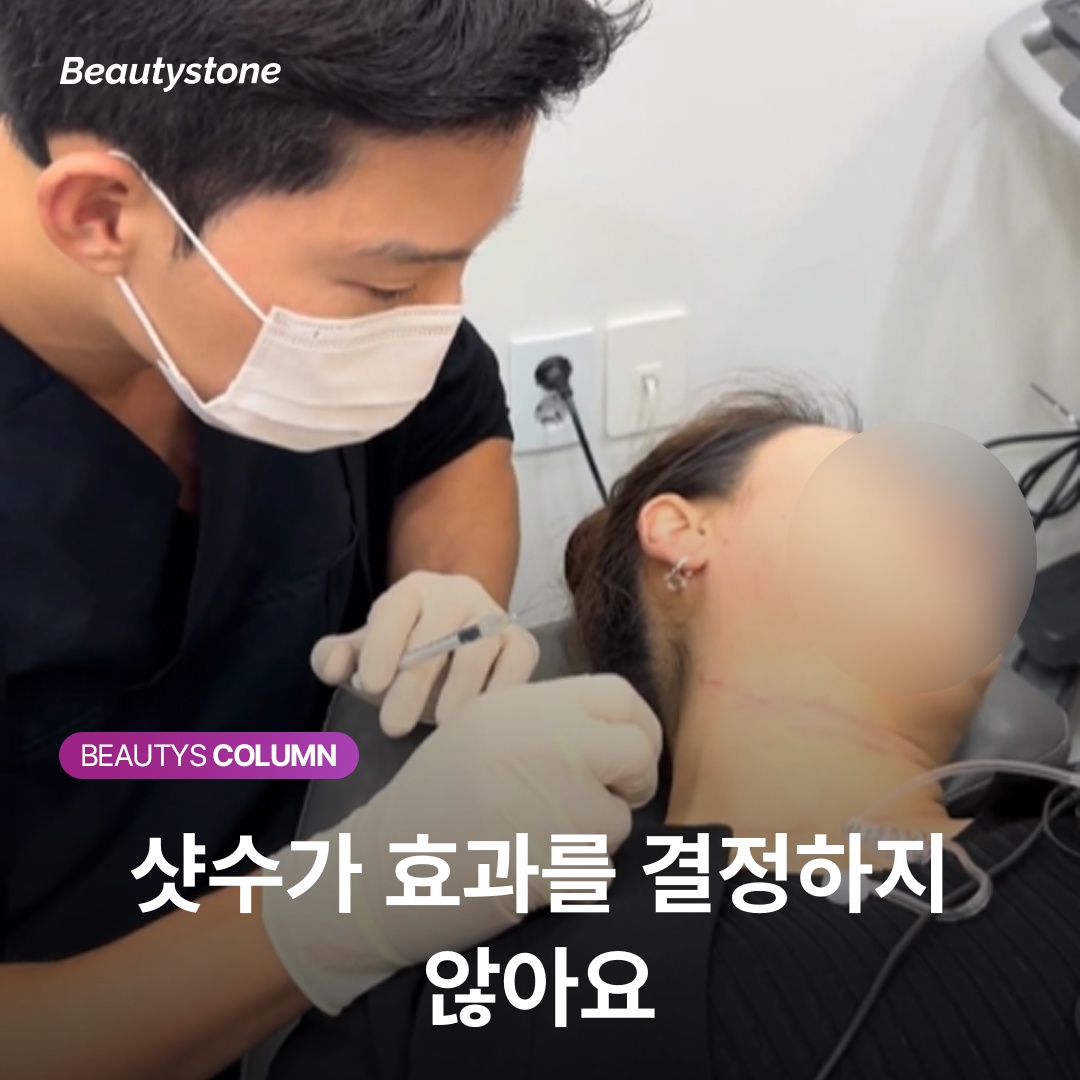
Knowing Where NOT to Treat Matters Just as Much
Applying excessive energy to areas with minimal fat — such as the rear cheeks or the sides of the mouth — can actually cause volume loss and hollowing. Once that hollowing occurs, it can be quite difficult to correct.
A skilled practitioner plans ahead: identifying which areas to focus on for lifting, and which areas to deliberately avoid. An Ultherapy procedure performed without proper pre-marking is, in practice, little more than stamping energy uniformly across the face.

Enduring More Pain Doesn't Guarantee Better Results
You may have heard the idea that "more pain means better results" — and there's a grain of truth to it. A certain level of stimulation is necessary for the procedure to be effective. However, if the discomfort becomes so intense that the practitioner has to lower the energy settings, that actually works against you.
Using numbing cream, or when appropriate, light sedation, allows the optimal energy level to be maintained throughout the entire procedure. Getting through it comfortably and consistently is what produces results — not simply gritting your teeth.

Results Typically Become Visible Around 3 Months Post-Procedure
Because Ultherapy works by stimulating new Collagen production, it's completely normal to see little visible change immediately after the procedure. Improvement develops gradually over 1 to 3 months, with the most noticeable results typically appearing around the 6-month mark.
There's no need to feel discouraged when you look in the mirror just a few days after your appointment. That said, if you're still seeing minimal change after 6 months, that's worth discussing with your doctor — it may be a signal to reassess the energy settings and mapping approach used.

**Q. So how many shots is the right amount?** A. Many practitioners recommend 400 shots or more as a general starting point, but the ideal number varies based on face size and the degree of sagging. How those shots are distributed across different zones matters far more than the total count.
**Q. Do I need to come in every year?** A. Taking Collagen maintenance cycles into account, many patients space their sessions 1 to 2 years apart. However, individual variation in how quickly sagging progresses can be significant.
**Q. Can I go back to my daily routine right after the procedure?** A. Mild Swelling or a dull, achy sensation may occur for 1 to 3 days, but there is virtually no Downtime required.
Frequently Asked Questions
Q1. Does a higher Ultherapy shot count mean better lifting results?
Not necessarily — shot count alone doesn't determine effectiveness. The outcome depends heavily on where and how precisely the energy is delivered, not just how many shots are given.
Q2. Can too many Ultherapy shots cause problems?
Yes — applying excessive energy to areas with minimal fat, like the rear cheeks or sides of the mouth, can cause volume loss and hollowing, which can be difficult to correct afterward. Proper pre-marking and planning helps avoid this.
Q3. Does enduring more pain during Ultherapy mean better results?
Not necessarily — while some stimulation is necessary for the procedure to work, if discomfort forces the practitioner to lower the energy settings, that actually works against you. Numbing cream or light sedation can help maintain the optimal energy level throughout.
Q4. When will I see results after Ultherapy?
Results typically become visible around three months after the procedure, since the treatment works by gradually stimulating collagen in the SMAS layer rather than producing an immediate change.