

Thermage vs. Other RF: Does Depth Matter?
Not all radiofrequency devices treat skin the same way. Here's what treatment depth actually means for the results you can expect.

If you've priced out radiofrequency (RF) skin tightening in Seoul, you've probably noticed the range is wide — some devices cost a fraction of what Thermage FLX does, even though the marketing sounds nearly identical. The short answer for why: it comes down to how deep the energy actually travels into your skin. In this article, we'll cover what "depth" really means for RF treatments, how a gap of just over a millimeter can change what you actually see in the mirror, and how to figure out which option fits what you're trying to achieve.
What Is RF Skin Tightening, and Why Does Depth Matter?
Radiofrequency (RF) treatments work by sending controlled energy into your skin, which heats the tissue and triggers your body's own collagen production. Over the following weeks, that response is what gradually firms and tightens the treated area.
What tends to get glossed over in the marketing is that not every RF device sends that energy to the same depth. Skin is layered — epidermis, dermis, a layer of subcutaneous fat, and beneath that, a fibrous sheet called the SMAS (superficial musculoaponeurotic system). The SMAS is the structural layer that actually holds your face up, and whether an RF treatment can produce a real lift — versus just making the surface feel firmer — depends largely on whether the energy reaches it.
Thermage FLX is an FDA-cleared RF device for skin tightening, engineered to deliver energy deeper and more precisely than many of the RF machines on the market, including a lot of domestically produced devices used widely in Korean clinics. That difference in reach is what this comparison actually comes down to.
Thermage FLX vs. Other RF Devices: Key Differences
On paper, a lot of RF devices look similar — same basic technology, similar treatment times, similar language about "lifting" and "collagen." The real differences show up in two places: how deep the energy reaches, and how precisely the device manages heat at the surface so you don't end up with a burn in the process.
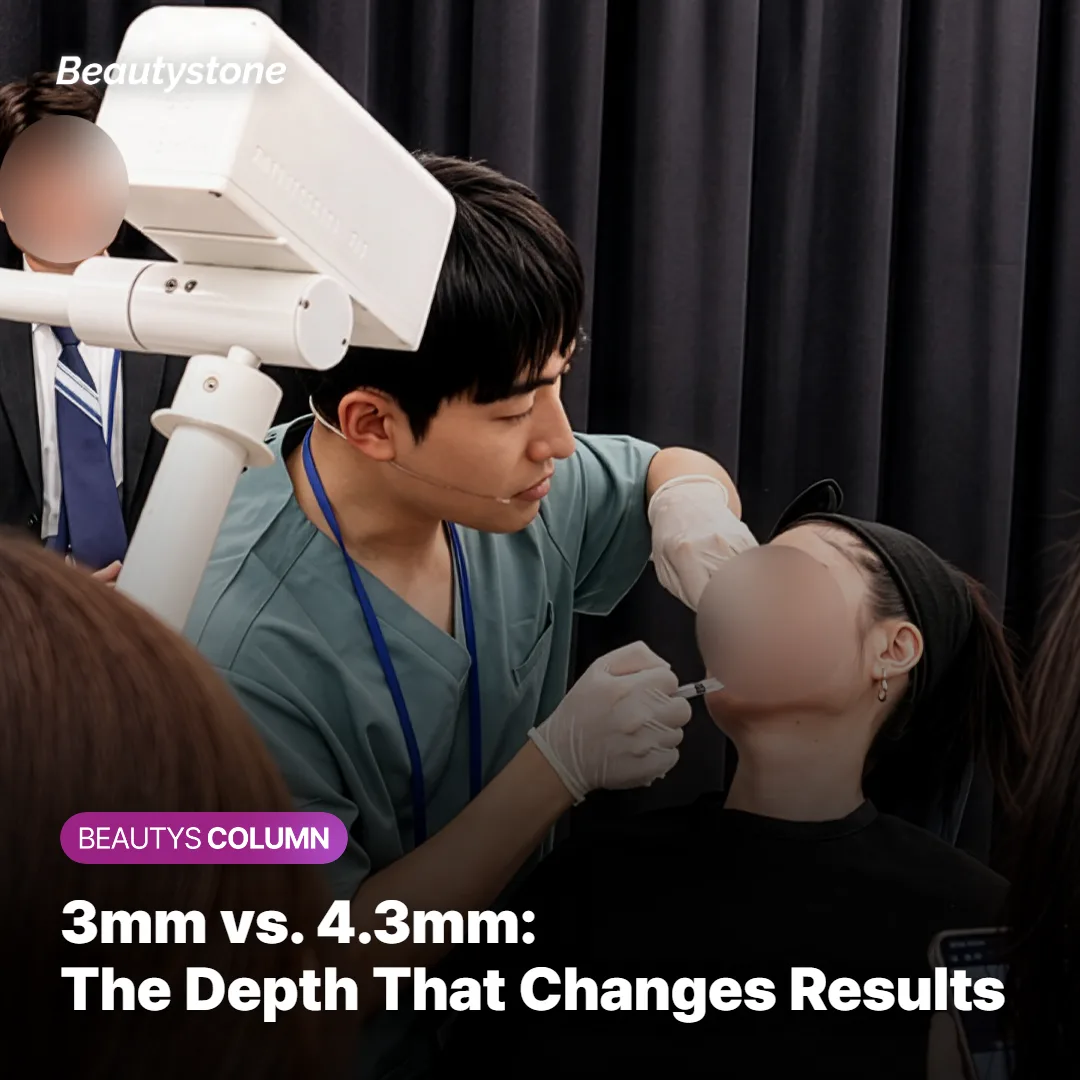
Many domestically produced RF devices commonly used in Korean clinics are built to reach around 3mm into the dermis — enough to stimulate collagen in the mid-dermis, but usually not deep enough to make meaningful contact with the SMAS layer. Thermage FLX is designed to reach closer to 4.3mm, near enough to the SMAS to affect it directly. That 1.3mm gap sounds small, but it's often the difference between skin that feels firmer and a change you can actually see along your jawline.
| Factor | Typical Domestic RF | Thermage FLX |
|---|---|---|
| Typical depth reached | Around 3mm (mid-dermis) | Around 4.3mm (near the SMAS layer) |
| Main effect | Smoother texture, tighter-feeling skin | Surface tightening plus a visible lift along sagging areas |
| Best suited for | Early signs of aging, texture and pore concerns | Visible sagging along the jawline or midface |
| Downtime | Minimal | Minimal |
| Price point | Generally more affordable | Higher, reflecting deeper, more precisely controlled energy delivery |
How Deeper Energy Reaches the SMAS Layer
Getting RF energy deeper into the skin without damaging the surface isn't just a matter of turning up the power. It takes a more advanced cooling system to protect the epidermis while energy is pushed further down, and that engineering is a big part of why deeper-reaching devices cost more to build — and to use.
Many domestic RF devices are built around a safety-first design: enough output to reliably stimulate the mid-dermis, paired with cooling tuned for that shallower depth. It's a reasonable trade-off, and it's part of why these devices tend to be more affordable. Thermage FLX takes a different approach, using real-time cooling that's precise enough to let it deliver energy near the SMAS layer without the surface risk you'd get from simply pushing an unshielded RF device harder.
This is also why you can't judge depth from a treatment description alone. Two devices marketed as "RF skin tightening" can behave very differently once that energy is actually inside your skin.
What to Expect: A Timeline After RF Treatment
The general timeline looks similar whether you choose a domestic RF device or Thermage FLX — what differs is the size of the change you'll eventually notice.
- Day of treatment: Skin typically looks slightly flushed and may feel warm, similar to a mild sunburn. Most people go straight back to their day.
- First 48 hours: Any redness or mild swelling usually settles down, and some people notice their skin already feels a bit smoother.
- 2 to 4 weeks: This is when new collagen production starts to show — texture and firmness tend to improve first.
- 2 to 6 months: Collagen remodeling continues gradually. With deeper-reaching treatments like Thermage FLX, this is typically when a lifting effect along the jawline or cheeks becomes more noticeable, since the SMAS layer responds more slowly than the dermis.
One thing worth keeping in mind: results build up rather than showing all at once, and individual results vary depending on your skin's starting point, your age, and how your body responds.
Side Effects & Safety: What You Should Know
RF skin tightening is generally well tolerated, whether the device is a domestic one or Thermage FLX. Redness, mild swelling, and a warm or slightly tender feeling in the treated area are common and usually settle within a day or two.
- Temporary redness or warmth: Common right after treatment, usually fades within hours to a day.
- Mild swelling: Can happen, especially with deeper-reaching treatments, and typically resolves within a few days.
- Rare risks: Blistering or surface burns are uncommon, but more likely with a poorly calibrated device or an inexperienced operator, since deeper energy delivery depends heavily on precise cooling.
If you notice blistering, spreading redness, fever, or pain that's getting worse instead of better, seek medical care right away rather than waiting it out. It's also fair to ask your provider directly which device they're using and how deep it's designed to treat — that's information you're entitled to before you book anything.
How Much Does RF Skin Tightening Cost in Seoul?
Pricing for RF skin tightening in Seoul varies a fair amount depending on the device, how many passes or shots are used, and the clinic's specific plan. As a general rule, domestic RF devices tend to sit at a lower price point, while Thermage FLX runs higher — a gap that mostly reflects the deeper, more tightly controlled energy delivery covered above, not just a brand premium.
Because pricing and promotions change often, we won't quote specific figures here. A consultation is the most reliable way to get an accurate quote for your face and your goals — you can see current offers at /en/promotion.

The Bottom Line: Which RF Option Fits You?
Here's the short version: domestic RF devices and Thermage FLX aren't really competing for the same job.
- Domestic RF devices typically reach around 3mm, enough to firm up texture and improve surface tone — a solid, budget-friendly option if visible sagging isn't your main concern yet.
- Thermage FLX reaches closer to 4.3mm, near enough to the SMAS layer to produce a more visible lift along sagging areas, not just smoother-feeling skin.
- Like any procedure, both come with trade-offs — cost, how deep your specific concern actually sits in the skin, and how much you're willing to spend for that extra reach.
If texture is your main concern and you're not seeing real sagging yet, a domestic RF device may get you there without the higher price tag. If your jawline or cheeks are starting to drop, the extra depth Thermage FLX offers is probably closer to what you actually need. Ultimately, the choice depends on your skin, your goals, and your budget. If you're considering RF skin tightening, a consultation is the best way to find out what fits you — Beautystone is a dermatology clinic in Seoul's Hapjeong area, and you can see current offers at /en/promotion.
Frequently Asked Questions
Q1. Does a Deeper RF Treatment Hurt More?
Not necessarily. Thermage FLX and most domestic RF devices are generally described as similarly tolerable — you may notice more warmth or a brief zap-like sensation as the settings go deeper, but pain levels vary from person to person, and most clinics offer numbing options if you're sensitive.
Q2. How Long Do RF Skin Tightening Results Last?
Collagen-driven results from RF treatments typically last several months to around a year, depending on the device used and your own skin. Since collagen production naturally slows with age, most people repeat treatments periodically rather than expecting one session to last indefinitely.
Q3. Can You Start With a Domestic RF Device and Switch to Thermage FLX Later?
Yes, that's a common approach. Just avoid stacking the two too close together — going back-to-back can overlap your skin's collagen remodeling cycles and make it harder to tell what's actually working. Spacing treatments a few months apart is usually recommended.
Q4. Is Thermage FLX Worth the Higher Cost Compared to Other RF Devices?
It depends on what you're trying to fix. If surface texture is your main concern, a domestic RF device may get you a similar-feeling result for less. If you're dealing with visible sagging, the deeper reach of Thermage FLX is designed specifically for that, which is where the price difference tends to pay off.