

Thermage in Your 30s: Why Timing Matters
You're in your early 30s, nothing looks like it's sagging yet, but you keep hearing that starting Thermage now is more efficient than waiting. Here's the collagen science behind that idea, and how an early-30s treatment plan actually differs from a standard session.

Last updated: July 2026
What Is Thermage, and Why Does Timing Matter?
Thermage is a radiofrequency (RF) skin-tightening treatment that heats the deeper layers of skin to trigger new collagen production. Most people picture it as something you book once jowls or a slack jawline actually show up, since that’s the version most reviews and before-and-afters focus on.
In this article, we’ll cover why plenty of providers actually recommend starting earlier than that, what the collagen science behind the “early start” idea looks like, and how a treatment plan in your early 30s differs from a standard session built for visible sagging.
The short answer? If you get ahead of the point where your own collagen production really starts sliding, the same number of shots tends to do more work. Here’s why that matters, and how to think about your own timing.
How Collagen Production Changes as You Age
Collagen synthesis in skin typically peaks in your mid-20s, then declines by roughly 1% a year after that. It’s a slow slope, not a cliff, but it adds up. By 35, most people are already producing somewhere in the range of 10–15% less collagen than they were at their peak. By your late 40s, that gap can be closer to half.
Thermage doesn’t add collagen directly. It heats the dermis enough to trigger your own fibroblasts, the cells that build collagen, into producing more. Because of that, results depend partly on how much productive capacity your skin still has left. Send the same RF energy into skin with a strong collagen-producing baseline and into skin with a weaker one, and you’ll typically get a different response.
Think of it like a savings account. Depositing money into an account that’s already earning solid interest builds faster than trying to rebuild a balance that’s been mostly drawn down. Early Thermage runs on similar logic: you’re topping up collagen reserves while your skin is still good at making more of it.
What Happens If You Start Thermage in Your Early 30s?
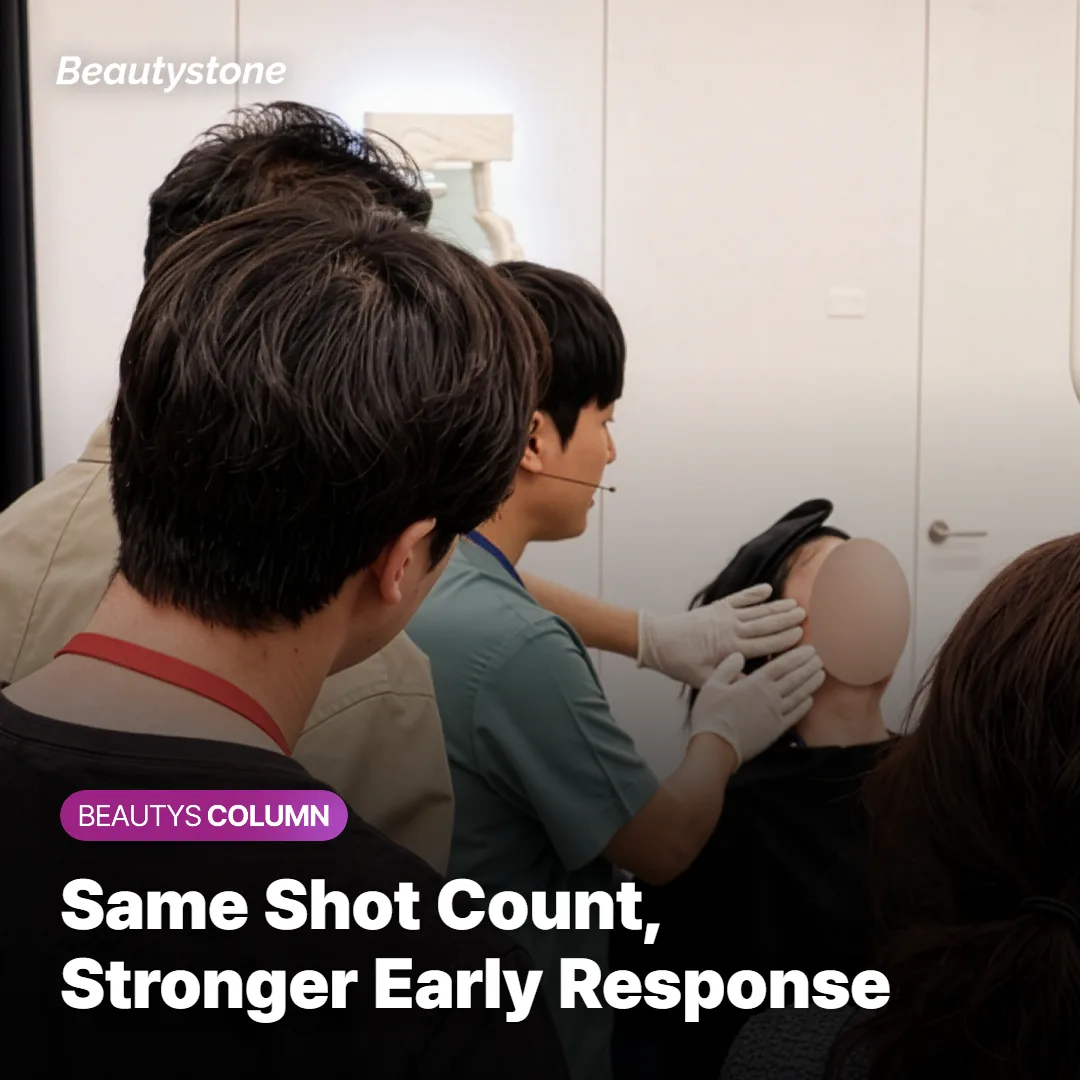
This is where the “banking collagen” idea comes from. One Thermage session before 35, while your skin’s collagen-producing capacity is still relatively strong, can lead to a noticeably stronger response than the same shot count delivered a decade later.
That doesn’t mean results show up dramatically overnight. In fact, early-30s patients often notice more subtle changes right after treatment than someone in their late 40s does, simply because there’s less visible loss to correct in the first place. The real payoff shows up on a longer timeline.
The real difference isn’t something you notice right after the appointment. It tends to show up over a longer stretch — people who compare their skin three to five years down the road, treated versus untreated, are the ones who typically see a clear gap in firmness.
Providers sometimes describe this as raising your own starting line. You’re not stopping the aging process, nobody can do that, but you may be shifting your own curve so visible sagging shows up later and progresses more slowly.
So do you need visible sagging to see any benefit? No. This is probably the biggest hesitation for people in their early 30s: if nothing looks like it’s sagging yet, is there anything to actually treat? It’s a fair question, and the honest answer is that early Thermage isn’t really about correcting current sagging, it’s about slowing down what happens next.
If you already have a healthy collagen baseline and treat it early, that baseline tends to hold up longer. If you wait until sagging is visible, you’re starting from a lower point and trying to climb back up, which generally takes more sessions to reach a comparable result.
That said, early Thermage isn’t required for everyone in their 30s. If your skin is holding up well, your lifestyle is lower-risk for early aging, and you’re not particularly bothered by the idea of changes down the road, there’s no rule that says you have to start now. It’s a strategic option, not a mandatory one.
How Is an Early-30s Treatment Plan Different?
Providers often adjust both the shot count and the distribution pattern for patients who don’t have visible sagging yet.
- Shot count: A standard session aimed at visible sagging is often around 600 shots. Early-30s patients without sagging are frequently treated with somewhat fewer, often in the 400–500 range, since the goal is collagen stimulation rather than aggressive lifting.
- Distribution: Patients with clear sagging usually get shots concentrated over the cheekbones and jawline. In your early 30s, distribution is often spread more evenly across the whole face.
- Cost: A lighter shot count generally means a somewhat lower price for the initial session, though pricing always depends on the clinic and plan.
- Follow-up: Many providers set up an early, lighter session as a foundation, with a fuller session, closer to 600 shots, a year or two later once there’s a baseline to build on.
The idea isn’t to do less for the sake of it. It’s to match the treatment intensity to what your skin actually needs at this stage.
Side Effects and Downtime: What to Expect
Thermage is a single-session, non-invasive RF treatment, and side effects are generally mild and short-lived.
- Redness and warmth: Common right after treatment and usually settles within a few hours to a day.
- Mild swelling: Some people notice slight puffiness for a day or two, especially around the treated areas.
- Temporary tingling or tightness: A normal part of the skin’s response to the RF energy, typically fading within the first week.
- Downtime: Minimal — most people return to normal activities and makeup the same day or the next.
More serious reactions, like blistering, prolonged pain, or burns, are rare but can happen if device settings aren’t matched properly to your skin. If you notice spreading redness, unusual pain, or anything that looks like a burn after treatment, contact your provider right away rather than waiting it out.
Individual results and recovery time vary, and a board-certified provider should adjust settings based on your specific skin type and history.
How Much Does Thermage Cost, and How Often Do You Need It?
Pricing for Thermage varies by clinic, the shot count used, and any bundled treatment plan, so it isn’t something we can pin down with a single number here. In general, lighter, prevention-focused sessions, like the reduced shot counts often used for early-30s patients, tend to cost less than full sessions built around visible sagging. A consultation is the best way to find out what fits your skin and your budget — see current offers at /en/promotion.
How often you need it depends heavily on lifestyle. If you get a lot of sun exposure, smoke, drink frequently, or work night shifts, your skin’s aging pace tends to run faster, and providers often suggest revisiting treatment roughly every two years. If your lifestyle is more stable and your skin is holding up well, a three-year interval is often enough.
One session in your early 30s can be meaningful on its own. Whether you continue on a regular schedule or treat it as a one-time “deposit” is a decision you can make after seeing how your own skin responds — you don’t need to commit to a multi-session package up front.
| Factor | Early 30s, No Sagging | Late 40s, Visible Sagging |
|---|---|---|
| Typical goal | Collagen stimulation, prevention | Lifting, correcting visible sagging |
| Typical shot count | 400–500, even distribution | Around 600, concentrated on cheeks and jawline |
| Collagen response | Generally stronger for the same energy | Generally slower, since baseline is lower |
| Change visible right after treatment | Subtle | More noticeable |
Is Early Thermage Worth It, and Who’s a Good Candidate?
Early Thermage tends to make the most sense if you fall into a few categories: you have a family history of early sagging, your lifestyle includes higher-risk factors like heavy sun exposure or smoking, or you simply prefer a prevention-over-correction approach to skin care.
It’s less of a priority if your skin is holding up well, your lifestyle is generally lower-risk, and you’re not especially concerned about proactively managing changes that haven’t shown up yet. There’s no strict rule that everyone needs Thermage by a certain age.
A few questions worth thinking through before booking: What specific change are you hoping for, firmness, texture, or prevention? How do your current habits, sun exposure, smoking, sleep, affect your own aging pace? And are you comfortable planning for a multi-year pattern, or would you rather try one session first and decide from there?
The Bottom Line
Starting Thermage in your early 30s isn’t about chasing a dramatic transformation. It’s a longer-game strategy built on the idea that your skin’s own collagen-producing capacity is still relatively strong at that age. The same shot count tends to go further before 35 than it does after 45, and an early, lighter session can set up a stronger baseline for whatever you choose to do next.
Like any procedure, it comes with trade-offs: cost, some short-term redness and swelling, and no guarantee that it’ll offset every future change on its own. Individual results vary, and lifestyle plays a real role in how fast your skin’s baseline shifts.
Ultimately, the choice depends on your skin, your goals, and your budget. If you’re weighing whether early Thermage makes sense for you, a consultation is the best way to get a plan tailored to your own skin. Beautystone is a dermatology clinic in Seoul’s Hapjeong district — see current offers at /en/promotion.
Frequently Asked Questions
Q1. My friend got Thermage early and wasn’t impressed by the results. Should I still consider it?
It’s worth checking when your friend’s review was written. A one-week review and a three-month review of the same treatment can look completely different, since collagen remodeling takes time. It’s more useful to compare notes with someone whose skin and timeline are similar to yours than to judge from a single early impression.
Q2. Does the effect really drop off sharply after 35?
No, it’s a gradual decline rather than a cliff. Age 35 is just an average benchmark, and your own collagen-producing capacity depends on genetics, sun exposure, and lifestyle. The general pattern still holds, though: starting earlier tends to be more efficient than waiting.
Q3. Do I need Ultherapy too if I start Thermage in my early 30s?
Not necessarily. If you don’t have visible sagging yet, Ultherapy isn’t a required add-on. A common approach is to build a firmer collagen baseline with Thermage first, then add Ultherapy later if and when sagging actually starts to show.
Q4. What if I already notice some sagging in my early 30s?
Some sagging in your early 30s doesn’t rule out the early-start approach, it just means your provider may lean toward the standard shot count and distribution used for visible sagging rather than the lighter, prevention-focused protocol. A consultation is the best way to figure out which version fits your skin.