Does Thermage Really Cause Facial Bone Loss?
Search "Thermage" long enough and you'll run into a scary claim: repeated radiofrequency lifting supposedly shrinks or dissolves your facial bones. Here's where that rumor started, and what the evidence actually says about how deep the energy really goes.

Search "Thermage" long enough, and you'll eventually run into a claim that sounds more like folklore than dermatology: repeated radiofrequency lifting sessions supposedly cause your facial bones to shrink or dissolve over time. It's the kind of story that spreads fast online, vague enough to sound plausible and alarming enough to make you pause before booking anything.
Here's the short version up front: Thermage's radiofrequency energy is designed to target your skin and the connective tissue layer just beneath it, not the bone underneath. But is any of it true, even a little? In this article, we'll cover where the bone-loss rumor actually started, what the research says about how deep radiofrequency energy really travels, and what's more likely behind the "sunken face" look some longtime patients report.
Where Did the Bone Loss Rumor Come From?
Thermage uses radiofrequency energy to heat the deeper layers of your skin, and that heat is real. You'll feel distinct warmth, sometimes bordering on hot, as the device passes over your face. It's not hard to see how that sensation turned into a theory: if it's hot enough to feel, maybe it's hot enough to reach the bone underneath.
That theory picked up steam alongside a separate, real observation. Some people who'd had radiofrequency lifting treatments many times over the years started to look a little hollow or gaunt, and the internet did what it does best: connected two unrelated dots into one dramatic explanation. If a face changes shape after years of treatments, the story goes, the treatment must be why.
The problem is that correlation isn't causation, and facial hollowing has a well-documented set of causes that have nothing to do with radiofrequency energy. Research on how radiofrequency affects collagen describes the treatment as working by reshaping collagen molecules in the skin, causing immediate contraction followed by new collagen production, which tells you plainly where the energy is meant to act: the skin, not the skeleton underneath it.
What Does Thermage Actually Target?
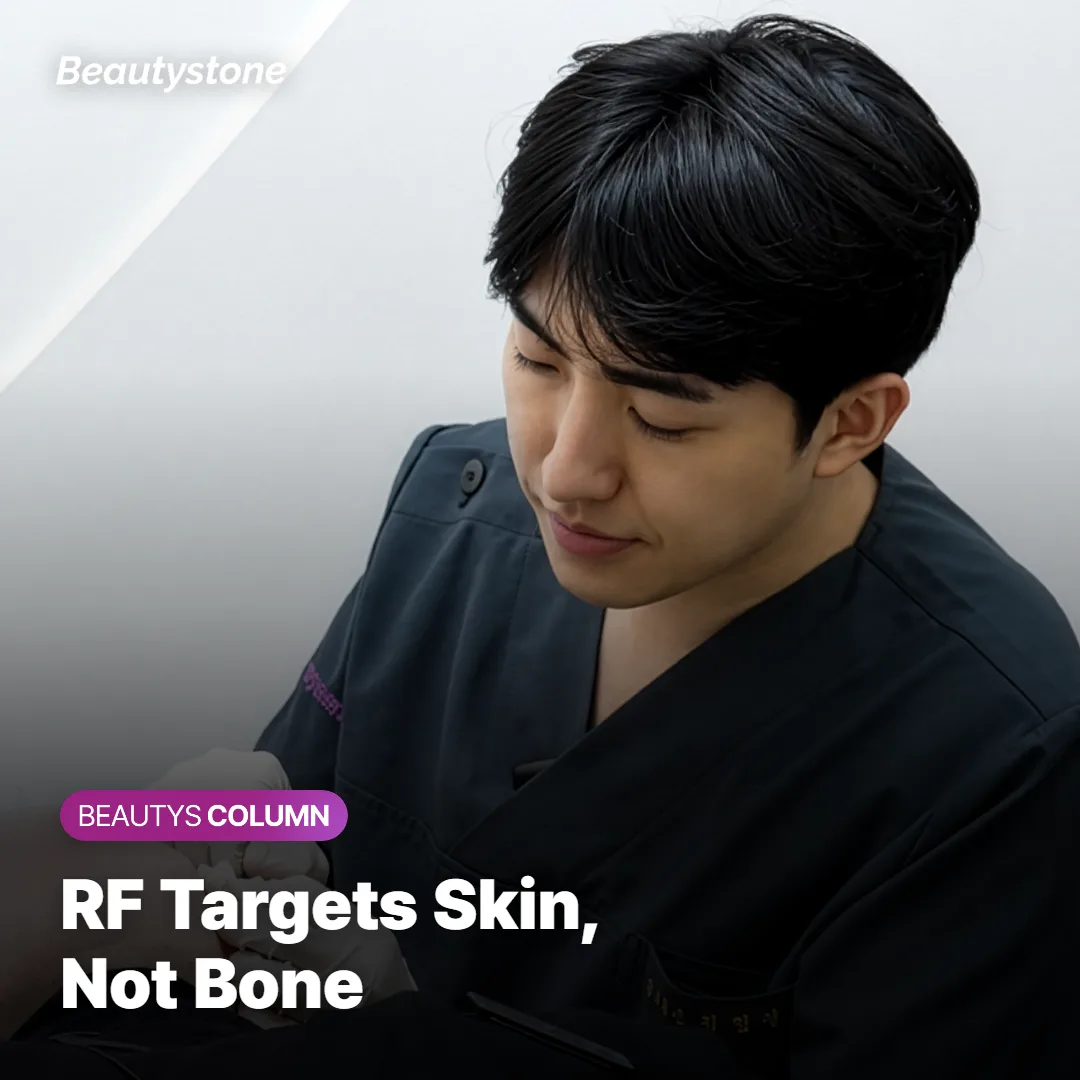
To understand why the rumor doesn't hold up, it helps to know what Thermage is actually built to do. It's a non-invasive radiofrequency treatment cleared to tighten skin by heating your dermis, the collagen-rich layer that sits below the surface of your skin, along with the fibrous layer just beneath that called the SMAS (the superficial musculoaponeurotic system), which supports your facial muscles.
Neither of those layers is anywhere close to bone. Your skull sits much deeper, cushioned by muscle and fat, well outside the depth range Thermage devices are engineered to reach. The device's cooling tip is specifically there to protect your skin's surface while energy is delivered to the target layers underneath, which is a pretty strong hint that depth control, not blanket heating, is the whole design philosophy.
Rumor vs. Research: What Does the Evidence Say?
Laid side by side, the gap between what people fear and what's actually documented becomes pretty clear. Here's how the two compare on the questions that matter most.
| Question | The Rumor | What Research Shows |
|---|---|---|
| How deep does the heat go? | All the way to bone | Targets the dermis and SMAS layer |
| Does it cause bone loss? | Radiofrequency dissolves facial bone | No clinical evidence supports this claim |
| Why do some faces look hollower? | The treatment melted away bone | Aging, fat pad loss, and weight changes |
| Is repeated treatment risky? | Always dangerous long term | Generally fine with appropriate spacing |
Thermage does reach deep into your skin, that part of the rumor is accurate. But the depth is calibrated to the skin and SMAS layer, and there's no clinical evidence tying the treatment to bone density loss. If your face looks different after years of treatments, the far more likely explanation is one of several ordinary aging processes happening at the same time.
How Deep Does the Radiofrequency Energy Actually Go?
Radiofrequency skin tightening works in two stages. The moment the device touches your skin, heat causes existing collagen fibers to contract, which is why some people notice a subtle tightening right after treatment. Over the following weeks and months, that same heat triggers your skin to produce new collagen, which is where the more lasting improvement actually comes from.
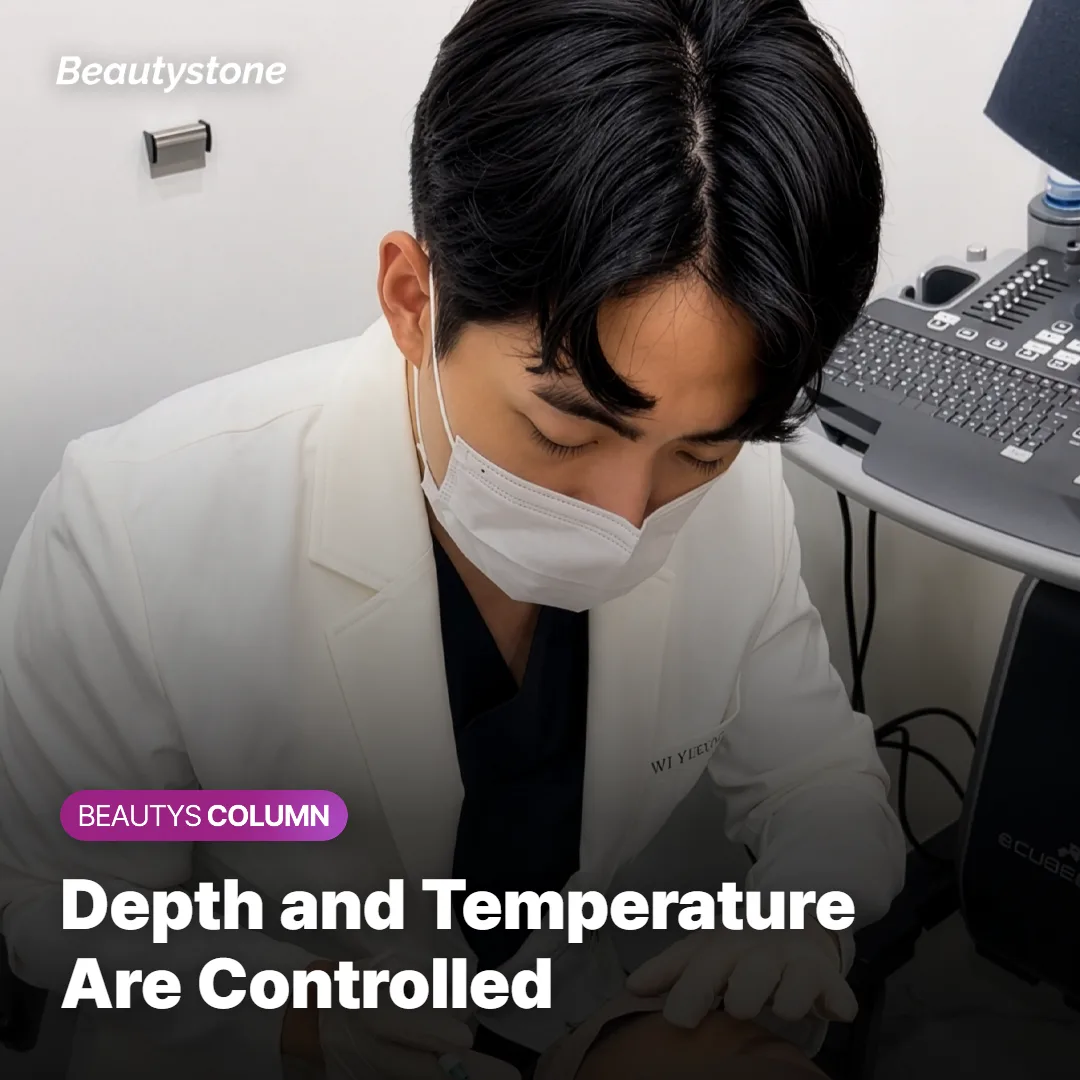
Research on radiofrequency tissue tightening describes how these devices control the depth of energy delivery, the target temperature, and the treatment time to reach a specific layer rather than heating everything in their path. In practice, that means your skin's surface temperature and the temperature at the target depth are managed separately and continuously throughout your session, not left to chance.
Picture it in layers: the epidermis is a thin surface layer, the dermis and SMAS sit underneath and are where radiofrequency energy is meant to act, and bone is a whole different structure, sitting far deeper than any non-invasive lifting device is built to reach. "Hot" and "deep enough to affect bone" are two very different things, and the engineering behind these devices is built around keeping them that way.
Side Effects & Risks: What's Actually Normal?
Now that the bone-loss question is settled, it's worth knowing what side effects are actually worth paying attention to. Mild redness and a warm, slightly puffy feeling right after treatment are common and usually settle within a few hours to a day. Some people describe a brief, sharp warmth during the session itself, particularly over areas with thinner tissue, like the jawline or forehead, where there's less padding to buffer the heat.
If something feels too intense during your session, say so. Your provider can adjust the intensity in real time, and there's no reason to grit your teeth through discomfort that's easily dialed back. Individual results and sensitivity vary quite a bit from person to person, so what feels mild to one patient might feel stronger to another.
Serious complications are rare with Thermage, but they're not impossible. If you notice blistering, redness that lingers well past a few days, or pain that's getting worse instead of settling down, contact your provider right away rather than waiting it out.

Is It Safe to Get Thermage Regularly?
Getting Thermage more than once isn't the problem the rumor makes it out to be, but pacing still matters. Your skin needs time to complete its collagen-building response between sessions, and treating too frequently doesn't necessarily speed up your results, it just doesn't give your skin the recovery window that response depends on.
Most providers space sessions based on how your skin is responding rather than a fixed calendar, so the right interval for you depends on your skin condition, your goals, and what your provider observes at follow-up. If ongoing concerns about bone density or facial volume are part of what's holding you back, it's worth raising them directly at your consultation so your provider can walk through your specific treatment plan and intervals with you.
The Bottom Line
The bone-loss rumor doesn't hold up against what Thermage is actually built to do. Its radiofrequency energy is designed to reach your dermis and SMAS layer, not the bone underneath, and there's no clinical evidence linking the treatment to facial bone density loss. The hollow or gaunt look some longtime patients notice is far more likely tied to ordinary aging: fat pad volume loss, shifting fat distribution, and sometimes weight change.
Like any procedure, Thermage comes with trade-offs worth knowing, mild warmth and temporary redness among them, even if bone loss isn't one of them. Ultimately, the choice depends on your skin, your goals, and how comfortable you feel with the treatment once you understand what it's really doing.
If lingering questions like this one are what's keeping you from booking, a consultation is the best way to get clarity. Beautystone is a dermatology clinic in Seoul's Hapjeong area, see current offers at /en/promotion.
Frequently Asked Questions
Q1. Does Thermage Really Cause Facial Bone Loss?
No. There's no clinical evidence that radiofrequency lifting causes bone density loss. Thermage's energy is designed to target your skin's dermis and the SMAS layer beneath it, not the bone underneath, which sits much deeper than the treatment is built to reach.
Q2. Why Do Some Long-Time Thermage Patients Look Hollow or Gaunt?
It's usually a matter of timing, not the treatment itself. Facial hollowing tends to show up with age from natural fat pad volume loss, shifting fat distribution, and sometimes weight change, all of which can happen alongside years of skincare routines, radiofrequency treatments included.
Q3. How Deep Does Thermage's Radiofrequency Energy Go?
It's designed to reach your dermis and the SMAS layer just beneath your skin, both of which sit well above bone. Devices control the depth, temperature, and duration of energy delivery so it stays within that target range rather than heating everything in its path.
Q4. Is It Safe to Get Thermage More Than Once?
Generally, yes, as long as sessions are spaced out enough for your skin to complete its collagen-building response in between. Your provider can help you find the right interval based on how your skin responds and your specific goals.