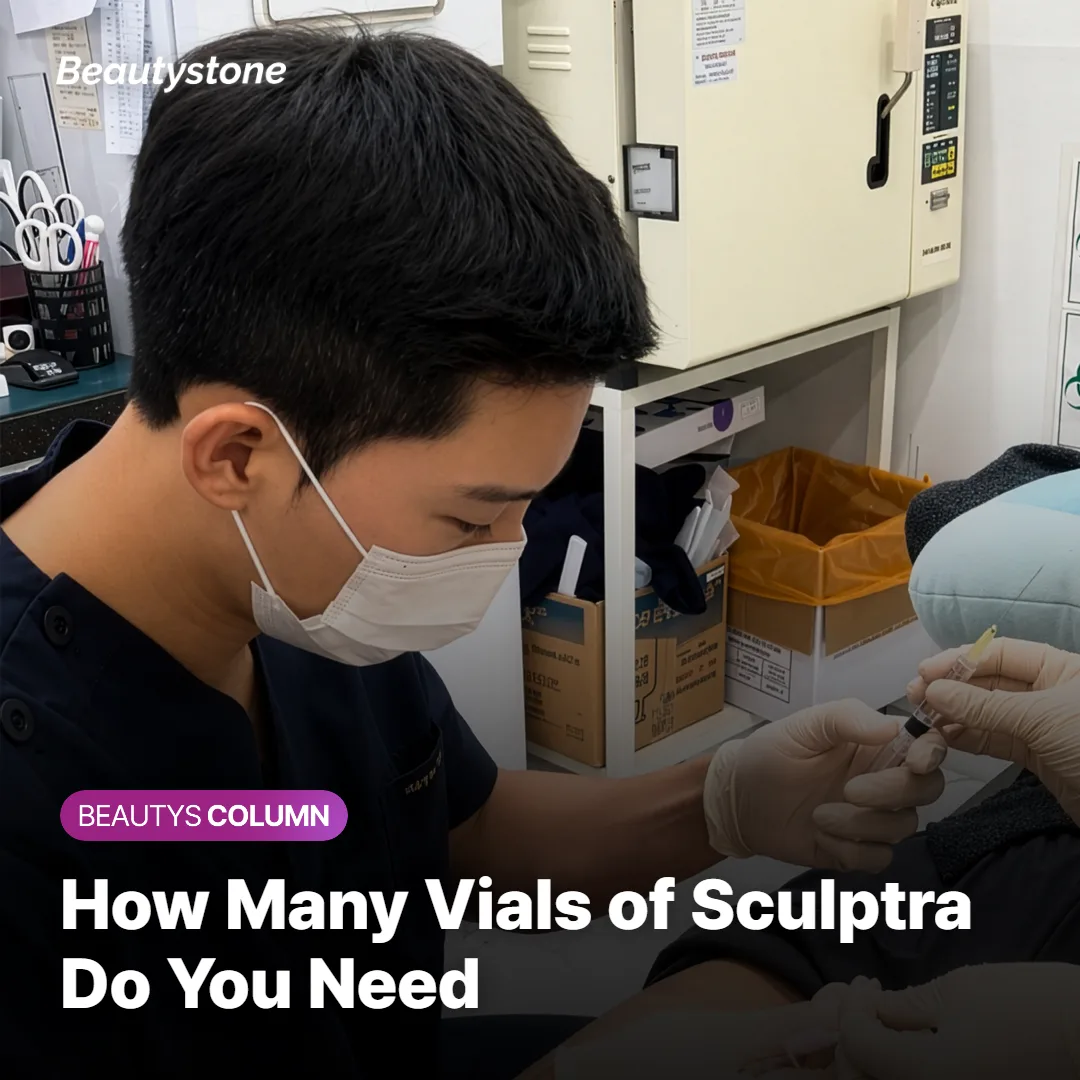
How Many Vials of Sculptra Do You Need?
Wondering how many vials of Sculptra you actually need? Here's what one vial can realistically treat, what the timeline looks like, and when you'd need more than one.

Wi Young-jin
Chief Director & CEO, Myeongdong
If you've spent any time researching Sculptra, you've probably run into a confusing detail: results and pricing are quoted by the vial, not by the area treated. That trips a lot of people up, because it's not how fillers usually work.
Here's the short version: one vial of Sculptra can absolutely make a visible difference, but it has real limits, and knowing what those limits are can save you from a disappointing result, or an unnecessary upsell. In this article, we'll cover what Sculptra actually does, how many vials most areas realistically need, what the timeline looks like, and the risks worth knowing about before you book.
What Is Sculptra, Exactly?
Sculptra is the brand name for injectable poly-L-lactic acid, or PLLA, a biostimulator rather than a traditional filler. Instead of physically filling in a wrinkle or hollow the moment it's injected, it works with your body over time, encouraging your own skin to rebuild the collagen scaffolding that thins out with age.
That's the biggest mental shift for people trying it for the first time. A hyaluronic acid filler gives you volume instantly, and the effect fades gradually as the product breaks down. Sculptra does close to the opposite: there's very little change on day one, and the results build slowly as your body responds to the treatment.
Sculptra has been used around the world for years and carries a long track record, which is part of why it has remained a go-to option for people who want a gradual, natural-looking refresh rather than an obvious "done" look.
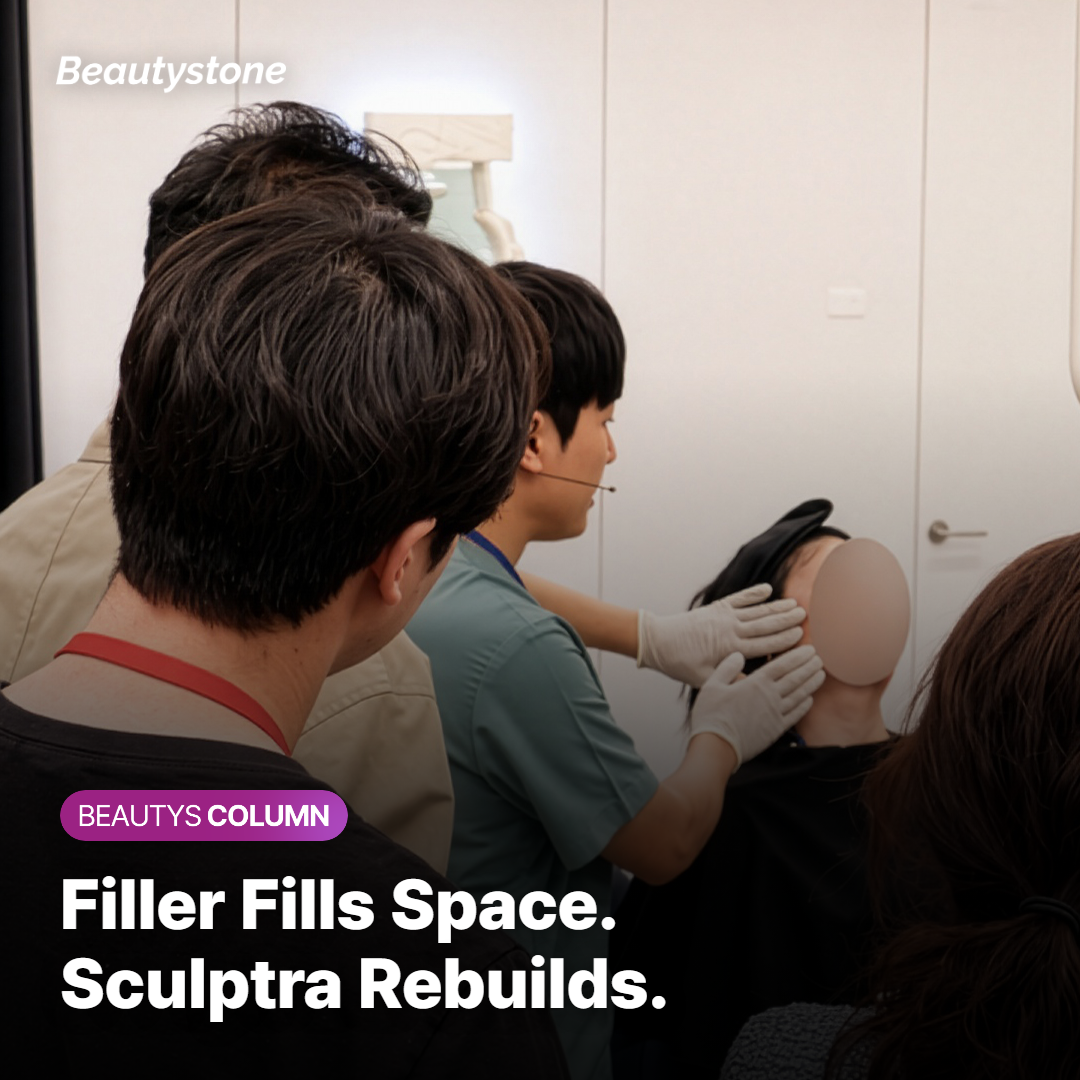
How Does It Actually Work?
Once Sculptra is injected, the PLLA microparticles sit in the deeper layers of your skin and act as a gentle trigger. Your body responds by sending in fibroblasts, the cells responsible for producing collagen, and over the following weeks that collagen slowly thickens and lifts the treated area from within.
This is why the timeline feels so different from a filler. You're not looking at the product itself sitting under your skin, you're looking at your own tissue rebuilding, which is also why the improvement tends to look subtle and natural rather than "filled."
It also means the total amount of active ingredient you receive, not just the number of injection points, determines how much collagen stimulation actually happens. Which brings us to the question most people really want answered.
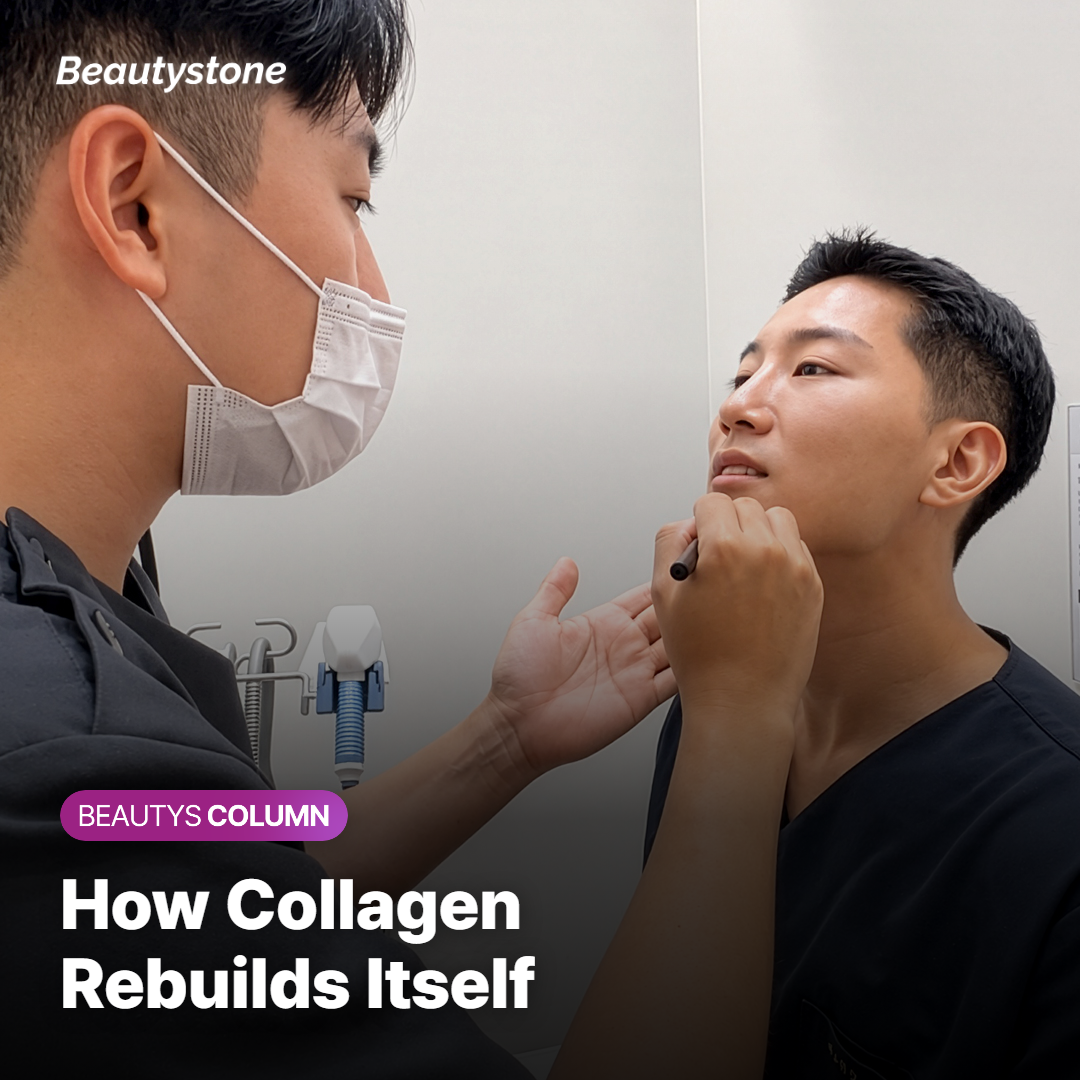
How Many Vials Do You Actually Need?
This is the part that trips people up. Sculptra dosing is measured in vials, not milliliters of "filler," because what matters is the total number of PLLA particles delivered, and that number is fixed per vial.
Think of it like brewing a single tea bag in a full pot of water versus a small cup: the tea bag itself doesn't change, but spread across more liquid, it's noticeably weaker. Stretch one vial of Sculptra across too broad an area, and you dilute the concentration enough that results can fall short, even if the price tag looked like a deal.
That's also why an unusually low quote is worth a second look. If a provider is charging far less than what a genuine vial typically costs, it's reasonable to ask directly whether you're getting a full, authentic vial. Any experienced provider should be comfortable answering that question.
So what can one vial realistically cover? For most people, it's enough to treat one focused area well, such as:
- Nasolabial folds — the creases that run from the nose to the corners of the mouth.
- Marionette lines — the lines running down from the corners of the mouth toward the chin.
- Temples — a technically demanding area that calls for real injector experience, since uneven placement here carries a higher risk of small lumps.
If your goal is broader, a refresh across multiple areas of the face, or a larger treatment area on the body, you're generally looking at two to three vials or more. That's a conversation worth having directly with your provider once they've assessed your skin and goals in person.
| Vial Count | What It Can Typically Cover |
|---|---|
| 1 vial | One focused area, like the nasolabial folds, marionette lines, or temples |
| 2-3 vials | A fuller lower-face refresh across several areas |
| 3+ vials | Larger areas, including body treatments like the hips or thighs |
Sculptra isn't limited to the face, either. Some providers use it on the body to add density and smoothness to areas like hip dips, the inner or outer thighs, the upper arms, or the skin just above the knees. If you're interested in body treatment, it's worth discussing directly with your provider, since it goes beyond Sculptra's original use on the face, and the vial math works the same way: larger areas need more product.
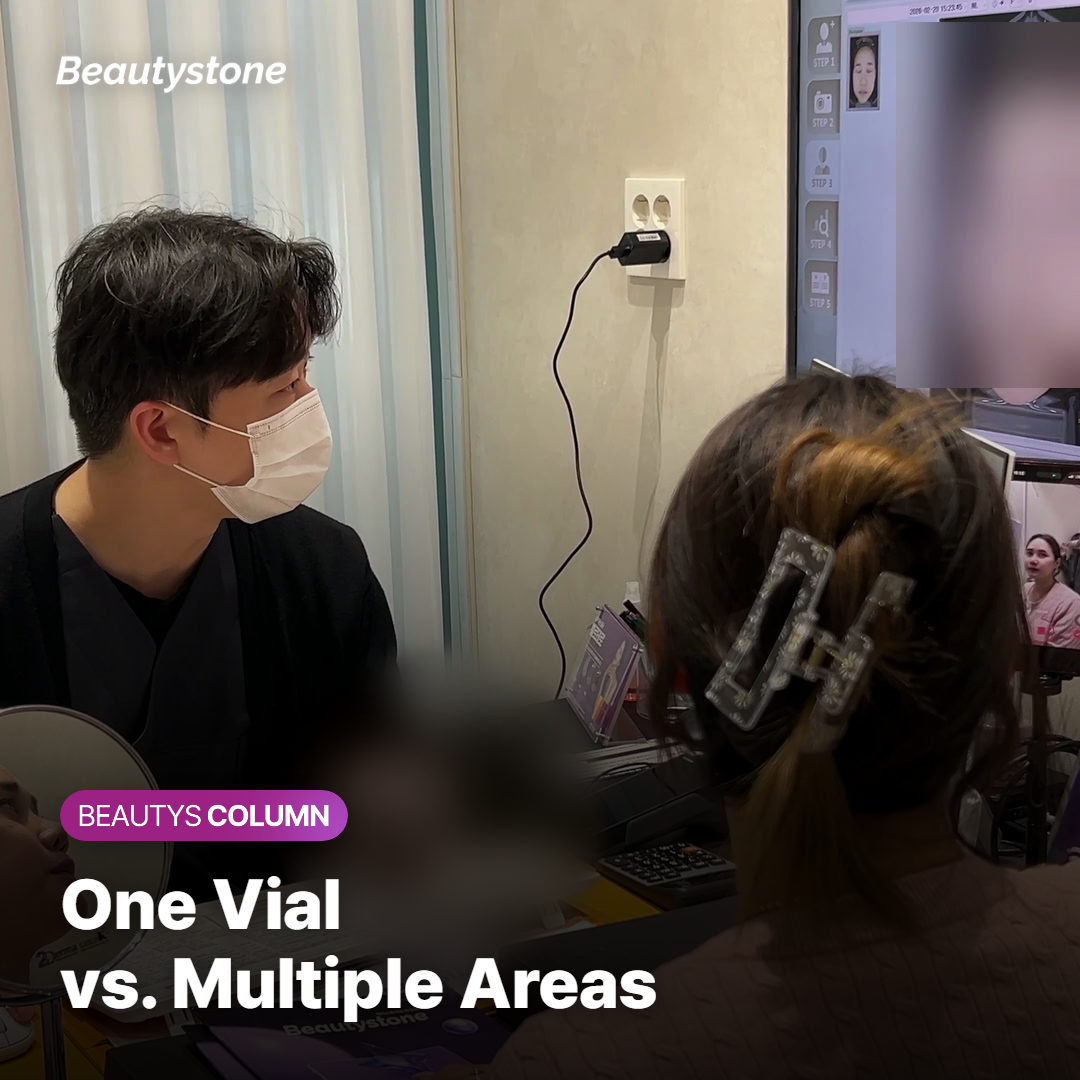
What to Expect: The Sculptra Timeline
Sculptra is a patience game, and knowing the rough timeline going in makes the whole process a lot less confusing.
- Right after treatment: Don't expect much. There's no immediate volume the way there is with a hyaluronic acid filler.
- Weeks 6-9: Your body's collagen response starts to kick in, and subtle changes begin to show.
- Around 3 months: Most people can clearly see and feel the difference by this point.
- Up to 2 years: With good maintenance, results from a full treatment plan can last this long for many people, though as with any biostimulator, individual results vary.
That last point is worth repeating: how long your results last depends heavily on your own biology, your lifestyle, and how many vials you started with. Nobody can promise you the high end of that range.

Side Effects and Risks
The main risk specific to Sculptra is the formation of small nodules, firm little bumps under the skin, though this isn't common when the treatment is done correctly. It typically comes down to two things: whether the product was properly hydrated and reconstituted before injection, and whether it was distributed evenly rather than concentrated in one spot.
That's exactly why the provider matters as much as the product. An experienced injector who reconstitutes Sculptra correctly, and takes the time to massage and disperse it evenly, dramatically lowers the odds of a lumpy result.
Before you book, it's reasonable to ask two direct questions: is this a genuine, full vial, and how much experience does the injector have specifically with Sculptra? Your results, and your safety, depend more on the answers to those questions than on almost anything else.
If you notice a lump that feels unusually firm, keeps growing, or is accompanied by spreading redness or fever, don't wait it out. Contact your provider right away.

Is Sculptra Worth It?
That depends on what you're hoping to get out of it. If you want an instant, dramatic change, a filler is probably the better fit. If you're after a slow, natural-looking rebuild of your own collagen, and you're comfortable waiting a few months to see it, Sculptra tends to be worth it for the right candidate.
Good candidates are generally people with mild to moderate volume loss who want a gradual result, are in good general health, and are realistic about needing more than one vial for anything beyond a single area.
Cost varies quite a bit by clinic, region, and how many vials your plan calls for, so it's hard to put one number on it here. A consultation is really the best way to get a plan, and a price, specific to your face. You can see current offers at /en/promotion.
The Bottom Line
A single vial of Sculptra can genuinely improve one area, whether that's the nasolabial folds, the marionette lines, or the temples, but it's not a stand-in for a full-face treatment plan on its own. Multiple areas, or any body treatment, generally call for two to three vials or more.
- Sculptra rebuilds your own collagen gradually. It doesn't add instant volume the way a filler does.
- Visible change typically starts around weeks 6-9 and is clearest by roughly 3 months.
- One vial covers one area well; broader goals need more vials.
- The provider's skill and the product's authenticity matter as much as the number on the syringe.
Like any injectable, it comes with trade-offs, and results vary from person to person. Ultimately, the choice, and the right number of vials, depends on your skin, your goals, and your budget.
If you're considering Sculptra, a consultation is the best way to find out what fits you. Beautystone is a dermatology clinic in Seoul's Hapjeong area. See current offers at /en/promotion.