How Long Does Skin Booster Downtime Last?
If you've got a skin booster on the calendar and a big event a few days later, the timeline matters. Here's what the redness, swelling, and downtime actually look like day by day.

If you're eyeing a skin booster before a big event, you've probably asked the same question everyone asks: how obvious is my face going to look afterward? It's a fair worry — nobody wants to walk into a wedding or a Monday meeting with a flushed, puffy face and no explanation ready.
The short version: a skin booster uses a fine needle to place small amounts of active ingredient into the skin in many tiny passes, so some redness, mild swelling, and pinpoint marks right after treatment are completely normal. Most of it settles within a few days. In this article, we'll cover why the redness happens in the first place, how skin booster downtime compares to deeper injectables, what the day-by-day recovery actually looks like, how to care for your skin while it heals, and what you can do to shorten the whole process.
What Is a Skin Booster, and Why Does Your Skin Turn Red?
A skin booster is an injectable treatment that delivers hydrating, skin-conditioning ingredients — often a lightly cross-linked form of hyaluronic acid — directly into the dermis using a series of very fine micro-injections, rather than a single larger deposit. That's different from a traditional dermal filler, which is placed to add volume or shape in one or a few spots.
Because the technique itself involves dozens of tiny needle passes, it creates its own mild, controlled irritation. Research on skin needling suggests that this kind of micro-injury triggers a short healing response — redness and pinpoint bleeding show up first, and the skin's own repair process, including new collagen production, unfolds over the following weeks. The redness you notice right after your appointment is really just your skin reacting to that stimulation, not a sign that anything went wrong.
On top of that, hyaluronic acid attracts water, so the treated area can look subtly puffy for the first day or so as it settles into place. How noticeable this all is depends on your skin's sensitivity, the specific product used, and how deep the injections go — which is exactly why the next section matters.
Skin Booster Downtime vs. Deeper Injectables
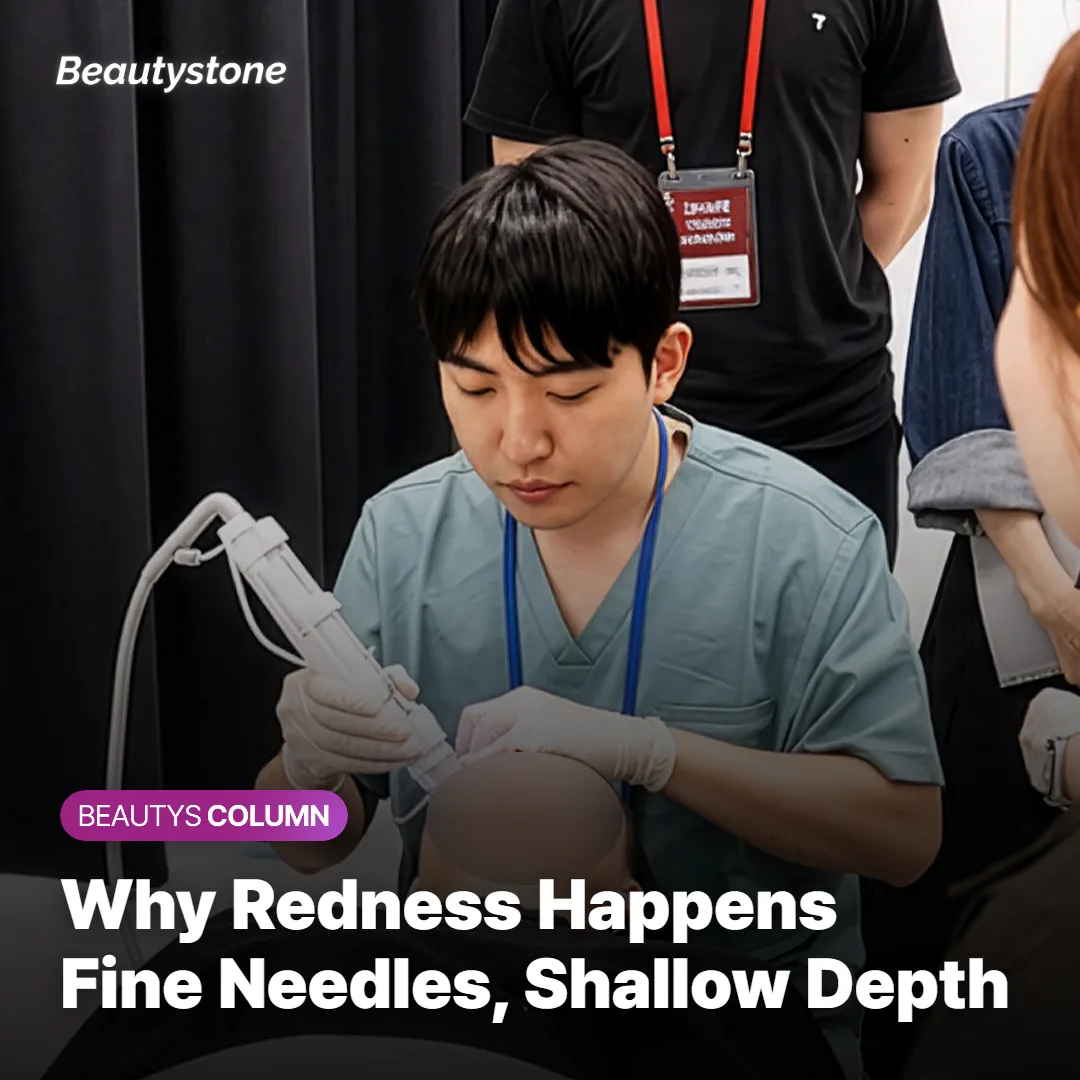
Not all injectables recover the same way, and depth is the biggest reason why. Skin boosters are typically placed in the upper dermis, in a fine, even pattern, while deeper treatments — like structural filler — go further down, sometimes into the lower dermis or the fat layer beneath it.
| Factor | Skin Booster | Deeper Injectable |
|---|---|---|
| Injection depth | Upper dermis, shallow | Lower dermis to subcutaneous fat |
| Common reaction | Redness, faint puffiness, pinpoint marks | More noticeable swelling and bruising |
| Typical downtime | Around 1 to 3 days | 3 days to a week or more |
| How visible it is | Mild, camera-flash flush | Swelling can be hard to hide |
Neither approach is objectively better — they're built for different goals. A skin booster is about hydration and overall texture, while a deeper injectable is about volume or contour. If your downtime tolerance is low, it's worth discussing technique and product choice with your provider ahead of time rather than assuming every injectable behaves the same way.
Your Downtime Timeline: Day by Day
Individual results vary, and sensitive skin can take a little longer to calm down, but most people follow a fairly predictable arc.
- Day of treatment: Pinpoint redness, tiny needle marks, and mild puffiness are typical right after your session and usually look their most obvious in the first few hours.
- 24 to 48 hours: Redness generally fades to a faint pink or disappears, and the initial puffiness starts to flatten out.
- Days 3 to 4: Most people look essentially back to normal, though a few pinpoint marks can still be faintly visible up close.
- One week and beyond: Any lingering texture or marks have typically resolved, while the deeper hydration and skin-conditioning effects continue to build in the background over the following weeks.
If your skin tends to flush easily or you've had a strong reaction to injections before, it's smart to build in a little extra buffer rather than cutting it close to an event.
How to Care for Your Skin During Recovery
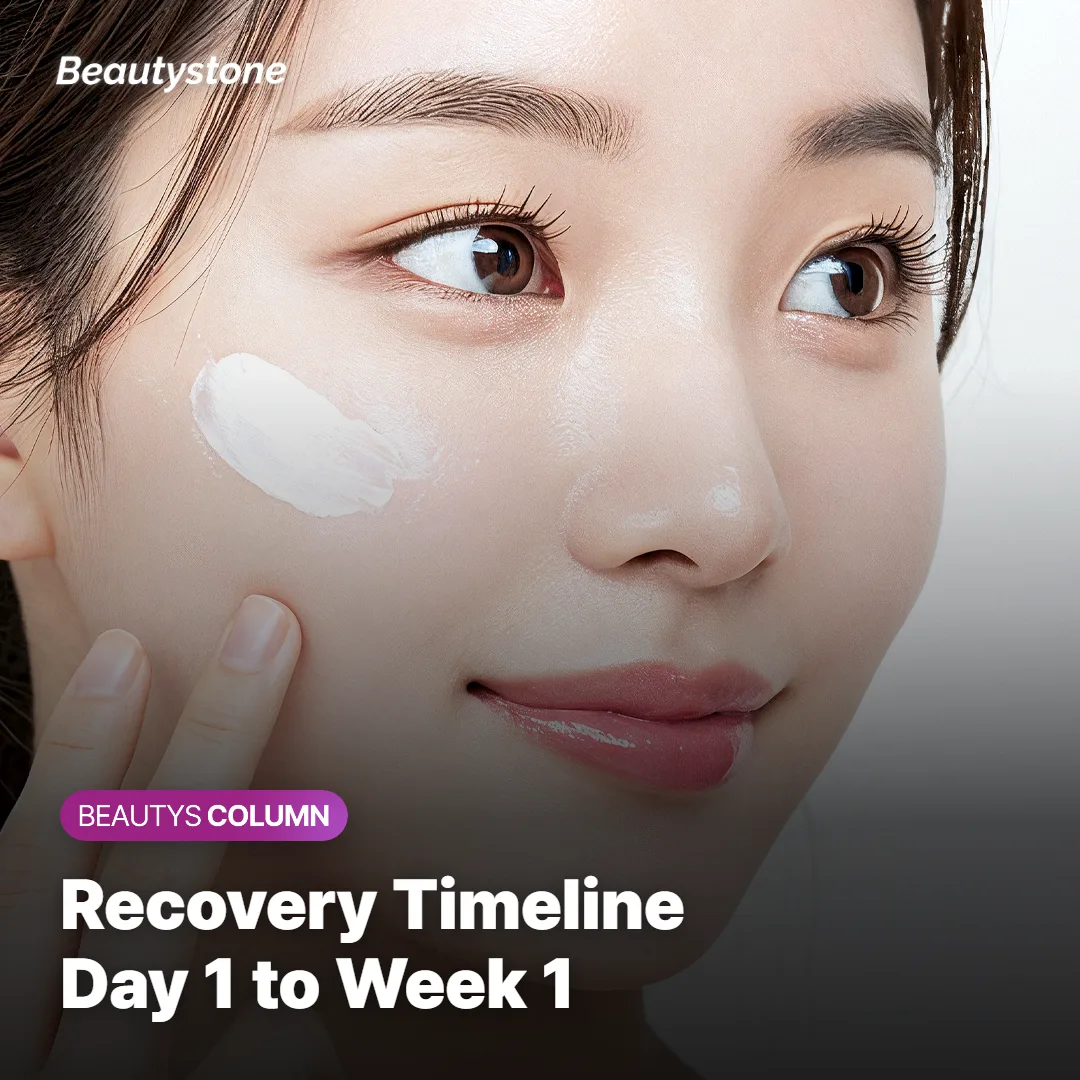
The day of your appointment, the main job is to leave your skin alone. Avoid rubbing, pressing, or applying strong pressure to the treated area, and keep your routine simple: a gentle moisturizer and sunscreen are really all your skin needs while it settles.
- Skip intense heat: Saunas, steam rooms, and hot yoga raise blood flow to the face and can prolong redness — give it a day or two off.
- Hold off on active ingredients: Strong exfoliants, retinoids, and acids can irritate freshly treated skin further; stick to the basics for a few days.
- Ease back into makeup: Most people can wear makeup again the next day, though it's worth waiting an extra day if needle marks are still visible so you're not applying pressure over healing skin.
- Keep it simple, not aggressive: Trying to speed things along with harsh treatments or over-exfoliating usually backfires and can actually slow recovery down.
Side Effects and Risks to Watch For
Redness, faint swelling, and small bruises are common and usually settle within a few days on their own. Some people also notice mild tenderness or tiny raised bumps where the needle entered, which typically flatten out within a day or two.
That said, a few signs shouldn't be brushed off. If you notice spreading redness, increasing pain instead of gradual improvement, fluid or pus at an injection point, or a fever, contact your provider or seek medical care right away rather than waiting it out. These aren't typical parts of the healing process, and catching them early makes a real difference.
How to Minimize Downtime
Timing is the single biggest lever you have. If you've got something important coming up, book your appointment at least three to four days ahead, and ideally closer to a week out if your skin tends to react strongly. That buffer gives redness and swelling time to fully resolve.
- Avoid alcohol for a day or two before and after your appointment, since it can worsen swelling and flushing.
- Stay well hydrated in the days surrounding treatment — it won't eliminate downtime, but it tends to help your skin bounce back more comfortably.
- Know your own skin: if you're new to skin boosters, treat your first session as a bit of a test run so you know how your skin typically responds before scheduling around a big event next time.
The Bottom Line
A skin booster is a shallow, needle-based treatment, so some redness, mild puffiness, and pinpoint marks right after your appointment are normal and usually fade within one to three days — faster than what you'd typically see with a deeper injectable. Gentle skincare, a day or two away from heat and hard exercise, and a little extra scheduling buffer before big events go a long way toward a smooth recovery.
Like any injectable procedure, it comes with trade-offs, and how your own skin responds can only really be confirmed by trying it. Ultimately, the right timing and approach depend on your skin, your event calendar, and how your skin has reacted to treatments in the past.
If you're considering a skin booster, a consultation is the best way to find out what fits your skin and schedule. Beautystone is a clinic in Seoul's Hapjeong area — a consultation is a good place to ask about timing around your plans, and current offers are listed at /en/promotion.
Frequently Asked Questions
Q1. Does a skin booster hurt more than other injectables?
Most people describe it as mild discomfort rather than sharp pain, since the needles used are very fine. Some providers apply a numbing cream beforehand if you're sensitive. Individual results vary depending on the treatment area and your personal pain tolerance.
Q2. How long until I can wear makeup after a skin booster?
Most people can wear makeup again the next day. If needle marks are still visible, it's worth waiting an extra day so you're not applying pressure over skin that's still settling.
Q3. Why is the redness lasting longer than I expected?
Most redness fades within a few days, but sensitive skin can take a bit longer. Keeping your routine gentle — moisturizer and sunscreen only — tends to help. If redness worsens instead of improving, or comes with pain or a fever, check in with your provider.
Q4. What's the best way to shorten skin booster downtime?
Scheduling ahead of any big plans is the most reliable approach — three to four days at minimum, closer to a week if your skin reacts strongly. Avoiding alcohol and intense heat for a day or two afterward also tends to help redness and swelling settle faster.