Rejuran Healer vs. HB: Scars or Hydration?
Rejuran Healer and Rejuran HB come from the same product family, but they're not interchangeable. Here's what actually separates them, and how to figure out which one fits your skin.

If you've searched "Rejuran" and landed on both "Healer" and "HB," you've probably wondered whether that's just marketing or an actual difference in what you're getting. It's a fair question — the names sound close enough to be confusing, and not every clinic spells out the distinction before you're on the table. The short answer? They're related, but they're not interchangeable. In this article, we'll cover what each one actually contains, how the results and downtime differ, and how to figure out which one — or which order — fits what you're trying to fix.
What Is Rejuran? Healer vs. HB, Explained
Rejuran is a skin booster built around polynucleotides, or PN (you'll also see it labeled PDRN, a closely related form typically derived from salmon DNA). Instead of just plumping skin temporarily, PN works by signaling skin cells to repair and rebuild tissue, which is why Rejuran gets grouped with regenerative treatments rather than simple hydration boosters.
Rejuran Healer is the original formula: PN on its own, at a concentration built for texture, scarring, and overall skin quality. Rejuran HB (short for "Hyaluronic Booster") starts from that same PN base and adds hyaluronic acid, plus a touch of lidocaine for comfort during injection. That one addition changes what the treatment feels like, how fast you see something, and what it's actually best at.
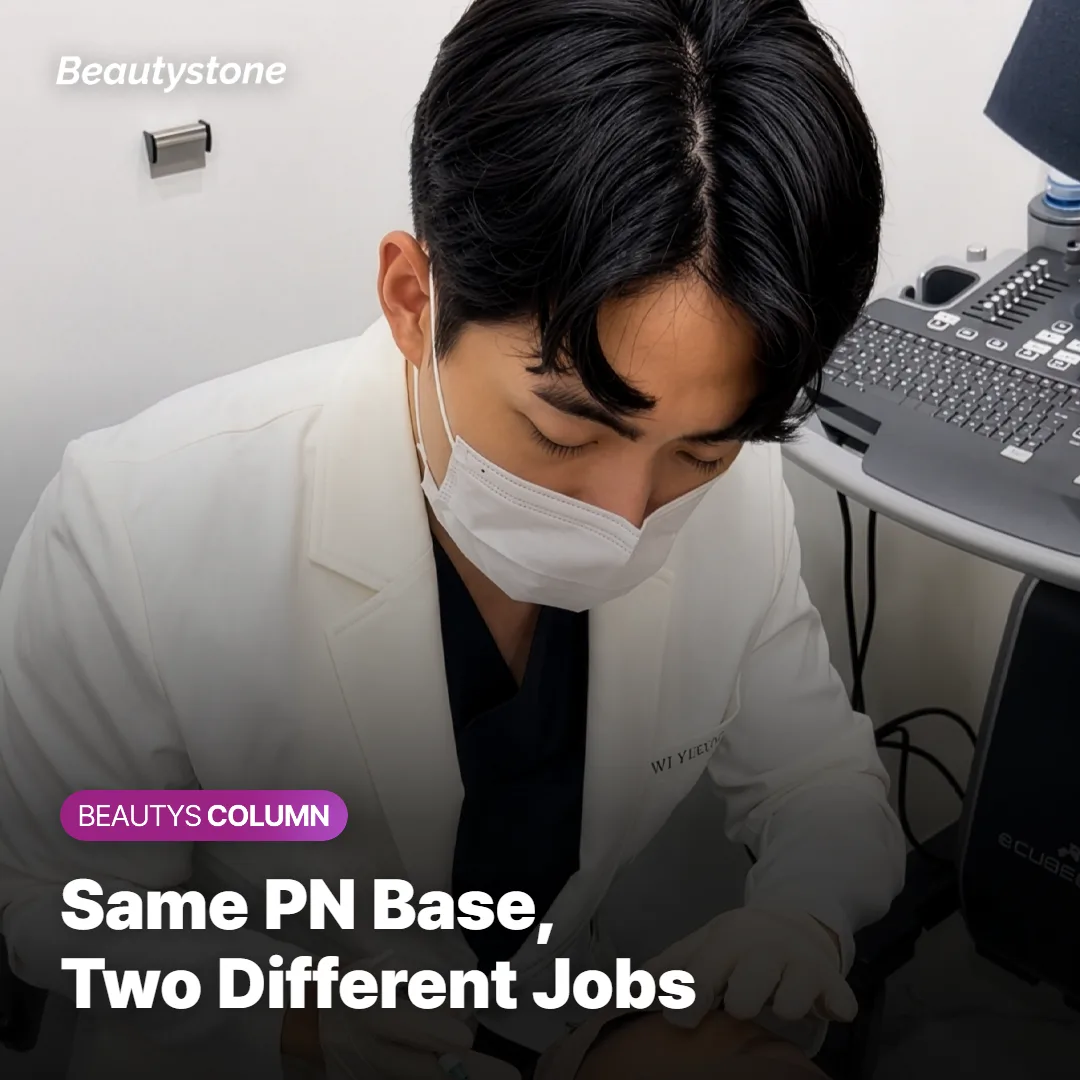
Same brand, same core ingredient family, two different jobs.
Rejuran Healer vs. Rejuran HB: Key Differences at a Glance
Here's the short version before we get into specifics on each:
| Feature | Rejuran Healer | Rejuran HB |
|---|---|---|
| Main ingredient | PN/PDRN alone | PN/PDRN plus hyaluronic acid |
| Best for | Scars, enlarged pores, uneven texture | Dullness, fine lines, dehydrated-looking skin |
| Onset of results | Gradual, builds over a series of sessions | Often visible within a day or two |
| Common short-term effect | Temporary firmness or small bumps | Mild swelling or light bruising |
In practice, that table plays out like this: Healer is the one your provider reaches for when the goal is repairing skin quality itself — think acne scarring or pores that feel structurally enlarged, not just visually. HB is the one that gets pulled out when the complaint is more about how skin looks and feels day to day, like dullness or a tired, dehydrated appearance that concealer can't quite fix.
How Does Each One Work?
Both formulas work through the same basic mechanism. PN fragments are recognized by skin cells as a repair signal, which appears to encourage fibroblast activity and collagen production over time. That's the theory behind why Rejuran's results tend to build slowly rather than showing up overnight.
Where the two diverge is in what's riding along with the PN. Healer is injected so the PN can sit in the dermis and do its regenerative work largely on its own — part of why it gets credited with scar and texture improvement specifically.
HB's added hyaluronic acid works on a different timeline: it draws in water almost immediately, which is why people often notice smoother, more hydrated-looking skin within a day or two, on top of whatever the PN is doing underneath at a slower pace.
What to Expect: Timeline and Downtime
- Day of treatment: expect a series of small injections across the treatment area. Most people describe the sensation as pressure or mild stinging rather than sharp pain, and a numbing cream is typically applied first.
- First 48 hours: redness, swelling, or small bumps are common with Healer specifically — these are usually just the PN sitting in the skin, not a sign anything went wrong. HB tends to show more surface-level puffiness or the occasional bruise instead.
- 1 to 4 weeks: this is where the two start to look different. HB's hydration effect is often visible early and holds fairly steady. Healer's improvement in texture and scarring builds more slowly, and it's common not to see the full effect until after two or three sessions.
- Ongoing: Rejuran isn't a one-and-done treatment. Most providers recommend a series of three to five sessions spaced two to four weeks apart, followed by maintenance every one to two months depending on your skin and goals.

Side Effects and Risks
The most talked-about side effect of Rejuran Healer is a temporary firmness or small bump where the product was injected. In most cases, this settles within a few days as the PN disperses through the tissue. If it's placed too superficially, though, that firmness can stick around longer than expected — which is part of why injection depth and provider experience matter so much here.
HB's side effect profile leans closer to what you'd expect from any injectable: mild swelling, redness, or light bruising that typically fades within a week.
As with any injectable, allergic reactions are uncommon but possible, and infection at the injection site is a risk anytime the skin barrier is broken. If you notice spreading redness, fever, or pain that's getting worse instead of better, contact your provider right away rather than waiting it out.
How Much Does It Cost?
Pricing for Rejuran varies quite a bit depending on the clinic, how many sessions you book as a package, and whether you're getting Healer, HB, or a combination of both over time. As a general rule, HB tends to run a little higher per session because of the added hyaluronic acid, though clinics often bundle both into a single treatment plan rather than pricing them separately.
Because per-session and package pricing shifts from clinic to clinic — and season to season — the most reliable way to get an actual number is to ask during a consultation. Beautystone, a dermatology clinic in Seoul's Hapjeong neighborhood, lists current sessions and promotions at beautystone1.com/en/promotion if you want a starting point for comparison.
Who's a Good Candidate for Each?
If your main concern is acne scarring, enlarged pores, or skin that feels structurally thin or uneven in texture, Healer is usually the better starting point. It's built for exactly that kind of repair work, even though it takes some patience to see the payoff.
If dullness, fine lines, or an overall tired, dehydrated look is what's bothering you, HB is the more common recommendation. The hyaluronic acid gives you something to see relatively quickly, which helps if you want visible results before committing to a longer series.
It's also worth knowing that getting both on the same day, in the same area, isn't typical. Providers more often alternate between the two over time — Healer for structural concerns, HB for hydration and glow in between. If you're not sure which category you fall into, that's exactly what a consultation is for: a provider can look at your skin in person and map out a sequence, rather than you guessing from a screen.

The Bottom Line
Rejuran Healer and Rejuran HB share the same PN foundation, but they're not the same treatment, and they're not interchangeable just because they come from the same product family.
Quick recap:
- Healer: PN alone, aimed at scars, pores, and texture, with results that build slowly.
- HB: PN plus hyaluronic acid, aimed at hydration and fine lines, with a faster visible effect.
- Sessions: both typically require a series of visits, not just one.
- Recovery: side effects are usually mild and short-lived, though injection depth and provider skill matter more with Healer specifically.
Like any injectable, individual results vary, and there's some trial and error in finding the right cadence for your skin. Ultimately, the choice between Healer, HB, or a mix of both depends on what you're trying to fix and how quickly you want to see it. If you're considering Rejuran, a consultation is the best way to find out what fits — Beautystone is a dermatology clinic in Seoul's Hapjeong area, and current offers are listed at beautystone1.com/en/promotion.
Frequently Asked Questions
Q1. Is Rejuran Healer the same as Rejuran HB?
No. Both are built on the same PN/PDRN ingredient, but Healer is PN alone and is aimed at scars, pores, and texture, while HB adds hyaluronic acid for a faster hydration and glow effect.
Q2. How many Rejuran sessions will I need?
Most providers recommend three to five sessions spaced two to four weeks apart as an initial series, followed by maintenance sessions every one to two months depending on your goals.
Q3. Are the small bumps after Rejuran Healer normal?
Yes, in most cases. Temporary firmness or small bumps are a common short-term effect of Healer and usually settle within a few days as the product disperses through the skin. If firmness lasts much longer than that, check in with your provider.
Q4. Can I get Rejuran Healer and HB at the same time?
It's not typical to combine them in the same area on the same day. Providers more often alternate between the two over time, using Healer for structural concerns and HB for hydration in between.