
How Long Until Skin Boosters Show Results?
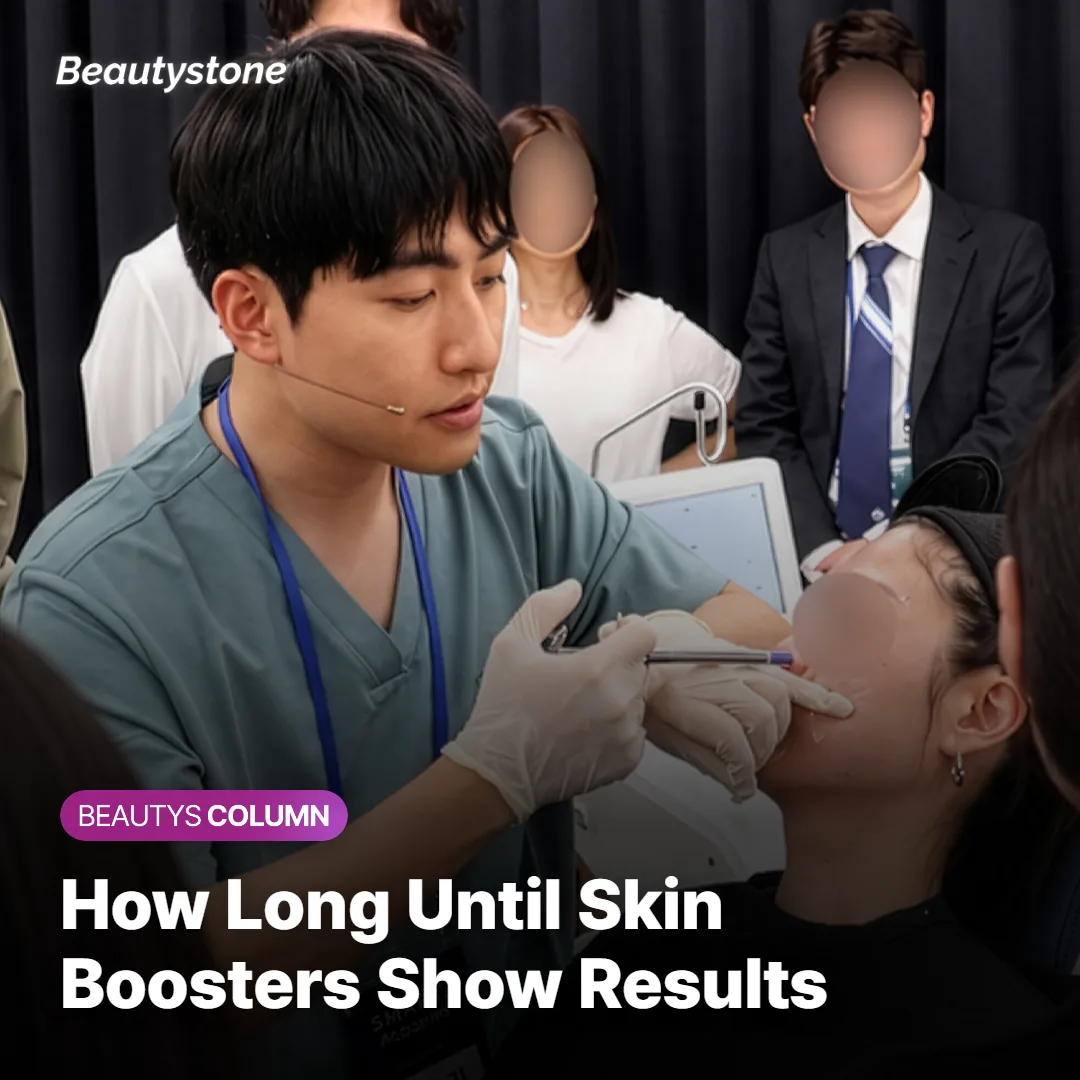
Skin boosters work by nudging your skin into making its own collagen, which is why the change arrives over sessions instead of overnight. Here’s what that timeline usually looks like, and what the treatment can’t do.

There’s one sentence that comes up in consultations more than almost any other: “so the skin booster fills my skin back up with collagen, right?” It’s a reasonable assumption, and it’s also the single biggest reason people end up disappointed with an otherwise well-performed treatment. Skin boosters don’t deposit collagen. They ask your skin to make its own, which changes both what they can realistically do and how long you have to wait to see it. In this article, we’ll cover what a skin booster actually is, the mechanism behind it, why two people can finish the same course with different results, what each session tends to deliver, and how long the effect holds.
What Is a Skin Booster?
A skin booster is an injectable treatment that spreads a thin layer of product through the dermis across a broad area, rather than placing a bolus in one spot to build shape.
That distinction is the whole game, and it’s where most of the confusion with dermal fillers comes from. A filler is placed deliberately in one location, in enough volume to hold a structure — to project a cheek, define a chin, or support a fold. A skin booster is distributed in many small deposits across a region, and it isn’t trying to change your face’s shape at all. It’s working on quality: hydration, surface texture, fine lines, the way light sits on your skin.
The category covers several product types — hyaluronic-acid-based hydrators, polynucleotide products such as Rejuran, and collagen-stimulating agents like Juvelook — and they don’t all behave identically. What they share is the delivery approach and the target layer.
How Do Skin Boosters Actually Work?
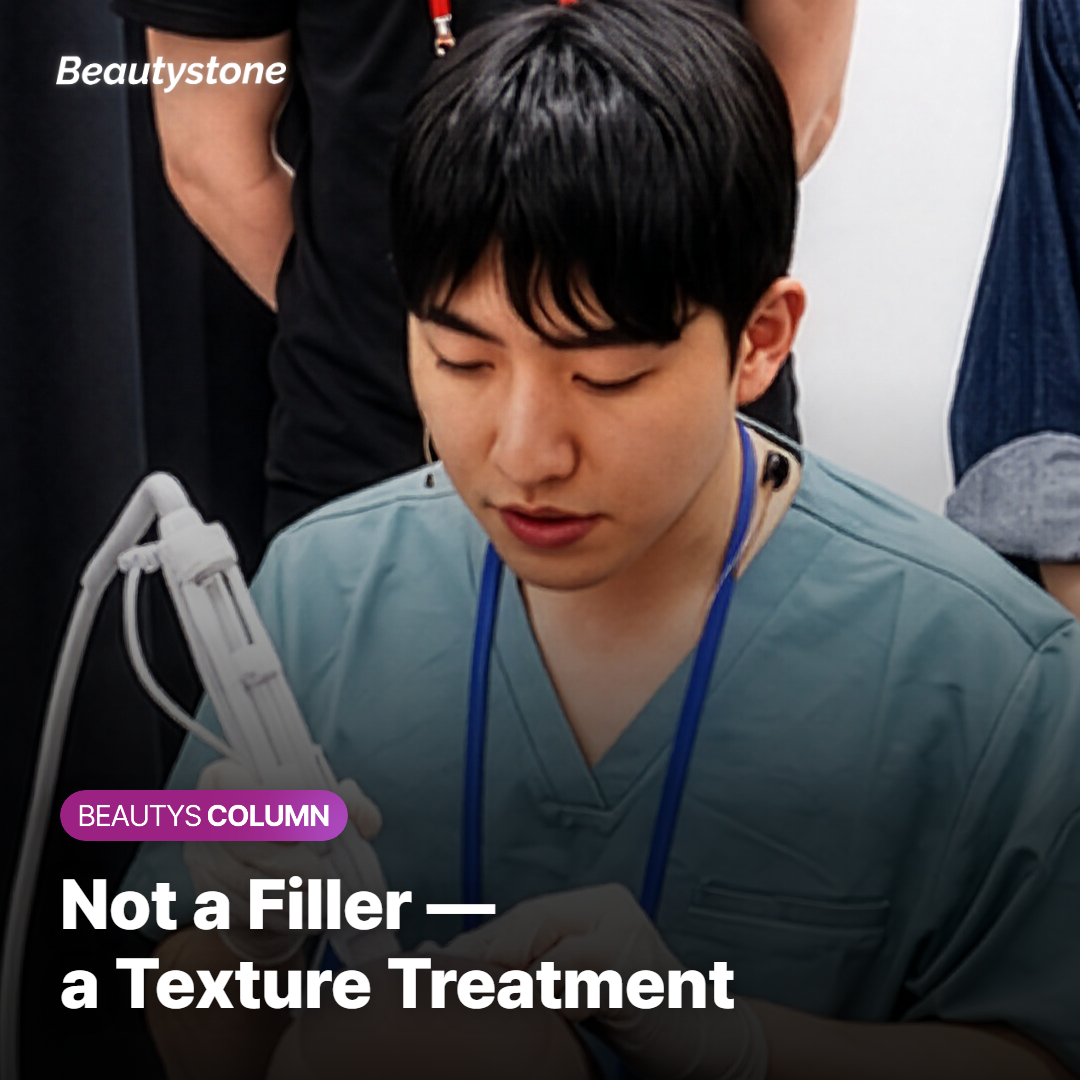
They stimulate your own fibroblasts rather than supplying collagen directly.
Fibroblasts are the cells in the dermis responsible for producing collagen and elastin, the two proteins that give skin its firmness and bounce. When product is introduced into that layer, the combination of the micro-injury from the needle and the material itself gives those cells a reason to switch into a more active repair mode. Over the following weeks, they build new collagen and elastin, and the skin gradually reorganizes the matrix it sits in.
Two practical consequences fall out of that mechanism, and they explain most of the misunderstanding:
- It takes time. Cells don’t respond on the drive home. Meaningful collagen production unfolds over weeks, which is why a single visit rarely satisfies anyone hoping for an immediate change.
- It has a ceiling. Because the effect is generated in the dermis, the results stay in the dermis — texture, fine lines, hydration, a modest firmness gain. Sagging driven by deeper structures is a different problem entirely.
*Fibroblast: the connective-tissue cell in the dermis that manufactures collagen, elastin and the surrounding support matrix.

Why Some People See More Change Than Others
Usually it isn’t the product. It’s whether the concern being treated lives in the layer the treatment reaches.
Someone who finishes four sessions expecting a lifted jawline is measuring against a goal skin boosters were never built to hit. Laxity that comes from descending fat pads, loss of deep support, or muscle pull sits well below the dermis, and no amount of collagen stimulation up top will suspend it. That is the territory of energy-based lifting treatments — focused ultrasound such as Ultherapy, or radiofrequency platforms such as InMode — and sometimes of surgery. A good consultation will say so before the first syringe is opened, not after the fourth.
Beyond that mismatch, a few things genuinely shift the outcome:
- Number of sessions completed: stopping at one or two is the most common reason people report “nothing happened.”
- Interval discipline: spacing sessions roughly three to four weeks apart keeps the stimulus stacking while the previous response is still active.
- Baseline skin and habits: sun exposure, smoking and age all influence how energetically fibroblasts respond, and everyone’s skin is different.
- Injection technique: depth control matters, and it varies with the hand holding the needle.

What to Expect, Session by Session
Most protocols run as a course of three to four sessions spaced three to four weeks apart, and the change tends to arrive in a fairly predictable order.
| Session | What Is Typically Noticed | What Is Happening Underneath |
|---|---|---|
| First | Skin feels better hydrated; tone looks slightly more even | Mostly the hydrating component of the product doing its work |
| Second | Texture starts to feel smoother to the touch | Early fibroblast activity, not yet a visible structural change |
| Third | Fine lines and pore appearance often look softer | New collagen and elastin from the previous rounds beginning to show |
| Fourth | Firmness and overall tone tend to settle into place | Cumulative remodeling across the full course |
In practice, fewer than half of people feel genuinely convinced after one or two rounds. The third session is usually where the feedback shifts from “maybe?” to something other people comment on. If you’re booking around an event, count backward from that point rather than from your first appointment. Individual results vary, and some people plateau earlier or later than the pattern above.
Side Effects and Downtime
Because this is a needle-based treatment, small bruises and pinpoint redness are common and usually fade within about a week. If swelling worsens or spreads instead of settling, contact your provider right away.
Temporary lumps are the other reaction worth expecting. Small nodules where product sits can be felt for a couple of weeks and typically soften on their own. Depth is the main variable here: placed too superficially, product is more likely to stay palpable or visible; placed too deep, it delivers less of the dermal stimulation you came for. That narrow window is a large part of why injector experience shows up in the results.
Downtime is otherwise modest. Most people go back to normal activity the same day, with makeup usually reasonable after about 24 hours once injection points have closed. Sunscreen is non-negotiable while skin is recovering.
Seek medical care right away if you notice fever, spreading redness or warmth, escalating pain, skin that turns dusky or white and stays that way, or any change in vision after treatment near the eyes. These are rare, and they are not symptoms to monitor from home.
How Long Do the Results Last?
After a full course, many people hold the improvement for roughly six to eight months before it fades gradually.
It doesn’t switch off on a date. What you built is new collagen sitting in a system that keeps aging at its usual pace, so the improvement thins out slowly rather than disappearing. That’s why maintenance is often scheduled around the six-month mark — topping up before you have lost the ground you gained takes less work than rebuilding from scratch. How long any individual holds it depends on age, sun exposure, skin condition and how completely the initial course was finished.
The Bottom Line
- Skin boosters stimulate your skin to make collagen; they don’t deposit it.
- That mechanism keeps the effect in the dermis — texture, fine lines, hydration — not deep sagging.
- Expect a course of three to four sessions, with most people convinced around the third.
- A finished course commonly holds for about six to eight months before gradual fading.
Like any injectable, it comes with trade-offs, and individual results vary. Ultimately, the choice depends on your skin, your goals and how patient you are willing to be with a slow-building result.
If you’re considering a skin booster, the most useful thing to settle in consultation is whether your main concern actually lives in the dermis — because that single question predicts your satisfaction better than the brand name on the box. Beautystone is a dermatology clinic in the Hapjeong area of Seoul; current offers are listed on our promotions page.