

Why Laser Toning Backfires If It's Too Strong
Cranking up the energy doesn't clear stubborn pigment any faster — it often backfires as weeks of rebound darkening. Here's what actually works, and why low energy over more sessions beats one aggressive session every time.

What Is Laser Toning?
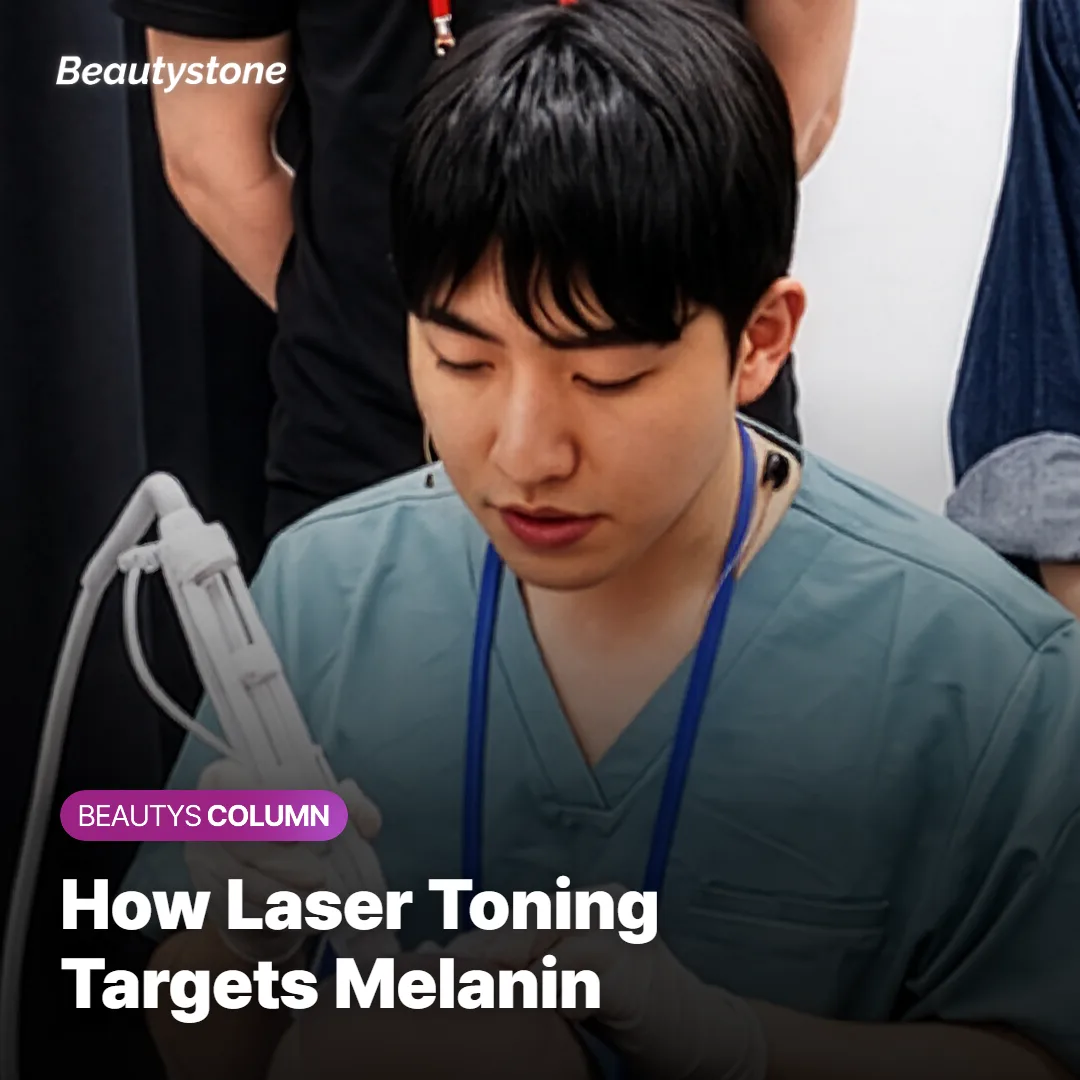
Laser toning is a low-fluence, multi-pass treatment that uses a Q-switched Nd:YAG laser (commonly 1064nm, sometimes paired with 755nm) to target melanin sitting just under the surface of your skin. Instead of one strong pass aimed at a single dark spot, the laser sweeps across a broader area — usually the whole face — at a gentler setting, breaking pigment into smaller fragments your body clears over the following weeks.
It's typically used for diffuse, overall dullness and uneven tone rather than one stubborn freckle or sunspot. Think of it as a tone-evening treatment, not a spot-eraser. In Korea, it's become one of the most requested pigment treatments — and one of the most commonly over-requested, too, which is exactly where the side effects in this article come from.
How Does Laser Toning Work?
Melanin absorbs specific laser wavelengths more efficiently than the surrounding tissue does. When the laser hits a melanin-rich area, it heats and fragments the pigment granules inside. Over the next several days to weeks, your immune system's cleanup cells (macrophages) clear those fragments away, which is why results build gradually across a series of sessions rather than all at once.
Here's the part that matters most for side effects: the amount of melanin in your skin directly affects how much energy you absorb at any given setting. People with more melanin in their skin — which includes most Korean and other East Asian skin types — tend to absorb more of that energy than people with lighter skin at the exact same setting. A 'medium' energy level for one person can behave like a 'strong' one for another.
Why Does More Energy Raise the Risk of Rebound Pigmentation?
Here's the short answer: turning up the energy doesn't clear pigment faster. In a lot of cases, it does the opposite. Going in too strong can trigger post-inflammatory hyperpigmentation (PIH) — a rebound where irritated melanocytes overreact and produce even more pigment than before, leaving the treated area looking darker, not lighter, for weeks afterward.
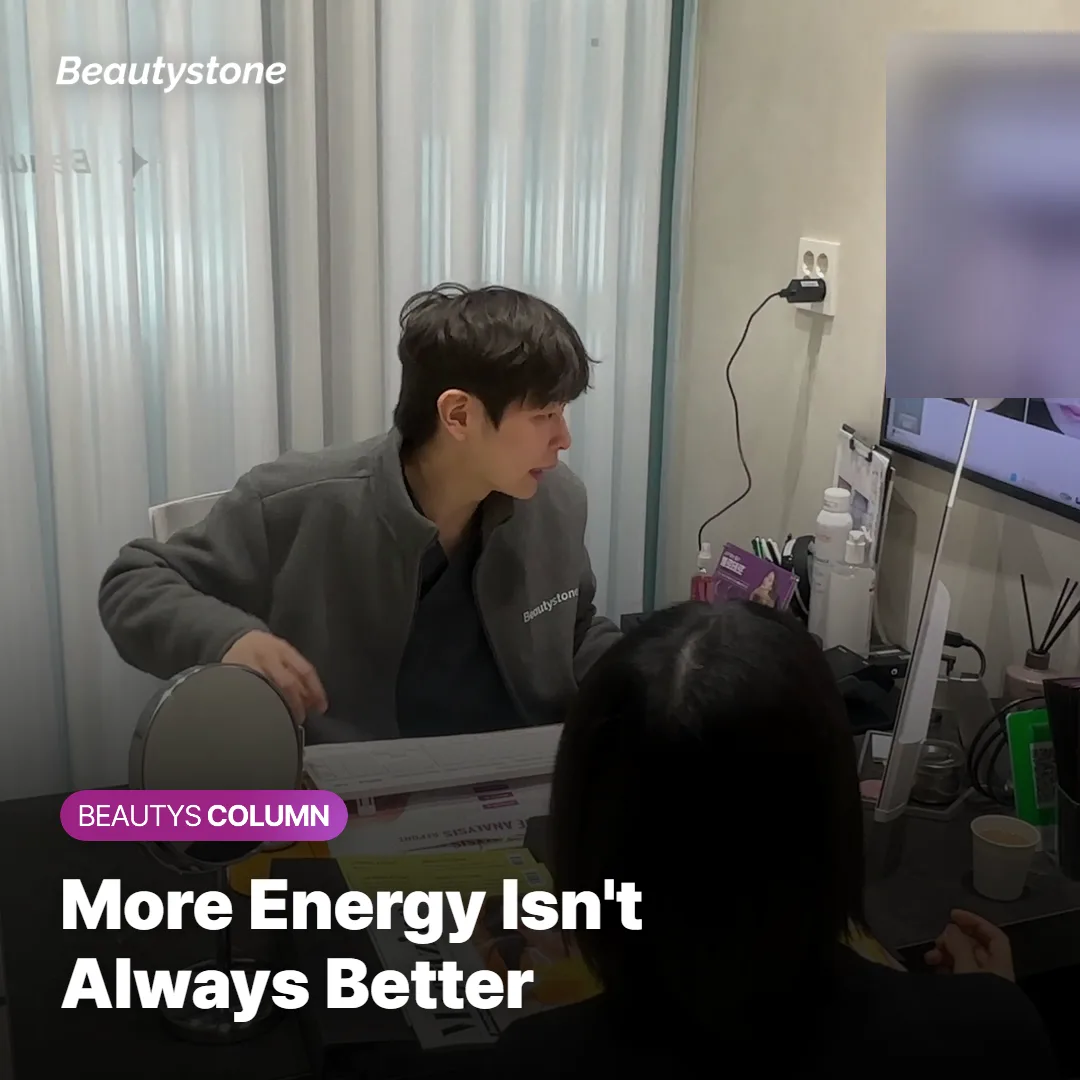
One of our providers at Beautystone, a dermatology clinic in Seoul's Hapjeong neighborhood, described a patient in her mid-30s who'd already had six toning sessions elsewhere. She'd asked her previous provider to 'go stronger' for faster results, and both cheekbones ended up visibly duller for about a month afterward. When she came in, the clinic held off on any laser at all for that cycle — the melanocytes were already in an overactive state, and adding more energy on top of that risked driving the pigment in deeper. Instead, she was started on oral tranexamic acid and given roughly four weeks to settle down before restarting at a lower energy.
The pattern shows up again and again. Low energy, more sessions: spaced out, it clears pigment gradually with a much lower rebound risk. High energy, fewer sessions: it can look faster on paper, but a single overly aggressive session can cost you a full month of downtime if it tips into rebound territory.
What to Expect: The Laser Toning Recovery Timeline
A well-calibrated session should feel mild, not dramatic. Here's a general timeline, though your provider will adjust it based on your skin and settings.
- Right after treatment: Mild, even pinkness for a few hours is normal and typically fades the same day.
- 24 to 48 hours: Skin may feel slightly warm or tight. Some people notice tiny, pinpoint dark specks (fragmented pigment rising to the surface) — this is expected, not a side effect.
- 1 to 2 weeks: Pigment fragments continue clearing. Skin tone usually looks more even by the end of this window.
- 3 to 4 weeks: The full effect of that session settles in, and most providers space the next session out to this point.
Laser Toning Side Effects: What's Normal vs. What Needs Attention
Most reactions after laser toning are mild and short-lived. A few are signs the setting was too aggressive for your skin that day. Here's how to tell the difference.
| Signal | What to Do |
|---|---|
| Rebound pigmentation (skin looks darker weeks later) | Pause laser sessions for about four weeks; your provider may add oral tranexamic acid or a brightening regimen |
| Immediate, intense redness during or right after treatment | Tell your provider mid-session so they can lower the energy on the spot |
| Micro-crusting or pinpoint bleeding | Use a gentle, fragrance-free healing balm and don't pick at it — let it slough off on its own |
| Flushing or redness that worsens instead of fading | Stop laser toning and have a provider re-evaluate for a vascular issue |
If you notice spreading redness, fever, or pain that keeps getting worse instead of better, seek medical care right away — that's not a typical laser toning reaction.

How Much Does Laser Toning Cost?
Pricing varies quite a bit by clinic, how many sessions your skin needs, and whether it's bundled with other treatments, so we won't put a made-up number here. What we can tell you is that laser toning is rarely a one-and-done treatment — most protocols run somewhere around 8 to 12 sessions spaced two to three weeks apart, and that total session count is what actually drives the overall cost, more than any single visit's price tag. A consultation is the best way to get real numbers for your skin — see current offers at /en/promotion.
Is Laser Toning Worth It?
If your main concern is overall dullness or diffuse, sun-related unevenness rather than one deep, isolated spot, laser toning tends to be a good fit. It's a patience game, though — the low-energy, multi-session approach that keeps rebound risk down is also what makes it a gradual process rather than an overnight fix.
It's probably not the right first step if you have a single stubborn dark spot that hasn't budged with anything else, active inflammation, or a history of rebound pigmentation from other treatments. In those cases, talk to your provider about whether a different approach should come first.
The Bottom Line
Laser toning side effects are almost always tied to one variable: energy. Here's what to keep in mind.
- Most redness and warmth right after a session are normal and settle within a day.
- Rebound pigmentation usually comes from pushing the energy too high, not from the treatment itself.
- Low energy over more sessions, spaced two to three weeks apart, tends to outperform one aggressive session.
- Speak up during treatment if something feels more intense than usual — that's your cue to ask for a lower setting.
Like any procedure, laser toning comes with trade-offs, and individual results vary from person to person. Ultimately, the choice of how aggressive to go — and whether laser toning is right for your skin at all — depends on your skin, your goals, and your provider's judgment. If you're considering laser toning, a consultation is the best way to find out what fits you. Beautystone is a dermatology clinic in Seoul's Hapjeong area — see current offers at /en/promotion.
Frequently Asked Questions
Q1. Does laser toning hurt?
Most people describe it as a warm, rubber-band-like snap rather than sharp pain, especially at properly calibrated settings. If a spot feels noticeably more intense than the rest, say so — that's usually a sign the energy needs to come down for that pass.
Q2. Why does my skin look darker after laser toning?
A little pinpoint darkening in the first day or two is expected — it's fragmented pigment rising to the surface before it clears. If your skin still looks duller after about four weeks, that's more likely rebound pigmentation from too much energy, and it's worth having your provider re-evaluate your settings.
Q3. How many sessions of laser toning do I need?
Most protocols run around 8 to 12 sessions spaced two to three weeks apart, since low energy delivered gradually tends to work better than a handful of aggressive sessions. Your provider will adjust the exact number based on how your skin responds.
Q4. How much does laser toning cost?
It varies by clinic and by how many sessions your skin needs, so there's no single number that applies to everyone. A consultation is the most reliable way to get an accurate quote for your skin — see current offers at /en/promotion.