Juvelook Lump After 3 Weeks: Will It Go Away?
Juvelook lumps sort by timing. Early firmness usually settles within days, while a firm, non-red bump weeks to months later is often clumped particles that need treatment. Here's how to tell, and which lumps need care right away.

Wi Young-jin
Chief Director, Myeongdong
A firm spot in the first few days after Juvelook is usually injection swelling, and it tends to settle within days. A small, hard lump that shows up weeks to months later without redness is more likely a nodule, where particles have gathered in one place. That kind often needs treatment in clinic to break it up rather than fading on its own.
So two things sort most lumps: when it appeared, and whether it's red, warm or sore. In this article, we'll cover how timing separates swelling from a nodule, why nodules form, how they're treated, and which lumps can't wait.
Quick summary
- Sort a Juvelook lump by when it appeared and whether it's red or warm; the fix depends on both.
- First few days: mild swelling and firmness are common and usually settle within days.
- A firm, non-red bump that appears weeks to months later is usually clumped particles.
- A red, hot, painful lump, or one that suddenly swells months later, needs care right away.
Juvelook Lump or Swelling: How Can You Tell by Timing?
Timing is the first thing I ask about. In the first days after treatment, the injection points can feel swollen, achy and firm. Mild warmth, tenderness and swelling are common at this stage and usually fade within a few days, so a lump you feel that early is too soon to call a nodule.
A nodule is different because it develops later. Juvelook is an injectable that mixes slowly dissolving particles (PDLLA*) with hyaluronic acid (HA). When those particles collect in one spot, collagen builds up around them, and over a few months that spot can turn into a small, firm bump you can feel.
*PDLLA (poly-D,L-lactic acid): tiny particles from the polylactic acid family that the body breaks down slowly.
Here's how the timing usually lines up with what to do:
| When it appeared | How it feels | What comes with it | What to do |
|---|---|---|---|
| First few days | Firm at the injection points | Mild swelling, achiness | Watch it for a few days |
| Days to weeks | Soft or growing lump | Redness, warmth, pain when pressed | Get care right away |
| Weeks to months | Small, firm bump | No redness or pain | Have it checked in clinic |
| 3 months to years | Lump that suddenly swells | Redness, puffiness | Get care right away |
Why Do Juvelook Nodules Form, and Where Do They Show Up?
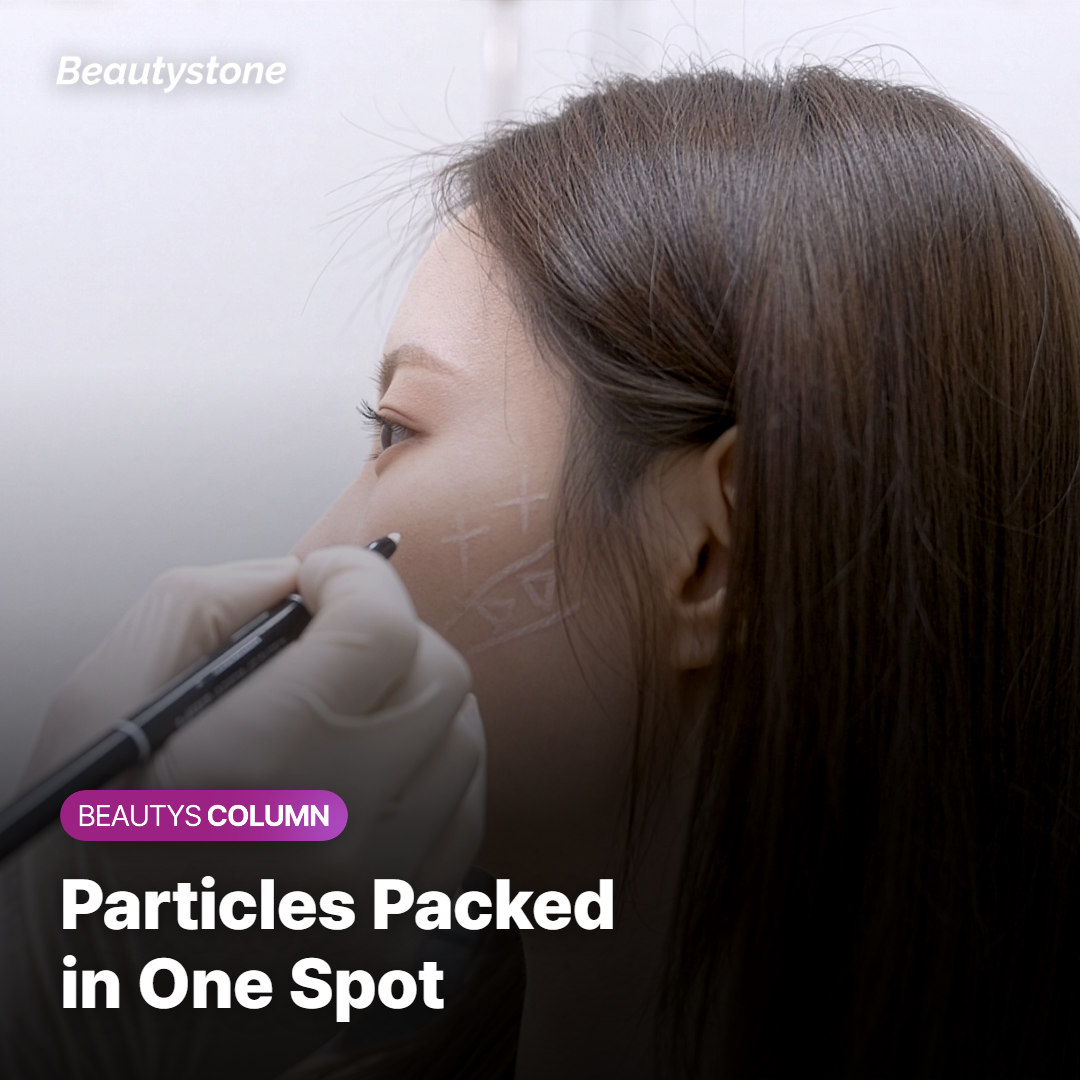
A nodule without redness forms when particles don't spread evenly and end up packed in one place. The causes usually named are placing the product too shallow or imprecisely, particles being pushed around by facial muscles that move a lot or by gravity, and pressing hard on the area after treatment*.
*Based on a 2025 guidance paper on managing PDLLA nodules.
Thin skin makes even a small clump easy to feel, and the area under the eyes is the classic example. In one published case, a firm nodule appeared under the eye 3 weeks after Juvelook Volume (200 mg per vial) was injected into the tear trough. The authors linked it to using a large-particle product in such a thin area.
That's why, for the under-eye area, I check first which Juvelook product is planned and how much it's diluted. A product type meant for thicker areas isn't automatically a good match for thin skin.
How Common Are Juvelook Nodules?
There isn't a large study yet that measures how often Juvelook itself causes nodules. In a small study, 20 people received Juvelook (product type not stated) in their smile lines 3 times, a month apart, and none had nodules up to 3 months after the last session. With only 20 people, that's not enough to say nodules are rare.
A larger record comes from a related but different ingredient, PLLA (poly-L-lactic acid), not Juvelook's PDLLA. Among 130 people treated with PLLA, nodules were the most common reaction, at 8.5%. Nearly all of them could be felt but not seen.
By area, nodules were more frequent on the backs of the hands (12.5%) than on the cheeks (7.2%). Because this is a different product, the numbers don't carry over to Juvelook directly. What does carry over is practical: these bumps are usually something you feel with your fingertips, so checking by touch tells you more than searching in the mirror.
Will a Juvelook Nodule Go Away, and How Is It Treated?
A non-red nodule often doesn't disappear entirely on its own, and it usually needs hands-on treatment to break up. The first step is firm massage to spread the clumped particles. Another option is a device that warms the area to about 38 to 39°C while the spot is massaged.
In the under-eye case above, the nodule cleared within 24 hours after one radiofrequency (RF) treatment of 150 shots, and it didn't come back. That's a single case, so it shows what's possible rather than what to expect. Results differ from person to person.
Keep in mind that the enzyme used to dissolve HA filler (hyaluronidase) won't dissolve a Juvelook nodule. It only breaks down hyaluronic acid, so it does nothing to the particles. If massage doesn't shrink the nodule, the next step is a needle technique that loosens the nodule from inside (subcision) along with injected medication. If something still remains, surgical removal is the last option.
Pressing hard and long on the area yourself after treatment can also push particles to one side. Ask your provider how and when to touch the area before you try anything at home.
Juvelook Side Effects: Which Lumps Need Care Right Away?
Some swelling and firmness in the first few days is expected and usually fades within days. If it worsens or spreads instead of fading, contact your provider right away.
A lump that's red, hot and painful when pressed may be an infection. These tend to appear days to weeks after the injection, and they're treated with antibiotics after a sample is tested, sometimes with drainage guided by ultrasound. That's not something to wait out.
A lump that suddenly turns red and swells 3 months to years later may be a delayed immune reaction or a granuloma (a firm cluster of inflammatory cells). A small tissue sample (biopsy) is used to tell them apart before treatment is chosen.
Rarely, an injection can block a blood vessel. The signs below need attention no matter how many days it's been since treatment*:
- Skin near the injection site turning white, gray or blue: get medical care right away
- Unusual pain: get medical care right away
- Changes in your vision: go to the nearest emergency room
- Sudden difficulty speaking, numbness or weakness in the face, arms or legs, difficulty walking, face drooping, severe headache, dizziness or confusion: go to the nearest emergency room
*Based on US FDA guidance on dermal fillers in general, not on Juvelook specifically.
At the first visit for a lump, I feel its size and firmness, then check when it appeared and whether there's redness or warmth. With no redness, treatment usually starts with massage. If it's red and painful, infection treatment comes first.

Fitting Juvelook Into Your Travel Schedule in Korea
Unless you've had sedation that day, there's no need to postpone your flight home after a Juvelook session.
It also helps to know what one visit means. Some treatments, like filler, change your shape the same day. Juvelook works more gradually, so a single visit tends to bring a slow shift rather than a sudden change, and it doesn't replace a full series if one was planned.
Because a nodule can appear weeks or months later, you may notice it after you're already home. You can send a photo of the spot and the date you first felt it through the consultation button on this page. We can't promise a reply time or remote treatment, so if the lump is red, hot or painful, or you notice any of the warning signs above, see a local doctor first.
The Bottom Line: Date the Lump, Then Check for Redness
Before deciding on your next session, write down the date you first felt the lump and whether it has ever been red or warm. That one record tells your provider whether this is early swelling, a clumped nodule or something that needs care right away. If the lump is under your eyes, also ask which Juvelook product and how much dilution would be used there.
The question to settle is simple: did the bump show up in the first days, or weeks later? If you're weighing what to do about it, Beautystone is a clinic in Seoul's Hapjeong area, and the consultation button on this page is the place to start.
Sources
- How to tell PDLLA nodules apart and the order of treatment: Journal of Cosmetic Dermatology, 2025
- Under-eye nodule after Juvelook Volume treated with radiofrequency: Journal of Cosmetic Dermatology, 2025
- Results in 20 people after 3 Juvelook sessions in smile lines: Journal of Craniofacial Surgery, 2026
- Nodule rates in 130 people treated with PLLA: Dermatologic Surgery, 2010
- Dermal fillers: nodules and warning signs of a blocked blood vessel, US FDA
Frequently Asked Questions
Q. Is it a nodule if my skin feels hard a few days after Juvelook?
A. Firmness a few days after Juvelook is usually a normal reaction to the injection, not a nodule. It often comes with mild warmth, swelling or tenderness and tends to settle within a few days. If the spot gets redder and more painful as the days go by, get it checked right away.
Q. Can you see a Juvelook nodule in photos?
A. A Juvelook nodule is usually easier to feel than to see. In a record of 130 people treated with PLLA, a related but different ingredient, only one nodule was visible and the rest could only be felt. Feeling the same spot over time and noting its size tells you more than photos or the mirror.
Q. Can Juvelook Skin cause nodules too?
A. Juvelook Skin contains the same type of particles and hyaluronic acid, so it can form a nodule if the particles collect in one spot. We didn't find a study comparing nodule rates between Juvelook products. That's why how shallow the product was placed and how much it was diluted matter more than the product name.
Q. Can a Juvelook nodule appear months after treatment?
A. A Juvelook nodule can appear months after treatment. A non-red nodule may start to be felt over the few months when collagen builds around the particles. A lump that suddenly turns red and swells 3 months to years later may be a delayed immune reaction and needs care right away.
Q. Does filler dissolver work on Juvelook nodules?
A. Filler dissolver doesn't work on Juvelook nodules. The enzyme (hyaluronidase) only breaks down hyaluronic acid, so it has no effect on the particles. Options are usually tried in order: massage, a warming device with massage, then a needle technique with injected medication, and surgical removal if something remains.
Q. If I get a nodule, will I lose my Juvelook results?
A. A nodule doesn't usually undo your Juvelook results elsewhere. It's a problem in the one spot where particles gathered, so that spot is treated on its own. Whether the area looks flatter after the nodule is broken up is something to check with your provider afterward.
Q. Can I massage a Juvelook nodule hard at home?
A. Firm massage is a first-line treatment for a non-red Juvelook nodule, but pressing hard and long on your own isn't recommended. Strong massage after treatment can itself push particles into a clump. Have the lump checked for redness and warmth first, then follow the method and frequency your provider gives you.
Q. Should I postpone my next Juvelook session if I think I have a nodule?
A. If you suspect a Juvelook nodule, have the spot checked before your next session. A red, painful lump means no more product goes into that area until infection treatment is finished. For a non-red bump, the provider first looks at whether shallow placement was the cause, then plans the next step.