Thread Lift vs. HIFU for the Forehead
If your forehead looks heavier than it used to, thread lifting and HIFU are often the two options you'll hear about — but they work differently and fix different things. This guide walks you through how to tell which one actually fits your situation.
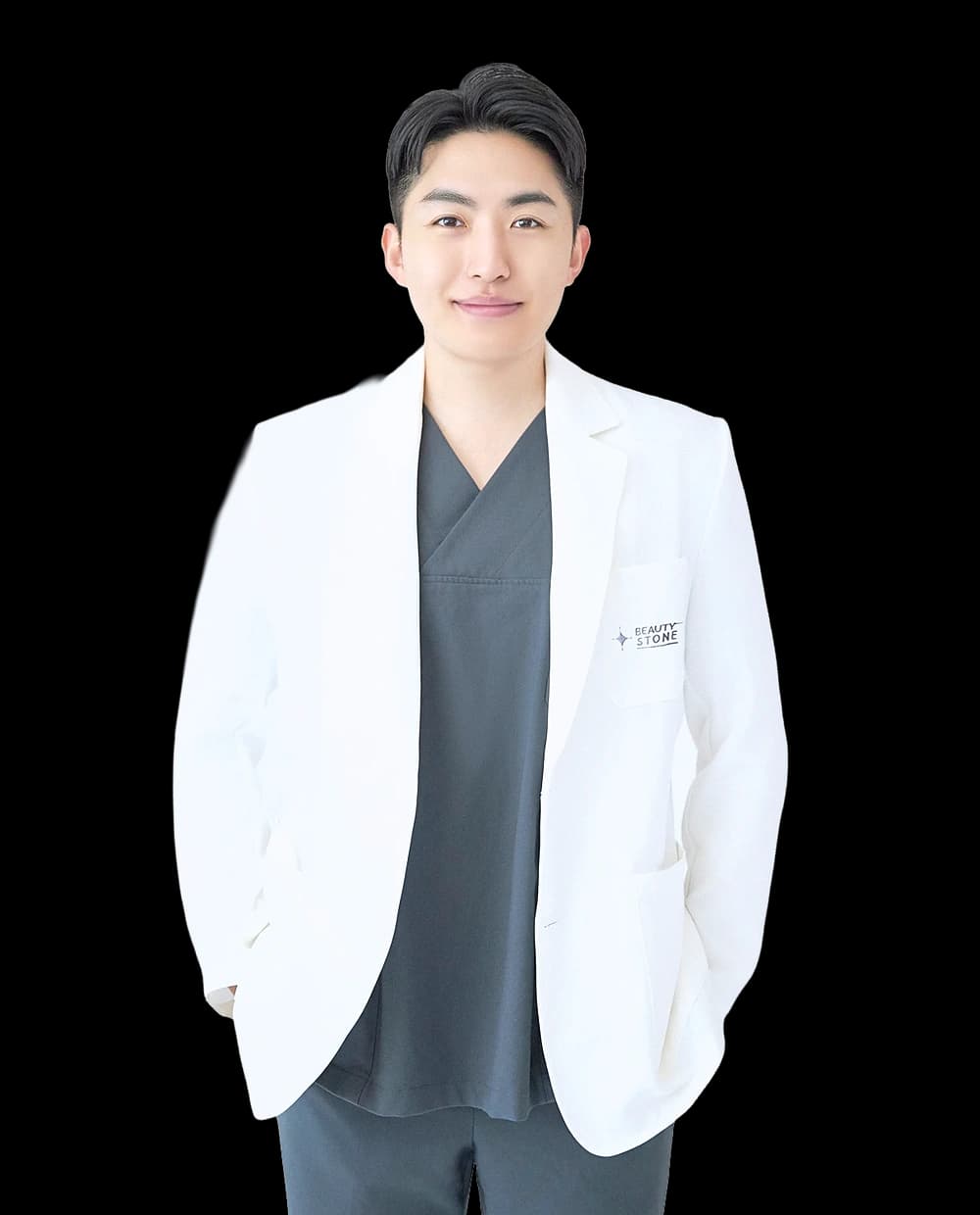
Wi Young-jin
Chief Director, Myeongdong
If you've been researching forehead lifting, you've probably heard two names more than any others: thread lifting and HIFU. Both are minimally invasive, both are popular in Korean dermatology clinics, and both can make a forehead look noticeably younger. But they're not interchangeable — and choosing the wrong one based on the wrong diagnosis is the most common reason forehead treatments disappoint.
In this guide, we'll cover how thread lifting and HIFU each work, which aging pattern each one is built to fix, when a third option (volume correction) actually makes more sense, and what to realistically expect from each approach. By the end, you'll have a clear framework for the conversation you need to have with your provider.
Is Thread Lifting the Right Tool for Your Forehead?
Thread lifting is a mechanical procedure. Dissolvable sutures — usually made from PDO (polydioxanone) or PLLA (poly-L-lactic acid) — are inserted under the skin via a fine cannula, and their barbs physically grip and reposition soft tissue upward. Over several months, the thread also triggers a mild collagen-building response in the surrounding tissue.
For the forehead, thread placement is typically concentrated near the hairline and along the brow arch, targeting the area where the frontalis muscle and the overlying skin have started to descend. The goal is a few millimeters of true positional correction — enough to lift a brow tail that's starting to hood the outer corner of the eye, or to reduce the horizontal heaviness across the upper forehead.
Thread lifting tends to work well when:
- The tissue has actually descended. If your brow genuinely sits lower than it did five or ten years ago, threads can mechanically restore some of that lost position.
- Your skin still has reasonable elasticity. Thread lifting needs the surrounding skin to hold the lifted position after the suture anchors it. Very lax, heavily stretched skin may not maintain the correction as well.
- Volume is relatively preserved. Thread lifting repositions what's there — it doesn't replace what's gone. If your forehead looks heavy mostly because of hollowing or shadow, threads won't fix that.
Research published in PMC on suture-based lifting outcomes shows measurable positional improvement in brow height and periorbital tissue in patients with mild-to-moderate tissue laxity. The keyword there is mild-to-moderate — threads aren't designed to replace what a surgical brow lift does.
Thread Lifting vs. HIFU: Two Different Problems
HIFU (High-Intensity Focused Ultrasound) devices — including systems like Shurink and Sofwave — work completely differently from threads. They deliver focused ultrasound energy to a specific tissue depth (typically 1.5mm, 3mm, or 4.5mm, depending on the handpiece), creating a controlled thermal injury that triggers a contraction and remodeling response in the SMAS layer and deep dermis.
The result isn't an immediate mechanical lift the way threads provide. Instead, HIFU produces a gradual tightening and lifting effect over two to six months as the collagen remodeling completes. The lift is more diffuse, the downtime is minimal, and the mechanism targets tissue quality rather than tissue position alone.
Here's the practical distinction that matters most:
- Thread lifting is a repositioning tool. It physically moves tissue that has fallen and holds it in a new position. Use it when the problem is actual descent.
- HIFU is a tightening and quality tool. It strengthens the structural scaffolding of the skin — the SMAS and deep dermis — over several months. Use it when the problem is looseness, early laxity, or a feeling of "heaviness" that isn't driven by true tissue descent but rather by reduced skin firmness and collagen density.
A lot of patients who feel their forehead looks "heavy" don't have significant brow descent at all. What they're experiencing is the early loss of collagen density in the dermis and SMAS — the tissue is losing its structural tightness and starting to feel heavier under the skin's surface. HIFU addresses this directly. Thread lifting doesn't, because there's nothing to mechanically reposition — it's a quality problem, not a position problem.
The two approaches can also be combined and often are: HIFU first for overall quality and structural support, followed by threads to fine-tune brow tail position if positional correction is still needed after the HIFU tightening has settled. Your provider can assess which component — if any — dominates your presentation.
When Volume Correction Should Come First
There's a third pattern that neither thread lifting nor HIFU is designed to fix: volume loss.
As the face ages, fat pads in the forehead and temple region deflate, and there's some degree of bone resorption at the orbital rim. When these structures lose volume, the forehead can look heavy or shadowed even when the tissue hasn't actually descended and the skin is still reasonably firm. The shadow falls in the wrong place, making the forehead look older and more tired without any actual drooping.
Research in PMC examining facial aging patterns identifies volume loss and tissue descent as distinct — and often concurrent — processes requiring separate treatment strategies. A forehead that's sagging and a forehead that's hollow can look similar in a mirror but respond to completely different interventions.
Signs that volume correction may be the primary need:
- The forehead looks shadowed or concave in the upper third, rather than just drooped along the brow line.
- The temple area feels thin or sunken, creating a "pinched" appearance at the sides of the forehead.
- The forehead looks heavy in photos taken from the side more than from the front.
- You've lost significant weight recently, which accelerates fat compartment deflation in the face.
Options for volume correction in this area include hyaluronic acid fillers (for immediate volume), PLLA-based biostimulators like Sculptra (for gradual collagen and volume rebuild over several months), and HA + PDLLA combinations like Juvelook Volume. Threads placed over a hollow forehead typically make the hollowing more visible by pulling the overlying skin tighter over an already deflated space — individual results vary, and the sequencing matters significantly. Volume correction first, then positional correction if still needed, is the typical approach your provider will recommend.
What to Expect: Recovery and Results Timeline
Recovery and result timelines differ significantly between thread lifting and HIFU, which is worth knowing before you commit.
Thread lifting recovery and results:
- Day of procedure: Mild swelling and bruising at insertion points. Some patients notice a "bunched" or dimpled appearance along the thread lines — this is normal.
- Days 2–7: Bruising peaks and begins to fade. The puckering along the suture path starts to smooth.
- Weeks 2–4: Surface dimpling resolves for most patients. Initial results are visible, though swelling can temporarily mask the full lift.
- Months 1–3: Collagen builds around the thread, adding a firming quality to the positional correction. This is often when the final result looks its best.
- Duration: Results typically last one to two years before the threads fully dissolve, though the collagen stimulation can extend some of the benefit beyond the thread's physical presence. Individual results vary.
HIFU recovery and results:
- Day of procedure: Redness and mild swelling, sometimes mild tenderness along treated areas. Most patients look presentable within a day.
- Days 1–7: Minimal visible downtime for most. Some patients experience temporary mild bruising, particularly in the temple area.
- Months 1–3: Collagen remodeling is actively underway. Some patients notice initial tightening within weeks; the majority of the result builds over two to four months.
- Peak results: Typically at three to six months post-treatment.
- Duration: Results generally last one to two years depending on device, energy settings, and individual collagen response. Maintenance sessions are common. Individual results vary.
In terms of downtime, HIFU typically has the lighter recovery profile. Thread lifting involves a brief period of visible swelling and possible puckering that most patients prefer to schedule around social or work commitments.
Risks and Safety: What to Watch For
Both procedures are considered minimally invasive, but neither is without risk. Here's what's worth knowing:
Thread lifting risks:
- Skin puckering: Bunching along the thread line is common immediately after the procedure and usually resolves within two to four weeks. Persistent or severe puckering is less common and may require the thread to be adjusted or removed.
- Thread migration or palpability: Threads can occasionally shift from their original placement or become palpable under the skin. Risk is higher with shallow placement.
- Infection: Entry points should be kept clean. Infection is rare but requires prompt treatment if it occurs.
- Asymmetry: Minor differences between sides typically resolve as swelling settles. Persistent asymmetry may need a touch-up.
HIFU risks:
- Post-treatment tenderness: The forehead and temple areas can feel sore or tender to the touch for several days to weeks after treatment, particularly after high-energy sessions.
- Nerve sensitivity: A small number of patients experience temporary numbness or altered sensation in the treated area. This is usually temporary.
- Burns or skin irregularity: Rare, but possible if energy settings or handpiece placement are off. Provider experience and proper device calibration matter here.
Redness and swelling are common after both procedures and usually settle within a few days to a week. If you notice spreading redness, fever, worsening pain beyond the expected healing window, or skin that looks blistered or unusually discolored, seek medical care right away. Red-flag criteria should be reviewed with your provider before you leave the clinic.
Frequently Asked Questions
Q: How do I know if my forehead needs thread lifting, HIFU, or something else?
A: The clearest way to tell is to look at which problem is driving what you see. If your brow has actually descended and hooding the outer eye corner, thread lifting may offer direct positional correction. If the forehead feels loose, dull, and less firm but hasn't significantly dropped, HIFU addresses that quality and structural problem. If there's a hollow or shadow in the upper forehead with minimal actual drooping, volume correction with fillers or biostimulators should come first. In practice, many patients have some of all three — a provider's assessment separates which pattern is dominant.
Q: Can thread lifting and HIFU be done at the same time?
A: It's technically possible to combine them, but many providers prefer to sequence them rather than do them simultaneously. A common approach is HIFU first for structural tightening, then threads after the HIFU result has settled (typically three to six months later) to address any remaining positional issues. Doing both on the same day can make it harder to evaluate what's contributing to the result — and to manage swelling. Your provider's protocol may vary, so ask directly.
Q: How long does forehead thread lifting last compared to HIFU?
A: Both typically last around one to two years, though the mechanisms differ. Thread lifting results fade as the threads dissolve, though some collagen benefit outlasts the physical thread. HIFU results build gradually and peak at three to six months, then slowly fade as collagen naturally remodels. Individual results vary for both, depending on skin condition, age, and lifestyle factors. Maintenance treatments are common for both approaches.
Q: Is forehead thread lifting painful?
A: Most patients describe it as pressure and mild discomfort rather than sharp pain. A topical numbing cream is applied beforehand, and many providers use local anesthetic at the entry points. Post-procedure soreness is common for a few days. HIFU can also cause discomfort during the procedure — particularly in bony areas like the temple and forehead — though the level varies by device and energy settings. Neither is typically described as highly painful.
The Final Word
Forehead thread lifting and HIFU are both legitimate, effective tools — when used for the right problem. Here's the framework:
- Thread lifting fixes position. Use it when tissue has actually descended and skin elasticity is still reasonable.
- HIFU fixes quality and structural tightness. Use it when the forehead feels loose and less firm, even without significant descent.
- Volume correction fixes hollowing and shadow. Use it when the forehead looks heavy because it's deflated, not because it's drooped.
- Many patients need a combination — the key is identifying which component is dominant before committing to a plan.
Like any procedure, both come with trade-offs — modest downtime, a recovery window, and results that require maintenance over time. Individual results vary, and no approach is a one-size-fits-all solution.
Ultimately, the choice depends on your skin, your goals, and what your forehead is actually doing. A consultation is the best way to find out which approach — or combination — fits you. Beautystone is a dermatology clinic in Seoul's Hapjeong area. See current offers at /en/promotion, or browse treatment details at /en/price.