Irezumi Removal: Why Provider Skill Matters
Irezumi tattoos are large, deeply layered, and full of color, which puts them among the hardest tattoos to remove. The laser used, the per-color settings, and the provider's experience all shape both the results and the risks.

Wi Young-jin
Chief Director & CEO, Myeongdong
If you've looked into removing an irezumi — a traditional Japanese tattoo — you've probably run into ads promising a clean result in just a few sessions. It's tempting to believe them, but the reality is messier. Two people with similar tattoos, in similar spots, can walk away with very different outcomes, and that gap usually isn't down to luck.
In this article, we'll cover what makes irezumi so stubborn to remove, why ink color reshapes the whole plan, how picosecond lasers differ from older ones, how the Kirby-Desai scale helps estimate the number of sessions, and what side effects and risks to keep on your radar. Along the way, you'll see why the person running the laser matters just as much as the machine itself.
What Makes Irezumi So Hard to Remove?
The short answer is size, depth, color, and layering — all working against you at once. An irezumi isn't a small, single-line amateur tattoo. It tends to be large, packed with color (reds, greens, and blues alongside black), and driven deep into the dermis, often with extra layers built up wherever the design was shaded or reworked over time.
That layering is the real sticking point. Tattoo ink doesn't lift out in a single pass. Your body clears the shattered pigment gradually, through the immune system, which is why removal is spread across multiple sessions weeks apart — frequently 6 to 12 or more for a dense, multi-color piece. As a rule, the bigger and more layered the tattoo, the longer that timeline runs. Anyone quoting you a quick, fixed number before seeing the tattoo is really just guessing.
Why Does Ink Color Change Everything?
Because each color absorbs laser light differently, and that absorption decides how well — or how poorly — a given part of the tattoo responds. Reviews of laser tattoo removal note that pigments respond to specific laser wavelengths, and that pale or flesh-toned inks can sometimes darken paradoxically after treatment.
In practical terms, that means no single setting works for a whole multi-color piece. Here's the rough hierarchy providers plan around:
| Ink Color | Typical Laser Response |
|---|---|
| Black / dark blue | Tends to respond best |
| Green / teal | Stubborn — wavelength choice is key |
| Red / orange | Often needs a different wavelength |
| White / flesh-tone | Risk of paradoxical darkening* |
*Paradoxical darkening is when a light or flesh-toned ink turns darker after a laser pass instead of fading. It's a known reason to test conservatively before treating those colors broadly.
Picosecond vs. Nanosecond Lasers
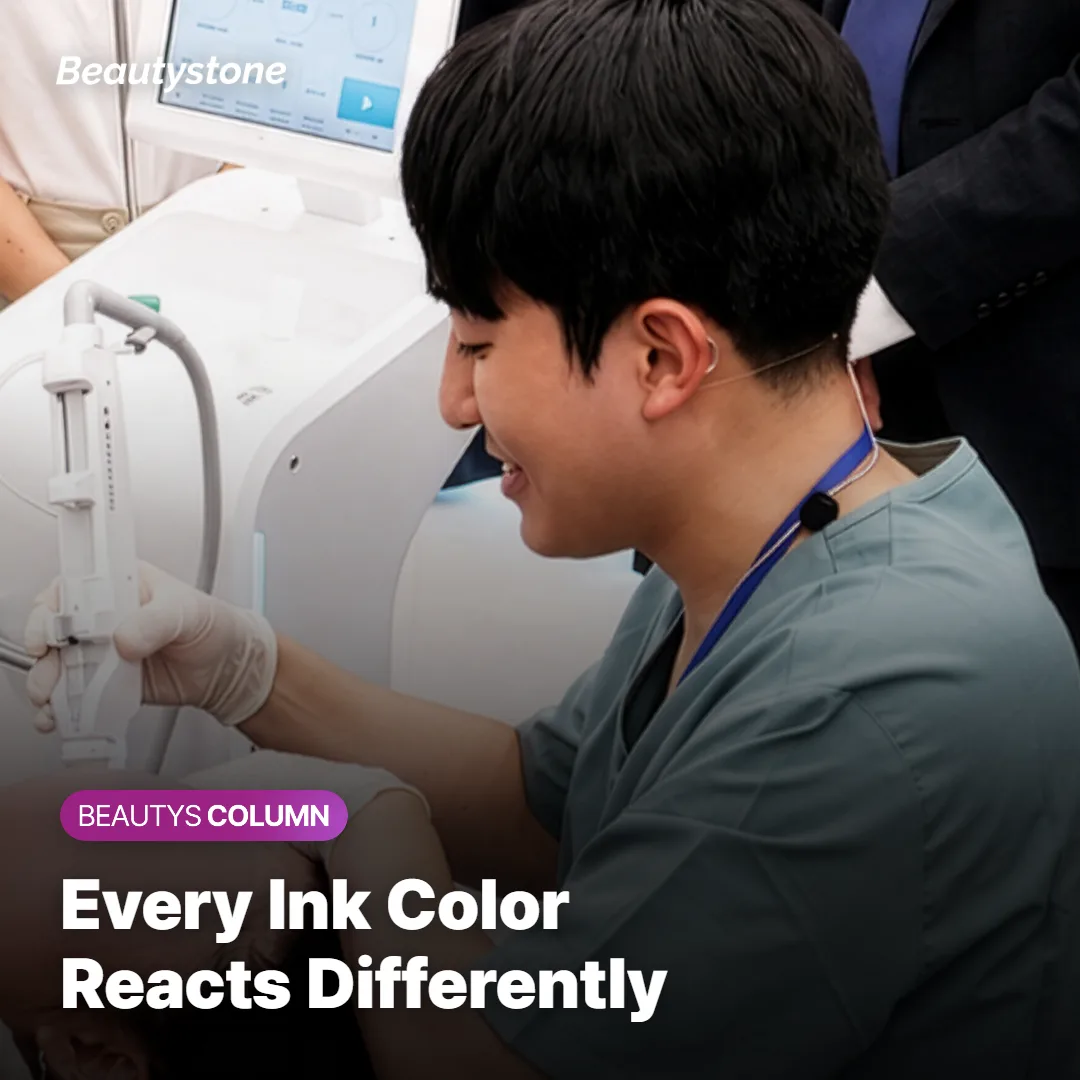
Picosecond lasers fire in far shorter pulses than the older nanosecond generation, and for multi-color work that difference counts. Research indicates that picosecond lasers break pigment into finer particles through a photoacoustic effect — a pressure wave rather than pure heat — with less thermal damage to the surrounding skin. PicoWay is one of these picosecond systems.
Finer particles are easier for your body to carry away, and less collateral heat can mean a more comfortable recovery. But here's the part the ads gloss over: the device is only half the story. The very same PicoWay can produce very different results depending on how the wavelength, energy, and spacing are dialed in for each color and depth. That judgment — reading the skin and adjusting on the fly — is where an experienced operator earns their keep.
How Many Sessions? The Kirby-Desai Scale
No one can hand you an exact number up front, but there's a tool that makes the estimate less of a guessing game: the Kirby-Desai scale. It scores six factors — skin type, tattoo location, color, amount of ink, scarring, and ink layering — to estimate how many sessions a tattoo may need, landing on an average of about 10 with a range of roughly 3 to 20.
The higher the total score, the more sessions tend to be needed. A large, multi-color, heavily layered irezumi naturally scores high on several of those factors at once, which is one more reason these pieces call for patience. Used at consultation, the scale turns a vague "a few sessions" into a planned range you can actually budget time and money around. Here's what those six factors look like:
- Skin type: deeper tones call for more cautious settings.
- Location: areas with better circulation tend to clear faster.
- Color: more colors usually mean more complexity.
- Amount of ink: dense, saturated work takes longer.
- Scarring: pre-existing scars can slow things down.
- Layering: reworked or covered-up designs stack the deck.

Side Effects and Risks
No laser removal is free of trade-offs, and it's worth understanding them before your first session. Most reactions are temporary — redness, swelling, blistering, and scabbing as the skin heals. A few risks, though, are worth planning around:
- Pigment changes: treated skin can turn lighter (hypopigmentation) or darker (hyperpigmentation), sometimes for months.
- Scarring: more likely if scabs are picked, or if the skin was already scarred by the original tattoo.
- Paradoxical darkening: as noted, pale and flesh-toned inks can darken rather than fade.
- Higher risk with deeper skin tones: research shows darker skin carries a greater risk of pigment change, so settings have to be adjusted carefully.
Most of these settle on their own with good aftercare. Sunscreen isn't optional while you heal — fresh, treated skin burns easily and is prone to discoloration. And never pick at scabs; that's one of the most preventable causes of scarring.
It's also safer to postpone treatment, or talk it through with a provider first, if you're pregnant or breastfeeding, have an active infection or inflammation at the site, tend to form keloids, or have recently tanned or spent a lot of time in strong sun.
When to seek care: if you develop a fever, spreading redness, pus, or worsening pain, don't wait it out — contact your provider or seek medical care right away.

Why the Provider Makes the Difference
Put the pieces together and a clear pattern shows up: results and safety hinge on laser choice, per-color settings, a realistic session plan, and the experience to adjust as the tattoo responds. None of that runs on autopilot. The same equipment in different hands can be the difference between steady, even fading and a stalled, patchy result — or an avoidable pigment problem.
That's the real case for treating the consultation as more than a formality. A few questions worth asking: Which laser do you use, and is it suited to multi-color ink? How will the settings change from color to color? What session count and spacing do you expect for a tattoo like mine? How do you handle risks like paradoxical darkening? And will a dermatologist actually oversee the treatment?
Beautystone is a dermatologist-led clinic in Seoul's Hapjeong area that approaches irezumi removal along these lines. Before anything starts, the team assesses ink color, depth, and skin type, and uses the Kirby-Desai scale to set expectations for the number of sessions. Treatment is done with the PicoWay picosecond laser, with settings adjusted per color, and a dermatologist follows how the skin responds at each visit. Because longer, multi-session removals benefit from continuity, the pacing is planned together as the tattoo gradually fades.
The Bottom Line
Irezumi removal is a marathon, not a sprint, and a handful of things decide how it goes:
- Size, depth, color, and layering make irezumi some of the hardest tattoos to fully clear.
- Ink color drives the plan; picosecond lasers like PicoWay handle multi-color pigment well, but the settings still have to be tuned color by color.
- The Kirby-Desai scale turns "how many sessions?" into a realistic, plannable range.
- Results and safety ultimately trace back to laser choice, careful settings, and the provider's experience.
Like any medical procedure, laser tattoo removal comes with trade-offs, and individual results vary with your skin, your ink, and how the treatment is planned. Ultimately, the right approach depends on your tattoo, your skin type, and your goals.
If you're considering irezumi removal, a consultation is the best way to understand what your specific tattoo will actually need — see current offers at /en/promotion.