Does InMode FX Cause Cheek Hollowing?
Most InMode FX side effects — the warmth, the puffiness — settle on their own within days. The one that doesn't always settle the same way is thinning under the cheekbones, and it's worth understanding before you book a session.


Planning a trip to Seoul?
If you've read up on InMode FX, you've probably run into two very different kinds of feedback online. One camp raves about a tighter jawline and smoother skin. The other mentions redness, warmth, or swelling that lingered a few days — and, much less often, a spot under the cheekbones that looks noticeably thinner than it used to. The first two reactions are almost always nothing to worry about. The third one is the side effect worth understanding before you book a session.
In this article, we'll cover what InMode FX actually does beneath the skin, which reactions are expected and harmless, why cheek hollowing under the cheekbone is a different animal entirely, and how to read the timeline so you're not panicking at week two over something that resolves by week eight.
What Is InMode FX, Exactly?
InMode FX is a bipolar radiofrequency (RF) treatment. Instead of sending energy deep into the tissue from a single point — the way monopolar devices like Thermage or Oligio do — InMode FX runs current between two closely spaced electrodes on the handpiece. That keeps the energy concentrated right at the border between the dermis and the shallow layer of fat just underneath it.
The practical effect is a combination treatment: some skin tightening, plus a modest reduction in the fat cells sitting closest to the surface. That's a meaningfully different job than what a device like Ultherapy is built for, and it matters for how the treatment gets dosed.
Bipolar RF vs. Monopolar Devices: Why the Difference Matters Here
Think of it like reheating food in a microwave. A thick portion heats evenly all the way through. A thin one scorches fast, because there's less material there to absorb the same amount of energy. Bipolar RF behaves the same way with fat.
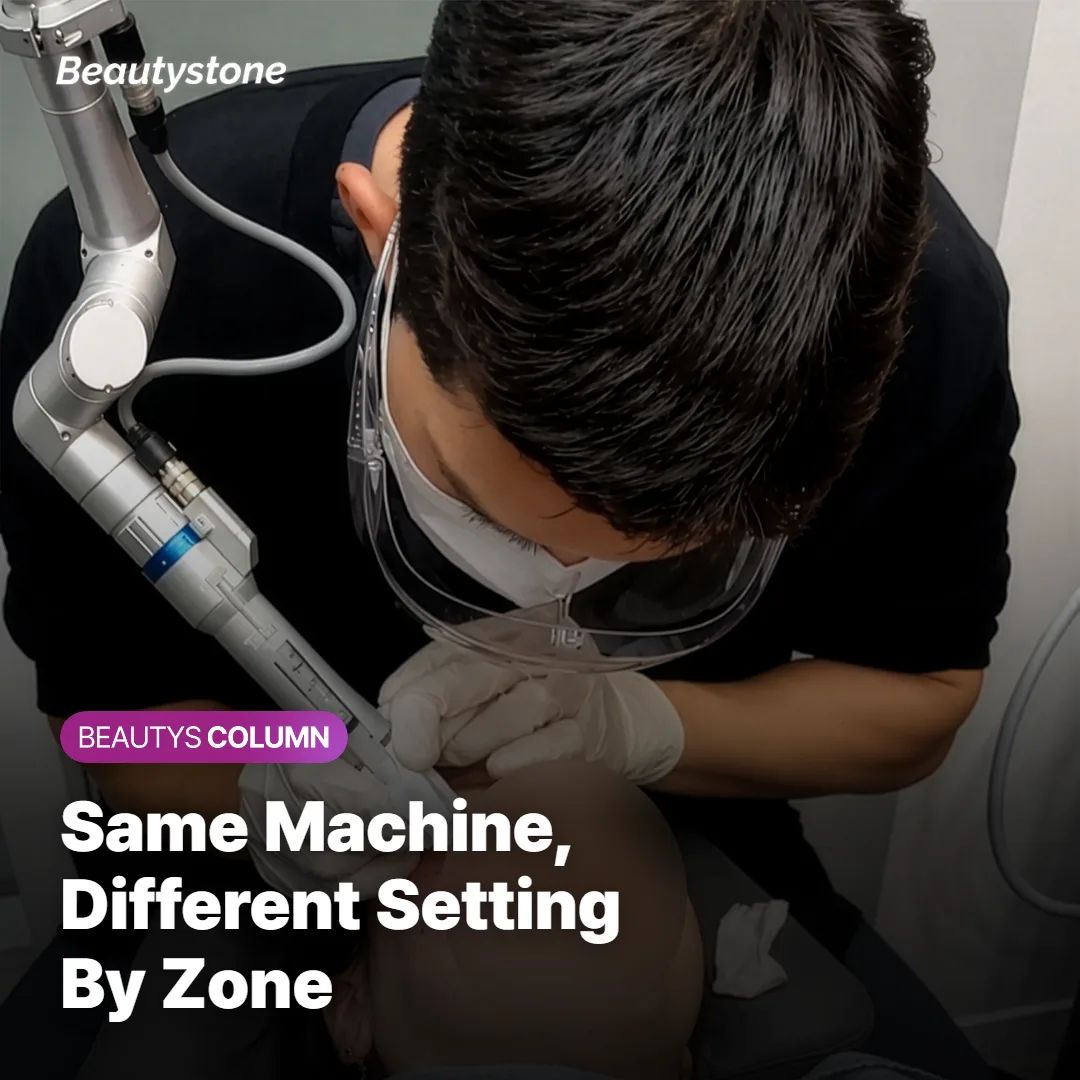
Under the chin and along the jawline, where the fat layer tends to run thicker, providers can use a higher energy setting fairly safely. Under the cheekbone, where the fat layer can be as thin as 2 to 5 millimeters, that same setting hits much harder relative to the tissue that's actually there. Fat cell walls break down at a different rate depending on the area, and thinner zones need their energy dialed down accordingly — not treated like every other part of the face.
The Normal Side Effects: Redness, Warmth, and Swelling
Most of what people report after InMode FX falls into the expected category. Bipolar RF leaves some heat in the dermis, and that typically shows up as redness, a warm or faintly sunburned feeling, and mild swelling for about 24 to 72 hours. Ice packs and a gentle, soothing skincare routine usually take care of it.
When it's still normal: even redness on both sides, warmth that fades day by day, and swelling that's noticeably better by day three.
When it's worth a check-in: redness that's much worse on one side than the other past day three, or blistering and crusting. That combination is uncommon, and it's reasonable to have your provider take a look if you see it.
Why Cheek Hollowing Happens — and Why It's Not Like the Others
Here's the part that trips people up: InMode FX isn't melting fat away. It's using RF energy to break down the fat cell walls directly. Over the following months, your body's macrophages — the cleanup cells that clear out damaged tissue — absorb what's left of those cells. If the volume that gets cleared is more than the area can spare, the spot doesn't just look tighter. It looks sunken.
That's exactly why the cheekbone area carries more risk than the jawline or chin. There isn't much fat to work with in the first place, so even a slightly-too-strong setting can tip the result from contoured to hollow. An experienced provider will typically pull the energy down a notch or two in that specific zone rather than running the whole face at one setting.
Once fat cells are broken down this way, they don't come back on their own. If hollowing does happen, the usual fix is adding volume back with a filler or a collagen-stimulating treatment like Sculptra — which works, but it's extra cost and extra time that careful dosing up front could have avoided.

Timeline: Why Week Two Can Look Worse Before It Gets Better
A pattern shows up often enough that it's worth flagging on its own: some people look fine right after treatment, then feel like their cheeks have sunken further around week one or two — only to end up happy with the result two or three months later.
- Day 1-3: Redness, warmth, and swelling that mask the treatment area's true shape.
- Week 1-2: Swelling starts to resolve, which can briefly make thinning look more obvious than it'll end up being.
- Week 4-8: Collagen remodeling kicks in and the area typically settles into its real result.
If you're evaluating your results, week two is too early to call it a win or a loss. Hold off on judgment — and on booking a touch-up — until you're past the eight-week mark.

Can Cheek Hollowing Be Reversed?
Short answer: not on its own, and not right away. Once the fat cell walls under the cheekbone are broken down, that tissue is gone for good. What providers can do is rebuild volume in that spot with dermal filler or a biostimulator, which restores the contour even though it doesn't undo the original treatment.
That's part of why the smarter move is preventing it in the first place — lower energy in thin-fat zones from the start — rather than treating and correcting after the fact. It's a more efficient use of your time and your budget either way.
Who's a Good Candidate for InMode FX?
InMode FX tends to suit people with mild to moderate fat under the chin or along the jawline, plus some early skin laxity they'd like addressed at the same time. If your main concern is sagging at a deeper, structural level — the kind that shows up as jowls or a dropped midface — a HIFU treatment like Ultherapy or a thread lift usually gets you further, since InMode FX works at a shallower layer.
If you already have naturally thin cheeks or minimal fat under the cheekbone, that's worth flagging to your provider before treatment, not after. A thorough consultation — one that actually maps out fat thickness zone by zone — is the single biggest factor in avoiding an outcome you didn't want.
Most people see one InMode FX session hold up for close to a year, with some coming back every six months or so for a touch-up. Cost varies by clinic, treatment area, and how many sessions you plan for, so it's not something we'll put a specific number on here — a consultation is genuinely the best way to get an accurate quote. Beautystone is a dermatology clinic in Seoul's Hapjeong neighborhood, and you can see current offers at /en/promotion.
The Bottom Line
Redness, warmth, and a couple of days of swelling are the normal, forgettable side effects of InMode FX. Cheek hollowing under the cheekbone is the one that actually matters, and it comes down to one variable: whether the energy setting respects how thin the fat layer already is in that specific spot.
Like any procedure, InMode FX comes with trade-offs, and it isn't the right call for every kind of sagging. Ultimately, the choice depends on your face, your goals, and how much you trust the hands doing the dosing.
If you're weighing InMode FX against another option — or you're not sure whether your cheeks fall into the higher-risk category — a consultation is the best way to find out. Talk to a provider who's willing to look at your face zone by zone, not just book you in for a standard setting.
Frequently Asked Questions
Q1. Is redness and warmth after InMode FX a sign something's wrong?
In most cases, no. Redness, a warm or faintly sunburned feeling, and mild swelling for about 24 to 72 hours are typical after bipolar RF, and they usually calm down with ice packs and gentle skincare. If one side is noticeably more red or swollen than the other past day three, or you notice blistering or crusting, check in with your provider.
Q2. Can cheek hollowing from InMode FX be fixed?
Not by itself, and not immediately. Once the fat cell walls under the cheekbone break down, that tissue doesn't come back on its own. Providers typically restore the area with a dermal filler or a collagen-stimulating treatment like Sculptra, which rebuilds the contour even though it can't reverse the original treatment.
Q3. Why do my cheeks look more sunken two weeks after InMode FX than right after treatment?
Swelling in the first few days can temporarily mask how the area actually looks. Once that swelling resolves around week one or two, thinning can briefly look more obvious than it'll end up being. The real result usually settles in by week four to eight, once collagen remodeling catches up — so it's worth holding off on judgment until then.
Q4. Is InMode FX safe if I already have thin cheeks?
It can be, but it depends heavily on how your provider sets the energy for that specific area. Thin fat layers under the cheekbone need a lower setting than thicker areas like the jawline or chin. If you know your cheeks run thin, mention it during your consultation so the treatment plan is adjusted zone by zone instead of applied uniformly.