Botox for Men in Korea: How Many Units & Cost?
Men usually need more Botox units than women. Here's how many, what it costs in the US vs Seoul, and the timeline.

Here is the short answer first: most men need more Botox units than women — often close to 1.5 to 2 times as much in the frown-line area — because male facial muscles are simply bigger and stronger. That one fact drives almost everything else about men's Botox: the unit count, the price, and why a light "starter" dose sometimes does nothing at all.
This is a plain-English rundown for men weighing Botox, including what it looks like to have it done in Seoul. We are Beautystone, a skin clinic in the Hongdae and Hapjeong area, so we will be transparent about that rather than pretend to be a US practice. No hype, no "you're already behind" pressure — just units, cost, timing, and how to keep the result from looking frozen.
What you'll learn

  · Why men usually need more units than women, and roughly how many
  · What Botox actually costs — US per-unit pricing plus a Seoul ballpark
  · How to keep the result natural instead of stiff or frozen
  · The real timeline: onset, peak, how long it lasts, and when you can fly home
Why men usually need more units than women
Botox is an FDA-approved drug — approved for the temporary improvement of frown lines (the glabella*), forehead lines, and crow's feet in adults. "Approved" is the right word for a drug; skin-tightening devices like Ultherapy or Thermage are "cleared," which is a separate category, so do not let a clinic blur the two.
glabella*: the area between your eyebrows where the vertical "11" frown lines form.
The reason men need more of it comes down to muscle. Published dosing guidance in the Journal of Drugs in Dermatology notes that men typically have greater glabellar muscle mass and need larger doses. Bigger, stronger muscles take more units to relax. That is why a dose that smooths a woman's frown lines can leave a man's barely touched — the toxin is the same, but there is more muscle to work against. The rough "1.5 to 2 times" figure you see quoted for men is a commonly cited rule of thumb tied to that greater muscle mass, not a fixed formula — your own number depends on your anatomy.

How many units men usually need, by area
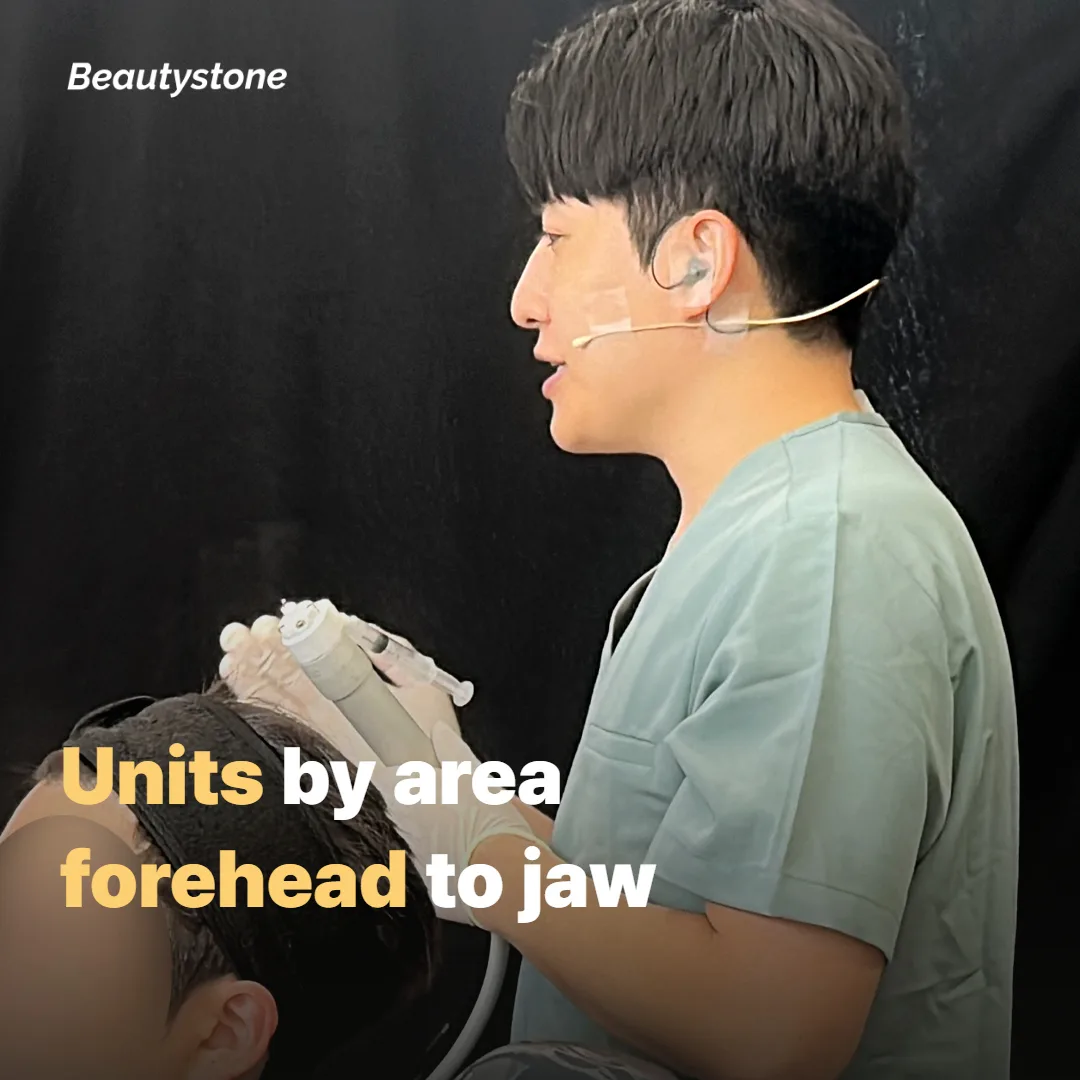
So what are the numbers? The ranges below are commonly cited starting points for men in clinical practice guides — not fixed doses. Your own number depends on how strong your muscles actually are, and individual results and dosing vary.
| Area | Typical range for men | What it targets |
|---|---|---|
| Frown lines (glabella) | about 20–40 units | vertical "11" lines between the brows |
| Forehead lines (frontalis*) | about 10–30 units | horizontal lines when you raise your brows |
| Crow's feet | about 10–30 units | lines fanning out from the corners of the eyes |
frontalis*: the broad muscle across your forehead that lifts your brows and creates horizontal lines.
Women often sit near the lower end of each range; men frequently land higher, especially in the frown-line area. The practical takeaway: a good injector doses to your muscle, not to a fixed number on a menu — so a fair quote should follow an actual assessment of your face, not a flat "20 units for everyone."
Which toxin also changes the unit math. "Botox" is one brand; US and Seoul clinics also use Dysport and Xeomin, and they are not dosed one-for-one. This matters for men because a higher unit number on a Dysport quote does not automatically mean more product — compare the per-area price, not the raw unit count.
| Toxin (all FDA-approved drugs) | Onset | Typical duration | Unit conversion | US price feel | Note |
|---|---|---|---|---|---|
| Botox | about 3–7 days | about 3–4 months | the baseline (1 unit = 1 unit) | around $10–15 per unit | most widely used; FDA-approved 2002 |
| Dysport | about 2–5 days | about 3–4 months | more units for the same effect (roughly 2–3 Dysport per 1 Botox, commonly cited) | often lower per unit, but more units used | diffuses a bit more — can suit broad areas like the forehead; FDA-approved 2009 |
| Xeomin | about 3–7 days | about 3–4 months | roughly 1:1 with Botox | broadly similar to Botox | "naked" toxin with no accessory proteins; FDA-approved 2011 |
Onset, duration, and FDA-approval details above reflect commonly published dermatology comparisons of the three toxins; the unit-conversion figures are commonly cited approximations, not fixed formulas. All three are FDA-approved drugs, and results still vary by person.
What it costs, and the honest math
Here is the money part, broken out so you can run your own math:
- US, per unit: The American Society of Plastic Surgeons puts the typical cost around $10 to $15 per unit.
- US, per session: A common 30–40 unit session runs roughly $300 to $600 — and because men tend to need more units, men's sessions often sit at the higher end.
- Seoul, per area: Clinics in Seoul commonly list wrinkle areas (frown, forehead, or crow's feet) per area rather than strictly per unit — often somewhere in the ₩50,000–₩150,000+ range per area for a common toxin, with premium imported brands running higher. Menus vary widely, so treat this as a ballpark, not a fixed price.
- The caveat: Exchange rates, your own dosing, and the toxin brand all move the number in both directions. Any figure you see online is only a ballpark until a clinic assesses you — we are not going to do the "X% cheaper than home" math for you, because it swings on all of the above. Confirm the exact quote when you book.
Who Botox is a good fit for, and who should skip it:
- Good for: dynamic lines — the frown, forehead, and crow's-feet lines that show up when you move your face. Botox helps reduce their appearance, and this is most men's best-value use of it.
- Skip it (or expect little) if: your main concern is a deep, static crease that sits there even when your face is completely still. Botox alone won't fix set-in folds; a consult should tell you plainly whether it is the right tool or only part of a bigger plan.
- Realistic payoff: a rested, less-tired look rather than a dramatic change — and it is temporary, so budget for a few sessions a year, not a one-time fix.

Why where you get it done matters
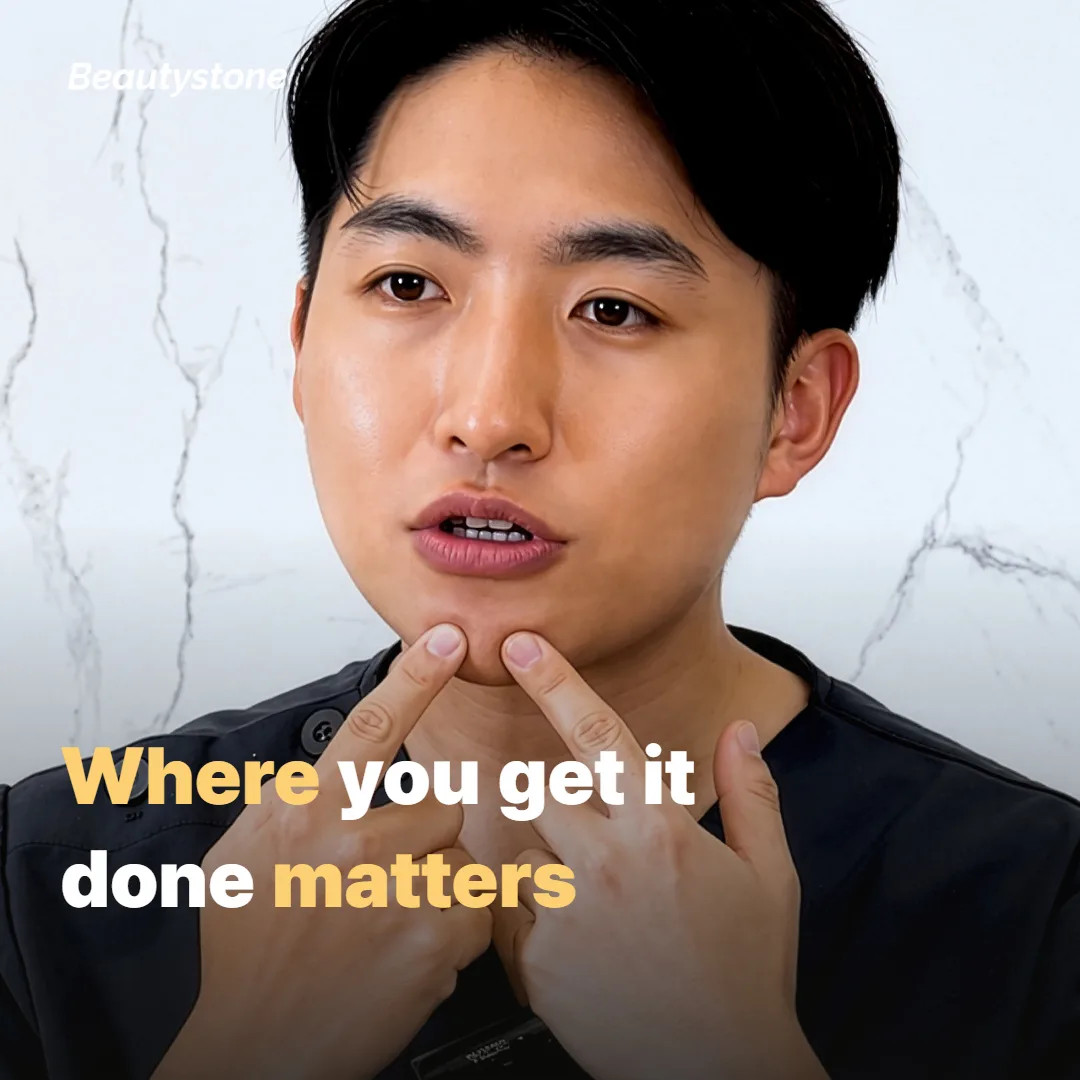
Take this as general information from a Seoul skin clinic, not a sales pitch: where you have Botox done matters more than the brand on the vial. Look for someone who assesses your muscle strength and adjusts both the dose and the injection points before treating — that is what keeps a man's result looking rested rather than surprised, or obviously done.
One honest caveat if you are traveling for it: aftercare has limits at a distance. Botox side effects are usually minor and settle on their own, but if something does need a follow-up after you fly home, you may need a local provider to check it. Worth planning for before you book — not a reason to avoid it.
What to expect, and when you can fly home
Botox is fast to have done — usually a few minutes with a fine needle, no anesthesia needed, and you walk out right away. The effect, though, is not instant. Here is the timeline most men can expect:
- Day 0: tiny injection points, sometimes small bumps or slight redness that fade within an hour or two.
- Days 3–7: the muscles start to relax and lines soften. Clinical trials showed measurable improvement by about day 7.
- Around 2 weeks: close to the full effect. This is the point to judge the result and go back for a small touch-up if a line still moves too much.
- 3–4 months: the effect gradually wears off. The median duration reported for frown lines is around 120 days, so most men re-treat a few times a year.
Flying home: because Botox is a quick injection with no incision, most people can fly within a day or two, and many the same day. Standard aftercare is to stay upright and skip hard workouts, rubbing the area, saunas, and heavy drinking for the first 24 hours — flight or no flight. For a long-haul flight, an extra day of buffer is a reasonable, conservative choice; confirm it with the clinic that treated you.
Most side effects are minor and short-lived: a little bruising, redness, or swelling at the injection points, and sometimes a mild headache in the first day or two. These usually settle on their own. Individual results and recovery vary, so treat all of this as ranges rather than guarantees. And if you ever get spreading redness, drooping that keeps getting worse, or trouble swallowing or breathing, seek urgent care right away rather than waiting it out.

Frequently asked questions
Q. How many units of Botox do men need for forehead and frown lines?
A. Most men need more than women — roughly 20 to 40 units for frown lines and about 10 to 30 for the forehead, though your exact number depends on how strong your muscles are. Bigger muscles need more units, which is why a light starter dose sometimes does nothing. A good injector measures the dose to your muscle rather than to a fixed count, so expect the number to be set after they look at your face move.
Q. How much does men's Botox cost in the US versus Seoul?
A. In the US it is usually priced per unit — the ASPS cites about $10 to $15 per unit, so a 30 to 40 unit session is roughly $300 to $600, and men often land higher because they use more units. In Seoul it is more often priced per area or per session and varies by clinic and toxin brand, so confirm the quote directly. Exchange rates and your own dosing move the total either way, and any figure you see online is only a ballpark until a clinic assesses you.
Q. Will Botox make my face look frozen or obviously done?
A. It should not, if it is dosed and placed for your muscles. Botox helps reduce the appearance of lines that form when you move, and the goal for men is usually a rested look rather than a motionless one. Ask for a natural, slightly conservative first session and a two-week review — you can always add a touch-up, but you cannot take units back out once they are in.
Q. Is Botox FDA-approved, and how long does it last?
A. Yes — Botox is an FDA-approved drug for frown lines, forehead lines, and crow's feet in adults. Results usually start in about 3 to 7 days, are close to full at around two weeks, and fade over 3 to 4 months, so most men re-treat a few times a year. Individual results vary, so use those windows as typical ranges, not promises. This is general information from a skin clinic in Seoul, not a personal medical recommendation. Individual results vary, so talk through your units, cost, and timing with a qualified provider before you book — and plan your aftercare with the clinic that treats you.