How to Choose a Botox Clinic That Lasts
If your Botox results faded in weeks instead of months, the brand probably wasn't the problem. Here's why the injection pattern, not the product, is what actually determines how long results last.

If you've ever left a Botox appointment feeling great, only to notice the results fading in a matter of weeks instead of months, you're not alone. It's one of the most common frustrations people bring up, and it rarely has anything to do with which brand went into the syringe. In this article, we'll cover why the product matters less than most people assume, what actually determines how long results last, and what to look for, and avoid, when you're choosing a clinic.
What's the Difference Between Xeomin and Other Neurotoxins?
Xeomin, Botox, Dysport, and Jeuveau are all FDA-approved forms of botulinum toxin type A, the same class of drug that temporarily relaxes an overactive muscle or softens an expression line. They're not just interchangeable names for one identical product, but the clinical difference between them, in terms of how well they smooth a wrinkle or slim a jaw, is smaller than the marketing around each one suggests.
Xeomin's main talking point is that it's what some providers call a "naked" injectable, meaning it doesn't contain the accessory complexing proteins found in some other formulations. Studies suggest this may lower the odds of your body building resistance to the toxin over years of repeated treatment, which matters more if you're someone getting touch-ups every three to four months for the long haul than if you're only trying it once.
Here's the part that tends to surprise people: two clinics using the exact same product can hand you wildly different results. The bigger variable usually isn't what's in the vial, it's how it gets distributed once it's under your skin.
Why the Injection Pattern Matters More Than the Brand
Botulinum toxin doesn't spread evenly across an entire muscle from a single injection point. It diffuses roughly 1.5 to 3 centimeters out from wherever the needle goes in, and it works strongest closest to that point. That detail matters a lot more than it sounds like it should.
Picture a provider treating a square jaw by loading every unit into one spot in the center of the masseter. (Using toxin to slim an overactive jaw muscle rather than soften a wrinkle is generally considered an off-label use of an FDA-approved drug in the U.S., common in dermatology, but worth knowing before you book.) The middle of the muscle gets hit hard and relaxes dramatically, while the outer edges barely get touched. At first that can look like a strong result, but because a meaningful chunk of the muscle was never really affected, the whole area can seem to "wear off" faster than it should, sometimes within a few weeks instead of a few months.
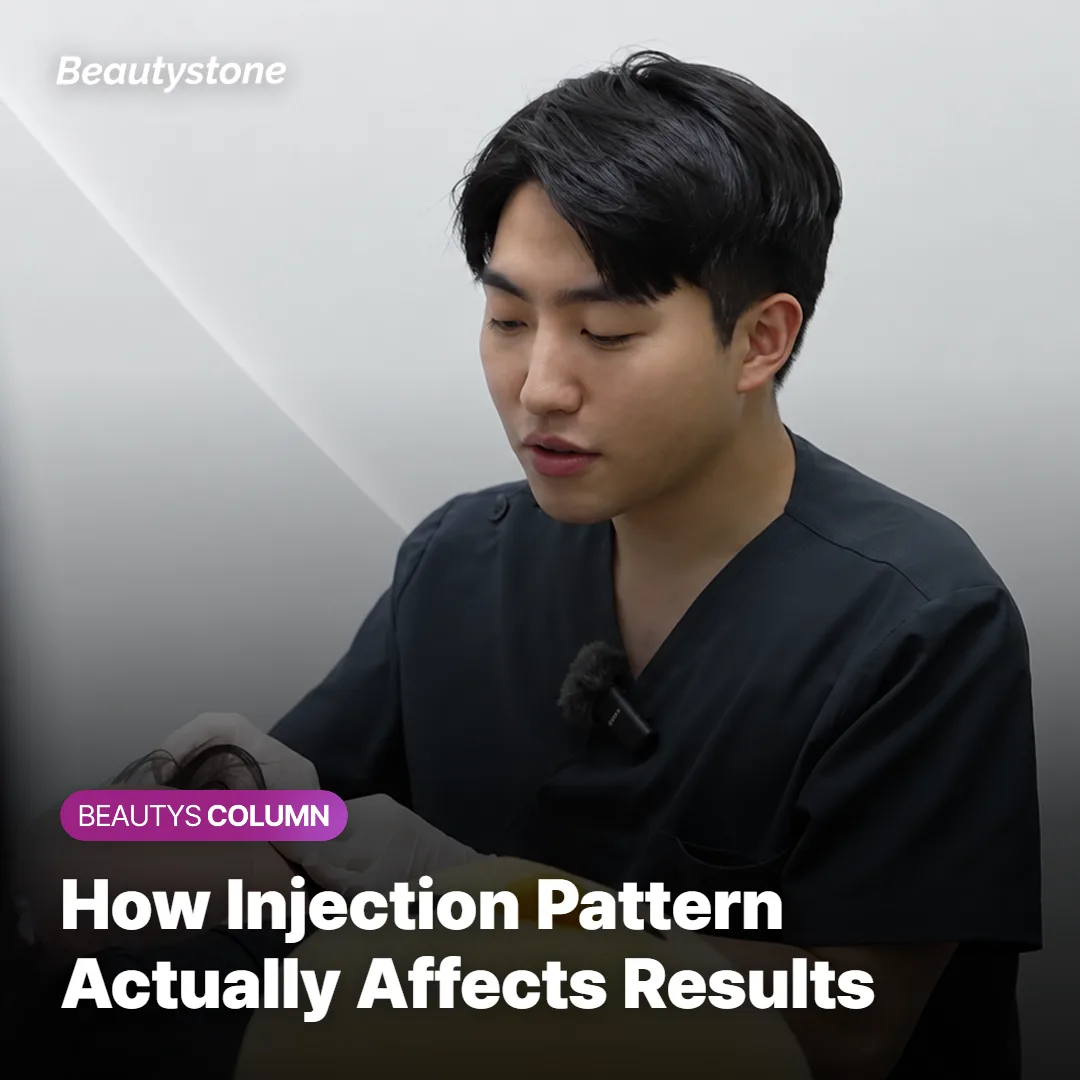
Split that same total dose across three to five points, adjusted to how thick the muscle actually is at each one, and the effect spreads more evenly across the whole area. Same units, same product, noticeably more even and longer-lasting result. It's one of the main reasons two people can get "the same treatment" at two different clinics and walk away with two very different experiences.
This isn't just a jaw thing. Forehead lines, the elevens between your brows, crow's feet, they all respond to the same principle: even distribution based on your actual muscle anatomy tends to outperform a one-size-fits-all pattern, regardless of which bottle it came from.
What a Good Botox Clinic Actually Looks Like
Since the product itself isn't the deciding factor, the questions worth asking are about process, not brand names. Here's a rough guide to what tends to separate a clinic that gets it right from one that doesn't:
| What to Check | Good Sign | Red Flag |
|---|---|---|
| Who does the assessment | Your provider examines and feels the muscle before dosing | Front-desk staff or a consultant decides your units |
| Dose planning | Units are split across 3–5 points based on your anatomy | Everything goes into one or two spots |
| Product transparency | Product name and lot number are available on request | Vaguely described as "imported" with no specifics |
| Appointment length | Consultation plus injection runs about 15–25 minutes | The whole visit is over in under five minutes |
| Follow-up | You're offered a check-in around two weeks out to assess and touch up if needed | No follow-up beyond the day you're injected |
The single biggest signal is whether the person treating you actually examines you first, not just to draw up a syringe, but to feel how thick and active the muscle is before deciding how much goes where. That assessment alone usually takes ten minutes or more. A five-minute in-and-out visit almost never includes it.

What to Expect: Consultation Through Results
Here's roughly how a well-run visit tends to unfold, and how results typically build afterward:
- Consultation (10–15 min): Your provider checks muscle thickness, symmetry, and habits, like grinding or one-sided expressions, that affect how your dose should be split.
- Injection (5–10 min): The injections themselves are quick, usually a handful of small pinches spread across several points rather than one.
- Days 1–3: Little visible change yet. Mild redness or small bumps at injection sites usually settle within hours.
- Days 5–7: Onset typically starts here, as muscle movement begins to soften.
- Weeks 2–4: This is usually the peak, and the window when a follow-up check makes sense if anything looks uneven.
- Months 3–4: Effects gradually wear off as the muscle regains normal function, right around when most people book their next session.
Exact timing shifts a bit from person to person, individual results vary depending on your muscle mass, metabolism, and how evenly the dose was distributed in the first place.

Side Effects & Risks
Botox and its alternatives are generally considered safe when injected by an experienced provider, but no injectable is entirely without risk.
- Bruising or tenderness: Common at injection sites and usually fades within a few days.
- Mild asymmetry: Can show up in the first couple of weeks and is often correctable with a small touch-up.
- Brow or lid heaviness: More likely with forehead or glabella treatment if dosing runs high, and it's usually temporary.
- Jaw fatigue: For masseter treatment specifically, chewing tougher foods can feel like more effort for the first few weeks.
If you notice drooping that isn't improving, spreading redness, fever, or worsening pain rather than the expected mild soreness, contact your provider or seek medical care right away.
How Much Does It Cost?
Pricing varies quite a bit by clinic, region, and how many units your treatment actually needs, there isn't one universal number that applies to everyone. A naturally thicker or more active muscle typically needs more units than a smaller one, which changes the total cost.
One thing worth watching for: a clinic that quotes you a flat, rock-bottom price before ever examining your muscle is one of the red flags mentioned above. Legitimate pricing usually comes after an assessment, not before it. At Beautystone, a dermatology clinic in Seoul's Hapjeong neighborhood, current pricing and promotions are posted directly on the clinic's site rather than quoted as a flat number here, since dosing is personalized per person. A consultation is the best way to get an exact quote, see current offers at /en/promotion.
The Bottom Line
If there's one thing to take away from all of this: the brand in the syringe matters less than how thoughtfully it's used. Here's the recap:
- Xeomin, Botox, Dysport, and Jeuveau are clinically similar; the meaningful differences are smaller than the marketing suggests.
- Toxin spreads only about 1.5–3cm from each injection point, so how a provider splits your dose matters more than the total unit count.
- A real muscle assessment, split dosing across multiple points, and a follow-up check are the clearest signs of a clinic doing it right.
- Pricing should follow an assessment, not replace one.
Like any injectable, it comes with trade-offs, temporary soreness, a small chance of asymmetry, and results that fade over months rather than staying forever. Ultimately, the choice of provider matters as much as, if not more than, the choice of product.
If you're considering Botox or Xeomin, a consultation is the best way to find out what dosing pattern actually fits your face. Beautystone is a dermatology clinic in Seoul's Hapjeong area, see current offers at /en/promotion.
Frequently Asked Questions
Q1. Is Xeomin better than Botox or other neurotoxin brands?
Not in any way that changes how a wrinkle looks or how long it lasts. Xeomin's main distinction is that it lacks the accessory complexing proteins found in some other formulations, and research suggests that may lower the odds of building resistance over years of repeated treatment. For most people trying it once, the practical difference is small.
Q2. How long does Botox actually last?
Typically three to four months, though it depends heavily on the area treated and how the dose was distributed. A provider who splits units across several points based on your muscle thickness tends to get more even, longer-holding results than one who concentrates the dose in a single spot.
Q3. How can I tell if a clinic is doing it right?
Ask how long the assessment takes, whether the provider feels the muscle before deciding on units, and whether the dose gets split across multiple points rather than one or two. A rushed, five-minute visit with no hands-on exam is a common red flag.
Q4. How much does Botox or Xeomin cost?
It varies by clinic, region, and how many units your muscle actually needs, so there's no single number that applies to everyone. Be cautious of a flat, too-good-to-be-true quote given before any assessment. A consultation is the best way to get an exact price for your case.