

Is Thermage Painful? It Depends on the Spot
If you've been told Thermage hurts no matter what, that's only half true. How much it hurts has a lot more to do with where on your face you're treating, and how well you prepare, than with the device's power setting.

If you've been told Thermage hurts no matter what, that's only half true. How much it hurts has less to do with the device's output and a lot more to do with two things: which part of your face is being treated, and how well you prepare beforehand. In this article, we'll cover why some areas hurt more than others, whether a higher shot count actually means more pain, what real prep can do to bring the discomfort down, and what's normal to feel in the days that follow.
What Is Thermage, and Why Can It Hurt in the First Place?
Thermage is a non-invasive, FDA-cleared radiofrequency (RF) treatment that heats the deeper layer of your skin — the dermis — to trigger collagen tightening and gradual regeneration. Instead of focusing energy on tiny points the way ultrasound-based lifting devices do, it spreads heat across a broad surface in a single pass, which is part of why it can cover a large area relatively quickly.
That same broad, even heat delivery is also the reason the pain isn't uniform. When there's a decent cushion of fat and muscle underneath your skin, some of that heat gets absorbed before it reaches nerve endings. Over bone — your cheekbones, jawline, and temples — there's nowhere for that heat to go, so it registers more directly.
Why Does Pain Vary So Much by Treatment Area?
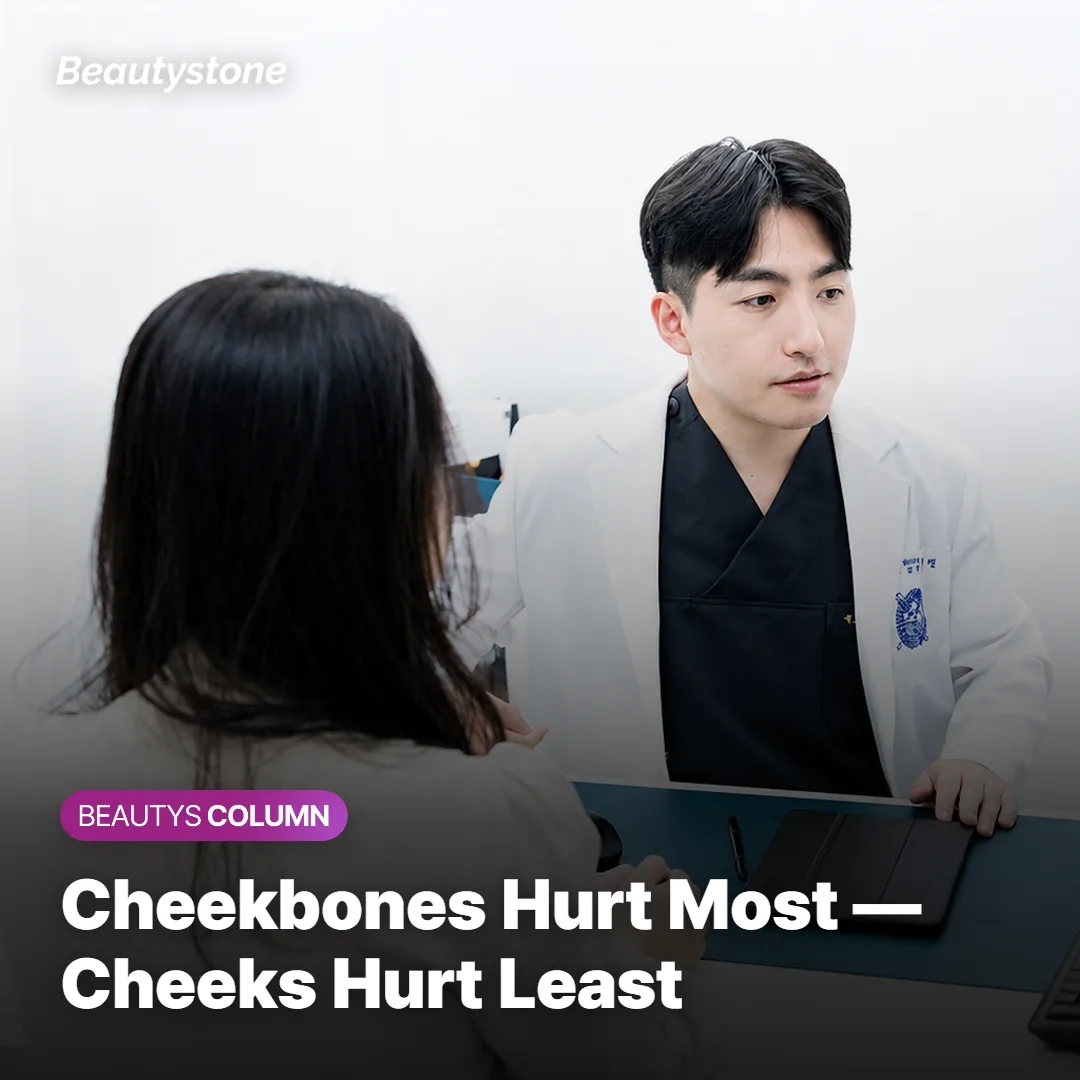
Here's the short answer: the thinner the skin and the closer it sits to bone, the more it tends to hurt. Thermage delivers heat to a fairly consistent depth in the dermis, roughly 2.5 to 3 millimeters, no matter where it's applied. What changes from spot to spot is what sits between that heat and your nerve endings.
| Treatment Area | Typical Pain Level (0–10) |
|---|---|
| Cheekbones | 8 |
| Jawline | 7 |
| Forehead | 6 |
| Cheeks | 5 |
Those numbers reflect a typical, unprepped session, before any numbing or pain-relief steps. It's the same pass with the same intensity setting across all of them — what's different is the tissue sitting underneath.
This is also why a rough first experience at one clinic doesn't necessarily predict how the treatment will feel elsewhere. A numbing window that's cut too short on a bony area can make an otherwise manageable session feel brutal, while the same number of shots on the cheeks might barely register.
Does a Higher Shot Count Mean More Pain?
Not really, and this trips a lot of people up. Shot count is mostly about your age and how much sagging you're dealing with, not about stacking on more pain. A 600-shot session tends to come up for people in their early thirties treating preventively, 900 shots is a common middle ground for the late thirties through forties, and 1200 shots is more typical for visible sagging in patients fifty and older.
The reason 1200 shots doesn't feel twice as intense as 600 is that the extra shots go toward covering more surface area, not toward piling more energy onto the same spot. Per-area intensity stays roughly the same; there's simply more area getting treated.
What does move the needle on comfort, within a given area, is technique: how much pressure the tip applies, how long it lingers, and how the cooling is timed. Those small adjustments can shave a point or two off how a session feels, even at the same shot count.
How Can You Lower the Pain Before Your Session?
Three things make the biggest difference, and none of them require a different machine setting.
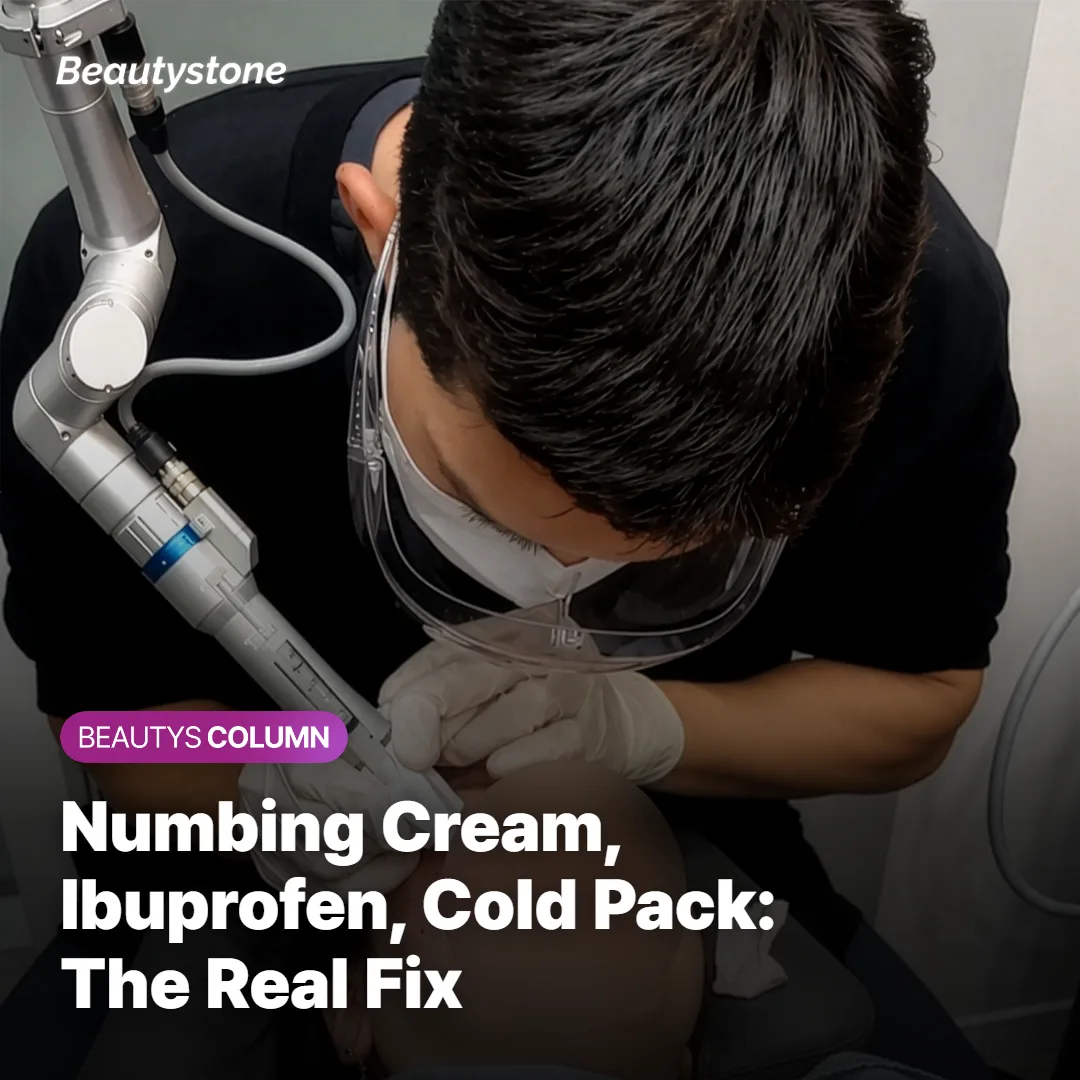
- Numbing cream, given enough time: Topical anesthetic needs roughly 60 minutes to reach the nerve endings in the deeper dermis. Cut that short, say 20 minutes, and you've numbed the surface while the layer that actually feels the RF heat is still wide awake.
- An oral pain reliever beforehand: Ibuprofen and other NSAIDs tend to work better here than acetaminophen, since they target the inflammatory pain pathway more directly, and Thermage discomfort is largely inflammation-driven heat irritation.
- Cold compress on the tougher spots: Applying a cold pack to bony areas like the cheekbones, either right before treatment or between passes, can meaningfully take the edge off in real time.
Combined, these three steps can bring an area that would otherwise sit around an 8 down closer to a 4, which is where most people land in the uncomfortable-but-manageable range rather than the hard-to-sit-through one.
What to Expect After Treatment: Side Effects & Downtime
Right after your session, it's normal to feel warm or slightly flushed for a few hours. That's a direct result of the heat delivered during treatment, not a red flag. Some mild, lingering soreness into the next day is also common, especially over the areas that hurt more during the session itself.
That lingering ache is your collagen fibers contracting, which is part of how Thermage works, not a sign something went wrong. It typically fades within two to three days on its own.
If you notice swelling that's getting worse instead of better, blistering, or pain that intensifies rather than settles down, contact your provider right away. Those aren't typical, and they're worth having checked.

How Much Does Thermage Cost?
Pricing depends on your shot count, the size of the area being treated, and the clinic you go to, so there's no single number that applies across the board. Higher shot counts generally cost more, but exact figures vary by provider and by any current promotions.
The most reliable way to get a real number is a consultation. A provider can look at your skin and recommend a shot count based on what you actually need, rather than quoting a generic package. You can see current offers at /en/promotion.
The Bottom Line
Thermage pain isn't random, and it isn't fixed either. It depends heavily on where you're treating, since bony areas like the cheekbones and jawline hurt more than the forehead or cheeks, and on how you prepare going in.
- Pain varies by area, not by shot count. Cheekbones and jawline tend to hurt more than the forehead or cheeks.
- A full 60 minutes of numbing cream, an NSAID beforehand, and a cold compress on tough spots can meaningfully cut the discomfort.
- Some warmth and soreness for a couple of days afterward is normal; worsening swelling or pain isn't.
Like any procedure, there's a trade-off between how much prep you're willing to do and how the session feels in the moment.
Ultimately, the choice depends on how much sagging you're dealing with, which areas matter most to you, and how much discomfort you're comfortable managing along the way. If you're considering Thermage, a consultation is the best way to find out what fits you. Beautystone is a dermatology clinic in Seoul's Hapjeong area — see current offers at /en/promotion.
Frequently Asked Questions
Q1. Does Thermage Hurt More on Some Parts of the Face?
Yes, quite a bit. Areas with thin skin sitting close to bone, like the cheekbones, jawline, and temples, tend to feel more intense than the forehead or cheeks, where there's more fat and muscle cushioning the heat before it reaches nerve endings.
Q2. What's the Best Way to Prepare for Less Pain?
Let numbing cream sit for about 60 minutes so it actually reaches the deeper dermis, take an NSAID like ibuprofen beforehand rather than acetaminophen, and use a cold compress on bonier areas. Combined, these steps can noticeably bring the discomfort down.
Q3. Does a Higher Shot Count Make It Hurt More?
Not necessarily. More shots usually means a wider area is being covered, not more energy stacked on the same spot, so per-area intensity tends to stay similar whether you're getting 600 shots or 1200.
Q4. Is It Normal to Feel Sore After Thermage?
Some warmth right after treatment and mild soreness into the next day are common and usually settle within two to three days as collagen fibers contract. Worsening swelling, blistering, or escalating pain isn't typical, so contact your provider if that happens.