Is a Skin Booster Enough, or Do You Need Filler? 3 Ways to Tell
Name the layer your concern lives in first, then pick the tool that works on it.


What you'll learn

  · If your skin looks dry and dull overall, a skin booster alone is usually the right call.
  · If one specific area looks flat or hollow, a booster will not fill it and filler will.
  · If tissue has dropped rather than emptied, that is a lifting question, not a filling one.
  · Neither is permanent, so plan for maintenance rather than a one-time fix.
If your skin looks dry, dull, or uneven all over rather than deflated in one place, a skin booster on its own is usually enough. If one specific area has lost volume, like a flattened cheek, a hollow under-eye, or a thinning jawline, a booster will not fill it, and filler is the tool built for that job. That single distinction settles most of the question people arrive with.
What makes it confusing is that both go in with a needle and both are often hyaluronic acid, so they get discussed as if they were the same treatment at two price points. They are not. Below is the order we use in consultation: work out which layer the problem lives in, then choose the tool for that layer. Individual results vary, so use this to frame your question rather than as a prescription.
Start Here: Is Your Concern Texture, Volume, or Sagging?
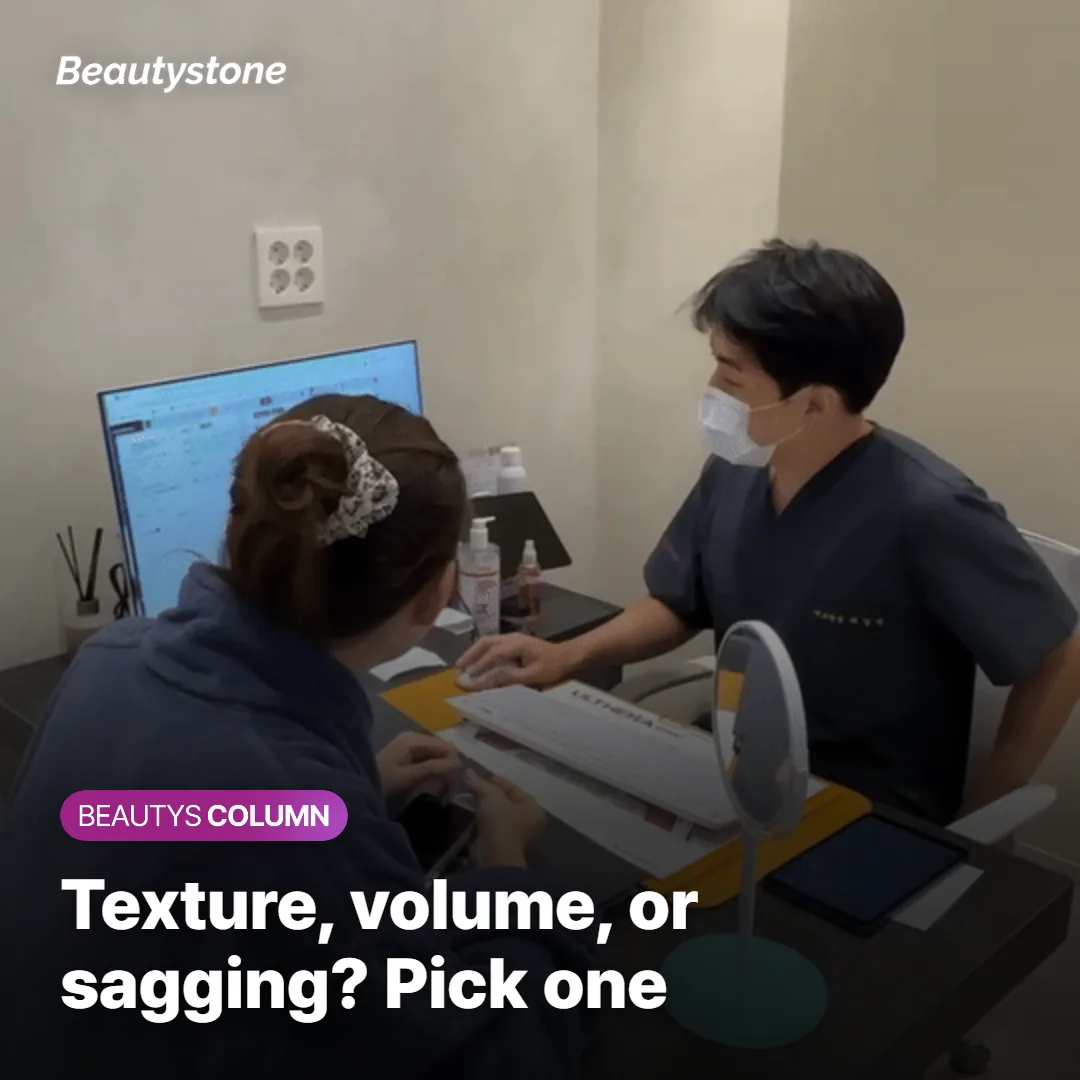
Most people arrive naming a product. It goes faster the other way around. Look in the mirror and decide which of three things you are actually seeing, because each one answers to a different tool and picking the wrong one is the most common reason a result feels like it missed.
| Layer | What it looks like in the mirror | What it answers to |
|---|---|---|
| Skin quality | Dry, dull, uneven texture across a whole area | A skin booster, usually as a short series |
| Volume | One specific spot looks flat or hollow: cheek, temple, chin, under-eye | Filler, placed in that spot |
| Support | The tissue has dropped rather than emptied | A lifting question, not a filling one |
That third row is the one worth slowing down on. Skin that has dropped is not the same as skin that has emptied. Adding volume underneath tissue that has descended does not put it back where it used to sit, so hollowing is a filling problem and sagging is a lifting problem. Keeping those two separate saves a lot of disappointment later.
A quick self-test: if what bothers you is how the surface reads, dry, crepey, no bounce, that is skin quality. If it is a shadow or a dip that stays there in any lighting, that is volume.
When a Skin Booster on Its Own Is Enough
A skin booster is delivered as a series of shallow micro-injections spread across the treatment area rather than a few larger deposits. The goal is not bulk. It is to support your skin's own hydration and texture from within, so the treatment is aimed at bringing skin back to a healthier, better-hydrated state instead of mechanically adding volume.
Choose a booster on its own when the description below sounds like your reflection:
- Your skin looks tired, dry, or dull overall rather than deflated in any single spot.
- What bothers you is texture, hydration, and evenness, not shape.
- You do not want the outline of your face to change at all.
- The area you want treated is broad, such as the whole face, the neck, or under the eyes.
Expect it to build. Results usually accumulate over a short series rather than appearing after one visit, and cross-linked hyaluronic acid formulas typically last somewhere around 6 to 12 months. A systematic review of hyaluronic acid injections reported improvements in hydration, elasticity, brightness, texture, and radiance, though how much any one person sees varies with the starting condition and the product.
Pricing follows the same shape as the treatment. Boosters are usually quoted per session and recommended as a short series, so the number that matters to your budget is the series total.
When Filler Is the Tool You Actually Need
Filler is placed more deeply and in more concentrated amounts, right where volume has been lost. Once it is in, it physically occupies that space, and that is what lifts a flattened cheek or softens a hollow under the eyes. It is a structural fix, not a texture one, and no amount of hydration will do the same job.
Filler is the better fit when:
- You can point to the problem with one finger, rather than describing a general dullness.
- The area reads as flat or hollow: a deflated cheek, a thinning jawline, a flattened temple.
- Your goal is a change in shape or contour rather than a change in surface quality.
Because filler is doing a mechanical job, holding a shape, it is placed more precisely and in smaller, targeted zones than a booster, which is spread broadly across an area. That difference in technique is also why the two are quoted differently: filler is usually priced per syringe or per area treated.
Longevity is where filler gets less predictable. It varies widely with the product line and where it is placed, so the useful question is not how long filler lasts in general but what to expect from the specific formula in your specific area.
When Neither Is the Answer, and When You Need Both
There are two situations where the booster-versus-filler question is the wrong question. The first is sagging. If the concern is tissue that has descended rather than volume that has drained away, filling underneath it does not reposition it, and a booster does not either. That belongs in a conversation about lifting.
The second is expecting something permanent. Neither treatment is. Boosters generally need refreshing every several months, and filler fades on its own timeline depending on the product and the area. If your plan assumes a single visit and no follow-up, the plan is the part that needs adjusting, not the treatment.
Needing both is common. Because they solve different problems, they are often combined, with filler restoring volume where it is genuinely missing and a booster improving hydration and texture across the wider area. The right combination and order depend on your skin, so have that conversation before anything is booked.
The short-term risks are similar for both, since both are injections. Swelling, redness, tenderness, and minor bruising at the injection sites are common and usually settle within a few days. If instead of gradual improvement you notice spreading redness, fever, or worsening pain, seek medical care right away rather than waiting it out.
How We Map It Out at Beautystone in Hapjeong
In consultation, Dr. Wi Young-jin works through the layers before naming any product: skin quality first, then volume, then support. Each layer gets two or three realistic options and a one-line rule for choosing between them, so the decision you leave with is what to do rather than whether to do anything at all.
It also helps to arrive with the right questions. These four get you a far more useful answer than asking which treatment is better:
- Which layer is my concern actually in, and what did you look at to decide that?
- If a booster fits, how many sessions is the series and how often would maintenance be?
- If filler fits, which product line, and what longevity is typical for that formula in this area?
- Is the price quoted per session, per series, per syringe, or per area?
Cost depends on the clinic, how many sessions you need, and which product line is used, which is why a single number online is rarely honest. A consultation is the reliable way to get a figure for your situation. Beautystone is a dermatology clinic in the Hapjeong area, and current offers are listed at /en/promotion.
Frequently Asked Questions
If I need both, which one should I do first?
That order depends on your skin rather than on a fixed rule, which is why it is worth talking through before booking. Filler addresses volume that is genuinely missing and a booster improves hydration and texture across a wider area, so the sequence usually follows whichever concern bothers you more.
Will a skin booster soften a nasolabial fold?
It depends on why the fold is there. If the crease looks deeper because volume has dropped out of the cheek above it, a booster will not fill that space and will not change the shape. If the skin around the fold looks dry and crepey, a booster can improve texture without altering the contour.
How do I compare prices between the two fairly?
Compare the shape of the quote, not the headline number. Boosters are typically priced per session and recommended as a short series, so the honest comparison is the series total. Filler is usually priced per syringe or per area.
What if the swelling is not settling down?
Swelling, redness, tenderness, and minor bruising are common after either treatment and usually settle within a few days. What should not happen is the opposite trend. If redness is spreading, pain is worsening, or you develop a fever, seek medical care right away.