Skin Clinic in Hongdae or Hapjeong?
How the two areas relate, transit, and what to check.

If you searched "Hongdae skin clinic," you probably pictured the area around Hongik University — the cafes, the crowds, the exits you always get wrong. The good news is that this whole district, including quieter Hapjeong next door, has skin clinics used to seeing foreigners.
Here is the short answer first: Hongdae and Hapjeong are neighbors, one subway stop apart, and you do not have to pick the exact station name to find a good clinic. What matters more is getting there easily and knowing whether the clinic fits how you like to be treated.
This is general information from Beautystone, a small skin clinic in Hapjeong — a short walk from Hapjeong Station and one stop from Hongdae — written for foreigners deciding where in this area to go.
What you'll learn

  · How Hongdae and Hapjeong relate, and why either works
  · How to get to the area, including from Incheon Airport
  · The honest trade-off between a big clinic and a small one
  · What to check on language, hours, and booking before you go
Hongdae or Hapjeong — what's the difference?
They are two adjacent neighborhoods in Mapo-gu, western Seoul. Hongdae is the lively area around Hongik University — art, music, and a lot of foot traffic. Hapjeong sits right beside it, one subway stop away, and is a little calmer: cafes, the Han River nearby, and easier streets to walk.
For finding a clinic, the practical takeaway is that "Hongdae" usually means this whole district, not one address. Plenty of skin clinics sit in and between the two neighborhoods, so a clinic in Hapjeong is, for most purposes, a Hongdae-area clinic that happens to be a few minutes quieter to reach.
Getting there (subway and from the airport)
Access is one of the real advantages of this area.
- By subway: Hapjeong Station sits on Seoul Subway Lines 2 and 6, and Hongik University Station is one stop away on Line 2. Both areas are walkable once you are above ground.
- From Incheon Airport: the Airport Railroad (AREX) runs directly to Hongik University Station. From there it is one stop on Line 2 to Hapjeong — an easy trip even with a suitcase.
- From elsewhere in Seoul: Line 2 is the city loop, so most neighborhoods connect without a complicated transfer.
If you are visiting for a short trip, this matters: less time lost to transit is more time for the actual reason you came.
A big clinic or a small one?
The Hongdae–Hapjeong area has both large, high-volume clinics and small neighborhood ones, and neither is simply "better." They are different experiences, and it is worth knowing which suits you.
- Larger, high-volume clinics move quickly and often have a broad menu. The trade-off can be a faster pace and more pressure to book a package on the spot.
- Small neighborhood clinics tend to run slower, with the doctor seeing you directly and more room to ask questions. The trade-off is shorter menus and fewer time slots.
This is a general comparison of clinic types, not a claim about any specific clinic — you should judge the actual place you visit. If you value being able to slow down, ask questions, and not feel rushed, a smaller clinic usually fits better.

Why Hapjeong Beautystone (near Hongdae)
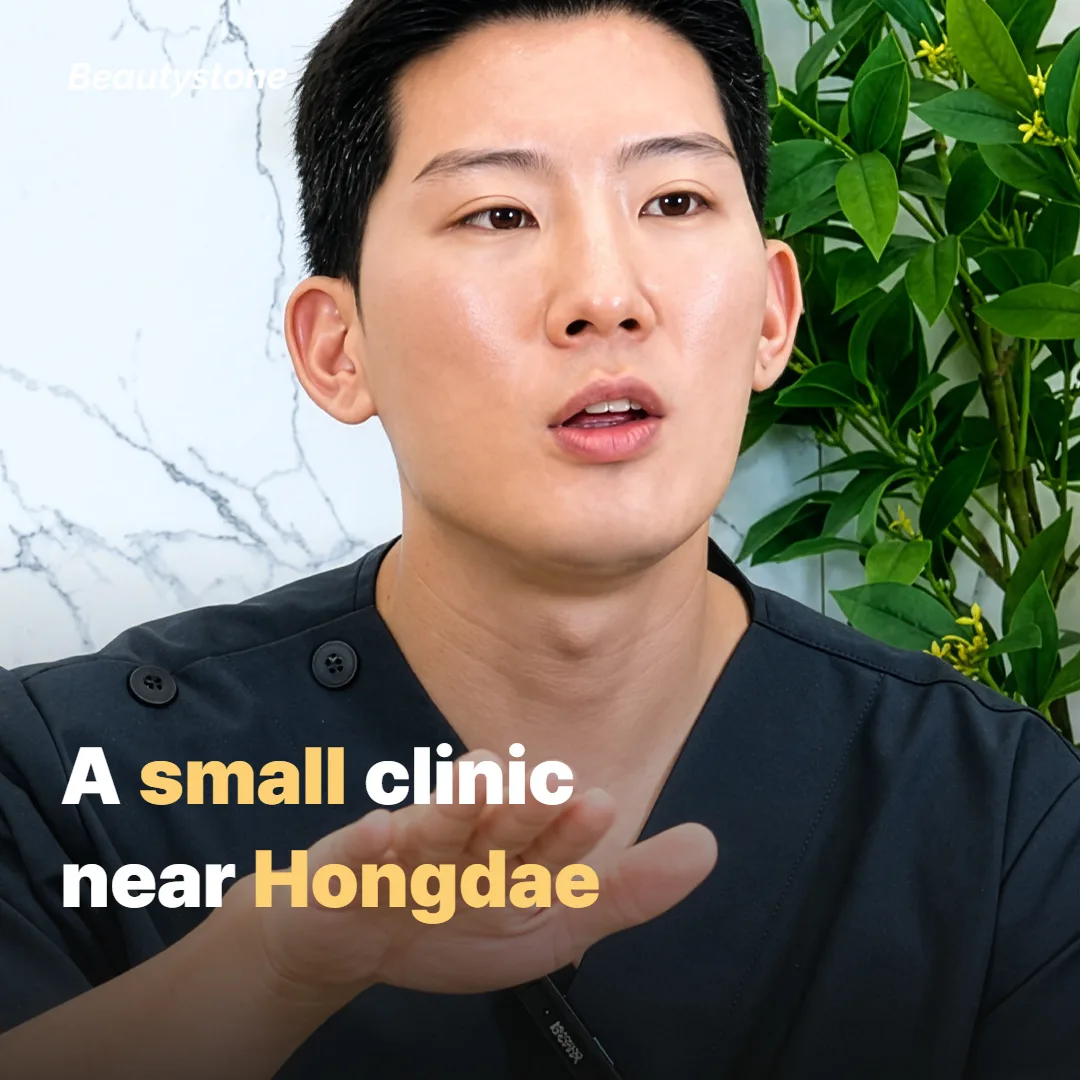
Beautystone is a small clinic in Hapjeong, a short walk from Hapjeong Station and one stop from Hongdae. The size is deliberate: a dermatology specialist sees you directly, without the conveyor-belt pace of a high-volume clinic, so a consultation can actually be a conversation.
For visitors and residents in this area, a few practical things line up: you can be seen in English, you can come same-day or on a weekend (we are open seven days a week, including Sundays — confirm the day's hours when you book), and the consultation is meant to help you decide rather than to close a sale. Those are reasons to consider us, said plainly.
Booking, language, and hours
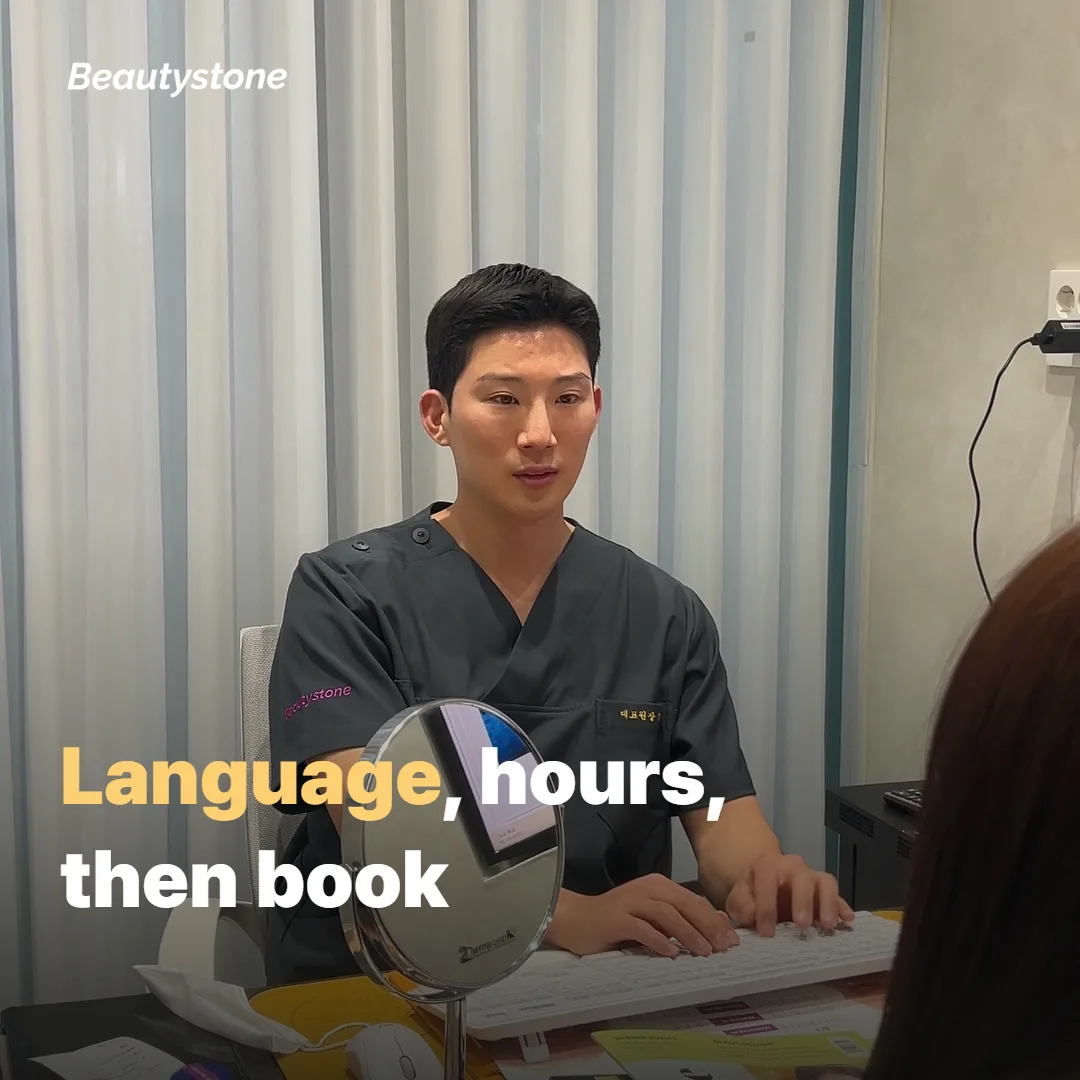
Before you travel across the city, three quick checks save a wasted trip:
- Language: confirm you can be seen and give consent in a language you understand. It is fine to message ahead and ask, "Can I be seen in English?"
- Hours: confirm the clinic is open the day you plan to come, and whether it takes walk-ins or wants an appointment.
- Who treats you: confirm a dermatology specialist does or supervises the treatment. Credential systems differ by country — in the US, the American Academy of Dermatology explains that board certification is shown by "FAAD" after a doctor's name; in Korea, look for a dermatology specialist (피부과 전문의). Either way, the habit is to ask.
One more honest note: no reputable clinic can promise a permanent or guaranteed result, and individual results vary. A clinic that says so, and names who should skip a treatment, is usually the safer bet.
Frequently asked questions
Q. Is there a skin clinic near Hongdae Station?
A. Yes. The Hongdae–Hapjeong district has a number of skin clinics, and because Hapjeong is one subway stop from Hongik University Station, a clinic listed under "Hapjeong" is still a short trip from Hongdae. Search the whole area rather than one exact station name.
Q. How do I get to Hapjeong from Incheon Airport?
A. Take the Airport Railroad (AREX) to Hongik University Station, then Line 2 one stop to Hapjeong. It is a straightforward route, and both stations are on major lines, so you rarely need a complicated transfer.
Q. Are Hongdae clinics cheaper than Gangnam?
A. Not reliably, and it is worth not assuming. Prices depend on the specific clinic, the treatment, and what is included, more than on the neighborhood. Instead of comparing districts, ask each clinic whether a price is per session, per area, or a package, and what the total would be.
Q. Do Hapjeong skin clinics have English-speaking staff?
A. Many in the area offer English-speaking care, though not all, so confirm before you go. Message or call ahead and ask whether you can be seen in English and give consent in a language you understand — informed consent only works if you actually understood.