

Shurink Pain, Explained by Tip Depth
Shurink pain depends heavily on tip depth: a quick prickle at 1.5mm, a duller ache at 3.0mm, and a deep vibration near the jaw at 4.5mm. Here's how numbing cream and nerve blocks change the experience.

If you've been putting off Shurink because of the pain stories, you're not alone. It's one of the most common hesitations we hear in consultations, right up there with cost and downtime. The truth is, Shurink pain isn't one single sensation — it changes a lot depending on how deep the ultrasound energy is delivered. In this article, we'll cover why pain varies by tip depth, what numbing options actually do, and how to figure out which combination makes sense for you.
How Much Does Shurink Really Hurt?
Short answer: it depends almost entirely on which tip depth your provider uses. Shurink relies on focused ultrasound (HIFU) to create tiny heat points beneath the skin, and three tip depths — 1.5mm, 3.0mm, and 4.5mm — are typically combined in the same session. Each one produces a different kind of discomfort.
At 1.5mm, most patients describe a quick, sharp prickle right at the surface, over almost as fast as it starts. At 3.0mm, the sensation shifts to a duller, achy throb that tends to arrive a beat after the shot lands. At 4.5mm, people often describe something closer to a deep, resonant ache, sometimes felt near the jawbone, rather than a surface-level sting.
None of this means Shurink is something to dread. In our experience, roughly 70 to 80 percent of patients get through a full session comfortably with topical numbing cream and a cold compress alone. The rest — usually patients getting heavier work at 4.5mm — do better with an added nerve block.
| Tip Depth | Skin Layer | Typical Sensation | Usual Numbing |
|---|---|---|---|
| 1.5mm | Dermis | Quick surface prickle | Numbing cream |
| 3.0mm | Subcutaneous fat | Dull, delayed ache | Numbing cream |
| 4.5mm | SMAS layer, near jawbone | Deep, resonant ache | Numbing cream, often plus nerve block |
| Repeat session or needle anxiety | Any depth | Heightened anticipation | Nerve block or sedation |
Why Pain Gets Worse at Deeper Tips
Shurink pain isn't random — it maps directly onto anatomy. The device focuses ultrasound energy into a single point, creating a heat coagulation zone above 65°C. Where that point lands determines the kind of pain you feel.
The 1.5mm tip lands in the dermis, the thin, nerve-dense top layer of skin, which is why it produces that quick surface prickle. The 3.0mm tip reaches the subcutaneous fat layer, a slightly less nerve-rich zone, which is why the ache feels duller and slower to register.
The 4.5mm tip goes deepest, targeting the SMAS layer — the fibrous, muscle-adjacent layer that gives the face its structural support. Because this layer sits close to the periosteum, the membrane covering bone, energy delivered here can feel like it's vibrating the bone itself, especially along the jawline.
A skilled provider makes a real difference here. Careful trigger placement that avoids bony high points can cut perceived pain nearly in half at the same depth and energy setting.
Numbing Options: From Topical Cream to Nerve Block
Not everyone needs the same numbing plan, and more numbing isn't automatically better — it's about matching the option to the depth and area being treated.
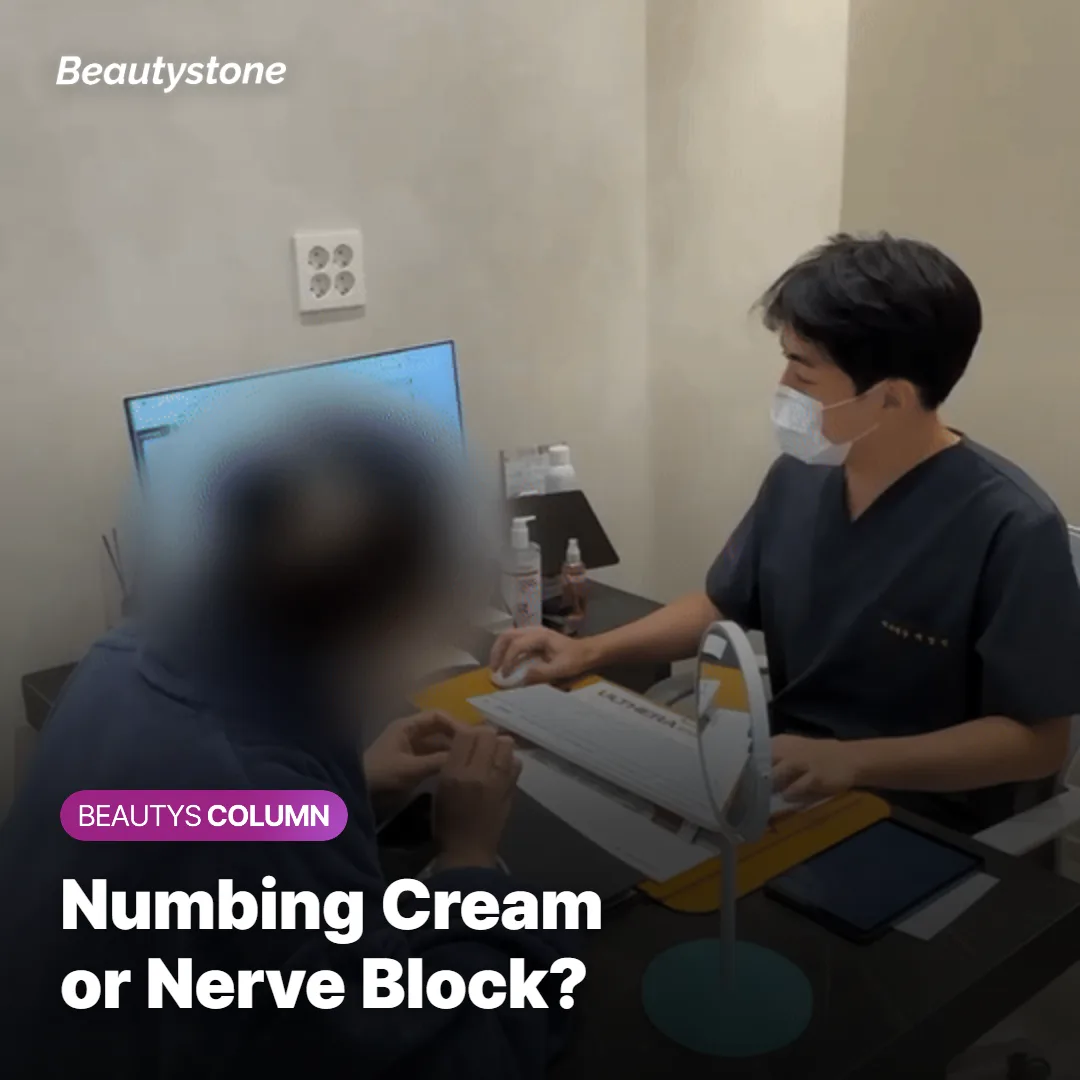
- Topical numbing cream (30 minutes): The default for most sessions. Combined with a cold compress, it's usually enough for 1.5mm and 3.0mm work, and often enough for light 4.5mm touch-ups too.
- Nerve block: A local anesthetic injection recommended when a session leans heavily on the 4.5mm tip, or when fine jawline contouring calls for precision. It can bring perceived pain down to roughly 30 to 40 percent of what it would otherwise be.
- Sedation: Reserved for patients with real needle anxiety, a history of a rough first session, or a lot of ground to cover in one visit. It trades a hazier memory of the procedure for a more comfortable one.
First-time nerves matter too. It's common for a first session to feel more intense simply because of anticipation. Patients coming back for a second round — this time with a nerve block added — often say it's a completely different experience.
What to Expect During and After Treatment
A full-face session that combines all three depths typically runs 30 to 60 minutes, most of it spent waiting on the numbing cream rather than on the treatment itself.
During the session, you'll feel the handpiece move across small grid sections, with a burst of heat at each point. Redness and mild swelling are common right after treatment and usually settle within a few hours to a day. Tenderness at deeper treatment points, especially along the jaw, can linger for a couple of days — more like a bruise than a sharp pain.
Most patients return to normal activities the same day. Visible tightening builds gradually over the following four to twelve weeks as collagen remodels underneath the skin.
Who Should Think Twice About the 4.5mm Tip
Depth isn't a one-size-fits-all setting, and more 4.5mm shots aren't automatically the better choice.
Providers generally hold back on heavy 4.5mm work for very lean patients with thin facial fat pads. Because the 4.5mm tip works at the SMAS level, tightening tissue and reducing fat at the same time, pushing it too far on an already thin face can leave hollows rather than lift.
On the other end, patients with a higher BMI and more pronounced jowling are often good candidates for a higher proportion of 4.5mm shots, since the combination of fat reduction and tissue tightening does more of the heavy lifting there.
If you're not sure which category you fall into, that's exactly what a consultation is for, not something you have to work out on your own.

Side Effects and Safety Considerations
Shurink is generally well tolerated, but it's still a procedure, and it's worth knowing what's normal versus what isn't.
Common, expected reactions include redness, mild swelling, and tenderness at treatment points, usually resolving within a few days. Some patients notice small, temporary bruising, particularly around nerve block injection sites.
Less common but worth flagging to your provider: numbness that doesn't improve after a few days, visible asymmetry, or a burn-like mark on the skin surface. If you develop spreading redness, fever, or increasing pain days after treatment, seek medical care right away rather than waiting it out.
Results and comfort levels vary from person to person, and a thorough consultation, including a look at fat pad thickness and bone structure, helps your provider plan depth and anesthesia appropriately.
Is Shurink Worth the Discomfort?
For most patients, yes, but worth it depends on matching expectations to reality. Shurink isn't a dramatic, overnight transformation. It's a gradual tightening that shows up over weeks as collagen rebuilds.
The discomfort itself is manageable and short-lived compared to the downtime of surgical options, which is a big part of why it's become a go-to for people wanting a visibly tighter jawline and lower face without going under the knife. Trying to dodge the pain by cutting shot count is usually the wrong trade — under-treating tends to blunt the results far more than it protects your comfort.
If pain tolerance is a real concern, the better fix is talking through numbing options up front, not cutting corners on treatment volume.
The Bottom Line
Shurink pain comes down to depth. The 1.5mm tip is a quick surface prickle, the 3.0mm tip is a duller ache, and the 4.5mm tip can feel like a deep vibration near the jaw. Topical numbing cream handles most sessions comfortably, and a nerve block closes the gap for heavier 4.5mm work or anyone who's had a rough first experience.
Like any procedure, it comes with trade-offs — some tenderness and swelling in the days after treatment. Ultimately, the choice of depth, shot count, and anesthesia depends on your skin, your goals, and your budget, and that's best worked out with your provider rather than guessed at home.
If you're considering Shurink, a consultation is the best way to find out what fits you. Beautystone is a dermatology clinic in Seoul's Hapjeong area — see current offers at /en/promotion.
Frequently Asked Questions
Q1. Does Shurink hurt more than other HIFU treatments?
Pain levels vary by device and tip depth rather than by brand name alone. With Shurink specifically, the deepest 4.5mm tip tends to produce the most noticeable sensation, while 1.5mm and 3.0mm work is usually much easier to tolerate with topical numbing cream.
Q2. How long does soreness last after Shurink?
Most redness and swelling settle within a few hours to a day. Deeper tenderness near the jaw, especially after heavy 4.5mm work, can linger for a couple of days but typically fades on its own without special care.
Q3. How much does Shurink cost?
Pricing varies by clinic, tip mix, and how many depths are combined in a session, so it's hard to give one number that fits everyone. A consultation is the best way to get an accurate quote — current offers are listed at /en/promotion.
Q4. Can I wear makeup right after Shurink?
Light makeup is usually fine a few hours after treatment once any redness has calmed down, though your provider may ask you to skip it the same day if you also had a nerve block injection. When in doubt, ask before you leave the clinic.