Sculptra Nodules: When They Appear, If They Fade
Most Sculptra lumps are the harmless, non-inflammatory kind that fade as the material breaks down over time — but a few need a provider's care. Here's how to tell the difference and what actually helps.

If you're researching Sculptra and keep running into the word "nodule," you're not alone. It's the one side effect that comes up in almost every consultation, and it's often the reason people hesitate before booking. The reassuring part: most Sculptra lumps aren't permanent, and there are clear steps — both at home and in a provider's office — for dealing with them.
A Sculptra "nodule" is a small, firm lump that can form when the poly-L-lactic acid (PLLA) in the product clusters together in one spot instead of spreading evenly through the skin. Some lumps you can only feel with your fingertips; others come with redness or tenderness, and those mean something different is going on.
In this article, we'll cover what these lumps actually are, whether Sculptra nodules go away on their own, how they're treated when they don't, why the under-eye area needs extra caution, and the everyday habits that lower your risk in the first place.
What Are Sculptra Nodules?
Sculptra is an FDA-approved poly-L-lactic acid (PLLA) injectable, and it works differently from a standard hyaluronic acid filler. Instead of adding volume on the spot, it acts as a collagen biostimulator: the PLLA microparticles are distributed through the deeper layers of the skin, where they prompt your own fibroblasts to build new collagen gradually, usually over three to six months.
A nodule can form when those particles end up too concentrated in one area — either because a lot of product settled in a small space or because it didn't disperse evenly after injection. The result is a tiny cluster you can often feel even when it isn't visible from the outside. These lumps usually show up somewhere between a few months and a year after treatment, and they tend to sit deep, which is why they're easier to feel than to see.
Not all lumps are the same, though — and telling them apart matters, because it changes what you should do about them.
| Type | When It Appears | What It Feels Like | General Approach |
|---|---|---|---|
| Non-inflammatory | About 3–12 months after treatment | Doesn't hurt; felt mainly by touch | Often resolves over time; gentle massage may help early on |
| Inflammatory | Any time after treatment | Tender, swollen, or red | Needs a provider's evaluation — not a self-care fix |
Non-inflammatory nodules are the more common, less worrying kind. They come from PLLA clustering rather than any reaction, they don't hurt, and they often soften as the material breaks down. Inflammatory nodules involve the immune system — sometimes an infection, sometimes a delayed reaction — and the tenderness, swelling, or redness that comes with them is the signal that you need a professional to take a look.
Do Sculptra Lumps Go Away?
In most cases, yes — but the timeline and the path there depend on which type of lump you have.
For non-inflammatory nodules, the honest answer is that they usually fade on their own. PLLA is designed to be broken down by your body over roughly 18 to 24 months, and as it does, the small clusters tend to soften and become less noticeable. Some resolve within a few months; others take up to a year or more. Gentle massage of the area can help encourage the particles to spread out, especially in the early weeks — though it's worth doing it the way your provider shows you rather than pressing hard, which can shift the product around in ways you don't want.
Inflammatory nodules are a different story. Because they involve an immune response or infection rather than simple clustering, they don't reliably clear up just by waiting, and pressing or massaging them can make things worse. These need a provider's hands-on care, which we'll get into next.
One more thing worth setting straight: unlike hyaluronic acid fillers, Sculptra can't be dissolved with an enzyme. There's no quick "undo" injection, so managing a lump is really about time, gentle massage where appropriate, and provider-guided treatment when it's needed. Individual results vary, and how quickly any lump settles depends on your skin, the amount of product, and where it was placed.

How Sculptra Nodules Are Treated
When a lump doesn't settle on its own — or when it's the tender, inflamed kind — treatment moves out of your hands and into your provider's. Here's the general picture, though your provider will tailor the approach to your specific situation.
For a stubborn non-inflammatory nodule, the first-line options are conservative: continued gentle massage, and time. If a firm lump persists and bothers you, a provider may inject a small amount of a corticosteroid directly into it to help soften and flatten it. In some cases, they might combine that with 5-fluorouracil (5-FU), a medication used off-label to calm and break down persistent nodules. Both of these are in-office procedures — not something to attempt on your own.
Inflammatory or delayed-onset nodules are handled more cautiously. If an infection is suspected, a provider may start with antibiotics; if it's an immune-driven reaction, corticosteroids or other prescribed medications may be used, sometimes in a stepwise way over several visits. Surgical removal is uncommon and usually a last resort. The common thread is that all of these are decisions a qualified provider makes after examining you in person — the wrong approach on the wrong type of lump can set you back.
If you've been tempted to dig at a lump, aggressively massage an inflamed one, or ask for a filler "dissolver," it's worth pausing. None of those fit how PLLA behaves, and a short consultation will point you toward what actually helps.

Lumps Under the Eyes: Why They Need Extra Care
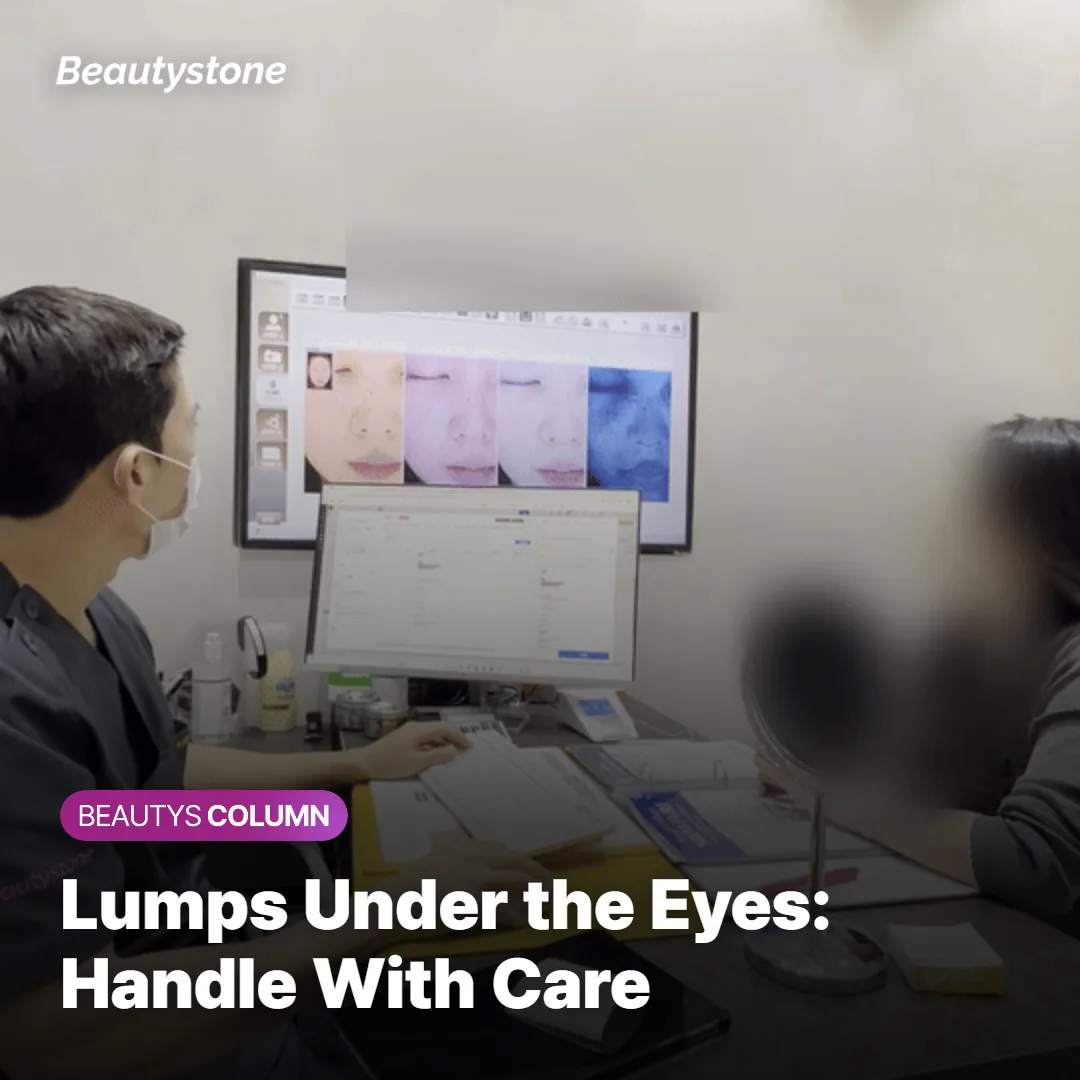
The under-eye area deserves its own note, because it's one of the trickiest spots for any injectable — Sculptra included. The skin here is some of the thinnest on the face, so anything sitting just beneath it can show through as a shadow, a bump, or a faint discoloration far more easily than it would in the cheeks.
That thin, delicate tissue is exactly why many injectors are cautious about placing Sculptra right under the eyes, and why a lump in this spot can be more visible and more stubborn than one elsewhere. If you notice a bump or an uneven texture under your eyes after treatment, resist the urge to massage it firmly on your own — the area bruises and irritates easily. Instead, have your provider assess it. Treatment here is deliberately gentle and conservative, precisely because there's so little margin for error.
Lowering Your Risk: Massage and Session Spacing
You can't reduce the odds of a nodule to zero, but a few habits genuinely tilt them in your favor — and most of them come down to how the product is placed and how you care for the area afterward.
- Massage on schedule. A common aftercare routine is the "5-5-5" approach: massage the treated area for about five minutes, five times a day, for five days. Your provider will show you the right pressure and motion — gentle circles, not hard kneading — which helps the PLLA spread evenly instead of settling in one spot.
- Don't rush the sessions. Sculptra works as a series, and cramming too much product into one appointment raises the risk of clustering. Spacing sessions about six to eight weeks apart gives your collagen time to respond and lets your provider top up only where it's actually needed.
- Let an experienced injector place it. Consistent injection depth and even distribution are largely down to technique, so who does your treatment matters as much as the product itself.
Even with all of that, a lump can still show up — biology isn't fully predictable. But steady massage, sensible spacing, and skilled placement are the levers that make the most difference.
Side Effects and When to Seek Care
Beyond nodules, Sculptra's more routine after-effects are the ones you'd expect from any injection: redness, minor swelling, tenderness, and the occasional bruise at the injection sites. These are common and usually settle within a few days with basic aftercare. Individual results and recovery vary, but this early phase is generally uneventful.
What's not routine is any sign that points toward an inflammatory nodule or an infection. Contact your provider promptly if you notice:
- A lump that's painful, warm, red, or swollen rather than quietly firm
- Swelling or heat that appears suddenly days or weeks after treatment
- A nodule that grows, changes color, or breaks through the skin above it
- Skin over a lump that darkens or starts to flake
- A firm lump that's still there, unchanged, more than a year later
If you develop a fever or notice redness spreading outward from the area, don't wait it out — seek medical care right away. Any one of these signs is a reason to be evaluated rather than to self-treat, since inflammatory nodules follow a completely different playbook from the harmless kind.
The Bottom Line
- Most Sculptra lumps are non-inflammatory and fade as the PLLA breaks down over roughly 18 to 24 months.
- Massage and time handle many early lumps; stubborn ones may need a provider's corticosteroid or 5-FU injection.
- Tender, red, or swollen lumps are the inflammatory kind and always need professional care — never a DIY fix.
- The under-eye area is thin and unforgiving, so lumps there call for extra caution and a gentle, provider-led approach.
Like any injectable, Sculptra comes with trade-offs, and results — including how any lump behaves — vary from person to person.
Ultimately, whether Sculptra is right for you depends on your skin, your goals, and how comfortable you are with a treatment that works gradually rather than instantly.
If you're considering Sculptra or dealing with a lump after treatment, a consultation is the best way to figure out your next step. Beautystone is a dermatology clinic in Seoul's Hapjeong area — see current offers at /en/promotion.
Frequently Asked Questions
Q1. Do Sculptra nodules go away on their own?
Non-inflammatory nodules usually do. PLLA is broken down by your body over roughly 18 to 24 months, and the small clusters tend to soften along the way — some within a few months, others over a year or more. Inflammatory nodules, which come with pain, redness, or swelling, are different and don't reliably resolve on their own, so those should be evaluated by your provider.
Q2. How are Sculptra lumps treated?
For a stubborn non-inflammatory lump, gentle massage and time come first; if it persists, a provider may inject a small amount of a corticosteroid, sometimes combined with 5-fluorouracil (5-FU), to soften it. Inflammatory nodules are managed differently — with antibiotics or prescribed medications depending on the cause. These are all in-office decisions your provider makes after examining you, not something to attempt yourself.
Q3. Are Sculptra lumps permanent?
It's rare for them to stick around indefinitely. Because PLLA is gradually broken down over about 18 to 24 months, most lumps soften and fade within that window. If a lump is bothering you before then — cosmetically or because it's tender — you can ask your provider about options rather than just waiting. Individual results vary.
Q4. Can I massage a Sculptra lump away myself?
Gentle massage can help with an early lump that doesn't hurt — but only the way your provider demonstrates, using light circular pressure rather than firm kneading. Never massage a lump that's tender, warm, red, or swollen, since that can be an inflammatory nodule and pressing it may make things worse. When in doubt, have it looked at instead of pushing on it.