Laser Toning: Safe for Dark Skin in Korea?
Laser toning for dark skin in Korea: PIH risk, why 1064 nm helps, and what to ask first.

If you have deeper skin and have read a few Reddit threads about Seoul skin clinics, you have hit this worry before: will laser toning fade my dark spots, or leave me with more of them? Fair question. Skin of color reacts to heat and light differently, and nobody wants a souvenir patch of pigment that outlasts the photos.
Here is the short answer first: laser toning is not off-limits for Fitzpatrick IV–VI skin, but it is not automatically safe either. Your risk rides on the wavelength, the energy settings, and the person holding the handpiece—not on having booked it in Korea. Individual results and reactions vary, so treat this as a "know what to ask" guide, not a "guaranteed glow-up" one.
What you'll learn

  · Why deeper skin tones carry a real risk of post-inflammatory hyperpigmentation with lasers
  · Why 1064 nm Nd:YAG and picosecond settings are the usual choice for skin of color
  · The checkpoints—test spot, skin-type assessment, cost ballparks—to confirm before you book
  · How to time sessions, sun, and red-flag symptoms around your flights home
Is laser really off-limits if your skin is deeper?
No, but the caution behind that idea is real. The American Academy of Dermatology is blunt about it: while lasers can be used on all skin types, deeper skin is more prone to burns and dark marks after treatment. Those "dark marks" have a name—post-inflammatory hyperpigmentation, or PIH*—and they are the main reason skin of color is told to be careful.
PIH*(post-inflammatory hyperpigmentation): brown patches that appear after skin is irritated or inflamed—more common in deeper tones, which make pigment more readily.
The reason is simple: deeper skin has more active melanin near the surface, so a laser absorbed too aggressively can trigger the very pigment response you were trying to fade. Not forbidden—just a smaller margin for a wrong setting, and more weight on who does it and how.
So who is this for, honestly?
- Good fit: stubborn dark spots, uneven tone, or old PIH—plus patience for several spaced sessions and daily sunscreen discipline.
- Should skip, or ask harder questions first: heat-flared melasma, a history of keloids or severe PIH, recent isotretinoin, or an all-beach itinerary with zero shade—raise these before anyone fires a laser.
- Realistic payoff: gradual brightening and softer spots over a few months—not a one-visit erasure of pigment.

Why the wavelength and settings decide your risk
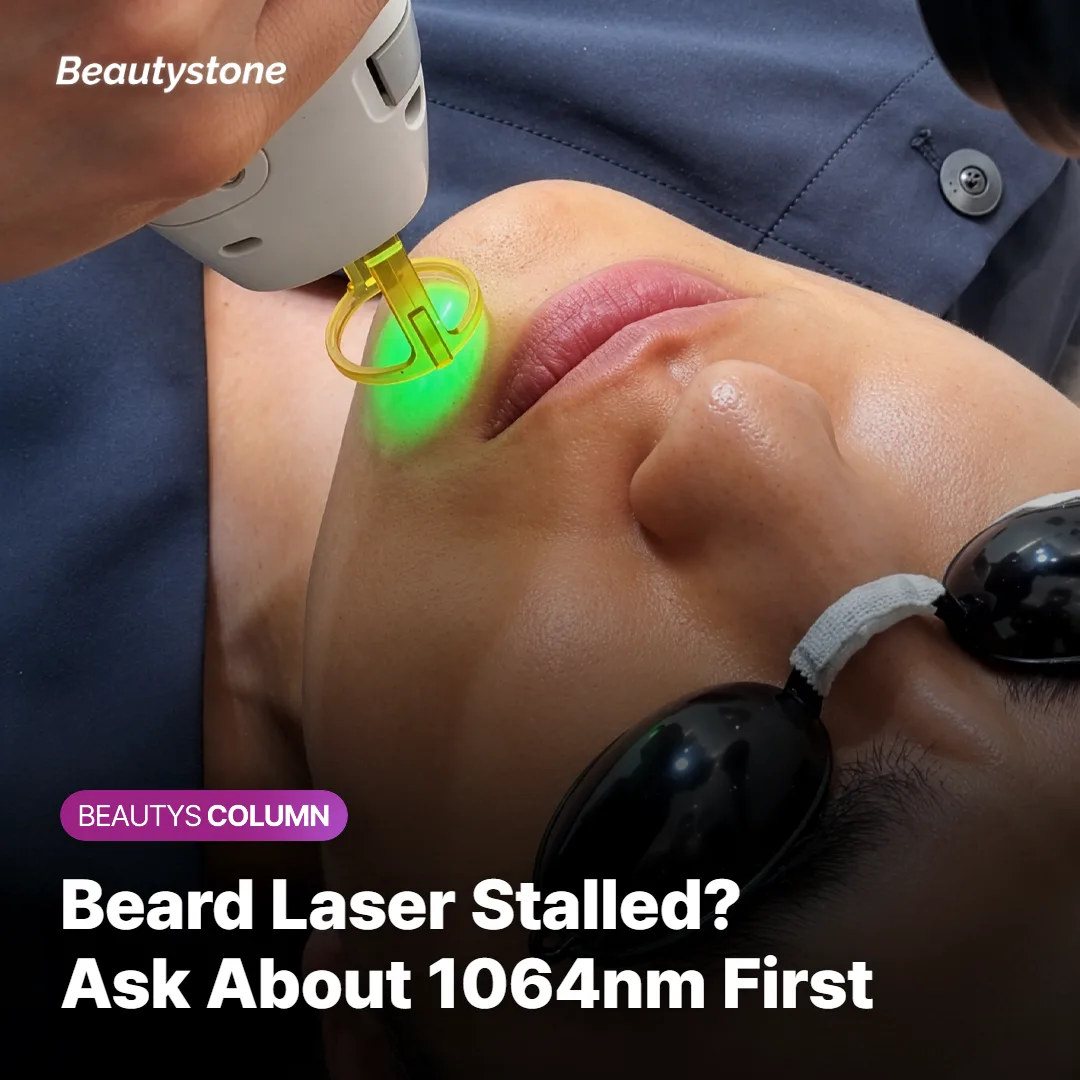
The type of laser matters more than the brand on the machine. For skin of color, most clinics reach for a 1064 nm Nd:YAG at low fluence—the approach marketed as "laser toning"—or a picosecond version. In the US these devices are FDA-cleared (a device is "cleared," while a drug like Botox is "approved"), and low-fluence toning itself is a technique, not a separate clearance.
The wavelength is the whole point. Research on Q-switched 1064 nm lasers in dark-skinned patients notes that the longer wavelength penetrates more deeply and is absorbed less by melanin, which is what makes it relatively safer for skin of color—less collateral heat where PIH starts.
| What to ask about | Lower-risk choice for deeper skin | Why it matters |
|---|---|---|
| Wavelength | 1064 nm Nd:YAG (or picosecond) | Deeper reach, less melanin absorption |
| Energy | Low fluence, gentler passes | Less surface heat that can trigger PIH |
| Plan | Several spaced sessions | Gradual change, not one aggressive hit |
If a clinic offers both standard and picosecond toning, here are the usual trade-offs—read every cell as "commonly, not always":
| Standard toning (Q-switched 1064 nm) | Picosecond toning | |
|---|---|---|
| When you notice change | Gradual; judged over several sessions | Gradual; sometimes fewer sessions |
| Typical course | Often 6–10 sessions, weeks apart | Often 3–6 sessions, weeks apart |
| Downtime | Minimal—redness for hours to a day | Similar—mild, brief redness |
| Deeper-skin considerations | Long track record at low fluence; pushing energy invites PIH | Shorter pulses, less heat—still needs conservative settings |
| Cost level | Usually lower per session | Usually higher per session |
Even with the friendlier wavelength, this is not one-and-done. A meta-analysis of low-fluence 1064 nm toning for melasma treats it as gradual and often combined with other care—useful context if a clinic promises to clear everything in one visit.
Before you book: the checkpoints that lower your risk
You do not need to be a dermatologist to screen a clinic. You need a short list.
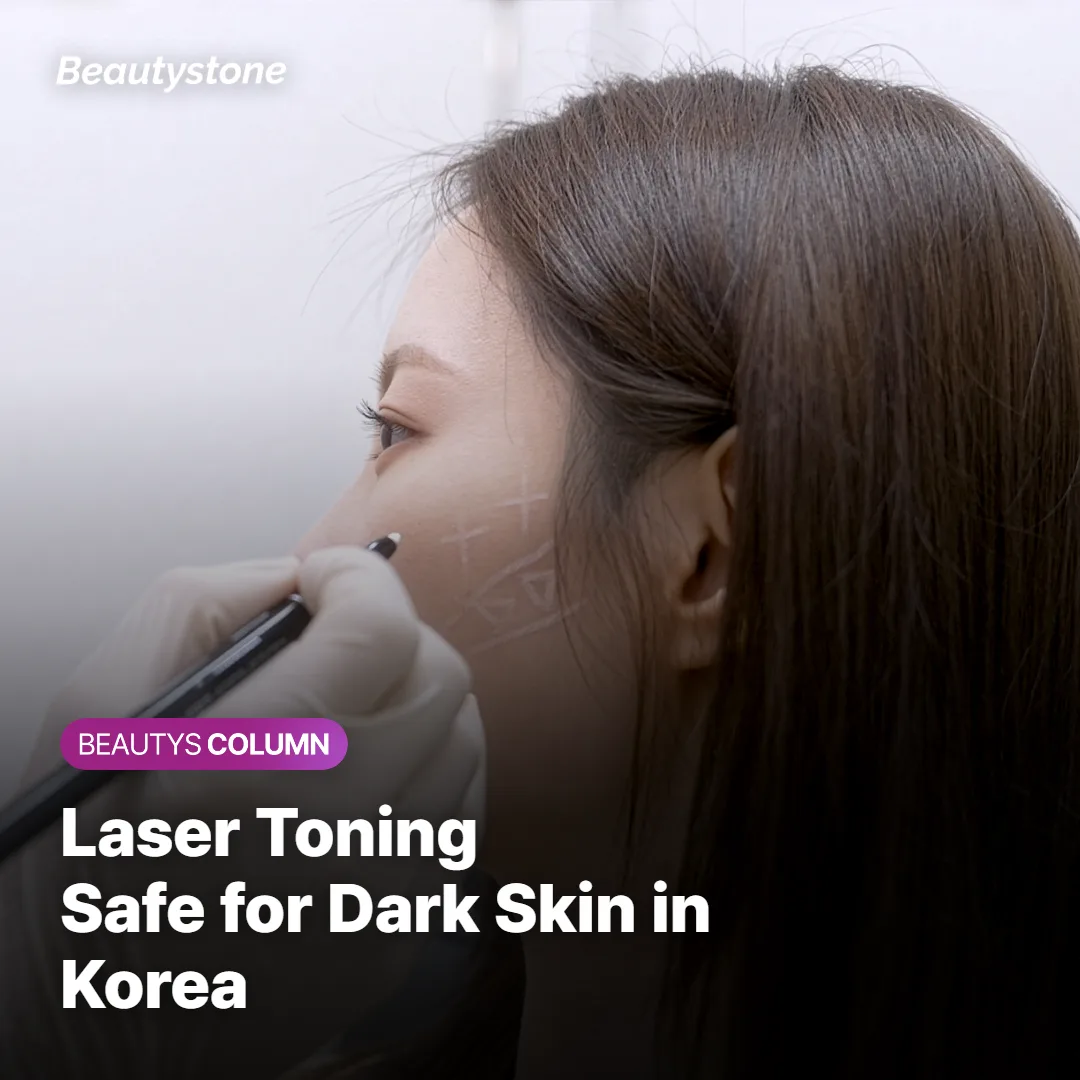
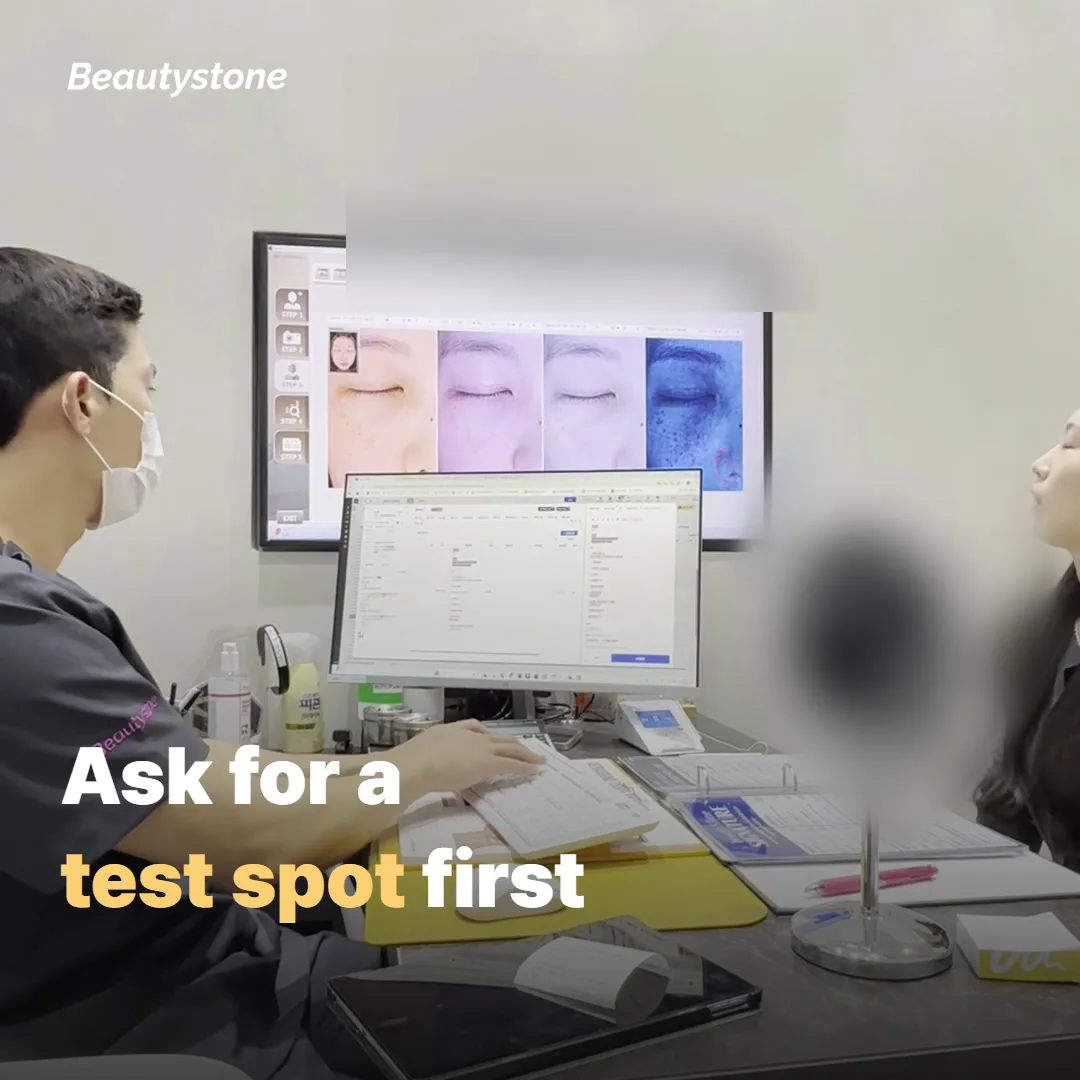
- Ask for a test spot. A small patch treated first and watched for a couple of weeks shows how your skin reacts before your whole face is committed.
- Confirm they assess your Fitzpatrick type. A provider who treats skin of color asks about your background and how you scar or mark—not just glance and fire.
- Share your pigment history. If you scar dark, get melasma, or have had PIH, say so up front—it changes the settings.
- Keep expectations honest. Laser toning helps reduce the appearance of pigment over time; it does not remove it permanently, and spots can return.
Budget is a checkpoint too. In the US, the American Society of Plastic Surgeons lists the average cost of laser skin resurfacing procedures at about $1,829, and picosecond pigment sessions are commonly quoted at several hundred dollars each. Clinics in Seoul commonly list standard toning sessions anywhere from roughly ₩30,000 to ₩150,000 (about $20–110), with picosecond toning higher—often a few hundred thousand won. Prices swing widely with the clinic, shot count, package size, and exchange rate, so treat these as ballparks and confirm the quote directly before you book.
If a clinic skips all of this and pushes the strongest setting on day one, slow down—wherever you are.
Why where you have it done still matters
The obvious part first: Beautystone is a small skin clinic in Hongdae/Hapjeong, Seoul—so this is how we approach the treatment, not a claim of a shortcut. What we look for here is worth looking for anywhere: read the skin before choosing the setting.
Before recommending anything, the priority is how deep your pigment sits, how your skin has marked before, and your Fitzpatrick type—then whether toning, picosecond, or a spaced plan fits. A board-certified dermatologist does that assessment, and a small clinic within walking distance of Hapjeong Station has room to run a test spot and talk through your reaction before a full course.
One practical worry: language. Many Seoul clinics field questions in English through Instagram DMs or messaging apps, and Korea's 1330 travel helpline offers free interpretation if you get stuck. Whichever clinic you choose, confirm language support when you book—one message asking "can I be consulted in English?" settles it before you fly.

Fitting laser toning into a Korea trip
Sun is the enemy of freshly lasered skin—UV right after treatment is the fastest route back to PIH. The arc to plan around (individual timelines vary):
- Day 0: redness and mild warmth for a few hours after a gentle session. Shade, hats, and broad-spectrum SPF 30+ start immediately—not a day for hard-daylight sightseeing.
- First few days: skin can feel slightly dry or sensitive. Keep sun protection strict and skip harsh actives.
- When results show: gradually—most people judge improvement after several sessions, over weeks to months, not after one visit.
- Maintenance: pigment can return, especially with sun, so clinics commonly suggest maintenance sessions every few months—worth weighing if your next Seoul trip is a year away.
Flights matter too. A test spot or gentle session is low-downtime, but give a stronger session a day or two of calm before a long-haul flight and heavy sun on the other side.
Know where "normal" ends: blistering, crusting, severe or spreading redness, or pain that worsens instead of easing over the first days is beyond routine recovery—contact your provider right away or seek urgent care. And the honest limitation of any procedure done abroad: if a reaction shows up after you fly home, you may need a local provider to follow up, so keep your clinic's notes and know who to see back home. When in doubt, consult a qualified provider before you book, and book a follow-up with the clinic that treated you.

Frequently asked questions
Q. Is laser toning actually safe for dark skin?
A. It can be, when the wavelength and energy are matched to skin of color—usually a 1064 nm Nd:YAG or picosecond laser at conservative settings. The bigger risk factor is an aggressive setting or an inexperienced provider, not your skin tone by itself. Individual results and reactions vary, so a test spot and a proper assessment matter.
Q. Will it get rid of my dark spots for good?
A. No treatment removes pigment permanently. Laser toning helps reduce the appearance of spots gradually, often over several sessions, and pigment can come back—especially with sun exposure or conditions like melasma. Think maintenance, not erasure.
Q. Does laser toning cause more dark marks on deeper skin?
A. It can, if the settings are too strong—that is exactly the post-inflammatory hyperpigmentation risk the AAD flags for deeper skin. Lower-fluence protocols, spaced sessions, and strict sun protection are how providers try to keep that risk down. A test spot first is the simplest safeguard.
Q. Can I sightsee or fly home right after a session?
A. Gentle toning is usually low-downtime, but your skin is sun-sensitive right afterward, so hard daylight and a long flight the same day are not ideal. Give a stronger session a day or two of calm, protect with SPF, and remember that if something flares after you get home, you may need a local follow-up.