
Sculptra or Juvelook? 5 Areas, 1 Depth Rule
A placement map for the cheek, temple, chin, under-eye and perioral area, and the depth rule sitting behind all five


Here is the short answer first: the Sculptra versus Juvelook argument is usually settled before either vial is opened. What decides the result is which part of your face lost volume, and which tissue layer that loss sits in.
So this page is a placement map rather than a verdict. Cheek, temple, chin, under-eye, perioral area, and what each one asks of a collagen booster. It is general education from Beautystone, a skin clinic in Seoul. Individual results and recovery vary, and only an in-person assessment can tell you which layer your volume loss comes from.
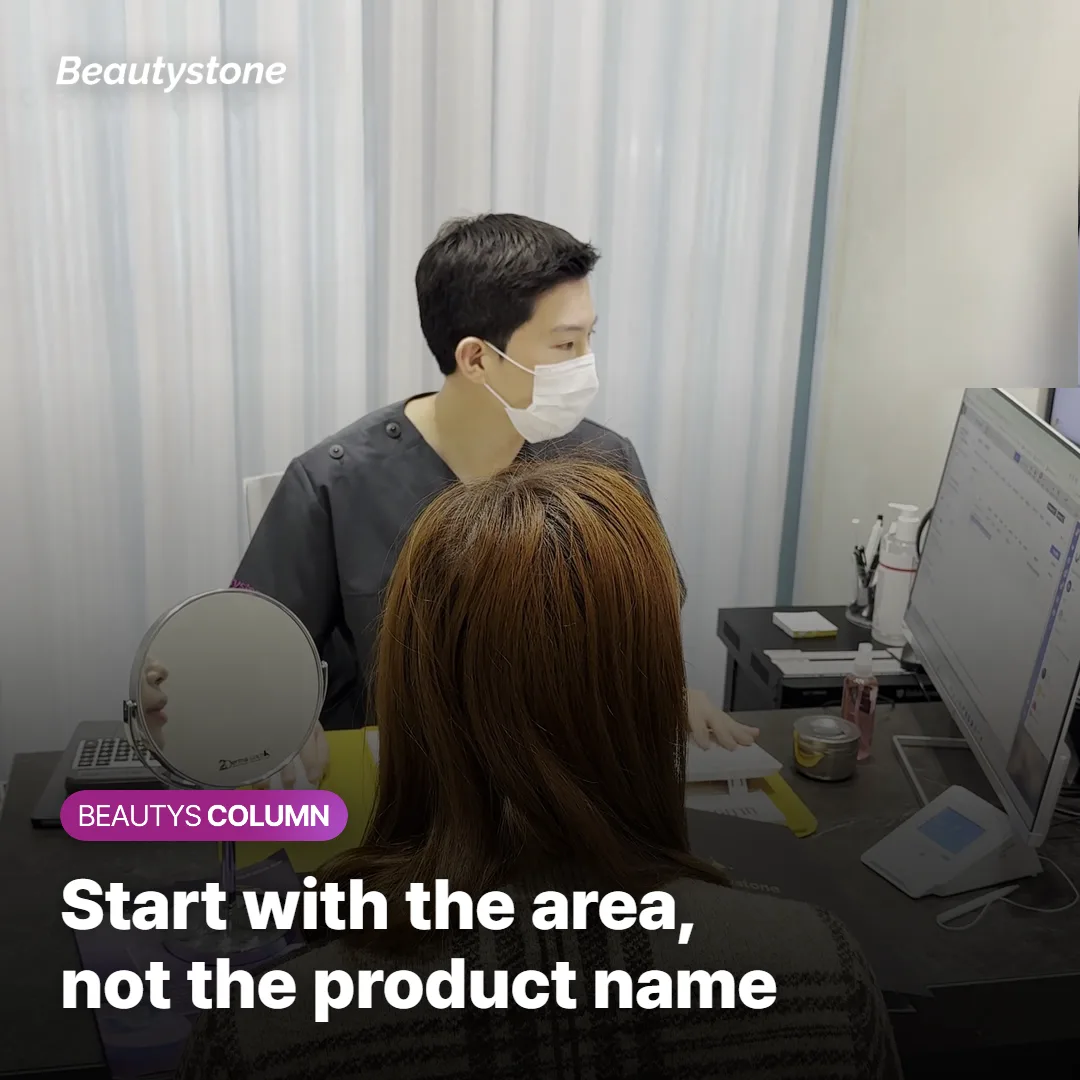
Start With the Area, Not the Product Name
Most people research this backwards: compare ingredient lists, then look for somewhere to use the winner. In the consultation room the order reverses, because the same product placed in two layers gives two different results.
The decision runs in three steps:
- Area first. Which part of the face actually lost volume: cheek, temple, chin, under-eye, the skin around the mouth?
- Layer second. Support that went missing from a deep fat compartment cannot be replaced from the superficial dermis.
- Product last. It mainly changes how fast the volume appears and how long it holds.
One piece of regulatory housekeeping first, because it changes what is available to you. Sculptra, an injectable poly-L-lactic acid, is FDA-approved in the US. Juvelook is not FDA-approved in the US; it is available in Korea under MFDS authorization. That is regulatory status, not a selling point.
The rest of this page follows that order: what actually differs, which areas each one suits, why depth decides duration, and how sessions get sequenced.
What Actually Differs: Early Volume, Layer, and Longevity
Sculptra is a single-ingredient collagen booster built on PLLA, poly-L-lactic acid. Juvelook is a composite: PDLLA blended with HA, hyaluronic acid. That distinction drives everything else people notice.
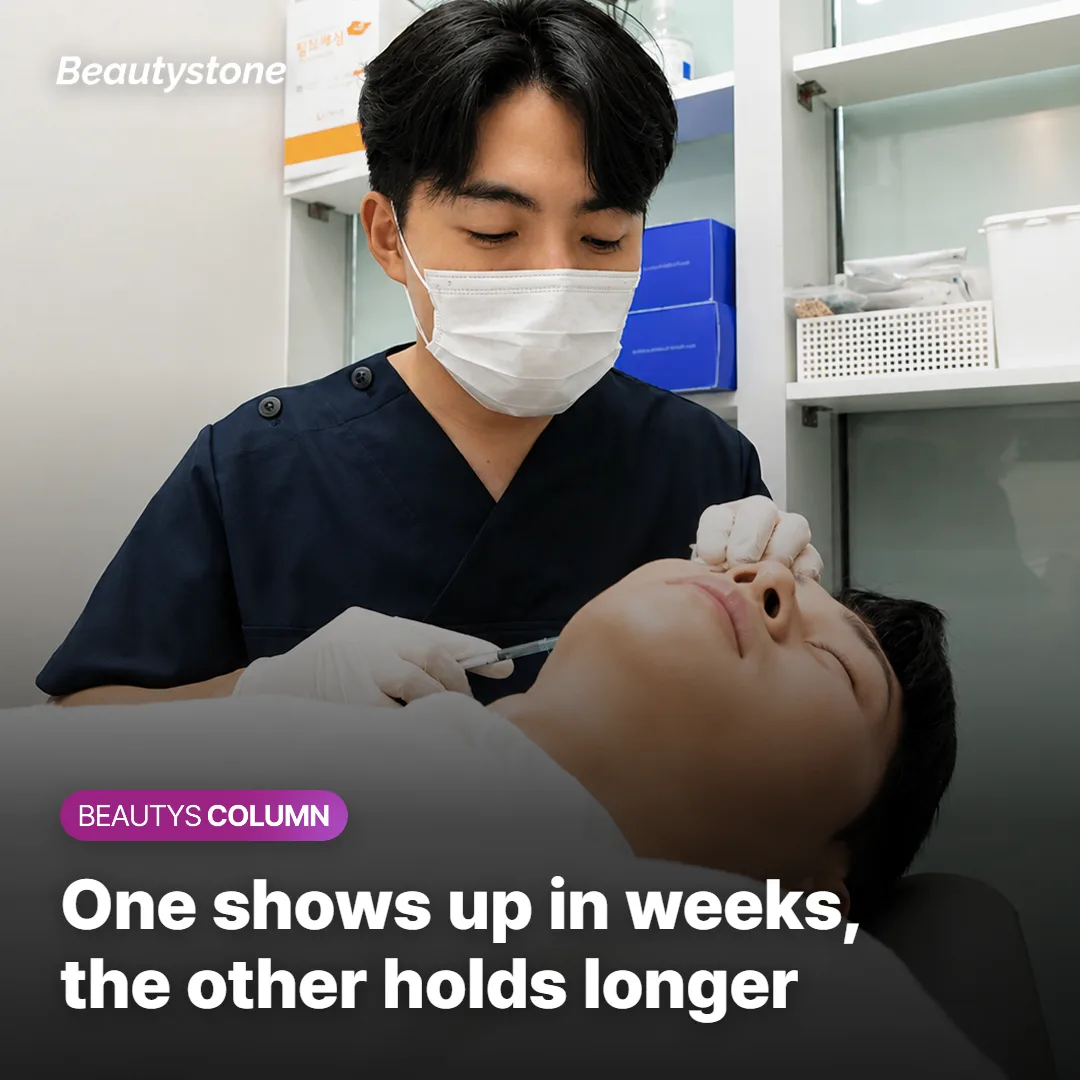
Because Sculptra contains no HA, there is little to see in the first weeks; volume builds gradually as collagen does, over roughly two to three months. Juvelook Volume delivers noticeable volume almost immediately, thanks to the HA. The trade-off arrives later, in how long each one holds.
The mechanism explains the timing. PLLA microparticles trigger a macrophage response that stimulates Type I collagen production, a process taking 8 to 12 weeks, with results that can last 18 to 24 months. PDLLA degrades faster, so collagen induction runs at a similar rate but duration is generally 12 to 18 months. Individual results may vary.
| What differs | Sculptra (PLLA) | Juvelook (PDLLA with HA) |
|---|---|---|
| Volume in the first weeks | Minimal, with no HA in it | Noticeable almost immediately |
| When collagen shows | Over roughly 2 to 3 months | Induction at a similar rate |
| How long it holds | About 18 to 24 months | About 12 to 18 months |
| If a nodule forms | No dissolving agent exists for PLLA | HA portion partly dissolvable with hyaluronidase |
| What that changes | Nothing shows for weeks, so depth must be right from the start | Early volume still cannot compensate for the wrong layer |
Nothing in either column says better. They say faster or longer, partly reversible or not at all, and each of those is really a question about which area you are treating.
Area by Area: Cheek, Temple, Chin, Under-Eye, Perioral
Here is the map. Every area below comes up in the consultation room, and the notes are about placement rather than ranking.
| Area | What it is asking for | The placement note that matters |
|---|---|---|
| Anterior cheek | Broad structural volume that dropped | Deep support belongs in the deep fat compartment above the SMAS layer, not the superficial dermis |
| Temple | Structural loss, same category as the cheek | Filler often addresses the structural loss first, with a booster following to refine and blend |
| Chin | Structural projection and support | Filler first for structure, booster 2 to 4 weeks later to blend; never both in one area on one day |
| Perioral area | Thin skin that moves all day | Notably higher risk of PLLA nodule formation, so site selection stays conservative from the outset |
| Under-eye | Thin, highly mobile skin again | Same elevated PLLA nodule risk; its own conversation, not an add-on to a cheek session |
The first three rows carry one instruction in different words: structural loss is addressed at a structural depth. The last two are the conservative zone for one reason, which is that thin skin plus constant movement is where PLLA nodule formation becomes notably more likely.

One area is missing on purpose: the posterior cheek. It is not a target. If a booster is creating fullness back there, that points at technique, not at the product in the syringe.
Depth Decides Duration: The One Rule Behind Both
Think of driving stakes into a crumbling earthen wall. The stake matters, but what determines how long the wall holds is where you drive it and how deep. The spec sheet is the stake; the anchor point is the wall.
A 34-year-old came in recently after 4 vials of Juvelook at another clinic. The volume barely showed and she wanted to switch to Sculptra. Her photos told a different story: the injection sites sat in the superficial dermis along the anterior cheek. That is a depth problem, not a product problem, and Sculptra in the same location would have produced a nearly identical outcome. Her plan was redesigned to target the deep fat compartment above the SMAS layer instead.
This is why the longevity figures above come with a condition attached. The 18 to 24 months for PLLA and the 12 to 18 months for PDLLA assume correct depth. Superficial placement raises the risk of nodule formation and actually reduces how long the result lasts, so depth is part of the number you are paying for.
- Volume that does not show. Support placed above the layer that lost it does not restore the contour.
- A shorter run. Superficial placement does not hold as long as the quoted ranges.
- More nodule risk. Especially where skin is thin and mobile.
- A misread. The conclusion becomes wrong product, which sends people to a second product at the same wrong depth.
So the useful consultation question is not Sculptra or Juvelook. It is: which areas lost volume, which layer is that loss in, and what depth are you injecting at?
Sessions, Sequencing, and 5 Questions to Bring
Once area and layer are settled, what remains is pacing. A 42-year-old asked for 5 vials of Sculptra in one session; that was declined. She had a lean frame and thin skin, and delivering that much at once would have meaningfully raised the risk of nodules and surface irregularities. The plan became 2 vials per session over two visits, with a possible third.
- Filler first, booster second. Structural loss in the anterior cheek, temple or chin is addressed with filler, then a collagen booster follows 2 to 4 weeks later to refine and blend.
- Never both in the same area on the same day. PLLA particles can marginally elevate the risk of nodule formation at HA filler injection sites.
- Not two boosters on the same day either. If a nodule or inflammatory response develops, there is no way to trace which product caused it; 2 to 3 weeks apart keeps that answerable.
Pain varies by individual, but Sculptra produces a heavier, more pressure-like sensation than Juvelook. The particles are coarser and the injections are distributed across a broader surface, which also makes the session longer. A typical setup is topical anesthetic cream for 40 minutes plus lidocaine mixed into the vial; about seven in ten patients find it more manageable than expected, and the rest need supplemental anesthesia partway through.
Cost confuses people because they compare the wrong unit. Per vial, Juvelook tends to be less expensive; per month, Sculptra often is. In roughly six out of ten cases, 3 vials of Sculptra lasting 24 months works out to less than 4 vials of Juvelook lasting 12 months. That flips as soon as your vial count or your own longevity differs, and prices vary by clinic.
Which gives you five things to ask before anyone opens a vial:
- Which layer is my volume loss in, and what depth are you injecting at?
- How many vials per session, across how many visits? A split plan is a normal answer, not an upsell.
- Are we combining anything, and in what order?
- What is the cost per month at the longevity you expect?
- What happens if a nodule forms after I have gone home?
That last one matters, because the two are not equally reversible. If you travelled for treatment, aftercare has a hard limit: once you fly home, follow-up for a complication may have to happen with a provider where you live, so ask who that would be before you book. Swelling that keeps expanding, spreading redness, warmth or fever is not wait-and-see. Contact your provider right away or seek urgent care.
Sculptra, Juvelook, Radiesse and Olidia look different on paper, but clinically the principle is the same: where you place the anchor point separates a good result from a mediocre one. Start with your face, not the label.
Frequently Asked Questions
My Juvelook barely showed any volume. Was it the wrong product?
Not necessarily, and the more common explanation is depth. A composite carrying HA usually shows volume soon after the appointment, so when it does not, check where it went before blaming what it was. Superficial dermis placement along the anterior cheek is a frequent finding, and support placed above the layer that lost volume does not restore the contour. Switching products while keeping the same placement tends to reproduce the same result.
Can I have Sculptra and Juvelook on the same day, in different areas?
Technically possible, but generally not advisable. If a nodule or an inflammatory response develops after two different collagen boosters were introduced on the same day, it becomes very difficult to trace which one caused it. Spacing them 2 to 3 weeks apart and treating each area separately keeps that answerable.
If a nodule forms, can it be dissolved?
It depends what was injected. Juvelook contains HA, so partial dissolution with hyaluronidase is possible. There is no dissolving agent for PLLA, so a Sculptra nodule is addressed over time instead, through massage or intralesional steroid injections. That asymmetry is why site selection stays conservative in thin, mobile skin around the mouth and under the eyes. If a lump comes with spreading redness, warmth or fever, contact your provider right away or seek urgent care.
Which one works out cheaper over a year?
Per vial, Juvelook is usually the less expensive of the two. Per month, Sculptra often is, because it holds longer. In roughly six out of ten cases, 3 vials of Sculptra lasting 24 months costs less than 4 vials of Juvelook lasting 12 months. It stops working that way once the vial count or the treated area changes, and prices vary by clinic and exchange rate.