

Seoul Dermatology Clinic Costs More Than Price
Picking a dermatology clinic near Sangsu Station on price alone can backfire — here's why checking for genuine products and matching the plan to your skin type matters more.

If you've searched for a dermatology clinic near Sangsu Station, you've probably noticed something strange: prices for what sounds like the exact same treatment can differ by a wide margin from one clinic to the next. With Hongdae and Hapjeong basically next door, it's tempting to treat "cheapest" as the tiebreaker.
But price alone doesn't tell you much. A treatment plan that ignores your skin type — your tone, your sensitivity, whether your skin is currently inflamed — can end up costing more in the long run, in time and in your skin's condition. In this article, we'll cover why verifying a product's authenticity matters as much as its price tag, how your skin type actually changes a treatment plan, and what questions are worth asking before you book anything.
What a Dermatology Visit Is Supposed to Do
A dermatology visit isn't the same as picking whatever's trending. At its core, it's a diagnosis: a provider looks at your skin condition, figures out what's actually going on, and builds a plan — medication, laser, injectable, or some combination — around that. It's a different exercise than asking "what's popular right now?"
Here's where it gets tricky. The same laser or the same injectable can produce very different results depending on who's getting it, at what setting, and in what order. So when you're comparing dermatology clinics near Sangsu Station, going with whatever's closest or whatever has the flashiest promotion can throw off that judgment before you've even started.
A price list is the first thing most people notice, and that's normal. But skin care has to account for what you're trying to avoid just as much as what you're trying to achieve. Redness, pigmentation, and acne scarring can look similar on the surface, but the underlying cause — a vascular issue, melanin buildup, or a post-inflammatory change — calls for a different approach each time. Once you know which one you're actually dealing with, "which clinic is cheapest" stops being the right question. "Which plan actually fits my case?" is.
Why Checking for Genuine Products Comes First
This next part matters enough that it's worth spelling out in detail: before you compare skin type or treatment goals, check whether the product itself is genuine.
Verifying authenticity isn't about assuming a clinic is dishonest — it's about making a treatment plan reproducible. The same injectable, sold under the same name, can behave differently depending on the manufacturer, the lot number, and how it was stored. Viscosity, how it spreads under the skin, and how your skin reacts — swelling, warmth, itching — can all shift based on those factors.
For anything with a pharmaceutical profile — injectables, skin boosters, Botox-type treatments — there are generally three things worth confirming:
- QR code: Does it lead to an authentication page you can check on your own phone, not just a staff member's screen?
- Serial or lot number: Is there a unique number on the box or label, and is the product opened in front of you?
- Prescription record: If a medication is being used, is there a documented prescription trail?
Being able to verify a product doesn't guarantee the treatment will work well for you — that's not what it confirms. What it does is make the next step possible: matching the right device and settings to your actual skin.

How Your Skin Type Changes the Plan
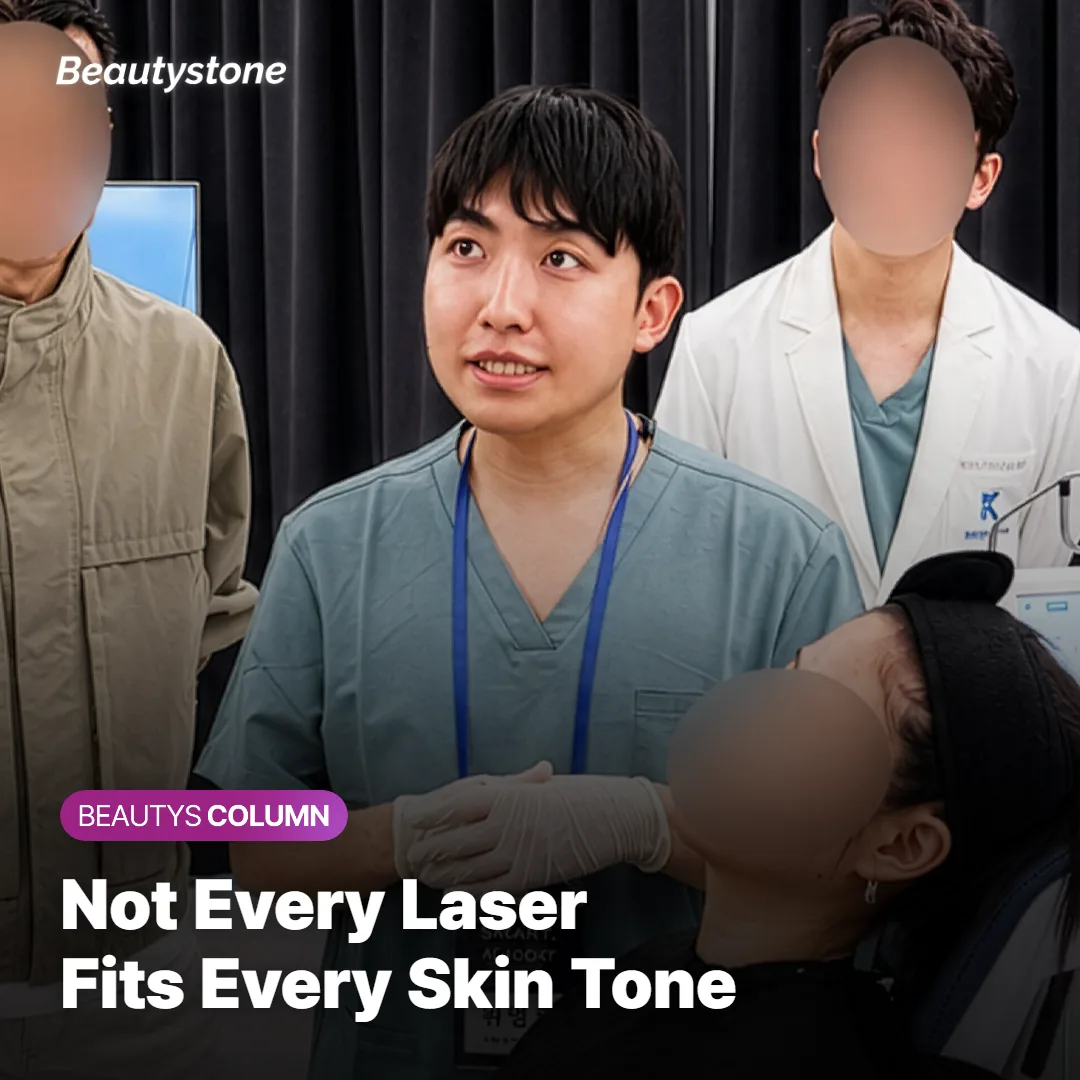
Lasers get grouped under broad names like "toning," but the wavelength behind that name determines how safe or aggressive it is for a given skin tone.
A 532nm (KTP) laser is absorbed strongly by melanin, so it tends to act fast — but if your skin tone runs deeper or you've had a lot of recent sun exposure, that same strength can mean more irritation. A 1064nm (Nd:YAG) laser sits deeper and is absorbed less by melanin, which is why it's often the more conservative choice for deeper skin tones (roughly Fitzpatrick IV to V).
| Wavelength | Melanin absorption | Typical fit |
|---|---|---|
| 532nm (KTP) | High | Lighter skin tones, minimal recent sun exposure |
| 1064nm (Nd:YAG) | Lower | Deeper skin tones, more conservative settings |
Chasing a flashy promotion isn't automatically a bad call. The problem shows up when the promotion runs the same setting on everyone, regardless of skin tone. That's usually when you end up needing more sessions than expected — or dealing with a longer recovery than you'd planned for.
The 3-Question Framework Clinics Should Walk You Through
With this many dermatology options clustered around Sangsu Station, there isn't one "correct" clinic — there's a plan that fits your case. A useful framework to bring into a consultation covers three questions:
- What's your skin tone and tanning status been over the last two to four weeks?
- Is your skin currently in an inflamed state (redness, stinging, recurring breakouts), or is it stable?
- Can you separate what you want to fix this month from what you're aiming for three months out?
Working through these questions upfront tends to make the first consultation longer, and the per-session price can look higher on paper. That's a fair trade-off in most cases — it usually costs less than resetting a plan mid-course after your skin didn't respond the way you expected.
Side Effects and Risks to Watch For
Mild redness, warmth, or itching in the first day or two after a laser or injectable treatment is common and usually settles on its own. If it worsens, spreads, or comes with fever, contact your provider right away.
The risk that matters most here is post-inflammatory hyperpigmentation, or PIH — dark patches that show up after the skin has been irritated. It's more likely when a stronger wavelength is used on deeper skin tones, or when treatment happens too soon after significant sun exposure. It's not common, but it does happen, and it's one of the clearest reasons a skin-type mismatch is worth avoiding in the first place.
Individual results and recovery times vary. If something about your reaction feels off — more swelling, more pain, or a longer recovery than what you were told to expect — it's worth checking in with your provider rather than waiting it out.

How Much Does It Cost?
Cost is where most comparisons start, and it's fair to want a number. The honest answer is that it varies by clinic, by device, and by how many sessions your specific plan calls for — comparing a single per-session price across clinics can be misleading if the settings, product, and number of sessions aren't the same.
A plan built around your skin type may come with a higher-looking price for the first visit, partly because it includes a longer consultation. In practice, that often costs less overall than a cheaper plan that needs to be adjusted midway through. A consultation is the best way to find out what your specific plan would actually cost — see current offers at /en/promotion.
Is a Skin-Type-Matched Plan Worth It?
For most people weighing dermatology clinics near Sangsu Station, the answer comes down to what you're optimizing for. If you're looking for the lowest number on a price list and you're comfortable adjusting course later, a generic plan might get you there. If you'd rather get it right the first time — and avoid the extra sessions, extra downtime, or extra cost that comes with a mismatched plan — the slightly longer, skin-type-based consultation tends to pay off.
There's no universal answer here, and results vary from one person's skin to the next. But a clinic that's willing to verify its products and take the time to assess your skin type is, at minimum, giving you the information you need to make that call yourself.
The Bottom Line
Here's the short version:
- Check for genuine products first — a QR code, a serial or lot number, and a documented prescription trail.
- Your skin tone and current condition, inflamed versus stable, should shape the treatment plan, not just the trending name of a device.
- A slightly longer, more detailed consultation usually costs less than course-correcting a mismatched plan later.
Like any procedure, this comes with trade-offs — more time upfront, and a price that might not be the lowest on the list. Ultimately, the choice depends on your skin, your goals, and your budget.
If you're weighing dermatology clinics near Sangsu Station, a consultation is the best way to find out what actually fits your skin. Beautystone is a dermatology clinic in Seoul's Hapjeong neighborhood — see current offers at /en/promotion.
Frequently Asked Questions
Q1. How can I verify that an injectable or skin booster is genuine?
Ask to see the QR code on the packaging — it should lead to an authentication page you can check on your own phone, not just the clinic's screen. You can also ask to see the serial or lot number on the box and confirm the product is opened in front of you.
Q2. Does a cheaper clinic always mean a worse treatment?
Not necessarily, but a low price that's identical for every skin type is a red flag. A treatment plan that doesn't account for your skin tone or current skin condition can end up costing more if it needs to be adjusted or redone later.
Q3. Why does my skin tone affect which laser wavelength is used?
A 532nm laser is absorbed strongly by melanin and tends to act fast, but it can be more irritating on deeper skin tones or recently tanned skin. A 1064nm laser sits deeper and is absorbed less by melanin, so it's often the more conservative option for deeper skin tones.
Q4. What happens if my skin type isn't factored into the treatment plan?
The most common issue is post-inflammatory hyperpigmentation, or dark patches that show up after the skin has been irritated. It's more likely with aggressive settings on deeper skin tones or after recent sun exposure, and it can mean a longer recovery than expected.