Rejuran Healer Clinic: 4 Things to Check First
Two Rejuran Healer quotes can describe two different treatments. Here's how to check the box label and product type, what 2 mL should cover, how hand and device injection differ, which reactions need care right away, and how sessions are spaced.

Wi Young-jin
Chief Director, Myeongdong
Before you compare Rejuran Healer prices, line up four things: the product type and whether it's genuine, how many cc go in per session, whether it's injected by hand or with a device, and how many sessions are planned and how far apart. The same name can cover different versions of all four, so two prices can describe two different treatments.
In this article, we'll cover how to check the box and syringe, what a 2cc session should cover, how hand and device injection differ, which reactions settle on their own and which need care right away, and how a session plan fits a trip to Seoul.
Quick summary
- Compare Rejuran Healer quotes only after the product type, cc per session, injection method and session plan match.
- Benchmark: in a survey of 235 skin doctors in Korea, 3 sessions 4 weeks apart was the plan recommended most often.
- For the full face, an expert panel suggests 2 to 4 mL per session, so a 1 mL quote isn't the same treatment.
- Skin near the injection turning white, gray or blue, or any change in vision, needs medical care right away.
Is It Genuine Rejuran Healer, and Which Type Is in the Syringe?
You can check both before the injection starts. Ask to see the sealed box and the syringe label. That shows you the product name and how many syringes are being opened for you, right there in the room.
"Rejuran Healer" is the name people use in clinics. The box itself says Rejuran. The same maker has four injectable types in Korea, and they aren't interchangeable:
- Rejuran (what people call Rejuran Healer): 2 mL per syringe
- Rejuran Eye: 1 mL, thinner, made for delicate skin around the eyes
- Rejuran S: 1 mL, thicker than Rejuran
- Rejuran HB Plus: adds hyaluronic acid and lidocaine, a numbing ingredient
Rejuran isn't FDA-approved in the US. In Korea, it's authorized by the MFDS (Korea's drug and medical device regulator) as a medical device for temporarily improving facial wrinkles. Filler products bought online could be counterfeit or unapproved, so it's worth looking at the packaging of any injectable*.
*Based on US FDA guidance for dermal fillers in general.
Some situations call for telling your provider first, or waiting. This list comes from the same FDA guidance on injectable fillers:
- Pimples, a rash, hives or another infection or inflammation where you'd be injected (wait until it's healed)
- A condition that makes you bleed easily
- A history of severe allergies or anaphylaxis
- An allergy to animal-derived ingredients
- An allergy to lidocaine or other local anesthetics (Rejuran HB Plus contains it)
Rejuran Healer 2cc: How Much Should One Session Use?
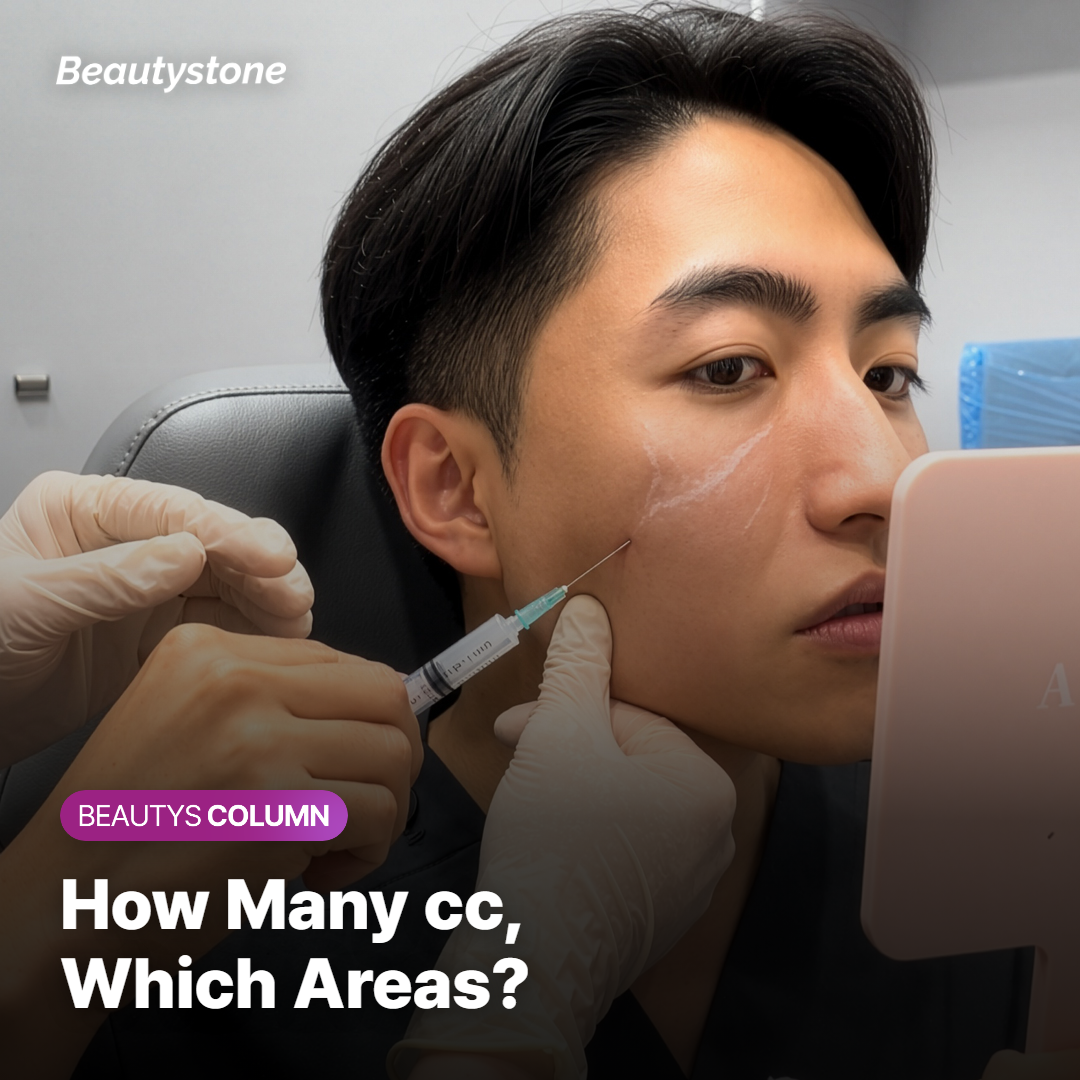
One syringe of Rejuran Healer is 2 mL (2cc), and for the full face an expert panel suggests 2 to 4 mL per session. That panel of doctors in Korea and abroad based its suggestions on hands-on experience. Their method places 0.02 to 0.04 mL at each point, 3 to 5 mm apart, into the dermis*.
*Dermis: the layer under the surface of the skin that gives it firmness and bounce.
That's why the cc on a quote only means something next to the area it covers. Two mL across the whole face and two mL on just the cheeks or around the eyes are different treatments. If a quote says 1 mL, ask which part of your face that amount is meant for.
This is also where most "rejuran healer 2cc" searches end up. The number on its own doesn't tell you much. Ask how many syringes, which areas, and whether a second product like Rejuran Eye is part of the same session.
Rejuran Healer by Hand vs. Injector Device: What Changes?
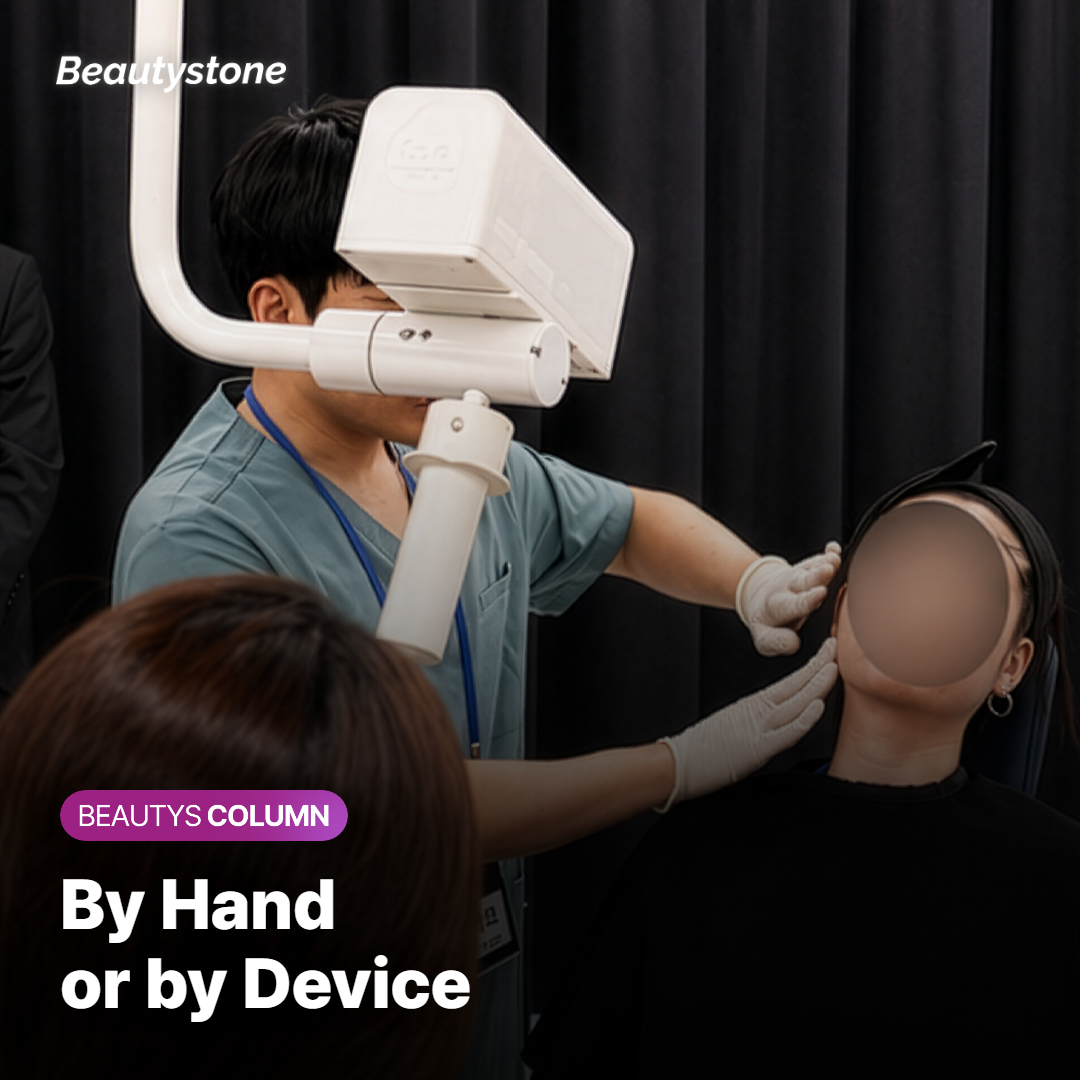
Hand injection uses a very fine needle to place the product point by point. An injector device repeats a preset depth and amount at even spacing. Dermal thickness changes from one part of the face to another, so either method has to reach the right depth for each area.
In 31 people whose faces were measured by ultrasound, the dermis was thinnest under the eyes at 0.53 mm on average. It was 0.79 mm on the forehead, 0.89 mm on the front of the cheek and 1.18 mm at the temple. The same group received 2 mL of Rejuran with an automatic injector fitted with 0.8 mm needles. The product landed at an average depth of 0.55 mm, ranging from 0.29 to 0.99 mm.
There are also needle-free devices that push the product in with pressure. In a small study, 10 Korean adults had Rejuran by hand with a 33G needle on one side of the face and with a needle-free device on the other. They were followed for only 2 weeks, so it can't show whether any difference lasts. In the US, needle-free devices aren't FDA-approved for injecting dermal fillers, and the FDA says their safety and effectiveness for that use isn't known.
| Comparison | Hand injection (fine needle) | Automatic injector (short needles) | Needle-free device |
|---|---|---|---|
| How it goes in | Point by point | Needle length sets the depth | Pushed in by pressure |
| Setup in the study | 33G needle, about 1 cm apart | 0.8 mm needles | No needle |
| What was measured | Pain 5.4 out of 10, bruising in 2 of 10 | Average depth 0.55 mm (31 people) | Pain 2.9 out of 10, no bruising |
Each column comes from a different study setup with a different number of people, so the table doesn't rank one method over another. If needle pain or bruising worries you, ask whether a device is used. If thin areas like under the eyes are included, ask how that area in particular is injected.
Rejuran Healer Side Effects: Bumps, Bruising and When to Get Help
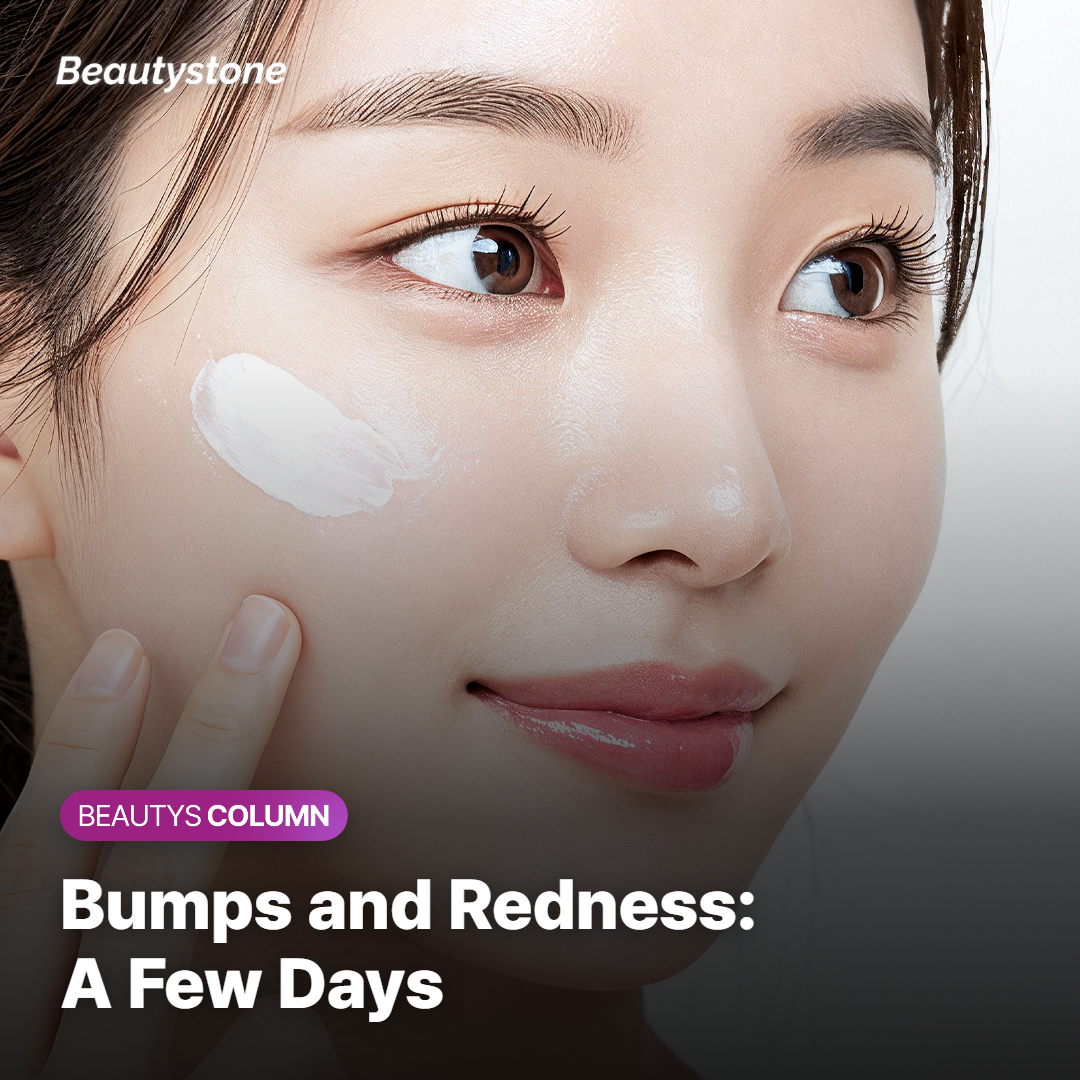
Redness and small raised bumps (2 to 3 mm, often called "rejuran bumps") usually settle within a few days. In a study of 15 people who had Rejuran Eye (1 mL) around the eyes every 2 weeks, 60 sessions were recorded in total. Redness showed up in 60% of sessions, bruising in 36.7% and bumps in 56.7%. On average, redness faded in 1.4 days and bruising in 1.9 days.
In the 10 people who had Rejuran across the face, everyone had mild redness that settled within a week. How you react depends on your skin, and these numbers come from small groups. If redness or swelling gets worse or spreads, contact your provider right away.
Don't wait to see how these go. Get medical attention right away if you notice any of the following*:
*Based on US FDA guidance for injectable dermal fillers.
- Skin near the injection site turning white, gray or blue
- Unusual pain
- Changes in your vision (go to the nearest emergency room)
- Signs of a stroke: sudden difficulty speaking, numbness or weakness in your face, arms or legs, difficulty walking, face drooping, severe headache, dizziness or confusion (go to the nearest emergency room)
In one animal study, PN injectables including Rejuran S and Rejuran HB Plus were injected into an artery in rabbits' ears. Blood flow was blocked for a short time, and no clot was seen 24 hours later. That's an animal study, so it doesn't carry over directly to people. Treat the signs above the same way after Rejuran Healer, and remember that a message to the clinic doesn't replace an in-person exam.
How Many Rejuran Healer Sessions, and How Far Apart?
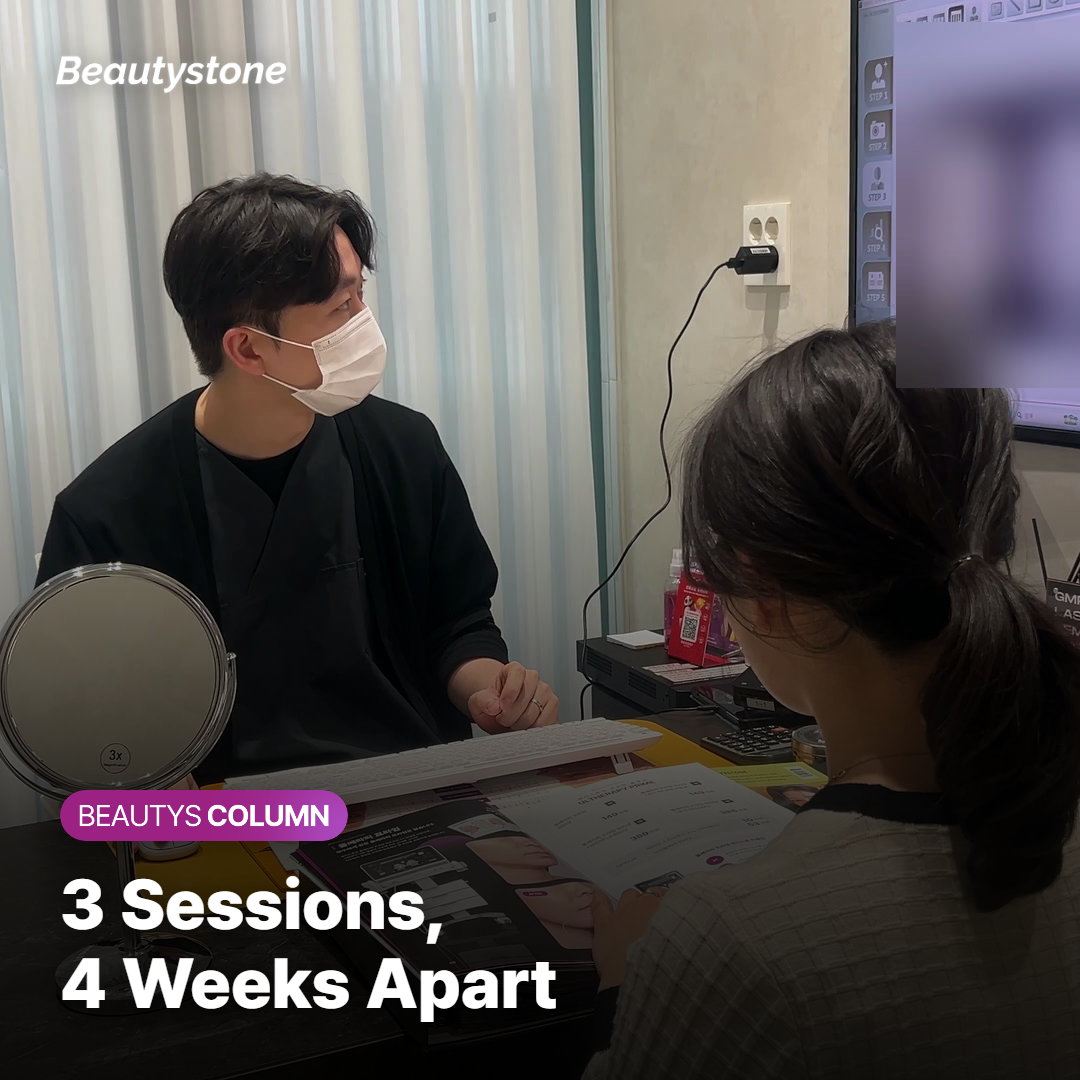
Rejuran Healer is planned as a series spaced several weeks apart. In the survey of 235 skin doctors in Korea, 3 sessions 4 weeks apart was recommended most often. A 2-week spacing has also been used in a study around the eyes. Even with 3 sessions, a different spacing changes how long the whole plan takes and what you can expect after the first visit.
Don't expect a big change after one session. Judge the result after the planned sessions are done, using photos taken in the same lighting. Results differ from person to person.
A quote can sit next to another one only when it lists these four items:
- Product name and type (Rejuran, Rejuran Eye, Rejuran HB Plus and so on)
- cc per session and the area covered (full face, cheeks, around the eyes)
- Hand injection or a device, and how numbing is handled
- How many sessions and how far apart, and whether the per-session price is tied to a package
Rejuran Healer Within Your Travel Itinerary in Korea
Unless you had sedation that day, there's no need to postpone your flight home because of a Rejuran Healer session. Plan around the redness and bumps from the first few days rather than the flight itself.
It helps to know what one visit can do. Some treatments, like fillers, change your shape the same day. Most others, Rejuran Healer included, don't transform your skin in one go. They bring it gradually closer to how it used to look. If a series of sessions is planned, a single visit doesn't replace the rest of it.
Once you're back home, you can send photos through the consultation button on this page if you have questions about how your skin is settling. If a reaction looks serious, like skin changing color or vision changes, get seen by a local doctor or emergency room first rather than waiting for a reply.
The Bottom Line on Choosing Where to Get Rejuran Healer
Before you compare prices, ask one question about every quote: how many cc go into which areas, and with which method? With that answer, two quotes can finally sit side by side. Like any procedure, Rejuran Healer comes with trade-offs, and the choice depends on your skin, your goals and your schedule.
Beautystone is a clinic in Seoul's Hapjeong area. When you reach out, include the area you're concerned about (under the eyes, cheeks or pores), any skin booster you've had before and when, and whether needle pain worries you.
Sources
- How 235 skin doctors in Korea use PN injections, including spacing and needles, J Cosmet Dermatol, 2024
- Expert suggestions on PN (Rejuran) injection technique and treatment plans, Clin Cosmet Investig Dermatol, 2026
- Hand injection vs. a needle-free device for PN, half of the face each in 10 people, J Cosmet Dermatol, 2025
- Dermal thickness and injection depth in 31 people treated with an automatic PN injector, Plast Reconstr Surg Glob Open, 2025
- Redness, bruising and bumps after PN injections around the eyes in 15 people, Aesthetic Plast Surg, 2026
- Rejuran on half of the face right after radiofrequency microneedling in 25 people, Plast Reconstr Surg Glob Open, 2026
- What happens when PN injectables enter an artery, a rabbit study, Sci Rep, 2026
- Warning signs of a blocked blood vessel, who should wait, and buying fillers online, US FDA
- Why injectable fillers belong in a medical setting, American Academy of Dermatology (AAD)
Frequently Asked Questions
Q. Does Rejuran Healer hurt?
A. Rejuran Healer by hand averaged 5.4 out of 10 for pain in a study of 10 Korean adults who had numbing cream on for 30 minutes before a 33G needle. The same people rated the needle-free side at 2.9. Numbing cream can be used, and the numbing method is decided at the visit based on the area and how sensitive you are.
Q. Is Rejuran HB the same as Rejuran Healer?
A. Rejuran HB Plus isn't the same as Rejuran Healer. It adds hyaluronic acid and lidocaine to PN, and in Korea it's authorized only for fine lines at the outer corners of the eyes. If a quote just says "Rejuran," check the box label to see which type it is.
Q. Do needle-free devices give the same Rejuran results?
A. In one small study, the needle-free side scored slightly higher on improvement 2 weeks after Rejuran: 3.85 vs. 3.6 on a 5-point scale in 10 Korean adults. Pore and wrinkle measures improved only on the device side. With 10 people followed for 2 weeks, it's not known whether the difference lasts.
Q. Can Rejuran Healer be done the same day as a laser or RF treatment?
A. Rejuran Healer is often combined with radiofrequency or laser treatments. In the survey of 235 skin doctors in Korea, 79% of those using PN combined it with laser or light treatments. In 25 women who had 2 mL of Rejuran on half the face right after radiofrequency microneedling, hydration and pores improved more at 6 weeks, but dermal thickness and elasticity didn't differ from the saline side.
Q. Can Rejuran Healer go under the eyes?
A. Under the eyes, Rejuran Eye is sometimes used instead of Rejuran Healer. Rejuran Eye comes in 1 mL syringes and is thinner than Rejuran. If you're having the full face and under the eyes done in one session, check how many syringes of each product the quote includes.
Q. How is needle depth chosen with an automatic injector?
A. With an automatic injector, one research team measured dermal thickness by ultrasound before treatment and picked the needle length from that. In their 31 people, the dermis was thinner in those 50 and older: at the front of the cheek it was 0.99 mm under 50 and 0.61 mm at 50 and over. That's why depth gets adjusted for age and area.
Q. Rejuran is salmon DNA. What if I have a fish allergy?
A. The PN (polynucleotide) in Rejuran comes from salmon or trout DNA. Animal-derived ingredients can cause allergies, so it's standard to check beforehand. If you've had an allergy to fish or other animal-derived ingredients, tell your provider before the injection.
Q. Is it safe to buy Rejuran online or get it injected at home?
A. Buying Rejuran online or getting injections outside a medical setting isn't a safe choice, because the product could be counterfeit or unapproved. The US FDA treats filler injections as a medical procedure and advises against buying fillers online or injecting yourself.
Q. Can I get Rejuran Healer while pregnant or breastfeeding?
A. The safety of injectable fillers during pregnancy or breastfeeding isn't known, and that applies to skin boosters like Rejuran Healer too. Mention it at the consultation, and you can decide together whether to plan the sessions after pregnancy or breastfeeding.