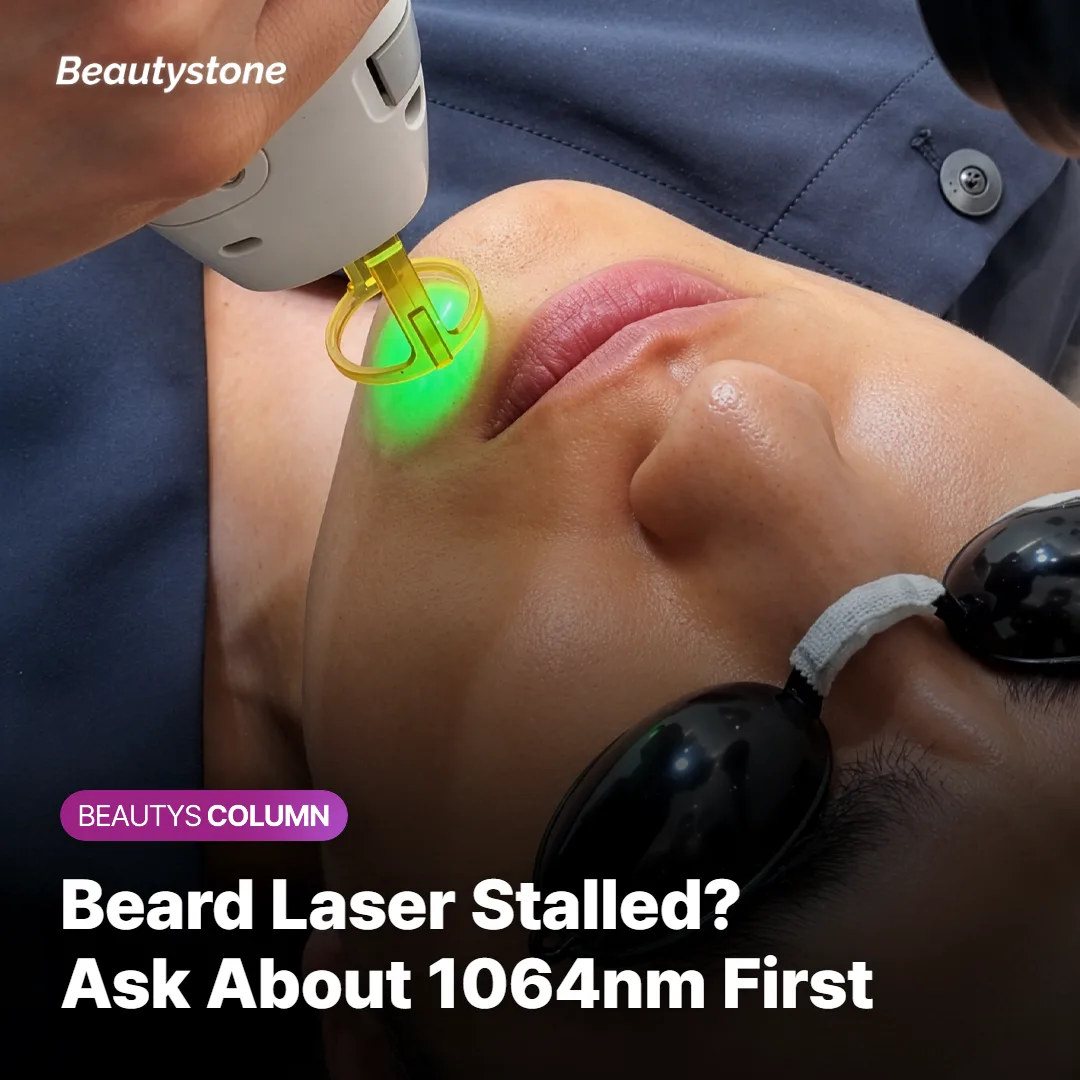
Which Laser Fits Your Type of Pigmentation?
If a dermatologist called your brown patch "pigmentation" and left it at that, you're not alone in feeling more confused than before. Freckles, melasma, and a birthmark called Nevus of Ota all sit at different depths in the skin, and that depth is what decides which laser actually works.

If a dermatologist looked at the brown patch on your cheek and said "pigmentation" without saying much else, you're not alone in walking out more confused than when you walked in. Freckles, sun spots, melasma, and a bluish-gray birthmark called Nevus of Ota all get lumped under the same word, but they don't sit in the same place in your skin, and that's exactly why a single laser setting can't treat all of them the same way.
The short version: pigment that sits shallow in the epidermis behaves very differently from pigment that's settled deeper in the dermis, and the laser wavelength that reaches one often can't reach the other efficiently. In this article, we'll cover the four most common types of facial pigmentation, why depth is the deciding factor for which laser gets used, and what that means for how many sessions each type typically takes.
What Are the Main Types of Facial Pigmentation?
Short answer: most of what people call "pigmentation" falls into four buckets, freckles, sun spots (also called solar lentigines or age spots), melasma, and Nevus of Ota, and each one tends to sit at a different depth in the skin.
Freckles and sun spots are usually shallow, sitting in the epidermis, the outermost layer of skin. They tend to look sharply defined and range from tan to dark brown. Melasma is trickier. It can be epidermal, dermal, or a mix of both in the same patch, which is part of why it's notoriously hard to treat with a one-size-fits-all approach. Nevus of Ota is different from the other three in that it's not sun-related at all. It's a birthmark where pigment cells sit deep in the dermis from early on, usually showing up as a grayish-blue patch around the eye or cheek.
| Pigment Type | Typical Depth | Color and Edges | General Approach |
|---|---|---|---|
| Freckles & sun spots | Epidermis | Brown, sharply defined | Shorter wavelengths targeting shallow layers |
| Melasma | Epidermis, dermis, or mixed | Tan to brown, hazy edges | Low-intensity, multi-session approach |
| Nevus of Ota | Dermis | Blue-gray, hazy edges | Longer wavelengths reaching deeper layers |
Why Does Pigment Depth Decide Which Laser Works?
Short answer: laser wavelength determines how deep the light travels into skin, and matching that depth to where the pigment actually sits is what makes a treatment effective instead of a shot in the dark.
Shorter wavelengths, in the range of about 532nm, are absorbed closer to the surface, which makes them well suited to epidermal pigment. Longer wavelengths, like 1064nm used in Q-switched and picosecond lasers, travel further into the dermis before they're absorbed, which is what makes them useful for deeper pigment. Devices like IPL, which fire a broad spectrum of light rather than a single focused wavelength, work in a similar shallow range and are often used on scattered surface pigment.
That's the whole logic behind why a provider asks a lot of questions before picking a device. A laser tuned for shallow pigment simply doesn't reach a birthmark like Nevus of Ota efficiently, and a laser built for deep dermal pigment can be more intense than a surface freckle actually needs. Getting the depth-to-wavelength match right is the difference between a treatment that clears in a session or two and one that drags on with mediocre results.
Freckles and Sun Spots: Shallow, Well-Defined Pigment
Short answer: because freckles and sun spots sit close to the surface, they generally respond well to shorter-wavelength lasers or IPL, often within one to a few sessions.
These are the classic "one and done, mostly" pigment types. The pigment tends to lift to the surface and form a light crust that flakes off over several days, taking the discoloration with it. Some spots need a second pass if they were particularly stubborn or deep for their type, but the overall course tends to be shorter than what melasma or Nevus of Ota require.
That said, sun spots can keep coming back if sun exposure isn't managed afterward, since the same UV triggers that created them in the first place are still in play. Daily sunscreen isn't optional here, it's the difference between a treatment that lasts and one that needs repeating every summer.
Melasma: Why It Needs a Different Approach
Short answer: because melasma often involves both epidermal and dermal pigment in the same patch, aggressive single-session treatment tends to backfire, so low-intensity laser toning spread across multiple visits is the more common approach.
Laser toning uses lower energy passed over the area multiple times rather than one strong pulse, which gently coaxes pigment to fade in stages instead of forcing it to lift all at once. Going in too hard, too fast is one of the more well-documented ways melasma gets worse instead of better; overly aggressive energy can trigger a rebound where pigment comes back darker than before.
This is part of why melasma has a reputation for being frustrating to treat. It isn't that lasers don't work on it, it's that the margin for error is narrower than with freckles or sun spots, and results can vary quite a bit from person to person depending on how deep the pigment sits and how reactive that particular skin is. A provider who spends real time assessing depth and skin tone before treating is doing exactly what melasma calls for.

Nevus of Ota: A Deep Dermal Pigment That Takes Patience
Short answer: Nevus of Ota sits deep in the dermis, so it typically needs several sessions with a longer-wavelength device like a Q-switched or picosecond laser, spaced weeks apart, rather than clearing in one visit.
Because the pigment cells themselves are positioned deep in the skin rather than sitting on top of it, there's no quick surface exfoliation that clears them the way there is with a freckle. Each session breaks down some of the pigment, the body gradually clears it, and the area lightens a little more with each round. How many sessions someone needs varies with how much pigment is present and how deep it sits, so this is very much a personalized timeline rather than a fixed number.
It's also worth knowing this isn't a quick weekend project. Sessions are typically spaced a month or more apart to let skin recover fully between treatments, so a full course can stretch out over the better part of a year. That's normal for this particular type of pigment, not a sign that something's going wrong.
Side Effects and Risks to Know Before You Book
Some redness, mild swelling, and light sensitivity in the treated area are common in the day or two after any pigment laser session, and usually settle on their own. For epidermal treatments, a light crust often forms and flakes off over roughly a week; picking at it isn't a good idea since that can invite scarring or new pigment issues.
There's also a real risk that isn't discussed enough: treating pigment too aggressively, or without properly assessing depth and skin tone first, can trigger post-inflammatory hyperpigmentation, where the treated area actually gets darker instead of lighter. This risk is higher in melasma and in deeper skin tones generally, which is exactly why a conservative, staged approach tends to outperform an aggressive one for those cases.
A few signs are worth contacting your provider about rather than waiting out: spreading redness, blistering, pain that's getting worse instead of better, or a fever. Those aren't typical parts of recovery. And as with any laser procedure, strict sun protection during healing isn't optional, since UV exposure is one of the biggest triggers for pigment bouncing back.
How Much Does Laser Pigmentation Treatment Cost?
Pricing for pigment lasers varies quite a bit depending on which device is used, how large an area is treated, and how many sessions your particular pigment type needs, so there isn't one number that applies across the board. A single session for a small cluster of sun spots costs less than a multi-session melasma toning plan or a Nevus of Ota course that runs across several months.
Because pricing depends so heavily on individual assessment, the most reliable way to get an actual figure is a consultation where a provider can look at your specific pigment, gauge its depth, and map out roughly how many sessions your case is likely to need. If you want a general sense of current offers before booking, that's worth checking directly rather than guessing from a general estimate.
The Bottom Line
Pigment isn't one condition, and it doesn't respond to one laser. Freckles and sun spots sit close to the surface and generally clear with shorter-wavelength devices in a session or two. Melasma is often a mix of shallow and deep pigment, which is why low-intensity laser toning spread across multiple visits tends to outperform anything more aggressive. Nevus of Ota sits deep in the dermis and needs a longer-wavelength laser and real patience, since it clears gradually across several sessions rather than all at once.
Like most skin treatments, individual results vary, and what looks like a straightforward freckle to the eye can turn out to be something that needs a more cautious plan once a provider actually examines it. Ultimately, the right wavelength, intensity, and number of sessions depend on your specific pigment, your skin tone, and how your skin responds along the way.
If you're trying to figure out which category your own pigment falls into, a consultation is the best way to find out what actually fits your skin. Beautystone is a clinic in Seoul's Hapjeong area, and current offers are listed at /en/promotion.
Frequently Asked Questions
Q1. Can the same laser treat freckles and melasma?
Not usually. Freckles sit close to the surface and respond well to shorter-wavelength lasers, while melasma often involves both shallow and deep pigment in the same patch. Treating melasma with the same intensity used on freckles can trigger a rebound where the pigment comes back darker.
Q2. How many sessions does Nevus of Ota usually need?
It varies by person, but because the pigment sits deep in the dermis, most people need several sessions with a longer-wavelength device, spaced roughly a month or more apart. A full course can stretch out over months rather than clearing in a visit or two.
Q3. Can laser toning make melasma worse?
It can, if the energy is too high or sessions are spaced too close together. That's part of why melasma is typically treated with lower-intensity laser toning spread across multiple visits instead of one aggressive session, along with close attention to how the skin responds in between.
Q4. How much does laser pigmentation treatment cost?
It depends on the device used, the size of the area, and how many sessions your specific pigment type needs, so there isn't one flat number. A consultation is the most reliable way to get an actual estimate, since pricing is tied to an individual assessment of your pigment and its depth.