

Do Hip Skin Boosters Work Without Filler?
A hip skin booster alone often falls short of a smoother hip line — because texture and volume are two different problems. Here's how the two treatments actually work together.


Planning a trip to Seoul?
If you've tried a hip skin booster and the line still doesn't look the way you pictured it, you're not alone.
A lot of patients come in after several rounds of skin boosters, expecting a firmer, smoother hip line — and instead they're left wondering why the shape hasn't changed at all.
The short answer: a skin booster and a filler solve two different problems, and skipping one usually means the other can't do its job properly. In this article, we'll cover what each treatment actually does, why boosters alone often disappoint, and how providers typically sequence the two when the goal is a smoother, more contoured hip line.
What Is a Hip Skin Booster?
A hip skin booster is an injectable treatment that places hyaluronic acid or polynucleotides (PN) into the upper layers of the skin, usually at a shallow depth of around 2 to 3 millimeters.
The goal isn't to add volume. It's to improve skin quality — tone, elasticity, and the dimpled or uneven texture a lot of people associate with cellulite.
Think of it as a treatment for the surface, not the structure underneath.
How Hip Skin Boosters and Filler Work Differently
Filler and skin boosters are often talked about like they're competing options. They're not — they sit in completely different layers and do different jobs.
Dermal filler is placed deeper, where it can restore lost volume and rebuild the actual contour of the hip. If an area has flattened out or a fold has developed, filler is what fills that gap back in.
A skin booster, by contrast, works on the layer just above that. It doesn't add shape — it refines whatever shape is already there.
That distinction matters more than it sounds like it should, because it explains why so many people feel like skin boosters "aren't doing anything," even after multiple sessions.
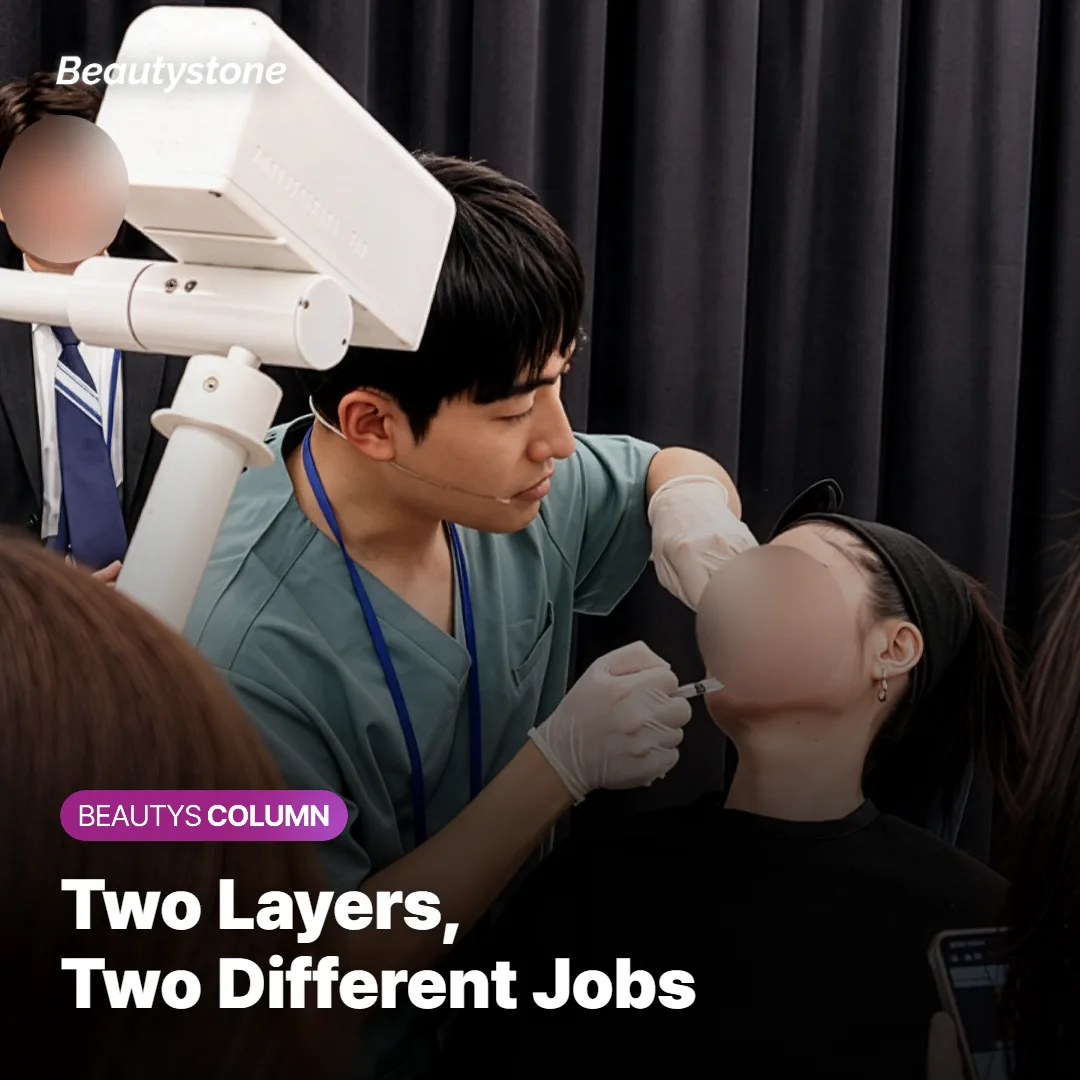
Why Skin Boosters Alone Often Fall Flat
One of the most common questions we hear is some version of: "I've had six sessions and my skin feels better, but why does the line still look the same?"
Usually, the answer comes down to structure. If there's a noticeable dip or fold — often around the upper hip, sometimes called a banana fold — no amount of surface smoothing is going to change that shape. Smoothing the skin over a hollow area just makes the hollow look smoother, not fuller.
Patients who start with skin boosters alone, skipping any volume assessment first, are often the ones who end up disappointed. It's not that the treatment failed. It's that it was solving the wrong problem for that particular case.
This is a case-by-case call, and it's worth having a provider actually look at the area — from the side and from behind — before deciding whether volume needs to be addressed first.
What Combining Filler and Skin Boosters Looks Like
When there's a structural dip involved, providers typically address volume first and layer the skin booster on top once that's settled.
- Step 1 — Volume: Filler is placed in the deeper layer to rebuild lost structure, often in stages rather than all at once.
- Step 2 — Wait: The area is given roughly two to three weeks to settle before anything else is added, since swelling can make it hard to judge injection depth accurately.
- Step 3 — Texture: Skin booster sessions follow, usually spaced three to four weeks apart, refining the skin sitting over the newly restored contour.
The order matters. Skin that's smoothed over a properly supported contour looks tight and even. Skin that's smoothed over a hollow still casts a shadow — texture work alone can't undo that.
This combined approach isn't automatically the right call for everyone, and it comes with trade-offs: it typically costs more than a skin booster alone, and recovery takes a few extra days. For anyone dealing with an actual structural dip, though, it tends to be the more reliable route to the result they're picturing.

Side Effects and Recovery
Soreness after sitting for long periods is common in the first day or two, especially after filler. Most people describe it as a dull ache rather than sharp pain, and it typically eases up within a few days.
Bruising is possible with either treatment, though it's more noticeable after filler. Whether you bruise largely comes down to individual factors like skin type and vessel fragility — some people don't bruise at all, others do every time.
Swelling and tenderness usually settle within five to seven days. If soreness sharpens, spreads, or comes with fever or spreading redness, that's outside the range of normal recovery — contact your provider right away rather than waiting it out.
Long drives, flights, or any schedule that involves sitting for hours are worth avoiding for about three days after treatment, just to keep pressure off the area while it settles.
How Much Does It Cost?
Pricing for hip treatments varies a lot depending on how much filler is needed, which product is used, and how many skin booster sessions are planned — a combined protocol will generally cost more than skin boosters alone, simply because it involves two treatments instead of one.
Because the right combination depends on your specific anatomy, a consultation is really the most reliable way to get an accurate number. Clinics that quote a flat price without seeing the area in person are worth being cautious about.
If you want a general sense of current pricing and any active offers, that's usually easiest to check directly — see current offers at /en/promotion.
Who's a Good Candidate?
Skin boosters alone tend to work well for people whose main concern is texture — dimpling, dullness, or looseness — without any real change in shape or volume.
The combined approach makes more sense for anyone with a visible dip, flattened area, or fold, especially around the upper hip. If you're not sure which category you fall into, that's a completely normal thing to be unsure about — it's genuinely hard to judge your own hip contour objectively in a mirror.
A provider assessing you from multiple angles, standing and possibly sitting, is usually able to tell fairly quickly whether the issue is surface-level, structural, or both.
The Bottom Line
A hip skin booster is a texture treatment, not a shaping treatment. If the line itself needs to change, structure has to be addressed first, typically with filler, before a skin booster can do its job effectively.
Like any procedure, combining the two comes with trade-offs — more cost, a bit more downtime, and a longer overall timeline.
Ultimately, the choice depends on your anatomy, your goals, and your budget, and it's not something you can fully judge from a mirror alone.
If you're considering a hip skin booster or filler, a consultation is the best way to find out what fits you. Beautystone is a dermatology clinic in Seoul's Hapjeong area — see current offers at /en/promotion.
Frequently Asked Questions
Q1. Do I need filler and skin boosters on the same day?
Not usually — most providers space them out. Filler is placed first to rebuild volume, and the area is given about two to three weeks to settle before skin booster sessions begin. Same-day treatment can make it harder to judge injection depth accurately because of swelling.
Q2. How many sessions do I need, and how long do results last?
Skin boosters are typically done in three to four sessions, spaced three to four weeks apart, with touch-ups every few months after that. When filler is part of the plan, the volume itself tends to last longer than the texture improvement — your provider can walk you through a realistic timeline once they've assessed your area.
Q3. Will sitting be painful, and will I bruise?
Some soreness when sitting for long stretches is common in the first day or two, and it usually fades within about a week. Bruising varies from person to person — some people don't bruise at all, others do more easily — but it's rarely something that lasts more than a few days.
Q4. Is a hip skin booster ever enough on its own?
Yes, if texture and tone are the main concern and there's no real dip or flattened area to correct. If the shape of the hip line itself needs to change, a skin booster alone typically isn't going to get you there — that's a volume problem, not a texture problem.

