Cheek Filler: Will It Make My Face Look Wider?
Cheek filler adds volume, but whether your face looks wider depends on where the hollow sits and how much goes in. Here's how to tell a front cheek hollow from a side cheek hollow, and what to check before you fill.

Wi Young-jin
Chief Director, Myeongdong
Cheek filler adds volume, so the area you fill will sit a little fuller, but whether your whole face reads as wider depends on where the hollow is, how much goes in, and the face shape you started with. That's why a hollow toward the front of the cheek and a hollow on the side cheek are planned separately, with your face checked from the front, at an angle, and in profile.
In this article, we'll use a 3D imaging study of how skin expands after cheek filler to show how to match each photo angle with the spot you'd want filled.
The short version
- Whether cheek filler makes your face look wider comes down to matching the spot you fill with the angle you care about.
- In one hyaluronic acid filler group, cheek volume measured on 3D photos rose by about as much as was injected.
- Your first call: decide whether front-view width or your angled contour is the bigger worry.
- Some materials, like calcium-based filler (CaHA), can't be easily dissolved, so check the ingredient first.
Does Filling Hollow Cheeks Make Your Face Look Wider?
It can, and the direction your hollow faces is a big part of the answer. When filler goes into the cheek, the skin expands outward from the injection point, at a right angle to the skin's surface. Researchers saw that same pattern again and again when they photographed 77 people with a 3D camera before and after hyaluronic acid filler in the cheeks.
Hollow cheeks don't all start in the same place, either. Volume can drop in the skin, the shallow fat, the deep fat, or the bone, and the layer that changed shapes which layer gets filled and with what material. A review of how each facial layer ages describes filler rising in a narrow peak or spreading in a broader swell, depending on the layer it sits in.
That 3D pattern tells you which way the skin moves. Face width wasn't measured separately for filler placed at the front of the cheek versus the side, so the study can't tell you how much wider your own face would look. What you can do is check in the mirror whether your hollow faces forward or faces out toward your ear. That tells you which angle to bring up in your consultation.
It also turns "Will my face get bigger?" into a more useful question: how much filler, in which part of the cheek, on your particular face shape.

Front Cheek or Side Cheek: Which Hollow Shows in Your Photos?
The same complaint, "my cheeks look sunken," can point to different spots depending on the photo. Some people see a shadowed dip on the side cheek below the cheekbone in a straight-on photo. Others notice that the front of the cheekbone looks flat in an angled shot. Whichever photo bothers you is the first clue to where filling would go.
| What bothers you | Area usually checked | Angle to check too | What to agree on at your consultation |
|---|---|---|---|
| The front of the cheekbone looks flat in angled photos | Front cheek | Forward fullness in angled and profile views | How far forward you'd like it to look |
| The side cheek below the cheekbone looks hollow from the front | Side cheek | Face width in the front view | How much added width you're comfortable with |
| Both photos look hollow | Front and side cheek | Front-view width and angled contour together | Which angle to prioritize first |
Once you know whether the front photo or the angled photo is the problem, the same hollow can be filled over a different range. Keep in mind that the angle pairings in this table come from the principle that skin expands outward over the filler. They aren't values measured in a study.
"Side cheek" is also an everyday name for the side of the face more than an anatomical one, so the actual extent of your hollow gets confirmed by touch during the exam. Your left and right hollows can differ, too, so compare your left and right angled photos separately.
Prominent Cheekbones With a Hollow Below: Should You Fill It?
Start by working out why your cheekbones stand out. Under overhead light, look for a band of shadow right below the cheekbone. Then check whether, without any shadow, the bone itself juts out to the side. Separating a dip between the cheekbone and cheek from the bone itself keeps you and your provider aiming at the same goal.
If the dip is what bothers you, write down two wishes separately: whether you want the shadow below the cheekbone to look softer, and whether you'd rather avoid a wider front view. Which of the two matters more changes how much of the hollow gets filled.
Cheek filler doesn't make the cheekbone itself smaller. If the size of the bone is your main concern, it's worth comparing other options alongside filler.
If Volume Rises by What's Injected, Does the Filler Type Matter?
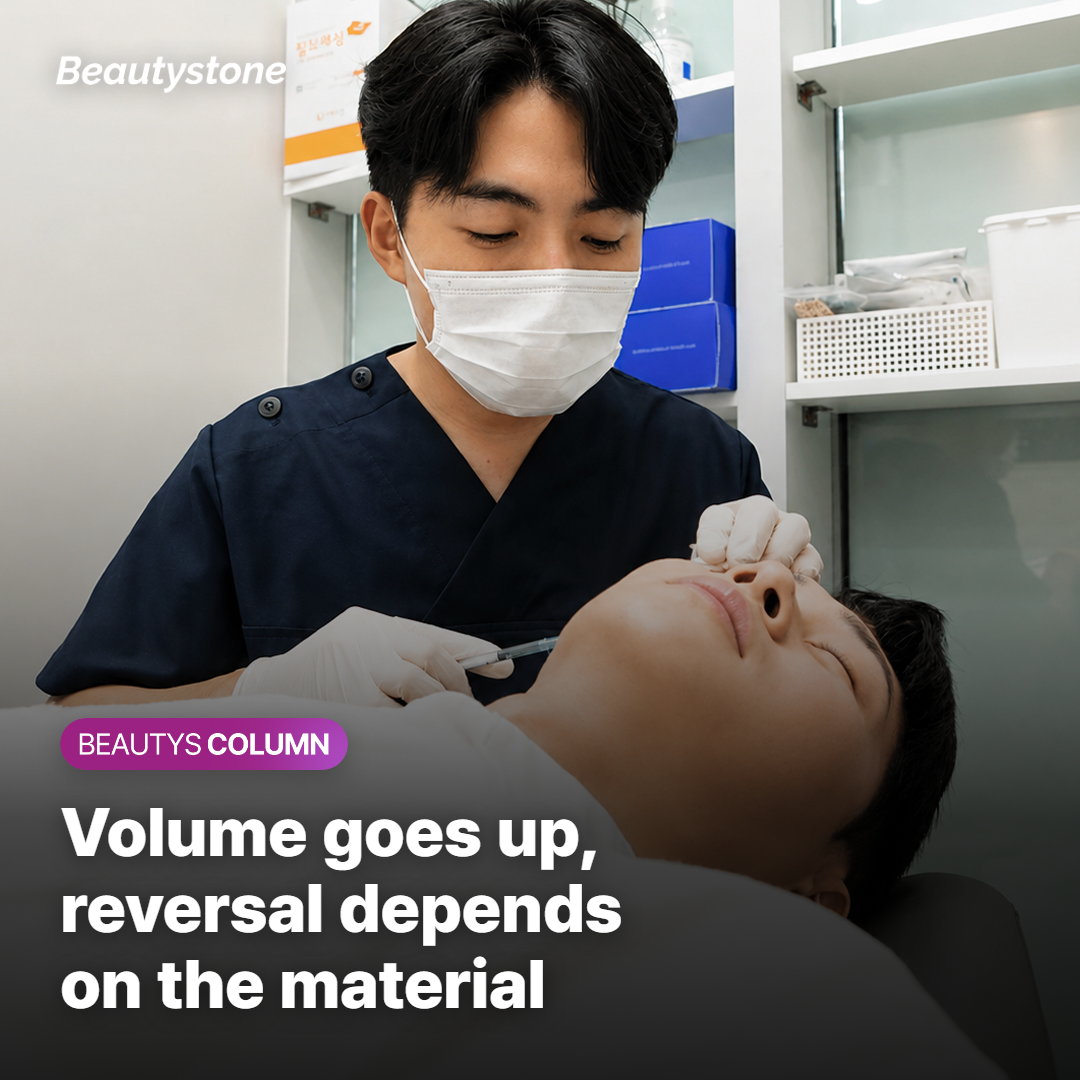
Yes. How volume builds and how easily it can be reversed both vary by material. One study randomly split 148 Chinese participants with cheek volume loss into a group treated with one hyaluronic acid filler product and a group that had no treatment. Within the treated group, cheek volume measured on 3D photos rose by roughly the same amount that was injected.
That's the result for a single product, so it doesn't automatically carry over to fillers made of other materials. Still, cheek filler works by adding volume, so expect the contour where it goes to come forward or out by about as much as you fill. How much you notice differs from person to person.
Reversal is where the ingredient really matters. Some hyaluronic acid fillers have a way to be dissolved, but calcium-based filler (CaHA) can't be easily dissolved. Permanent fillers and other materials that aren't hyaluronic acid may be hard or impossible to take out, and the removal itself carries its own risks. If looking bigger is a real worry, ask about the ingredient just as carefully as the amount.
Cheek Filler Side Effects: When Is Swelling Normal, When Is It Urgent?
Right after treatment, part of the size you see is swelling. Bruising, redness, swelling, pain, tenderness, and itching tend to show up soon after injection, and many of them settle within a few days to a few weeks. Don't judge your final contour by how your cheeks look during that window.
The signs below need different handling from ordinary swelling.
- If the skin near the injection site turns white, gray, or blue, don't wait. Get medical care right away.
- Unusual pain that's different from what you expected also needs medical care right away.
- If an open or draining wound or a sore develops at the injection site, see a doctor.
- If your vision blurs or changes, go to the nearest emergency room right away.
- If you suddenly have trouble speaking, numbness or weakness in your face, arms, or legs, difficulty walking, a drooping face, a severe headache, dizziness, or confusion, go to the nearest emergency room right away.
Filler accidentally getting into and blocking a blood vessel is described as unlikely. When it does happen, it can lead to serious and permanent harm, including tissue death (necrosis), vision problems up to and including blindness, and stroke*.
*Based on the US FDA's information on dermal fillers.
If any of these signs show up, a chat message to the clinic doesn't replace an in-person exam.

Getting Cheek Filler During a Trip to Seoul
If you're fitting cheek filler into a visit to Korea, three things are worth planning ahead.
First, your flight. Unless you were sedated that day, there's no need to postpone your flight home because of cheek filler.
Second, what one visit can do. Filler is one of the treatments where the shape changes the same day, but early swelling is mixed into what you see at first. The contour you see on the day you fly home may not be the settled result, so plan to compare photos again after you're back.
Third, after you're home. If something looks off, you can contact the clinic through its consultation chat and include photos. If any of the warning signs above appear, get care at a local hospital or emergency room first.
The Bottom Line: Pick the Angle Before You Pick the Amount
Like any filler treatment, cheek volume comes with trade-offs, and the result depends on where it goes and how much is used. Before your appointment, take one front photo and one angled photo from each side in the same lighting, and mark the one where the hollow bothers you most. Once the swelling has gone down, retake the same three photos in the same spot so you can see for yourself how much your front-view width changed.
In the consultation, a good first question is: "Is my hollow more about front-view width, or about the front of my cheek in angled views?" That question gets you to which part of the cheek to fill, and how much, more quickly. Beautystone is a clinic in Seoul's Hapjeong area. When you reach out, include your three photos, the change you want and the change you'd rather avoid, and the ingredient and timing of any filler you've had before.
Sources
- What dermal fillers are approved for, common reactions, and warning signs of a blocked blood vessel (US FDA)
- How skin expands after cheek filler, a 3D camera study of 77 people (Plast Reconstr Surg, 2018)
- 148 people with cheek volume loss split into a filler group and a no-treatment group (J Cosmet Dermatol, 2024)
- Why calcium-based filler (CaHA) is hard to dissolve, with a preliminary removal study (Aesthet Surg J, 2023)
- The layers of the cheek and how filler swells depending on the layer it sits in, a review (Clin Cosmet Investig Dermatol, 2021)
Frequently Asked Questions
Q. Can cheek filler make your face look smaller?
A. Cheek filler adds volume, so it doesn't shrink the size of your face. Softening the shadow in a hollow can change how your contour reads, but how much isn't something anyone can promise ahead of time. Because the skin over cheek filler expands outward, a better goal than looking smaller is deciding which angle you want the hollow to show less from.
Q. What if I don't know what filler I had in my cheeks before?
A. If you don't know what filler is already in your cheeks, ask the clinic that treated you for the product name and the date first. Whether a filler can be dissolved depends on its ingredient, so this is key information for deciding whether to add more on top and which spot to fill. If you can't find out, tell your provider that you don't know at the consultation.
Q. How old do you have to be to get cheek filler?
A. In the US, the FDA has approved dermal fillers for adults age 22 and older, and their safety in people under 22 hasn't been established. Approved ages and uses can differ by product in other countries, including Korea, so check the specific product's approval when you choose one at your consultation.
Q. When can you judge the final shape after cheek filler?
A. Right after cheek filler, swelling is mixed into the size you see, so take another look once bruising and swelling settle, a few days to a few weeks later. Retaking photos with the same lighting and angles as your before photos makes it easier to see how much your front-view width and angled contour actually changed. While swelling remains, don't decide on adding more based on size alone.