

Sagging Pores at 40: Why Won't Peels Fix Them?
Elongated, teardrop-shaped pores in your 40s usually trace back to collagen loss deep in the dermis, not oiliness. Here's why peels rarely help, and how microneedle RF treatments like Secret RF target the layer that actually matters.


Planning a trip to Seoul?
If you've noticed the pores along your cheeks starting to look less like small dots and more like tiny teardrops pulling downward, you're not imagining it — and you're definitely not alone. It's a complaint we hear constantly from patients in their 40s, and it usually comes with the same frustrated addendum: "I've been getting peels for over a year, and if anything, my pores look worse." In this article, we'll cover why pores change shape as skin ages, why peels and toning treatments often can't reach the actual problem, and how Secret RF, a microneedle radiofrequency treatment, approaches sagging pores from a completely different angle.
What Makes Pores "Sag" Instead of Just Look Large?
Pores in your 20s and pores in your 40s can look similar at a glance, but they're usually not the same problem. In your 20s, enlarged pores are typically an oil story — higher sebum production stretches the opening of the pore, so it looks wide and round. That's why oil control, gentle exfoliation, and peels tend to help at that age.
By your 40s, a different mechanism is often at play. The collagen network in the dermis that once held each pore firmly in place gradually loses structure with age and years of gravity. Instead of a round opening, the pore stretches into an elongated, downward-facing shape — sometimes called a "teardrop" pore. It's less about oil and more about lost structural support underneath the skin.
- 20s pores: round, often oilier, respond to peels and oil-control routines
- 40s pores: elongated or teardrop-shaped, tied to dermal collagen loss, don't respond well to surface treatments
This distinction matters because treating a structural problem like a surface problem rarely gets you anywhere, and in some cases, aggressive peeling can even make skin look more deflated around the pore, exaggerating the sagging appearance.
Why Peels and Toning Rarely Fix Sagging Pores
Chemical peels and standard toning lasers are excellent tools, but they generally work on the epidermis and the very top of the dermis — roughly 0.1 to 0.3 millimeters deep. That's enough to refine texture, fade some surface pigment, and help with genuinely oily, enlarged pores.
The structural support for a sagging pore, though, tends to sit much deeper — around 1.5 to 2 millimeters down, in the mid-dermis where collagen fibers are woven together. A peel simply doesn't reach that far, no matter how many rounds you do. That's the pattern we see over and over: patients who've had a dozen peels over a year with little to no change in how their pores look, because the treatment and the problem were never at the same depth.
How Secret RF Targets the Deeper Layer Peels Can't Reach
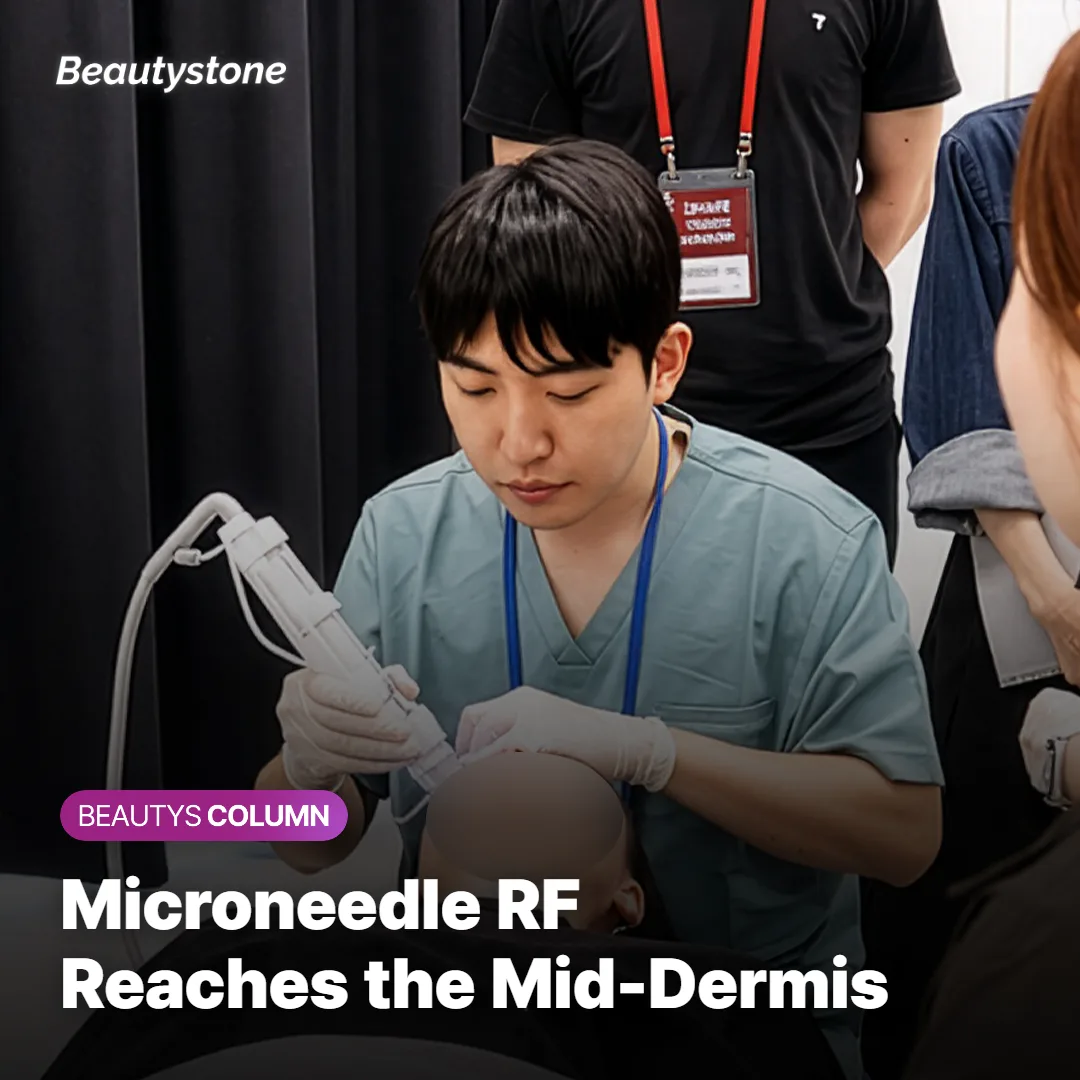
Secret RF is a microneedle radiofrequency device, meaning it uses very fine insulated needles that go directly into the skin rather than relying on light or acid to work from the surface down. Because the needles themselves deliver the energy, the depth can be adjusted with a fair amount of precision.
- 0.5mm: upper dermis — mainly used for overall texture and fine lines
- 1.5mm: mid-dermis — the depth most often used for sagging, teardrop-shaped pores
- 3.5mm: deep dermis and subcutaneous layer — used for more significant laxity
For sagging pores in your 40s, providers typically dial the needles to around 1.5 to 2.0 millimeters, right into the mid-dermis where the collagen framework has weakened. The radiofrequency energy at that depth creates a controlled thermal effect that prompts the skin to rebuild collagen over the following weeks, gradually giving the pore structure something to hold onto again.
Because sagging pores rarely show up as a lone concern in your 40s — they tend to arrive alongside some loss of firmness, a bit of pigment, and finer lines — Secret RF is often layered into a broader plan rather than used as a single fix-all. Your provider will typically assess your skin as a whole before mapping out depths and session counts.
What to Expect: Timeline From First Session to Results
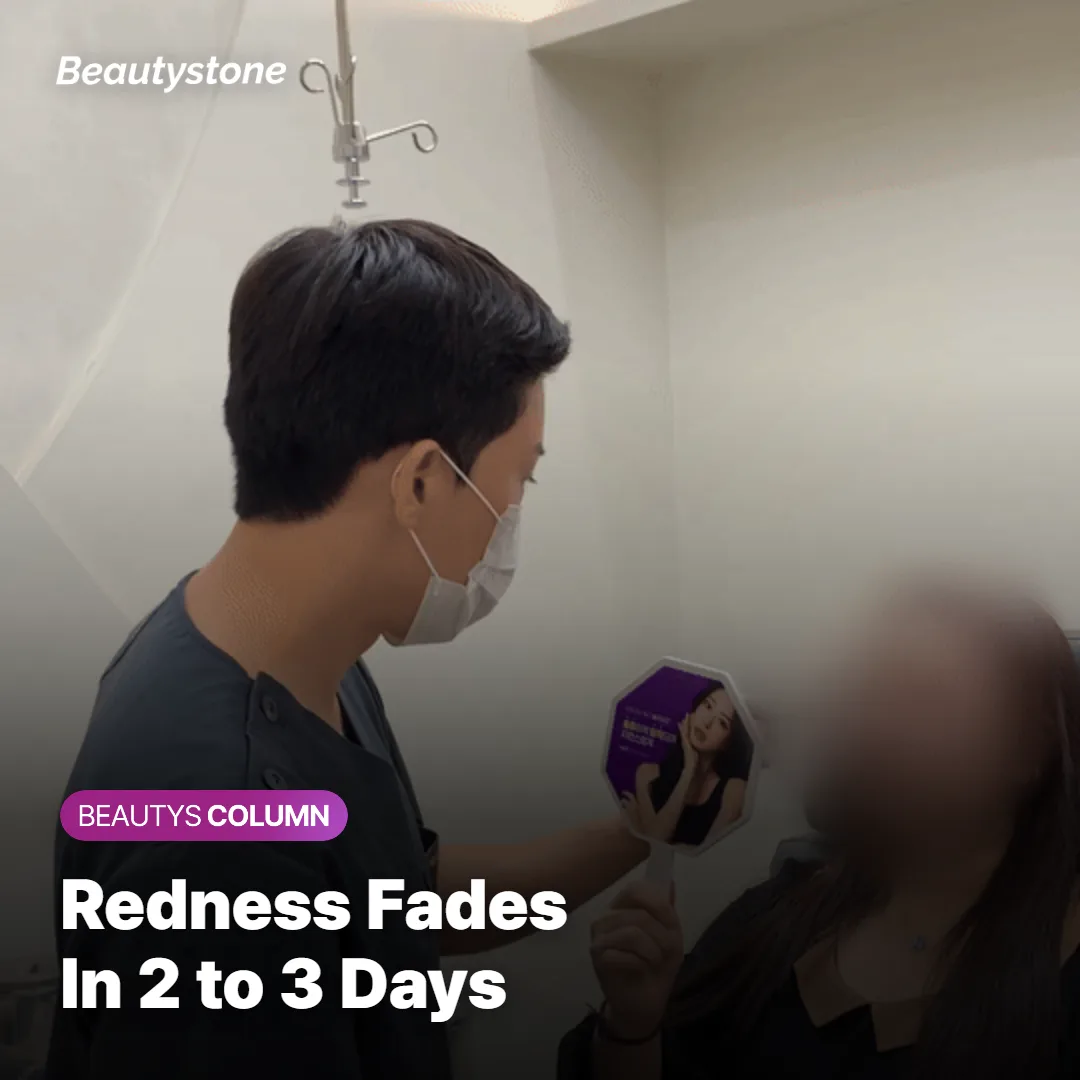
On the day of treatment, a topical numbing cream is applied first, but you'll likely still feel a quick, prickling sensation as the needles pass through the skin — most patients describe it as tolerable rather than comfortable. Redness and small pinpoint crusts are common for about two to three days afterward, and they should settle on their own without any special intervention.
Results build gradually rather than showing up overnight. For sagging pores tied to collagen loss, a typical plan is three sessions spaced about a month apart. Many patients report their first noticeable difference — often described as "makeup finally sits flat instead of pooling in my pores" — sometime after the second or third session, once new collagen has had time to organize.
Individual results vary depending on how much structural support was lost and how your skin responds, but improvement generally holds for around a year to a year and a half. After that, an occasional single "booster" session every six months to a year tends to help maintain the effect.

Side Effects and Safety Considerations
Because Secret RF involves needles penetrating the skin, some discomfort during the session is expected, even with numbing cream on board. Afterward, redness and tiny crusted dots at each needle site are common for two to three days and are considered a normal part of healing — not a complication.
A few safety notes worth keeping in mind:
- Don't pick at crusts. Let them fall off on their own to avoid scarring or uneven pigment.
- Skip saunas, alcohol, and intense workouts for about a week after treatment.
- Sunscreen is non-negotiable during healing — unprotected sun exposure raises the risk of post-treatment pigmentation.
- Pregnancy and pacemakers are generally considered contraindications for this treatment; be upfront with your provider about your medical history.
Redness that lingers beyond a few days, spreading warmth, or any sign of infection isn't typical — if that happens, contact your provider or seek medical care right away rather than waiting it out.
How Much Does Secret RF Cost?
Pricing for Secret RF varies quite a bit depending on the clinic, how many sessions your plan calls for, and how much of the face is treated. Because sagging pores are often addressed alongside other concerns in a combined plan, the total can shift based on what else is included in a given visit.
Rather than guessing at a number that may not reflect what a specific clinic charges, the most reliable way to get an accurate figure is a consultation, where a provider can map out a session plan based on your skin. Beautystone, a dermatology clinic in Seoul's Hapjeong district, lists current offers and package pricing at /en/promotion, which is worth checking before you book.
Are You a Good Candidate for Secret RF?
Secret RF tends to be a good fit if your pores look elongated or teardrop-shaped rather than simply wide and round, especially if you're in your 30s to 50s and surface treatments like peels haven't moved the needle. It's also a reasonable option if you're dealing with sagging pores alongside some general loss of firmness, since the mid-dermis depth addresses both at once.
Because the treatment relies on direct needle contact rather than light, it's generally considered workable across a wider range of skin tones than some laser-based toning treatments, though your provider will still evaluate your specific skin and history before treatment. It's typically not recommended during pregnancy or for patients with a pacemaker, and anyone with an active skin infection or breakout in the treatment area should wait until it clears.
If your main concern is oily, visibly clogged pores rather than a sagging or stretched shape, a different approach focused on oil control may serve you better — this is exactly the kind of judgment call worth bringing to a consultation rather than deciding on your own.
The Bottom Line
Sagging, teardrop-shaped pores in your 40s usually aren't an oil problem, and they don't respond well to treatments built for one. A few points to keep in mind:
- Elongated pores are typically tied to collagen loss roughly 1.5 to 2mm deep in the dermis, well below where most peels and toning lasers work.
- Secret RF uses adjustable-depth microneedles to deliver radiofrequency energy directly into that layer, prompting new collagen to form.
- A typical plan runs three sessions about a month apart, with results building gradually and lasting roughly a year to a year and a half.
- Redness and light crusting for a few days is normal; anything that worsens or spreads warrants a call to your provider.
Like any procedure, it comes with trade-offs — some discomfort during treatment and a short recovery window — and it isn't the right call for every type of pore concern. Ultimately, the choice depends on your skin, your goals, and your budget. If you're considering Secret RF for sagging pores, a consultation is the best way to find out what fits you. Beautystone is a dermatology clinic in Seoul's Hapjeong area — see current offers at /en/promotion.
Frequently Asked Questions
Q1. Will Secret RF make my pores disappear completely?
Not entirely, and it helps to set that expectation up front. Pores are a normal part of skin structure, so no treatment removes them outright. What Secret RF can do is help rebuild the collagen support around a sagging, teardrop-shaped pore so it looks closer to its original size and direction, which most patients notice as makeup sitting more evenly on the skin.
Q2. How many sessions do I need, and how long do results last?
For sagging pores in your 40s, a typical plan is three sessions spaced about a month apart, though your provider may suggest four or five if the sagging is more pronounced. Results tend to hold for roughly a year to a year and a half, after which an occasional booster session every six months to a year helps maintain the effect.
Q3. What does recovery look like after treatment?
Expect some redness and tiny pinpoint crusts at each needle site for about two to three days. It's important not to pick at the crusts and to let them fall off naturally. Most providers also recommend skipping saunas, alcohol, and intense workouts for about a week and staying diligent with sunscreen while your skin heals.
Q4. How much does Secret RF cost, and where can I check current pricing?
Cost depends on the clinic, the number of sessions, and how much of the face is treated, so it varies from person to person. Rather than relying on a rough estimate, a consultation is the most reliable way to get an accurate plan and price. Beautystone, a dermatology clinic in Seoul's Hapjeong district, lists current offers at /en/promotion.