Laser Hair Removal for Men: 2 Things to Check
If you've done five, ten, or more laser sessions and your beard still looks about the same, the problem usually isn't the laser itself — it's how it's being used.

Last updated: July 2026
If you've done five, ten, or even more laser sessions and your beard still looks about the same by the next morning, you're not imagining it — and you're definitely not alone.
Plenty of guys walk into laser hair removal expecting a fairly simple process: point the laser at the hair, repeat a few times, done. When it doesn't pan out that way, it's easy to assume the technology just doesn't work as well on coarser facial hair. That's rarely the real story.
In this article, we'll cover how laser hair removal actually works on men's facial hair, why results can vary so much from one guy to the next, and the two factors — energy settings and equipment — that tend to make or break the outcome.
How Does Laser Hair Removal Actually Work on Men's Facial Hair?
The short answer? It's not just about singeing off the hair you can see. A properly performed treatment targets the stem cells inside the hair follicle itself, aiming to stop the hair from growing back at all — not just trimming it down temporarily.
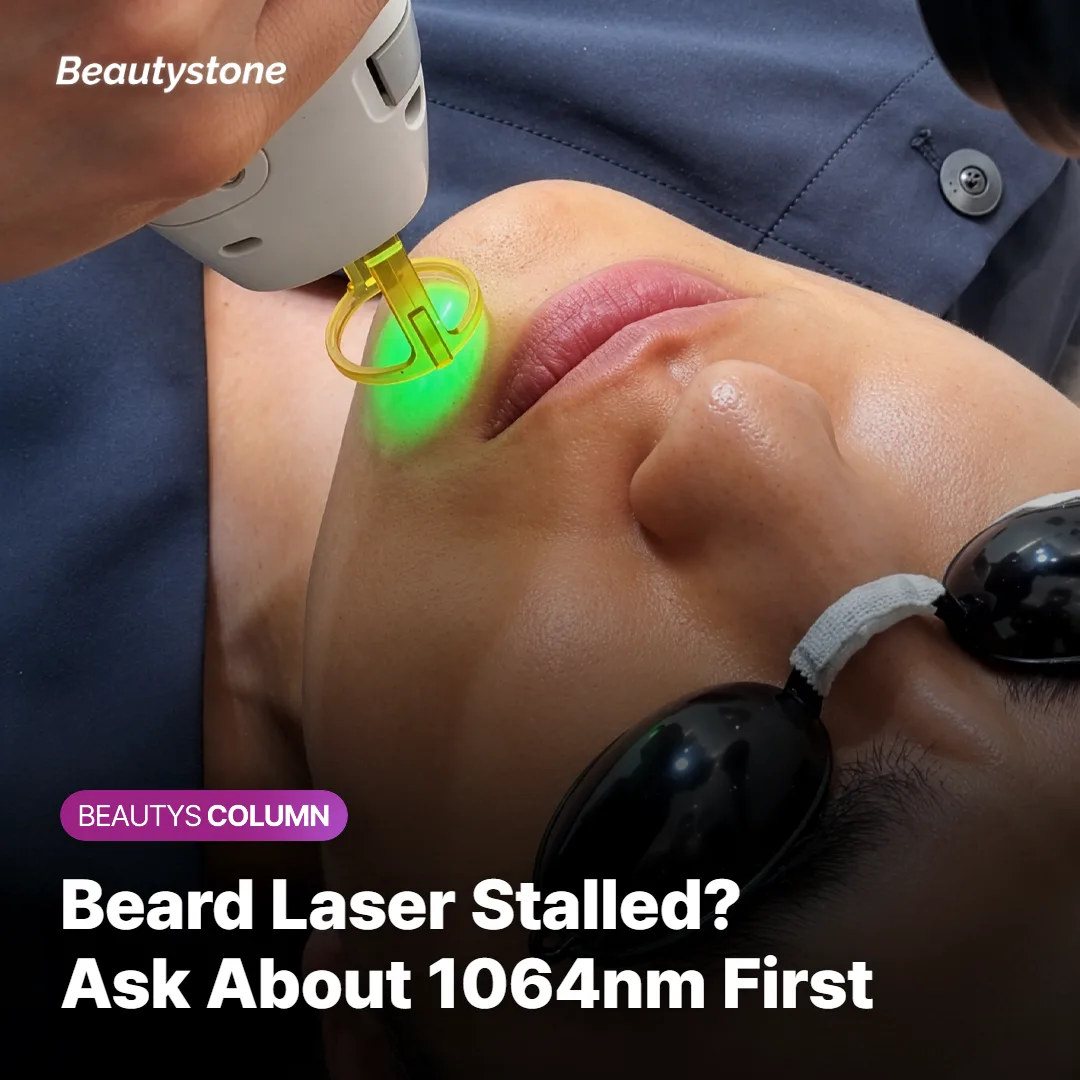
Here's how it works: the laser emits a specific wavelength that's absorbed by melanin, the pigment in the hair shaft. That absorbed light converts to heat, and the heat travels down into the follicle and the stem cells that regulate regrowth. When enough heat reaches those cells, they're damaged enough that the hair stops cycling back the way it used to.
Done consistently, this is what causes coarse stubble to gradually get finer and less dense — and, eventually, cuts down how often you need to shave in the first place.
Why Results Vary So Much From Guy to Guy
Not everyone gets the same outcome from the same number of sessions, and that's normal. Hair thickness, root depth, skin thickness, and melanin concentration are all different from person to person — sometimes even from one part of the face to another on the same guy.
A few examples show how much this matters:
- Chin and upper lip: Hair here tends to be thicker and rooted deeper, so it typically needs higher energy to get a real effect.
- Fine, peach-fuzz-type hair: Ironically, this can be trickier — it usually responds better to a shorter pulse width and a more precise setting rather than just cranking up the power.
- Darker or more sun-exposed skin: Higher melanin in the skin itself, not just the hair, changes how much energy can be used safely.
Treat every area the same way, with the same blanket settings, and you'll usually end up with one of two outcomes: barely-there results, or unnecessary irritation. That's exactly why "I've had ten sessions and nothing changed" is such a common complaint — and it's rarely about the number of sessions themselves.
The First Key Factor: Getting the Energy Setting Right
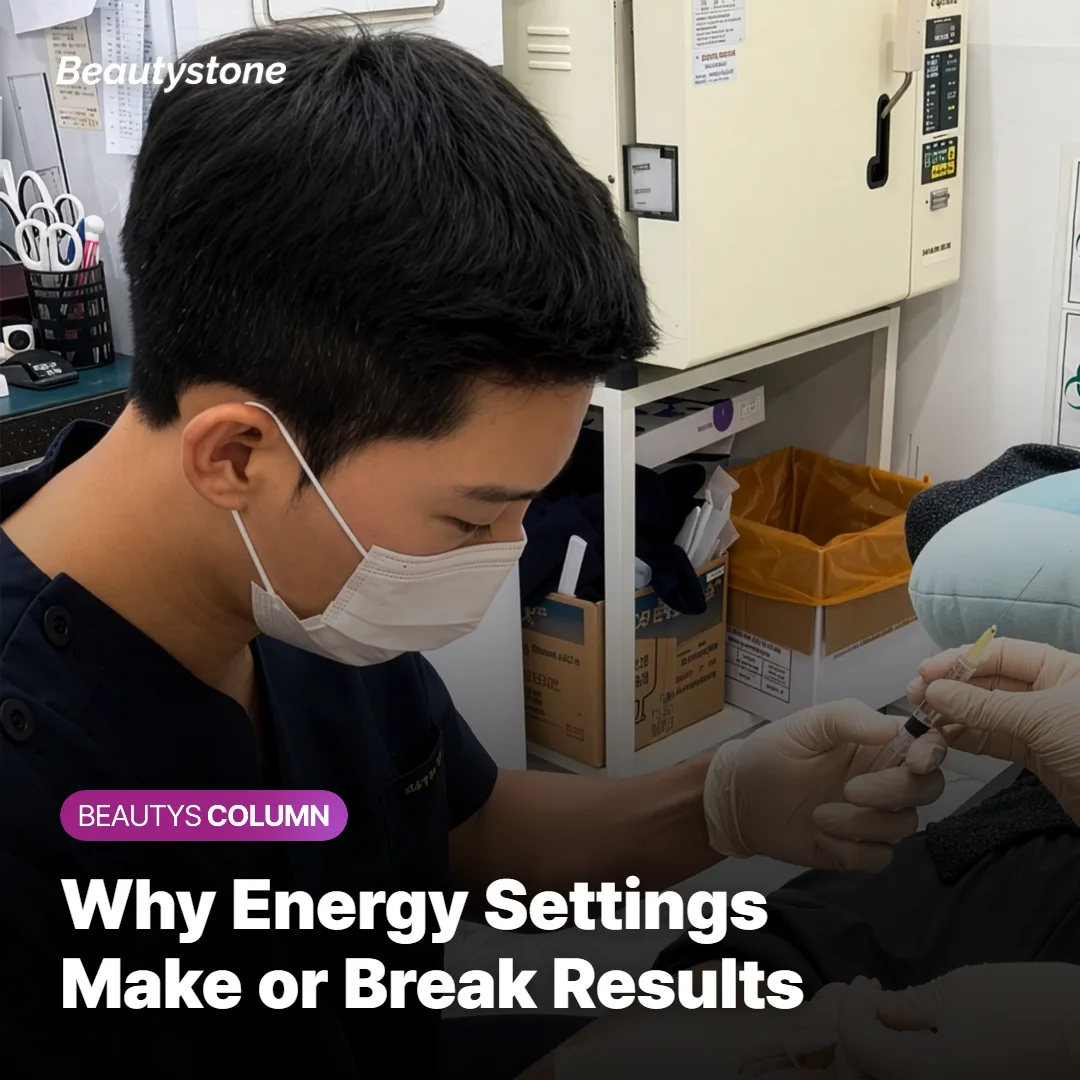
If there's one variable that determines whether a treatment actually works, it's the energy setting. Destroying those follicle stem cells takes a real amount of heat — but providers also have to weigh that against the risk of burns or pigmentation changes.
That trade-off pushes some clinics toward the cautious side, dialing the energy down to avoid any visible reaction. The problem: hair treated at too low an energy level may look thinner for a few weeks, then grow right back, because the stem cells were never damaged enough to stop it.
Go too far in the other direction, and the risks flip. Excess energy doesn't just affect the follicle — it can damage the surrounding skin tissue, too.
- Too low: Hair looks reduced short-term, then returns to its normal thickness and growth cycle.
- Too high: Increased risk of burns, folliculitis, or post-inflammatory pigmentation.
- Just right: Settings calibrated to your specific hair thickness, depth, and skin tone — which is exactly why a cookie-cutter setting doesn't work well for most men.
Men's facial hair is generally coarser and rooted deeper than hair elsewhere on the body, which narrows that margin even further. Too little energy and nothing really changes; too much, and you're dealing with discomfort and downtime you didn't sign up for. Whether you see real change after five sessions or are still waiting after ten often comes down to how carefully that setting was calibrated to you in the first place.
The Second Key Factor: Why Your Laser Device Matters
Energy settings are only half the equation — the device delivering that energy matters just as much, and it's the part people tend to overlook.
Not all laser platforms are built the same. Wavelength, pulse width, and cooling method all vary by device, and each of those changes how effective, and how comfortable, a session actually is.
Pulse width is especially important for treating a mix of coarse and fine hair in the same session, which is basically every man's beard area. Some older devices only offer a narrow pulse-width range, which means they can struggle with hair that's unusually thin or unusually deep-rooted.
The GentleMax Pro Plus, for example, allows pulse width to be adjusted in increments as small as 2 milliseconds — a level of precision that lets a provider dial in a setting for coarse chin hair and then adjust again for finer, shallower hair, rather than using one setting for the whole face.
It also comes with a built-in gas cooling system that cools the skin surface during the pulse. That matters because it's what allows higher, more effective energy levels to be used more safely — the cooling offsets some of the heat that would otherwise reach the surrounding skin.
If you're weighing laser hair removal, it's worth asking what wavelength and pulse-width range the device offers, and whether it's actually suited to your hair type, rather than just assuming any laser will do.

What to Expect: Timeline and Number of Sessions
Laser hair removal for men isn't a one-and-done treatment, and that's true no matter how well the energy and equipment are dialed in. Hair grows in cycles, active growth, transition, and resting, and the laser can only effectively treat hair that's in the active growth phase at the time of your session.
Because your facial hairs aren't all in the same phase at once, it takes multiple sessions spaced a few weeks apart to eventually catch each hair while it's actively growing.
Most providers plan for five to ten-plus sessions before judging the full result. If you're only a few sessions in, it's genuinely too early to call it a failure. If you're past ten with no real change, that's usually a sign the energy or equipment, not the treatment itself, needs a second look.

Side Effects and Risks to Watch For
Like any energy-based treatment, laser hair removal carries some real risks, and it's worth knowing what's normal versus what's not.
- Redness and mild swelling: Common right after treatment and usually settles within a few hours to a day.
- Temporary sensitivity: The treated area can feel a bit like mild sunburn for a day or so.
- Folliculitis: Inflammation around hair follicles, more likely when energy is set too high for the area.
- Pigmentation changes: Darkening or lightening of the skin, typically tied to excess energy or an inexperienced hand.
- Burns: Rare with proper technique, but a real risk when settings aren't matched to skin tone and hair type.
If you notice blistering, spreading redness, worsening pain, or any signs of infection after a session, seek medical care right away rather than waiting it out.
This is exactly why experience matters so much here. A provider who's used to fine-tuning energy for coarse, deep-rooted male facial hair is generally going to manage this trade-off better than a one-size-fits-all approach.
The Bottom Line: What Actually Determines Your Results
Laser hair removal for men isn't magic, and it isn't a scam either, but it is more technique-dependent than a lot of people expect going in.
- The laser works by using heat to damage the stem cells inside the hair follicle, not just by singeing visible hair.
- Energy that's too low won't create lasting change; energy that's too high raises the risk of burns and pigmentation issues.
- The device matters. Pulse-width flexibility and cooling technology, like on the GentleMax Pro Plus, can make coarse and fine hairs both treatable safely.
- Multiple sessions, usually five to ten or more, are needed because of how hair growth cycles work.
Like any procedure, it comes with trade-offs, and individual results vary depending on your hair, skin, and how the treatment is actually performed. Ultimately, whether ten sessions changes everything or changes nothing usually comes down to those two factors, energy and equipment, more than anything else.
If you're considering laser hair removal, a consultation is the best way to find out what settings and approach actually fit your hair and skin. Beautystone is a dermatology clinic in Seoul's Hapjeong area, and current offers are worth checking at /en/promotion.
Frequently Asked Questions
Q1. How many laser sessions does it take to see results on a man's beard?
Because hair grows in cycles, most men need at least five to ten sessions spaced a few weeks apart before judging the full result. Fewer than that, and it's often too early to tell whether the treatment is actually working.
Q2. I've had several sessions and my hair looks the same. Why?
This usually comes down to energy settings that were set too conservatively to avoid burns or pigmentation. When the energy doesn't fully damage the follicle's stem cells, hair can look reduced for a few weeks and then grow back at its normal thickness.
Q3. Does the type of laser device actually make a difference?
Yes. Wavelength, pulse width, and cooling technology all vary by device, and that affects both results and comfort. A device with a wider pulse-width range and a strong cooling system can safely treat both coarse chin hair and finer, shallower hair in the same session.
Q4. What side effects should I watch for after treatment?
Some redness and mild swelling are common and usually settle within a day. Less commonly, energy that's too high for the area can lead to folliculitis, pigmentation changes, or in rare cases burns, so seek medical care if you notice blistering, spreading redness, or worsening pain.