Glabella vs. Nasolabial Filler: Why It Differs
The same filler doesn't work everywhere on your face. Here's why softer, low-viscosity formulas suit the glabella while firmer, more cohesive fillers hold up better in the nasolabial folds.

If you've ever wondered why your glabella lines seem to bounce back within months while your nasolabial folds need touch-ups on an entirely different schedule, the filler itself might be part of the answer. Not every dermal filler behaves the same way, and using one type everywhere on your face is one of the more common reasons results end up looking uneven. In this article, we'll cover why the glabella calls for a soft, spreadable filler, why the nasolabial folds need something firmer and more cohesive, and what tends to happen when the two get swapped.
What Is Filler Viscosity, and Why Does It Matter?
Not all dermal filler is created equal. Two syringes can both be labeled hyaluronic acid filler and still behave completely differently once they're under your skin. The difference usually comes down to two properties: viscosity, or how thick and spreadable the gel is, and cohesivity, or how well the gel holds itself together as one mass instead of separating.
Softer, low-viscosity fillers spread easily and blend into thin, mobile skin. Firmer, high-cohesivity fillers resist spreading — they stay put where they're placed and lift a deeper fold from below. Neither type is better on its own. They're built for different jobs, and using the wrong one in the wrong spot is usually where things start to look a little off.
How Doctors Match Filler to Depth and Movement
Before choosing a filler, an experienced injector is really answering two questions: how deep does this line sit, and how much does this area move? The glabella, the vertical lines between your brows, and the nasolabial folds, the creases running from your nose to the corners of your mouth, sit at opposite ends of both scales.
The glabella is shallow and highly dynamic — it's shaped by the muscles you use to frown, so it's constantly flexing. The nasolabial fold sits deeper and is comparatively static, shaped more by volume loss and gravity than by expression. That combination of depth and movement is what determines whether a soft or firm filler belongs there.
| Glabella | Nasolabial Fold | |
|---|---|---|
| Depth | Shallow, superficial | Deep |
| Movement | High (frown lines) | Low (gravity, volume loss) |
| Filler type | Soft, low-viscosity | Firm, high-cohesivity |
| Risk if swapped | Lumps, visible under motion | Migration, sagging over time |

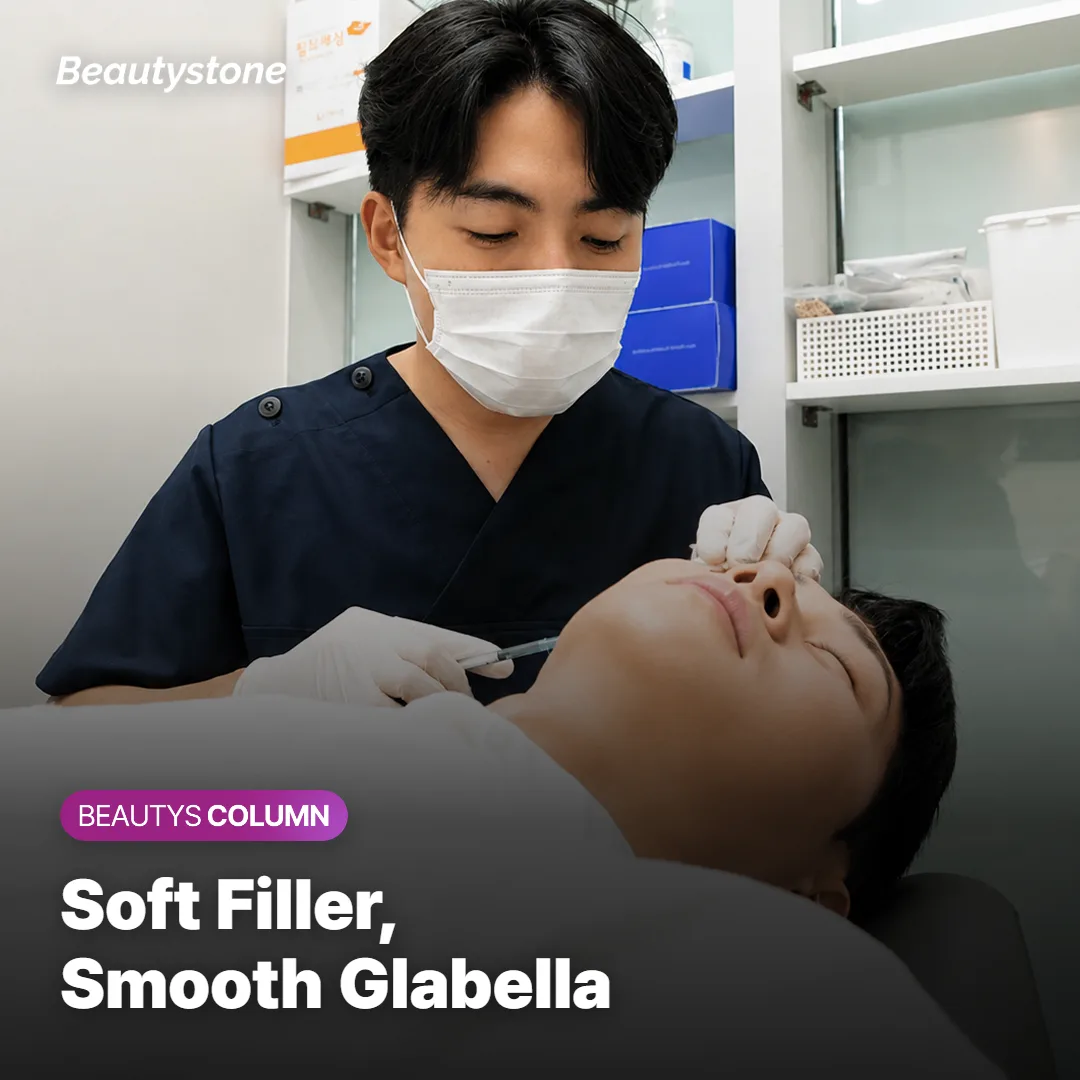
Soft Filler for the Glabella: What to Expect
Placed in the shallow, expressive skin between your brows, a soft filler spreads smoothly instead of sitting as a firm bead you can feel. That matters because this is a spot people move constantly — frowning, squinting, raising an eyebrow. A stiffer product here tends to clump on one side as the muscle contracts, and over time that can look like a small ridge instead of a smooth line.
What it feels like: A soft, hyaluronic acid-based gel injected in small amounts just under the skin's surface. What to expect: Minimal lumping, natural movement when you frown, and a softened line rather than a frozen one. Bruising and mild swelling are common for the first few days.
Firm Filler for the Nasolabial Folds: What to Expect
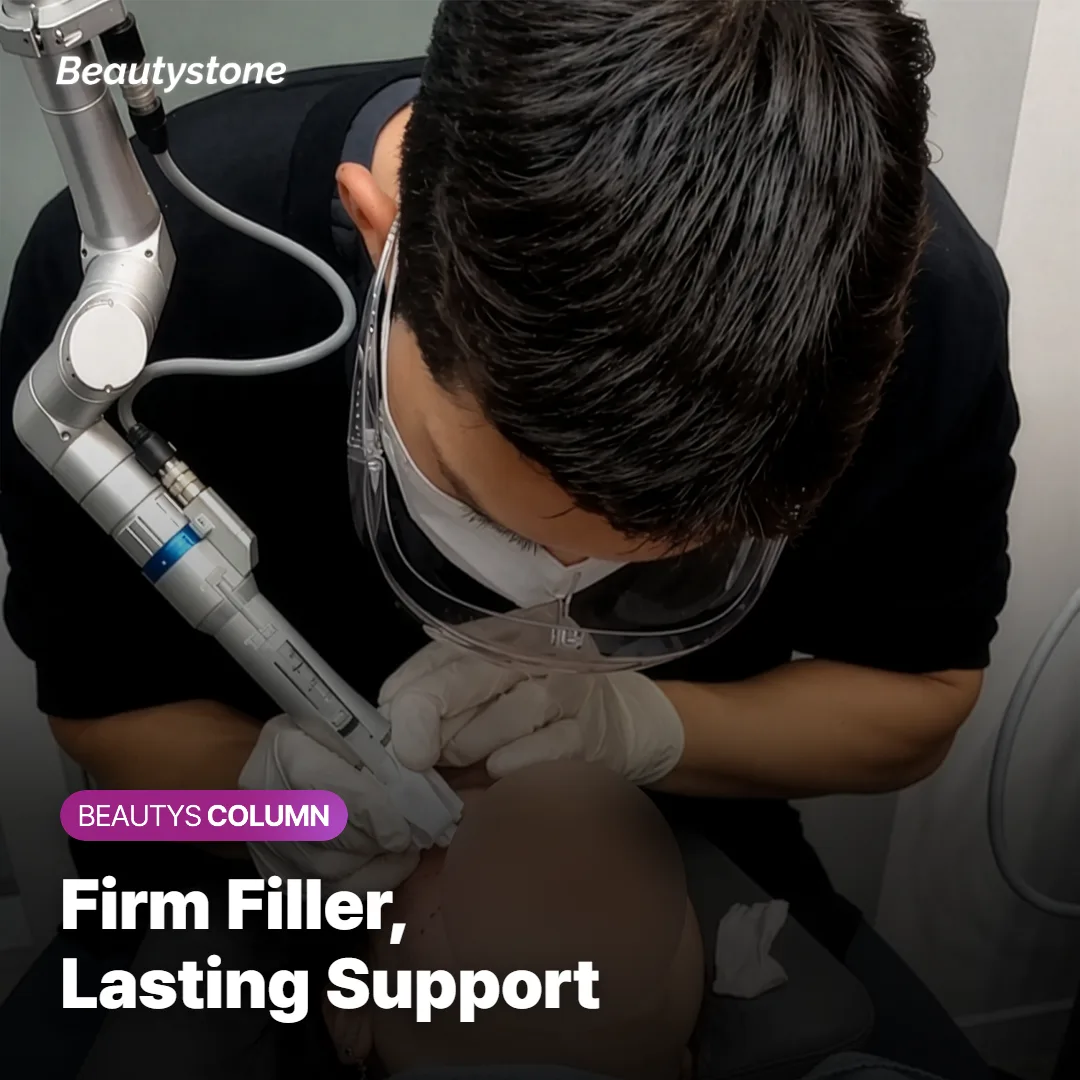
The nasolabial fold needs support, not just filling. Because this crease sits deeper and is shaped more by lost volume than by muscle movement, a filler here has to hold its shape and lift the line from underneath instead of simply smoothing the surface.
A soft filler placed in this area tends to spread out sideways instead of staying put, which is why some patients come back a few months later saying the crease didn't really lift, or that the area near their mouth looks fuller and heavier than expected. A firmer, more cohesive filler resists that spreading and holds its position over time.
What it feels like: A denser gel placed in a deeper layer, sometimes with a cannula instead of a needle. What to expect: A visible lift right after treatment, some firmness under the skin for the first week or two, and results that tend to hold up longer than soft filler placed in the same spot.
Side Effects & Risks
Both soft and firm fillers carry the same general risks: redness, swelling, bruising, and mild tenderness at the injection sites. These are common and usually settle within a few days to a week.
- Mismatched viscosity: the specific risk this article is about. Soft filler placed in a deep, static area like the nasolabial fold can migrate or lose its lift over time. Firm filler placed in a shallow, dynamic area like the glabella can feel lumpy or bunch up when you frown.
- Vascular occlusion: rare but serious — filler injected into or compressing a blood vessel. Warning signs include sudden severe pain, skin that turns unusually pale or dusky, or blanching that doesn't resolve.
- Infection or delayed nodules: uncommon, but possible weeks to months after treatment.
If you notice spreading redness, increasing pain, skin discoloration, or fever after filler, seek medical care right away — these aren't symptoms to wait out on your own.
How Much Does It Cost?
Filler pricing varies by clinic, product, and how many syringes your face actually needs, so there's no single number that applies to everyone. Some clinics price per syringe, others per area, and a few package multiple areas together at a discount.
Treating the glabella and nasolabial folds separately, with two different filler types, generally costs more upfront than doing both areas with one product. It's worth weighing that against the alternative, though: patients who end up with mismatched filler often pay for a touch-up or correction within a matter of months, which can erase most of the initial savings. A consultation is the most reliable way to get an actual quote for your face — see current offers at /en/promotion.
The Bottom Line
Soft filler and firm filler aren't interchangeable, even though they're often lumped together under the same label. The glabella needs something soft and spreadable that can move with a shallow, expressive area. The nasolabial fold needs something firmer that holds its shape in a deeper, more static one.
- Soft, low-viscosity filler suits shallow, dynamic areas like the glabella.
- Firm, cohesive filler suits deeper, static folds like the nasolabial lines.
- Using the wrong type in the wrong spot is a common reason results look off or fade unevenly.
- A provider who explains why they're choosing a specific filler for each area is usually paying closer attention to your results.
Like any injectable procedure, filler comes with trade-offs — some swelling, some cost, and results that fade gradually rather than lasting forever.
Ultimately, the choice depends on your anatomy, your goals, and your budget. If you're considering filler for your glabella, your nasolabial folds, or both, a consultation is the best way to find out what fits your face. Beautystone is a dermatology clinic in Seoul's Hapjeong neighborhood — see current offers at /en/promotion.
Frequently Asked Questions
Q1. Can I use the same filler for my glabella and nasolabial folds?
You can, but it's not usually the best choice. The glabella is shallow and moves a lot when you frown, so it does better with a soft, spreadable filler. The nasolabial fold is deeper and more static, so it needs a firmer, more cohesive filler to hold its shape. Using one product for both often means one area looks great and the other looks slightly off.
Q2. How long does filler in the nasolabial folds usually last?
It depends on the specific product and how much movement the area has, but a firm, cohesive filler placed in the nasolabial fold generally holds up for months at a time before it needs a refresh. Individual results vary — metabolism, muscle activity, and how much filler was placed all play a role.
Q3. Does soft filler in the glabella feel lumpy under the skin?
It shouldn't, if it's the right type of filler for the area. Soft, low-viscosity filler is designed to blend into shallow, mobile skin without forming a noticeable bead. If you can feel distinct lumps when you frown, that's often a sign a firmer, less flexible product was used somewhere it doesn't belong.
Q4. How much does it cost to fix filler that's migrated or doesn't look right?
Correction costs vary by clinic and by how much needs to be adjusted — sometimes it's dissolving the existing filler first, sometimes it's adding a different product to rebalance the area. Either way, it's usually more expensive than getting the right filler in the right spot the first time. A consultation is the best way to get a real number for your situation.