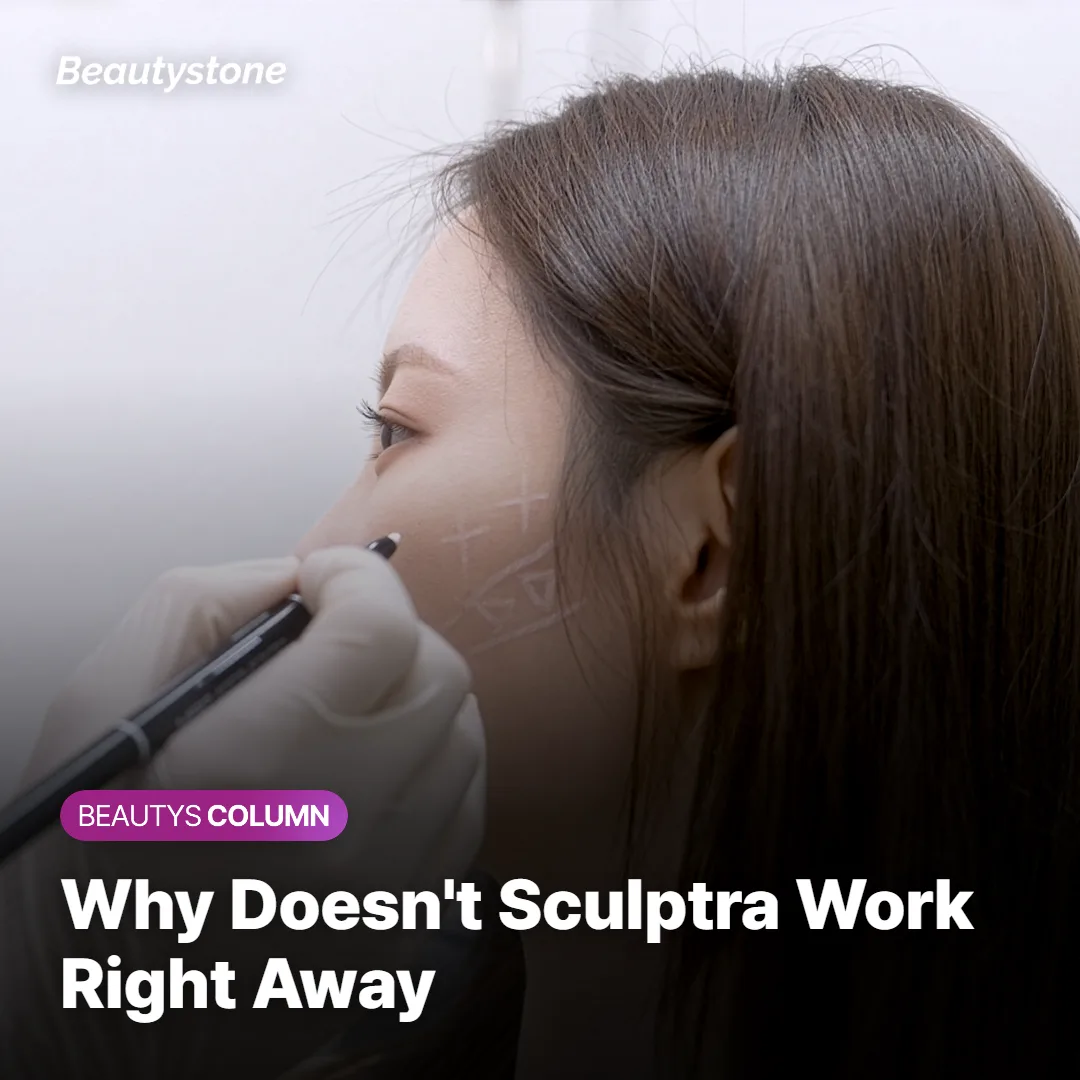
Why Doesn't Sculptra Work Right Away?
Sculptra doesn't fill space the way a traditional filler does — it triggers your skin to build its own collagen, which takes weeks, not days. Here's why that delay is normal and what the real timeline looks like.

Wi Young-jin
Chief Director & CEO, Myeongdong
If you got Sculptra and you're staring in the mirror wondering where the results went, you're not alone. A lot of people leave their first session expecting a fuller, lifted look, then watch that volume quietly disappear over the next day or two.
Here's the thing: that's actually normal. Sculptra doesn't work like a hyaluronic acid filler, and judging it by filler rules is where most of the confusion starts. In this article, we'll cover why Sculptra results take weeks to show up, what's actually happening under your skin during that wait, the real timeline to expect, and how to tell if this treatment is even the right fit for you.
What Is Sculptra, Exactly?
Sculptra is an injectable made from poly-L-lactic acid, or PLLA — a biodegradable material that's been used safely in medicine for decades. Unlike a traditional dermal filler, it isn't designed to physically fill space.
It's classified as a collagen biostimulator. Instead of showing up and taking the shape of added volume itself, it sends a signal to your own skin to build more collagen over time. That distinction matters more than it sounds like it should, because it changes everything about how — and when — you'll actually see a difference.
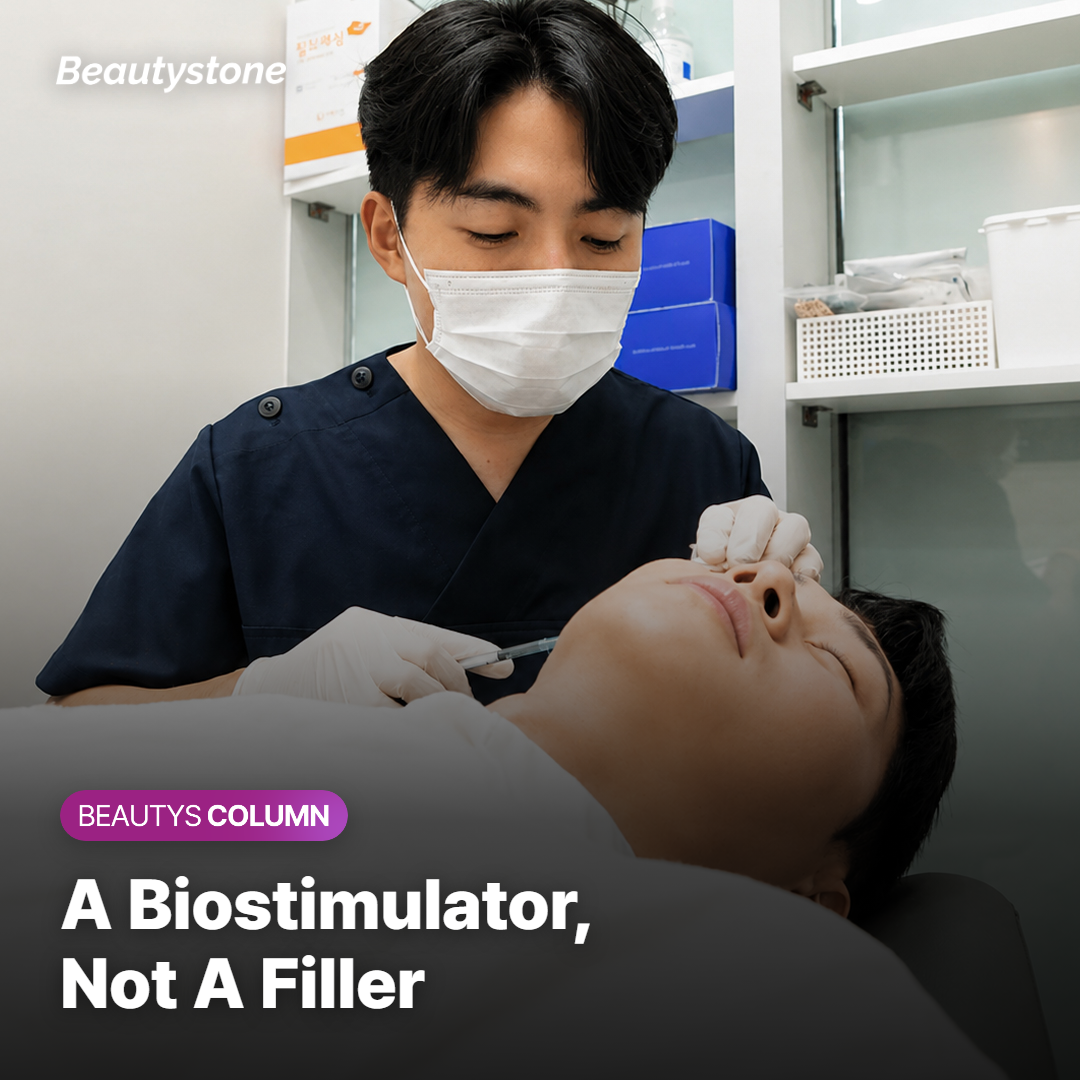
How Does Sculptra Actually Work?
Short version: Sculptra doesn't add volume. It triggers your body to make its own.
Once PLLA microparticles are injected into the deeper layers of skin, your immune system treats them the way it treats any foreign material — it sends in cells to deal with it. That includes fibroblasts, the cells responsible for producing collagen, mostly the structural type that keeps skin firm.
Fibroblasts gather around the PLLA particles and gradually start laying down new collagen — emphasis on gradually. Collagen isn't manufactured instantly. It's built fiber by fiber, and that takes your body real time to complete.
A simple way to picture it: a filler is like spackling a wall — the material itself is the fix. Sculptra is more like planting something and waiting for it to grow. Same general goal, completely different mechanism, completely different speed.

Why Don't You See Results Right Away?
Short answer: what you saw on day one wasn't the treatment actually working yet.
Sculptra is mixed with sterile water before injection, and that fluid does create some real fullness for the first day or two. It's genuine volume — it's just not the volume you're paying for. Once your body absorbs that fluid, the temporary puffiness fades and your skin looks back to how it looked before treatment.
This is exactly where a lot of people assume the treatment didn't work. It's the most common misunderstanding with Sculptra, and it's also completely expected — the fluid was never the point. The actual collagen-building process is just getting started underneath.
That process typically takes a minimum of four weeks, more commonly six to twelve, before it's produced enough new collagen to notice. There's no shortcut here. It's a biological process, not a chemical one, and biology moves at its own pace.
What Does the Real Timeline Look Like?
Every patient shifts a little, but most people follow a fairly consistent pattern:
| Timepoint | What You'll Notice | What's Happening Underneath |
|---|---|---|
| Right after treatment | Fuller-looking skin from the fluid | PLLA particles settling into place |
| 1–2 weeks | Fluid fades, skin looks like "before" again | Immune response begins, fibroblasts gather |
| 4–6 weeks | Subtle firmness, early texture change | New collagen production ramps up |
| 8–12 weeks | Natural-looking volume becomes noticeable | Collagen matrix keeps building |
| 3–6 months, after a full series | Change other people start to notice | Collagen accumulation stabilizes |
Most providers recommend a full course of three sessions spaced four to six weeks apart, and this is where a lot of disappointment actually comes from. Judge a single session against what a completed protocol delivers, and you're comparing an unfinished process to a finished one — that's not a failure of the treatment, it's an incomplete trial of it. A good rule of thumb: give it about two months after your third session before deciding how you feel about the results.

Sculptra vs. HA Filler: What's the Difference?
Both treatments can address volume loss, but they get there in almost opposite ways.
| Category | Sculptra (PLLA) | HA Filler |
|---|---|---|
| How it works | Stimulates your own collagen | Physically fills space on injection |
| Onset | Gradual, over 6–12 weeks | Immediate |
| How long it lasts | Roughly two-plus years on average | About six to eighteen months |
| Reversible? | No, it breaks down naturally over time | Yes, with hyaluronidase |
| Best for | Broad areas like temples, cheeks, jawline | Precise spots like lips or under-eye hollows |
Neither is objectively better — they're built for different goals. Want a specific amount of volume in one exact spot by next weekend? That's a filler job. Okay trading speed for a slower, more natural-looking result your own body builds and maintains? Sculptra is doing something a filler physically can't.
Who's a Good Candidate for Sculptra?
Sculptra tends to be a strong fit if:
- You're dealing with broad volume loss — hollowed cheeks, thinning temples, or an overall tired look from age-related fat and collagen loss.
- You don't love the "filled" look some HA fillers can create.
- You want a gradual, natural change rather than an overnight one.
- You're planning ahead, not treating a deadline — results that last an average of two-plus years reward patience.
It's probably not the right call if:
- You need visible change before a specific event next week — a filler will get you there faster.
- You want precise volume in one small area, like the lips or under the eyes, where thinner skin makes PLLA more likely to show as small bumps.
- You have a history of keloid scarring or an autoimmune condition — talk to your provider, since these can affect how your body responds.
One more thing worth knowing: results depend heavily on technique. Dilution ratio, injection depth, and how well you follow post-treatment massage instructions all affect whether you get smooth, even results or small nodules under the skin.
Side Effects & Risks
Bruising, swelling, and tenderness at the injection sites are common and typically settle within one to two weeks.
The risk providers watch most closely is nodules — small, firm bumps that can form if PLLA particles clump instead of spreading evenly. This is where aftercare actually matters: many clinics recommend a massage routine for the five days after treatment, massaging the area five times a day for about five minutes each time, to help distribute the particles evenly. Follow it even when it feels tedious.
Done correctly, with proper technique and consistent massage, clinical nodule rates run under 5%, and most that do form resolve on their own over time. Sculptra generally isn't used in thin-skinned areas like the lips or under the eyes for this reason — a filler is the safer choice there.
If you notice spreading redness, fever, or pain that's getting worse instead of better, contact your provider right away. Those aren't typical and shouldn't be ignored. Individual results and reactions vary, so a proper consultation before treatment matters more with Sculptra than with most fillers.
The Bottom Line
Sculptra isn't slow because something went wrong — it's slow because it's doing something fundamentally different from a filler. It's coaxing your own skin into building collagen, and that takes your body real time: typically six to twelve weeks per session, and a full series of three sessions for the results most people are actually after.
- Early puffiness is fluid, not the real effect — expect it to fade within a couple of days.
- Real results build gradually, usually noticeable by 6–12 weeks and most obvious two to three months after finishing a full series.
- Good technique and aftercare, especially massage, make a real difference in how smooth your results look.
Like any procedure, it comes with trade-offs — namely, patience. Ultimately, the choice depends on your goals, your timeline, and how you feel about that wait.
If you're considering Sculptra, a consultation is the best way to find out whether it fits your skin and goals. Beautystone is a dermatology clinic in Seoul's Hapjeong area — current pricing and offers are posted at /en/promotion, with detailed rates at /en/price.