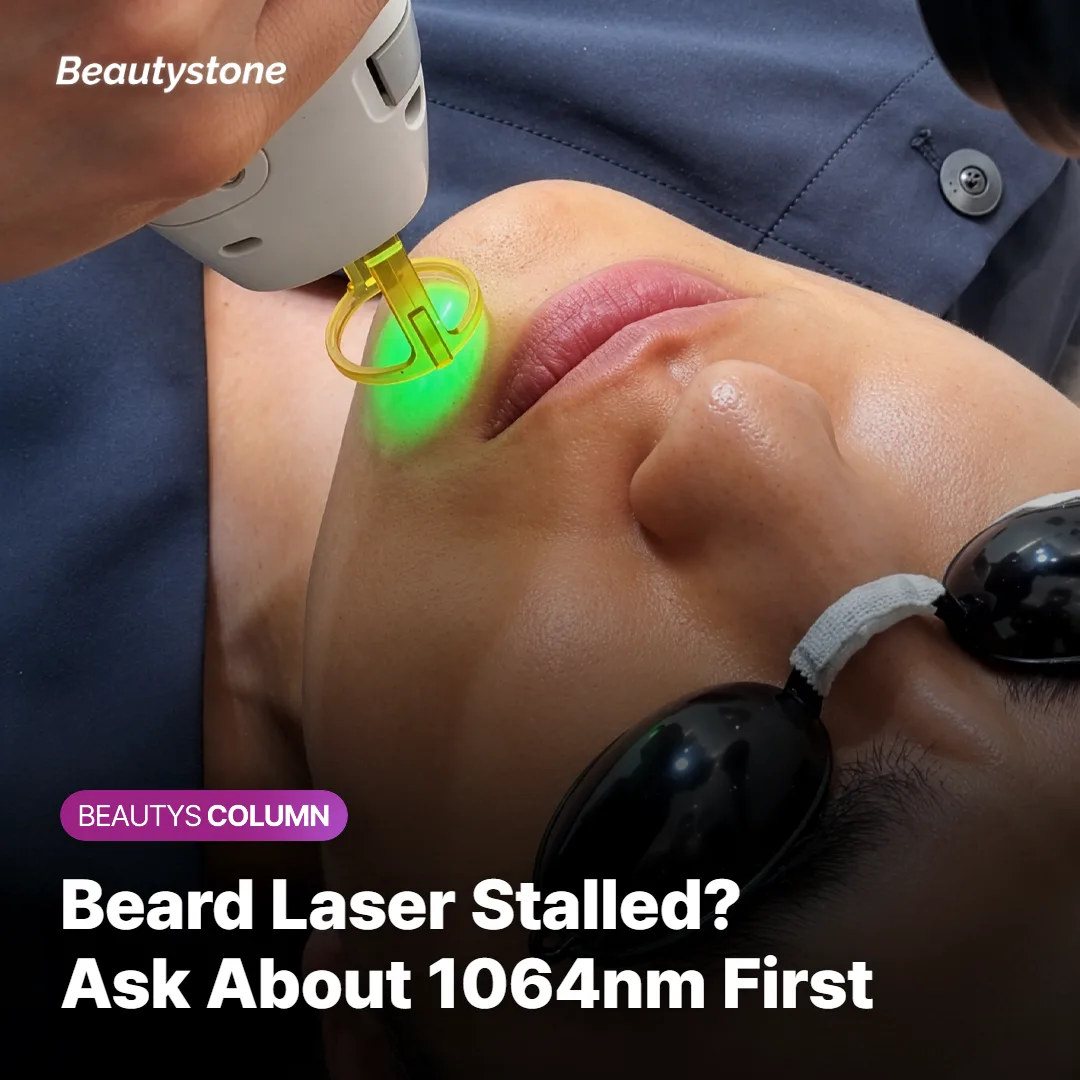
Does Potenza Work Better Than Laser for Pores?
If laser toning left your pores looking the same a few months later, the problem probably isn't your skin, it's the tool. Here's why Potenza's needle-based RF is built to reach a layer laser can't.

If you've done a round of laser toning for enlarged pores and the improvement barely lasted, you're not alone. It's one of the most common frustrations we hear, and it usually isn't about picking the wrong laser setting or not doing enough sessions. It's that laser toning and RF microneedling are built to treat two completely different layers of your skin. In this article, we'll cover why enlarged pores often don't respond to laser alone, how Potenza's needle-based RF reaches the layer where the real problem starts, and what actually happens during a treatment series.
Why Laser Alone Doesn't Fix Enlarged Pores
It's easy to assume pores are a surface problem, something a resurfacing laser should be able to smooth out. But enlarged pores usually aren't a pigment or texture issue sitting on top of your skin. They're a structural one: the collagen scaffolding that holds a pore's walls firm has weakened, so the opening stretches and stays open.
Laser toning and most resurfacing treatments work at or just below the skin's surface, the epidermis. That's exactly why results can look great for a few weeks and then quietly fade: the tool never touched the deeper layer, the dermis, where the actual support structure lives. Contrary to popular belief, more laser sessions don't fix that. They just keep polishing the same surface.
What Is Potenza, and How Is It Different From Laser?
Potenza is a radiofrequency (RF) microneedling device made by Cynosure. Instead of aiming energy at the skin's surface, it uses a grid of ultra-fine needles to carry RF energy directly into the dermis, the exact layer where pore-supporting collagen is made. The needles create controlled micro-channels, and RF energy is released right at the needle tips, so the heat lands precisely where it's needed with minimal impact on the surface skin above it.
That's the core difference from laser toning: Potenza doesn't have to guess its way down through the epidermis. It goes straight to the layer where pore walls actually get rebuilt, which is why it's frequently brought up for people whose pores didn't respond to laser.
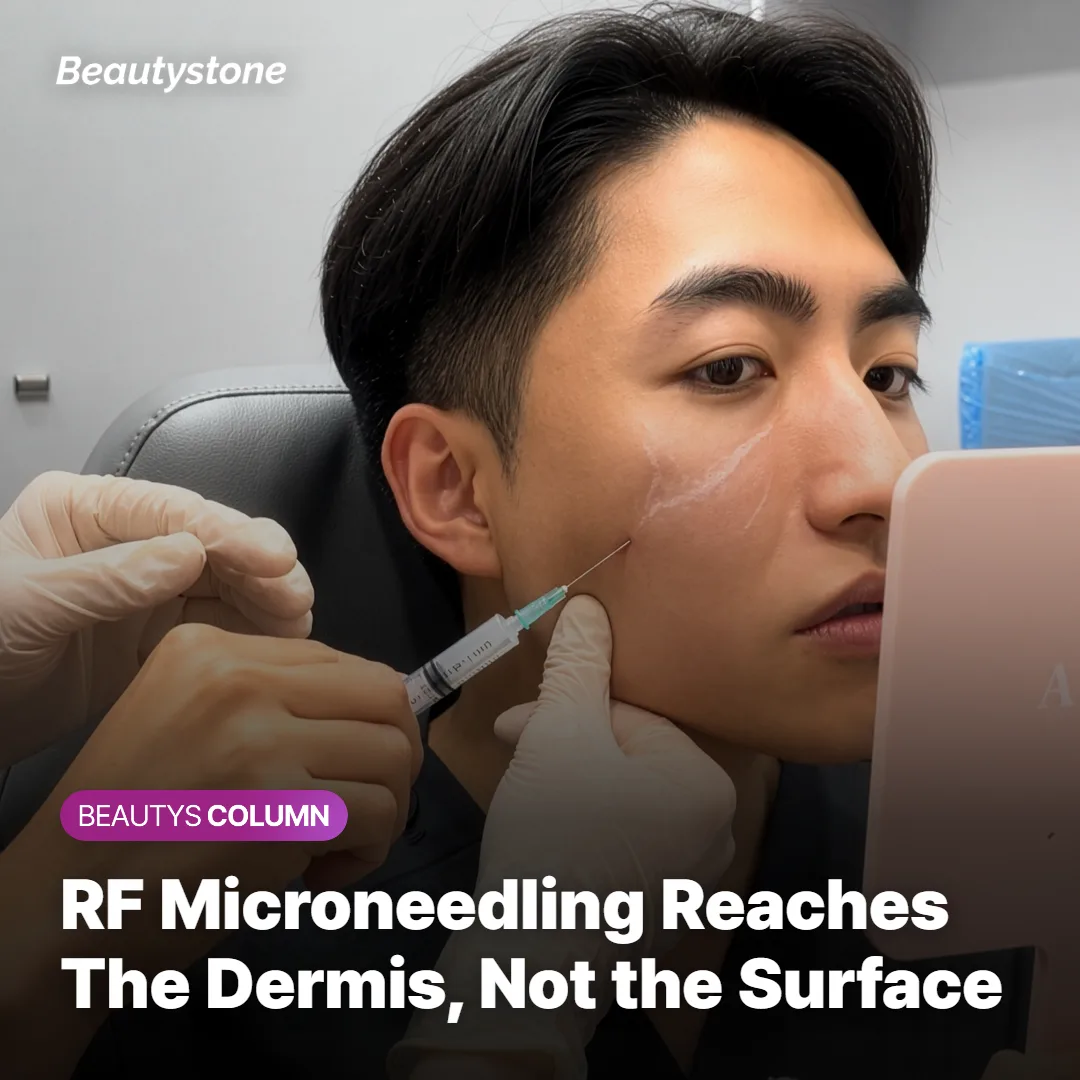
Monopolar vs. Bipolar RF: Why Potenza Uses Both
Here's what sets Potenza apart from a lot of other microneedle RF devices on the market: it can deliver both monopolar and bipolar RF from the same handpiece, and a provider can switch between them, or combine both, in a single session.
- Monopolar RF: Current travels deeper into the tissue, which makes it a better fit for addressing acne scarring or deeper structural laxity.
- Bipolar RF: Current stays concentrated near the needle tips, closer to the surface, which is typically better suited for pores, fine lines, and overall texture.
That flexibility is a big part of why two people can both say they "got Potenza" and walk away with different results. The outcome depends heavily on which mode was used, at what needle depth, and how many passes, not just the fact that the treatment was booked. If your provider isn't discussing mode and depth with you before your session, that's worth asking about.
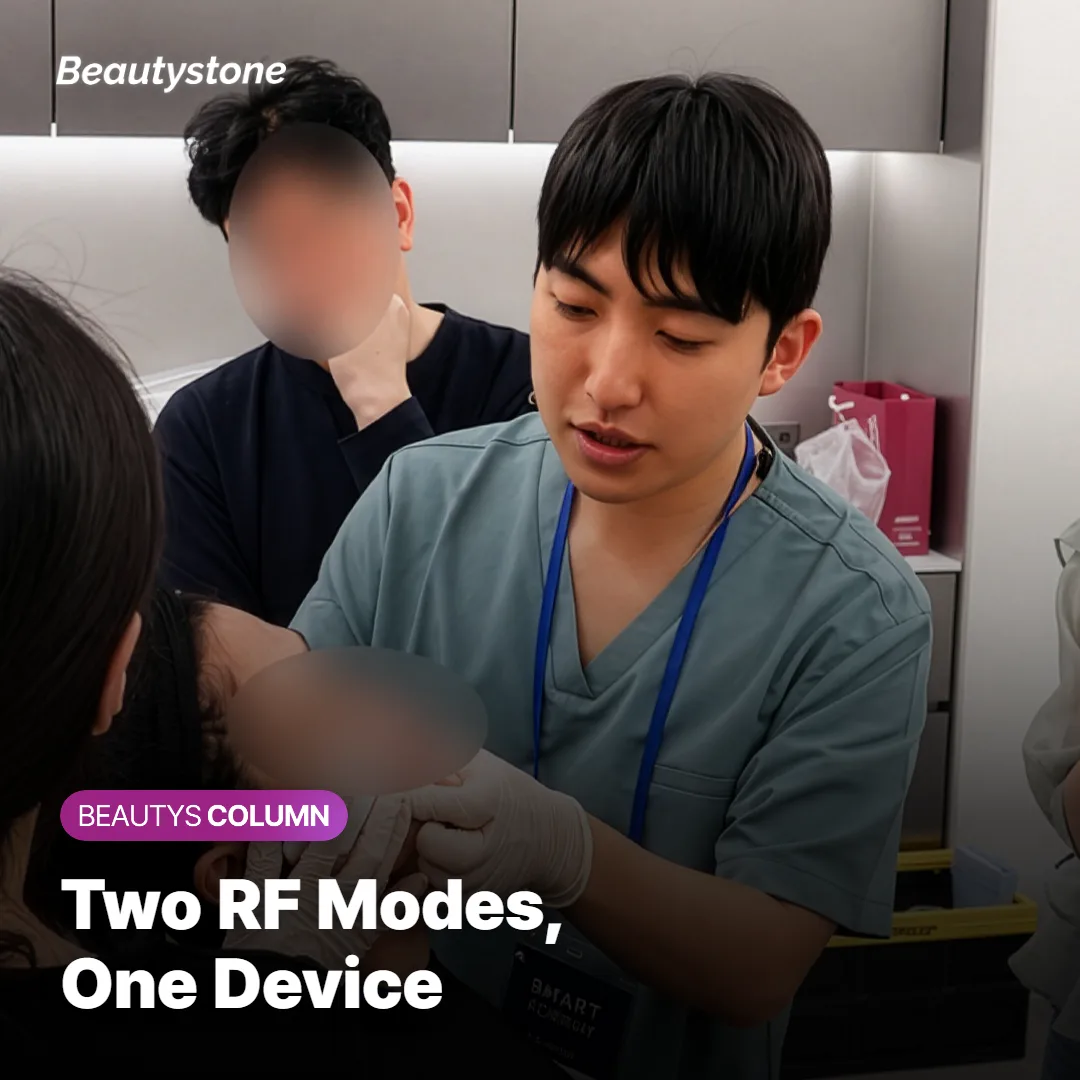
What to Expect: Treatment Day to Results
Numbing cream is applied first and given time to take effect, since the treatment involves fine needles. Your provider then works through the treatment area, adjusting needle depth and RF mode based on what you're addressing, shallower and bipolar for pores and texture, deeper and monopolar for scarring or laxity. Most sessions run about 20 to 40 minutes depending on the area and how many passes are used.
Redness, pinpoint marks, and mild swelling are common right after treatment, and many people are comfortable going back to normal activities, including light makeup, the next day. Some clinics also use a pumping tip immediately after treatment to push a topical, like exosomes or PDRN, into the micro-channels the needles just created. Not every device offers this, and not every clinic uses it, so it's worth asking what's included.
Because the real change comes from new collagen forming, not from anything visible on treatment day, results build gradually over three to four weeks per session. Most people see the clearest improvement after finishing a full series of three to five sessions, spaced three to four weeks apart, rather than judging things after just one visit. Individual results vary depending on your skin and how consistently you keep up with the schedule.
Side Effects & Downtime
- Downtime: Minimal for most people. Redness typically settles within a day or two, though areas treated with deeper monopolar settings may look slightly puffy for a few extra days.
- Common reactions: Pinpoint redness, tiny needle marks, and mild warmth or tightness in the treated area. These are expected and usually resolve on their own.
- What to avoid: Direct sun exposure, saunas, and intense exercise for a few days after treatment, since the skin has microscopic openings that need time to close.
- When to call your provider: If you notice spreading redness, fever, or pain that keeps getting worse, seek medical care right away, that's not a typical reaction.
As with any RF or microneedling treatment, how much redness or swelling you get depends on your skin, the depth and mode your provider used, and how many sessions you've had so far.

How Much Does It Cost?
Potenza pricing varies quite a bit by clinic, treatment area, and how many modes and needle depths are used in a session, so there isn't one number that applies across the board. What tends to move the price more than anything else is whether a pumping tip and topical, like exosomes or PDRN, is included, since that adds a separate step to the treatment.
Because Potenza is typically planned as a series rather than a single visit, it's worth asking your provider for the full-series cost rather than comparing clinics on a single-session price alone, that's usually where the real difference in value shows up. A consultation is the most reliable way to get an accurate quote for your specific concern, and current offers are listed at /en/promotion.
Potenza vs. Secret RF vs. CureJet: Which One Fits Your Concern?
Potenza sits in a category with a few other microneedle RF devices, most commonly Secret RF and CureJet, and it's worth knowing what separates them before picking one based on price alone.
| Device | Strongest For | RF Modes |
|---|---|---|
| Potenza | Pores, scarring, and laxity in one series | Monopolar and bipolar, combinable |
| Secret RF | Shorter downtime, simpler settings | Bipolar, narrower depth range |
| CureJet | Deep, well-defined scarring | Focused on deeper delivery |
The short version: CureJet tends to be the go-to when the concern is specifically deep, well-defined scarring. Secret RF is often chosen when shorter downtime matters more than treating multiple depths in one visit. Potenza's advantage is range, the ability to combine modes and depths in one series when you're dealing with more than one concern at once, like pores and scarring together. No single device is the best fit for everyone, it depends on what you're actually trying to address.
The Bottom Line
Enlarged pores are usually a structural problem in the dermis, not a surface issue, which is exactly why laser toning alone often can't hold onto results long-term. Potenza's needle-based RF is designed to reach that deeper layer directly, and its ability to combine monopolar and bipolar modes in one series is what lets it address pores, texture, and scarring depending on what your skin actually needs.
Like any procedure, it comes with trade-offs: it's a multi-session commitment, not a single fix, and results take a few months to fully show. Ultimately, the choice of device, and how it's used on you, depends on your skin, your goals, and your budget.
If you're considering Potenza for pores that haven't responded to laser, a consultation is the best way to find out what mode, depth, and schedule fit your skin. Beautystone is a dermatology clinic in Seoul's Hapjeong area, see current offers at /en/promotion.
Frequently Asked Questions
Q1. Why didn't laser toning fix my enlarged pores?
Enlarged pores are usually a structural issue: the collagen support around the pore wall has weakened. Laser toning mostly works at the skin's surface, so it can smooth texture temporarily but doesn't reach the dermis where that support actually gets rebuilt. That's why results from surface treatments alone tend to fade.
Q2. What's the difference between monopolar and bipolar RF in Potenza?
Monopolar RF sends current deeper into the tissue, which is typically used for acne scarring or more significant laxity. Bipolar RF keeps the current concentrated near the needle tip, closer to the surface, which tends to work better for pores, fine lines, and overall texture. Potenza can use either mode, or both, depending on your concern.
Q3. How many Potenza sessions will I need for pores?
Most plans call for three to five sessions spaced about three to four weeks apart, though it depends on how enlarged the pores are and whether other concerns, like scarring, are being treated at the same time. Your provider will typically check your skin's response after each session and adjust from there.
Q4. Is Potenza painful?
Most people describe it as a warm, prickling sensation rather than sharp pain, especially with numbing cream applied beforehand. Deeper monopolar passes can feel more intense than shallower bipolar ones, so it's worth mentioning your comfort level to your provider before starting.