

Why Does PicoWay Hurt More on Some Body Parts?
PicoWay tattoo removal pain can feel roughly twice as intense on bony areas like the ankle or ribs compared to fleshy spots like the forearm. Here's the anatomy behind that gap, and how proper numbing time closes it.

If a PicoWay session on your forearm felt like a light rubber-band snap, don't assume your ankle will feel the same. Fleshy areas and bony ones respond to the laser in completely different ways, and the gap in comfort can be dramatic. In this article, we'll cover why some spots hurt roughly twice as much as others, how numbing time changes the experience, and what you can do to make your next session more comfortable.
Does PicoWay Tattoo Removal Actually Hurt?
Short answer: yes, but how much depends heavily on where the tattoo sits. Most people describe PicoWay as a series of quick, sharp pinpricks rather than a constant burn, closer to a rubber band snapping against skin than a scraping sensation. On padded areas like the outer arm, thigh, or back, that snap is usually tolerable without much fuss.
On thinner-skinned or bonier areas, the story changes. Patients often describe the ankle, ribs, collarbone, and top of the hand as noticeably sharper, sometimes reporting the discomfort as close to double what they felt on fleshier spots. That difference is real, and it comes down to basic anatomy rather than how the laser is set.
How PicoWay's Picosecond Laser Feels Different
PicoWay delivers energy in trillionths of a second, shattering ink particles into fragments small enough for the body to clear naturally. Compared with older Q-switched lasers, that ultra-short pulse produces less heat buildup in the surrounding skin, which is part of why many patients tolerate PicoWay better than they expect.
The trade-off is sensation style, not necessarily intensity. Instead of a longer, duller burn, you get brief, sharp zaps that pass almost as quickly as they arrive. Some people find that quick-in, quick-out rhythm easier to handle than a sustained sting; others find rapid-fire snaps more startling. Either way, the sensation is momentary, it's the accumulation over dozens of pulses that determines how a session actually feels.
Why Some Spots Hurt Twice as Much
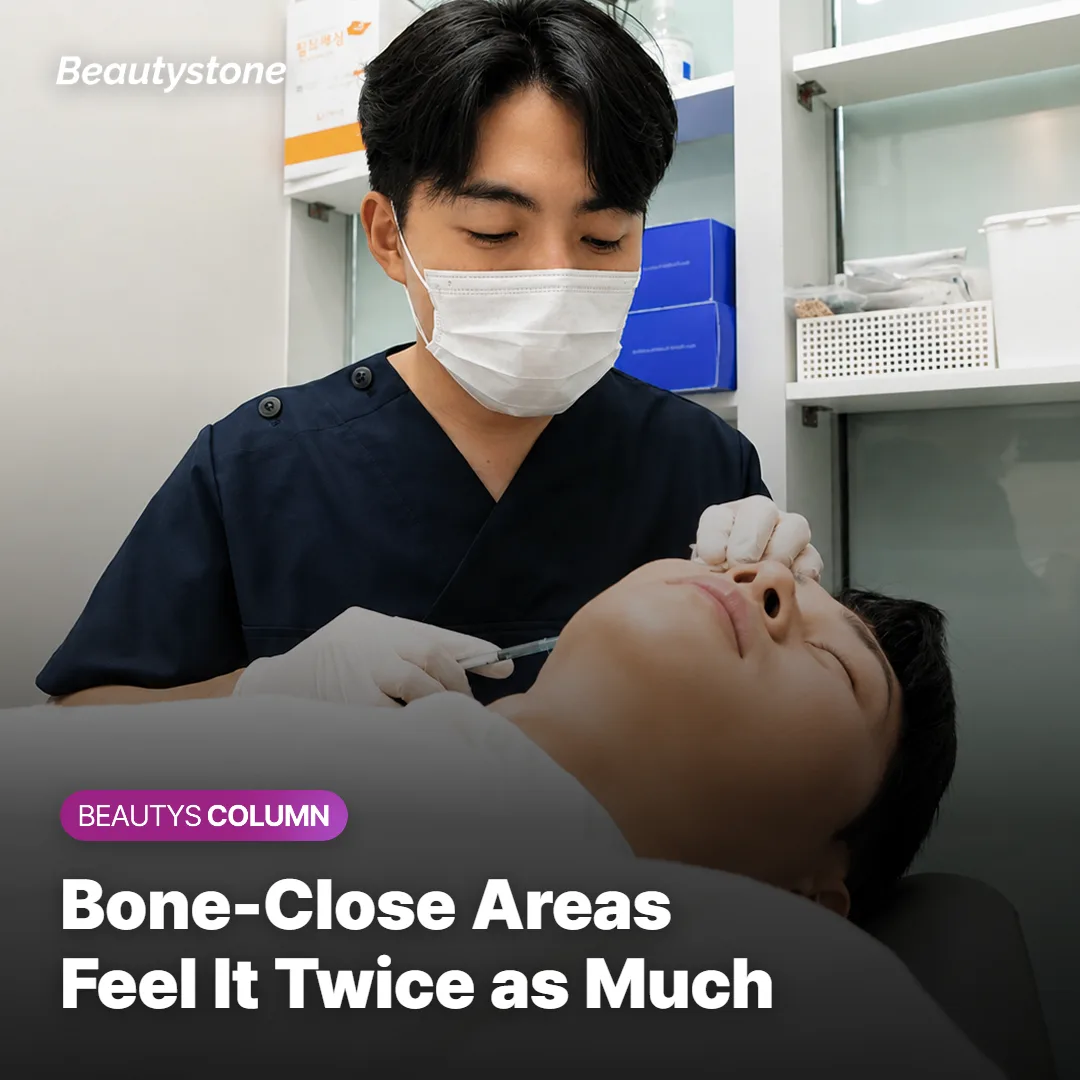
The real variable isn't the laser's power setting, it's what's sitting directly under the skin. Over fleshy areas like the forearm or thigh, the shockwave from each pulse has a cushion of fat and muscle to travel through before it fades out. That layer absorbs and disperses a good portion of the impact before it ever reaches a nerve ending.
Over the ankle, shin, ribs, or top of the hand, that cushion barely exists. The skin sits almost directly on bone, so the shockwave has nowhere to spread, it travels straight down and taps the periosteum, the sensitive membrane covering bone. That's the mechanism behind the "twice as much" feeling patients describe: it's not a bigger zap, it's a zap with nowhere to go.
Skin thickness plays a secondary role too. Areas with thinner skin, like the inner wrist or ankle, transmit sensation more directly than thicker-skinned zones like the upper back.
Numbing Cream: The 60-Minute Rule
A topical numbing cream can make a real difference, but only if it's given enough time to actually work. Applying it and starting treatment 15 or 20 minutes later barely scratches the surface, most numbing agents need close to an hour of contact time to fully saturate the skin.
For bony or thin-skinned areas, a full 60 minutes of numbing time is generally worth insisting on. Pairing that with a cooling device or ice pack during the session itself tends to bring the discomfort down further, providers who combine both often see patients rate sensitive spots as noticeably more manageable than numbing cream alone would suggest.
On fleshier areas, 30 minutes of numbing is often enough since the tissue itself is already doing some of the work. The takeaway either way: numbing time should match the area, not just follow a one-size-fits-all clinic default.
PicoWay vs Other Devices: How the Pain Compares
If you've had tattoo removal with a different device before, it's worth knowing that not all picosecond and Q-switched lasers feel the same. Here's a general comparison based on how patients typically describe each:
| Device | Sensation | Toughest Spots | Numbing Time |
|---|---|---|---|
| PicoWay | Short, sharp zaps | Ankle, ribs | ~60 minutes |
| Enlighten | Deeper, more diffuse thud | Top of hand, collarbone | 45-60 minutes |
| PicoSure | High-frequency, vibration-like | Fairly even across the body | 30-45 minutes |
PicoWay's fragmentation power is part of why it's popular for stubborn or multicolor ink, but that same efficiency is also why numbing time matters more here than it might with a gentler device.
Side Effects & Downtime to Expect
Redness, mild swelling, and a sensation similar to sunburn are common in the hours after a session and usually settle within a day or two. Pinpoint bleeding or tiny blisters can happen, especially on thin-skinned areas, and typically heal on their own with basic aftercare.
Keep the area clean, avoid picking at any scabbing, and use sun protection once the skin has closed over, treated skin can be more sensitive to UV exposure for weeks afterward. If you notice spreading redness, fever, pus, or pain that gets worse instead of better, contact your provider right away rather than waiting it out.
How to Prepare for a Lower-Pain Session
- Take acetaminophen beforehand: A dose about an hour before your appointment can take the edge off for many patients.
- Skip aspirin and NSAIDs: Both can increase bleeding risk during treatment, so they're best avoided in the day or two prior.
- Cut back on caffeine: Heavy caffeine intake can heighten pain sensitivity, so a lighter dose the morning of your session may help.
- Ask about numbing time upfront: If you're treating an ankle, rib, or hand, request the full 60 minutes rather than whatever the clinic defaults to.
None of these steps eliminate discomfort entirely, but stacked together, they can turn a rough session into a manageable one.
The Bottom Line
PicoWay tattoo removal pain isn't random, it's mostly a matter of what's underneath the skin you're treating. Fleshy areas have a natural cushion; bony areas like the ankle, ribs, and top of the hand don't, which is why patients so often describe them as roughly twice as intense.
The good news is that most of that gap can be closed with preparation: a full 60 minutes of numbing cream on sensitive spots, cooling during treatment, and simple steps like timing your pain reliever correctly. Like any procedure, it comes with trade-offs, and individual pain tolerance varies from person to person.
Ultimately, how much numbing to ask for and where to start treatment depends on your own comfort level and your provider's recommendations. If you're considering PicoWay tattoo removal, a consultation is the best way to find out what fits you. Beautystone is a dermatology clinic in Seoul's Hapjeong area, see current offers at /en/promotion.
Frequently Asked Questions
Q1. Does PicoWay hurt more than older tattoo removal lasers?
Not necessarily. PicoWay's picosecond pulses cause less heat buildup than older Q-switched lasers, so many patients find it more tolerable overall, though the sensation itself is a series of sharp, quick zaps rather than a duller burn.
Q2. Why does my ankle hurt more than my arm during treatment?
It comes down to what's under the skin. Fleshy areas like the arm have fat and muscle that absorb and disperse the laser's shockwave, while bony areas like the ankle have little cushion, so the impact reaches the periosteum almost directly.
Q3. How long should numbing cream sit before a PicoWay session?
For sensitive, bony areas, aim for a full 60 minutes of contact time. Fleshier areas can often get by with around 30 minutes, since the tissue itself provides some natural cushioning.
Q4. Can I take pain medication before my appointment?
Acetaminophen about an hour before treatment is generally fine and can help take the edge off. Aspirin and other NSAIDs are best avoided beforehand since they can increase bleeding risk.

