Pore Clinic in Hongdae: Which of 3 to Pick?
The 3 Most Popular Pore Procedures Among Patients in Their 20s–30s in Hongdae & Seoul, and How to Choose
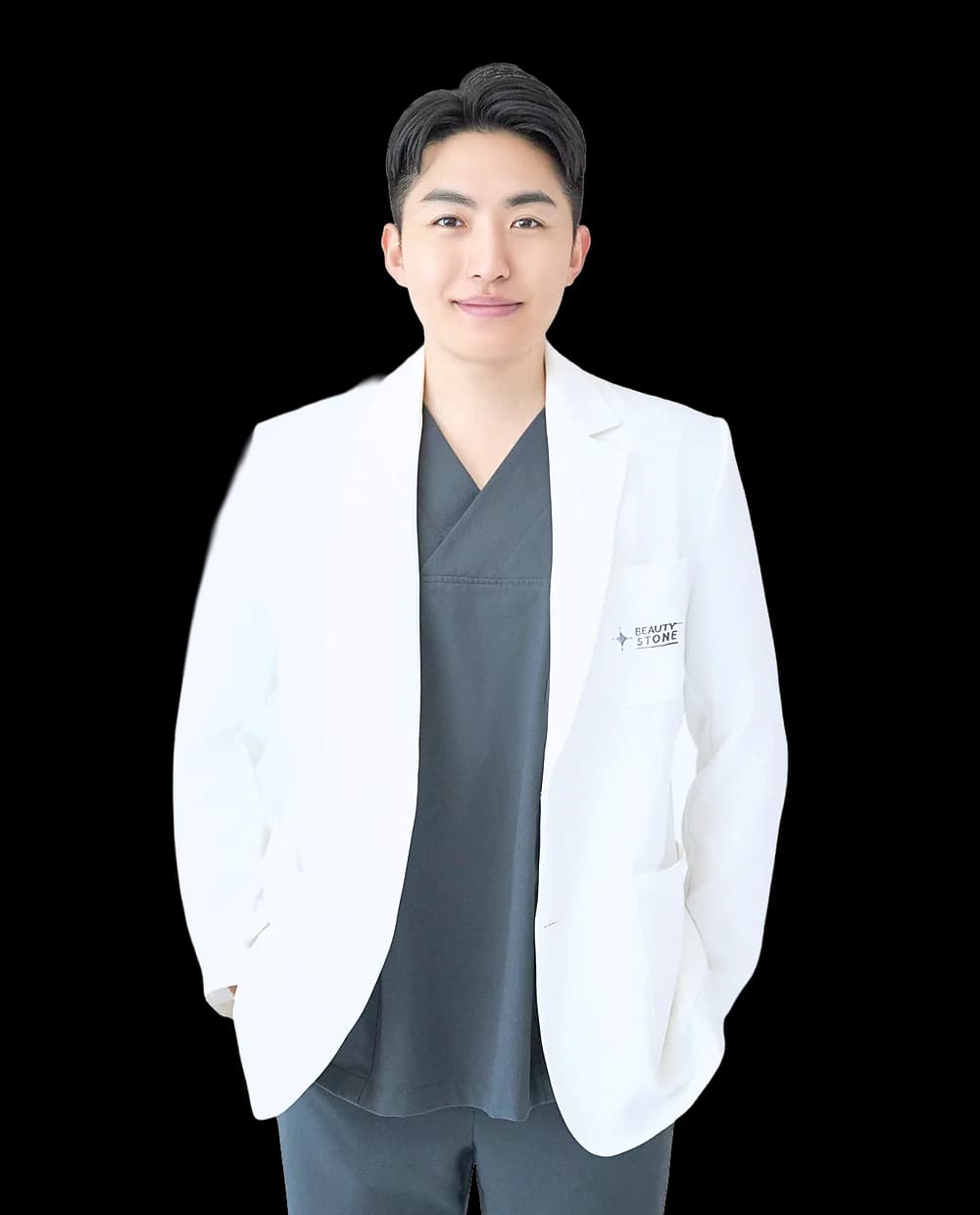
Wi Young-jin
Chief Director & CEO, Myeongdong
37 Patients Came In for Pore Consultations in Hongdae — They All Chose One of These Three
Before You Read — A Quick Check
Q. If I get a pore procedure done in Hongdae or Seoul, aren't they all pretty much the same?
A. Not at all. Given that this area skews heavily toward patients in their 20s and 30s, there are specific procedures that tend to get chosen most often. It depends entirely on whether your concern is excess sebum, loss of Elasticity, or Acne scarring — and each calls for a completely different approach.
Q. Why can't Pores just be eliminated in one session?
A. Pores aren't simply "holes" — they're a structure shaped by three interconnected factors: sebum production, Dermis Elasticity, and Keratin buildup. It's not the kind of problem you can solve by addressing just one of those.
Lately, in the consultation room, I keep hearing the same thing:
"I've been looking into pore procedures around Hongdae,
but there are so many options — I have no idea which one to pick."
That's how a lot of appointments start these days.
Honestly, my initial instinct was always,
"We'll assess your skin type and go from there" —
but after seeing enough cases, I started noticing a clear pattern.
There's a distinct set of procedures that patients in the Hongdae and Seoul area tend to gravitate toward.
Today, I want to talk about exactly that.
So What Actually Makes These Procedures Different?
Broadly speaking, pore procedures fall into three categories:
laser-based, Radiofrequency (RF)-based,
and Skin booster-based.
Lasers work on the surface — targeting Keratin buildup and sebaceous glands —
while Radiofrequency (RF) delivers heat deep into the Dermis
to physically tighten the walls of the pore itself.
Skin boosters work differently:
they replenish hydration and Elasticity from within,
so that Pores appear less prominent and less dilated.
Why These Three Procedures Stand Out in Hongdae
Key Takeaway
A clinic director in the Mapo area breaks down the top 3 pore procedures most popular among patients in their 20s–30s in Hongdae and Seoul.
Top 3 pore procedures most requested by patients in their 20s–30s in Hongdae and Seoul —
analyzed through real consultation data by a local clinic director.
I went back and reviewed my consultation records from last month — 47 patients total.
Of those, 37 came from the Hongdae, Sangsu, and Mangwon area and were in their 20s–30s.
What struck me was that their choices consistently narrowed down to one of three options.
The most common choice was Laser toning with a Pico laser base,
followed by needle RF procedures like InMode or Potenza,
and then Skin boosters such as Rejuran or Juvelook.
Those three, in that order, dominated the pattern.
But here's where it gets important.
Last week, I saw a 27-year-old graphic designer who had already completed 8 rounds of laser treatment elsewhere.
She came in frustrated, asking why her Pores hadn't changed at all.
When I examined her skin, the sebum in her T-zone had actually reduced —
but the Pores on her inner cheeks were vertically elongated and sagging.
That's a classic presentation of elasticity-related pore laxity.
The tricky part is this:
that type of Pores simply doesn't respond well to laser alone, no matter how many sessions you do.
The 1064nm wavelength reaches the epidermis and upper Dermis,
but it doesn't deliver enough energy to trigger Collagen remodeling in the mid-to-lower Dermis.
For patients like her, what's needed is needle RF — delivering heat directly at a depth of 1.5 to 3.5mm.
After just 2 sessions of InMode FX, she told me,
"This is the first time I've actually felt my skin tighten."
On the other hand, patients in their early 20s with oily skin and blackhead-prone Pores
often see noticeable improvement by sessions 3 or 4
with Laser toning and proper sebum management alone.
Even when the concern is framed the same way — "I want smaller Pores" —
the skin layer being targeted is completely different depending on the root cause.
Patients in their 20s–30s in the Hongdae area generally fall into two groups.
If the concern is excess sebum and blackheads, laser is the right direction.
If the Pores are elongated and sagging due to lost Elasticity, needle RF is what's needed.
When that distinction isn't made and a generic "pore package" is applied instead,
some patients finish 10 sessions with no meaningful change.
How I Approach the Assessment in My Consultation Room
The first thing I look at during a consultation
is the shape of the Pores.
Are they round? Elongated? Indented?
Each shape points to a different underlying issue.
That said, it's rarely a clean-cut distinction.
Usually one type is dominant,
but occasionally all three characteristics appear together —
in which case, I typically start with laser to address the surface first,
then follow up with RF to target the deeper layers.
One thing I always make clear to patients:
no matter which procedure we choose, one session won't be enough.
Honestly, pore concerns fall into the category of ongoing management.
I recommend thinking of 3 to 5 sessions as one complete cycle,
with maintenance sessions every 6 to 12 months after that — that's the realistic picture.
That said, unless we're dealing with Scar-type Pores,
most patients start seeing noticeable improvement around the third session.

The Three Questions I Get Asked Most in the Consultation Room
Q1. I work in the Hongdae area — can I go straight to plans after the procedure?
A. For Laser toning or Skin boosters,
any redness typically settles within 1 to 2 hours,
so evening plans are generally fine.
Needle RF is a different story, though.
Fine pinpoint marks can persist for 2 to 3 days,
and some Swelling can last around a day,
so I'd recommend avoiding important commitments on the day of the procedure.
Q2. How many sessions should I plan for, and what kind of budget should I set?
A. Pricing varies considerably depending on the procedure,
so I can give you accurate figures during your consultation.
In terms of session count:
Laser toning is typically done in sets of 5,
while needle RF is most commonly planned in sets of 3.
For Skin boosters, the usual pattern is 3 sessions spaced 2 to 3 weeks apart,
then transitioning to once-monthly maintenance.
Q3. I have sensitive skin — is it safe for me?
A. It really does depend on the individual,
but here's how I typically approach it in my practice.
If the skin barrier is already compromised,
I don't proceed with any procedure right away.
Instead, I spend about 2 to 3 weeks focusing on barrier restoration first,
and then begin the procedure at around 80% of the standard energy level.
A lot of people assume sensitive skin means procedures are off the table entirely —
but that's a misconception.
It's really a matter of sequencing and intensity, not a blanket contraindication.
I hope this was helpful. This is Dr. Wi Young-jin, signing off.